Artwork
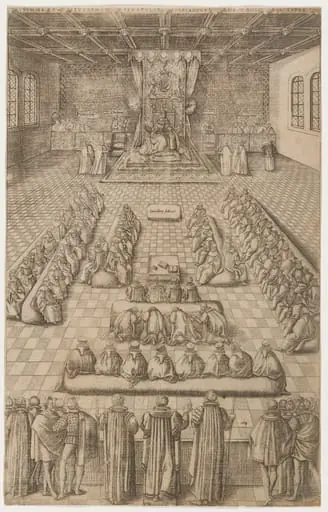
Queen Elizabeth in Parliament
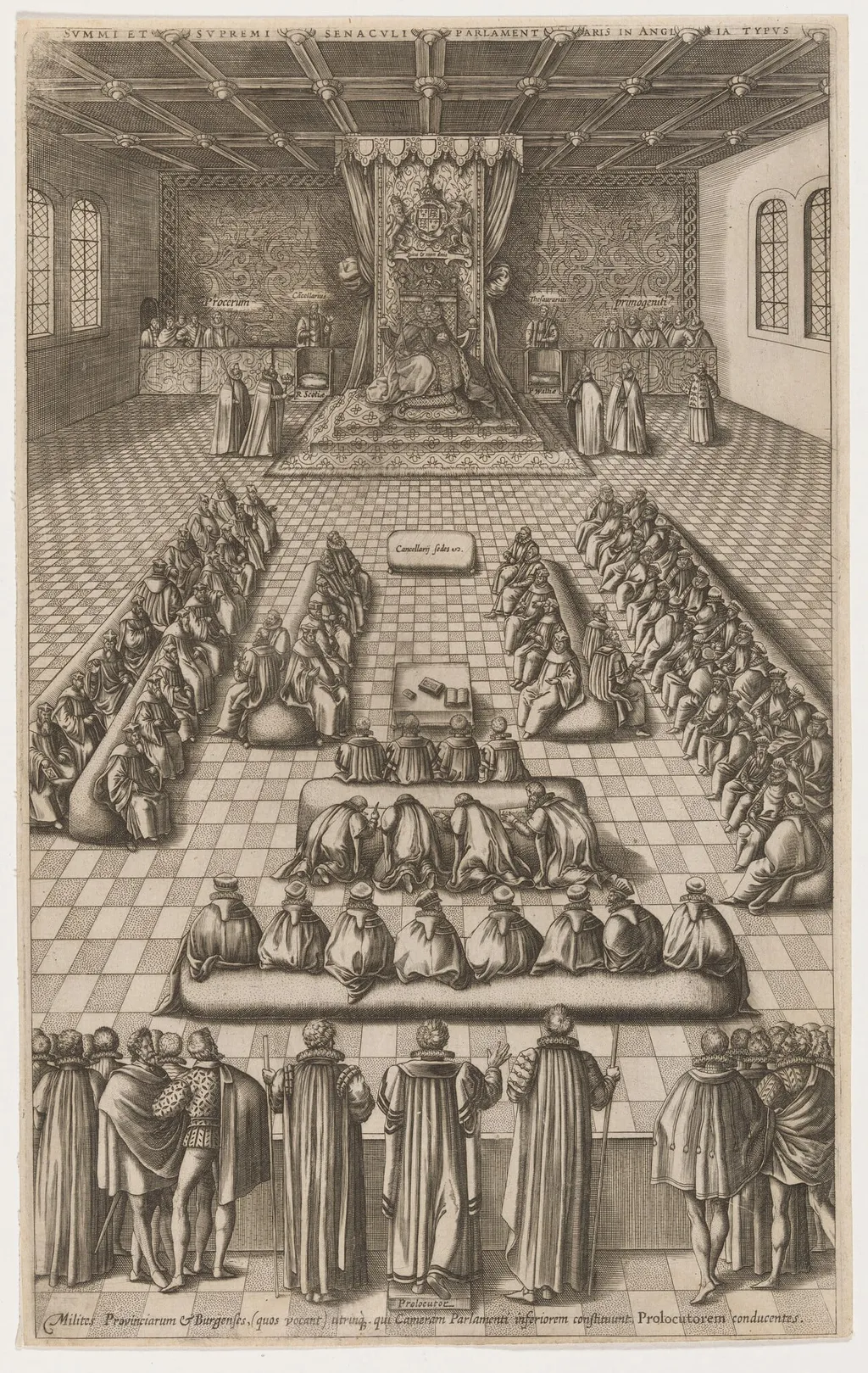
Queen Elizabeth in Parliament is an ink print by the Baroque artist Renold Elstrack. It dates from 1608 and is held in the collection of the National Gallery of Art.
About this work
Overview
The composition is densely populated with robed officials, some kneeling, others holding documents, while a group of armored soldiers observes from a doorway.
Renold Elstrack’s 1608 engraving titled *Queen Elizabeth in Parliament* depicts the monarch seated upon a throne within a formal chamber. The composition is densely populated with robed officials, some kneeling, others holding documents, while a group of armored soldiers observes from a doorway. Architectural elements such as tall windows and a timber‑beam ceiling frame the scene, emphasizing the ceremonial atmosphere of the Tudor court.
Subject & Meaning
The image presents Elizabeth I as the focal point of legislative authority, her scepter in hand signifying sovereign power. The surrounding courtiers and soldiers suggest the convergence of civil and military responsibilities under her rule, while the attentive posture of the figures conveys deference and the procedural nature of parliamentary proceedings in early seventeenth‑century England.
Technique & Style
Executed as an engraving, the work relies on fine incised lines to render intricate detail and texture. Elstrack employs cross‑hatching to model depth, particularly in the crowded figures and architectural background, creating a layered visual hierarchy that guides the eye toward the queen’s elevated position. The monochrome palette accentuates the contrast between light‑filled windows and the darker interior space.
History & Provenance
Created shortly after Elizabeth’s death, the print reflects contemporary interest in commemorating her reign. It was likely produced for a courtly audience and circulated among collectors of political imagery. Surviving copies are held in several European print collections, indicating its distribution across England and the Low Countries during the early modern period.
Context
The engraving belongs to a broader tradition of Tudor and early Stuart portraiture that linked monarchic imagery with state institutions. By portraying the queen within a parliamentary setting, Elstrack aligns the personal authority of the sovereign with the emerging concept of a representative assembly, a visual narrative resonant with the political discourse of the early 1600s.
Artist & collection

 James I in Parliament
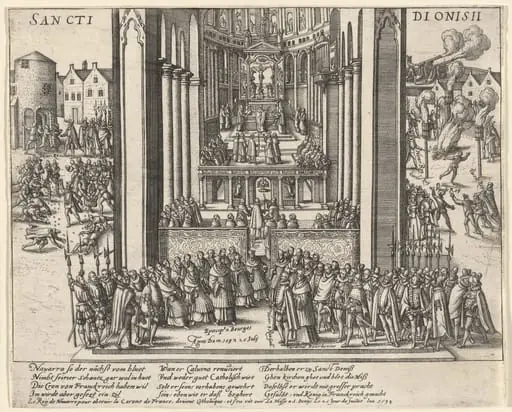 Composite Image Depicting Actions of Henri IV, King of France, upon His Abjuration of the Protestant Faith
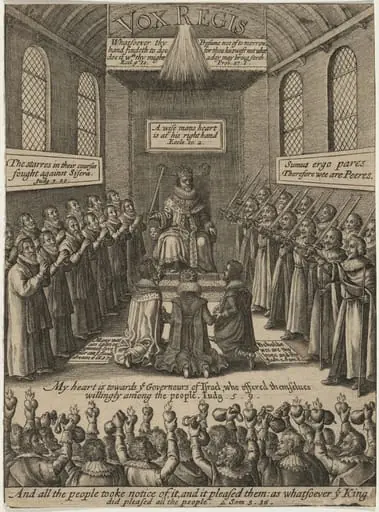 Vox Regis, by Thomas Scott
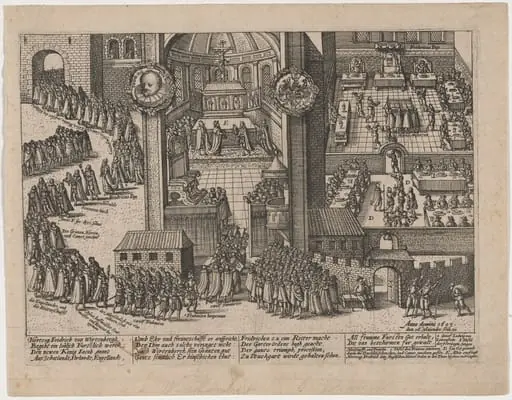 Frederick VI, Duke of Wurtenberg
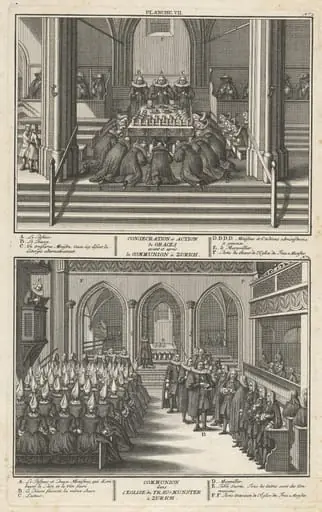 Consecration et Action de Graces avant et après la Communion à Zurich; Communion dans l’Eglise du Fraumunster à Zurich (Consecration and Communion at the Fraumunster, Zurich)
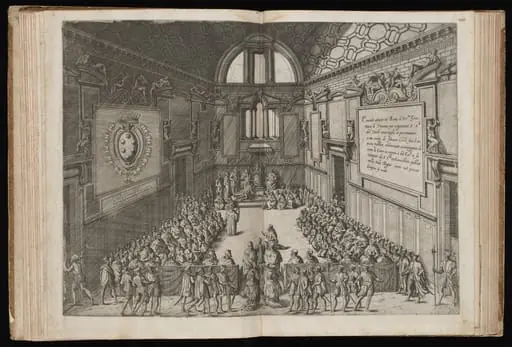 The Coronation of Cosimo I de' Medici
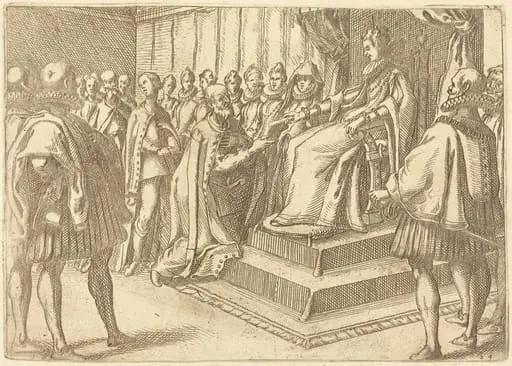 Reception of the Envoy of Poland
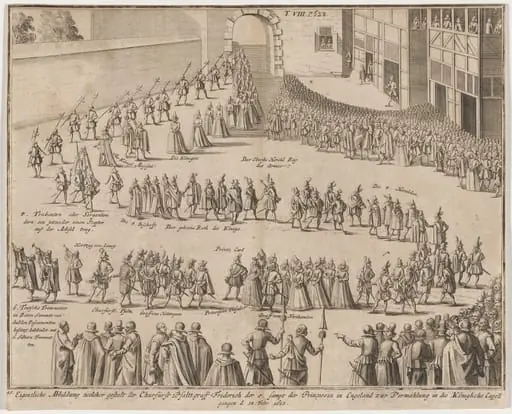 Marriage of Elizabeth to Frederick V of Bohemia, February 14, 1613
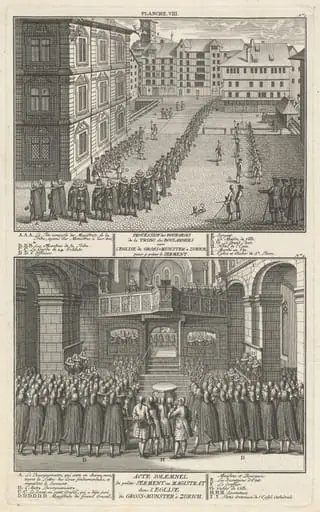 Procession des Bourgeois de la Tribu des Boulangers vers l’Eglise du Grossmunster à Zurich, pour y prêter le Serment; Acte Solemnel de prêter Serment au Magistrat dans l’eglise du Grossmunster à Zurich (Procession and Sermon at the Grossmunster)
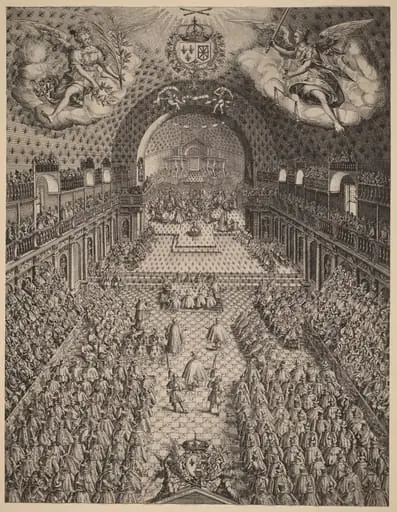 The States General of France (Les Etats Generaux de France)
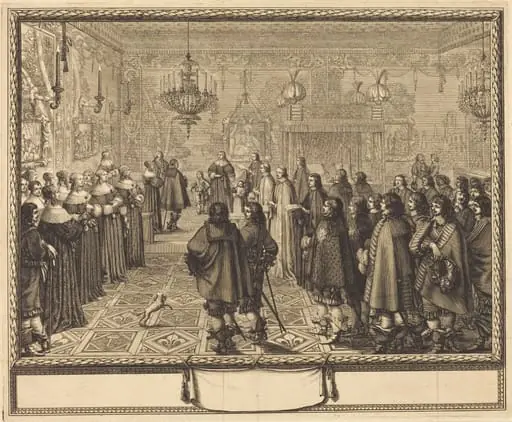 Ceremony of the Contract of Marriage between Vladislas IV, King of Poland, and LouiseMarie of Gonzaga, Princess of Mantua, at Fontainbleau
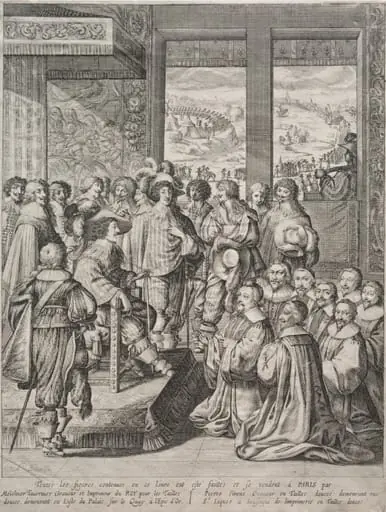 Louis XIII Receiving a Deputation of Magistrates