Artwork
Griffon Vulture
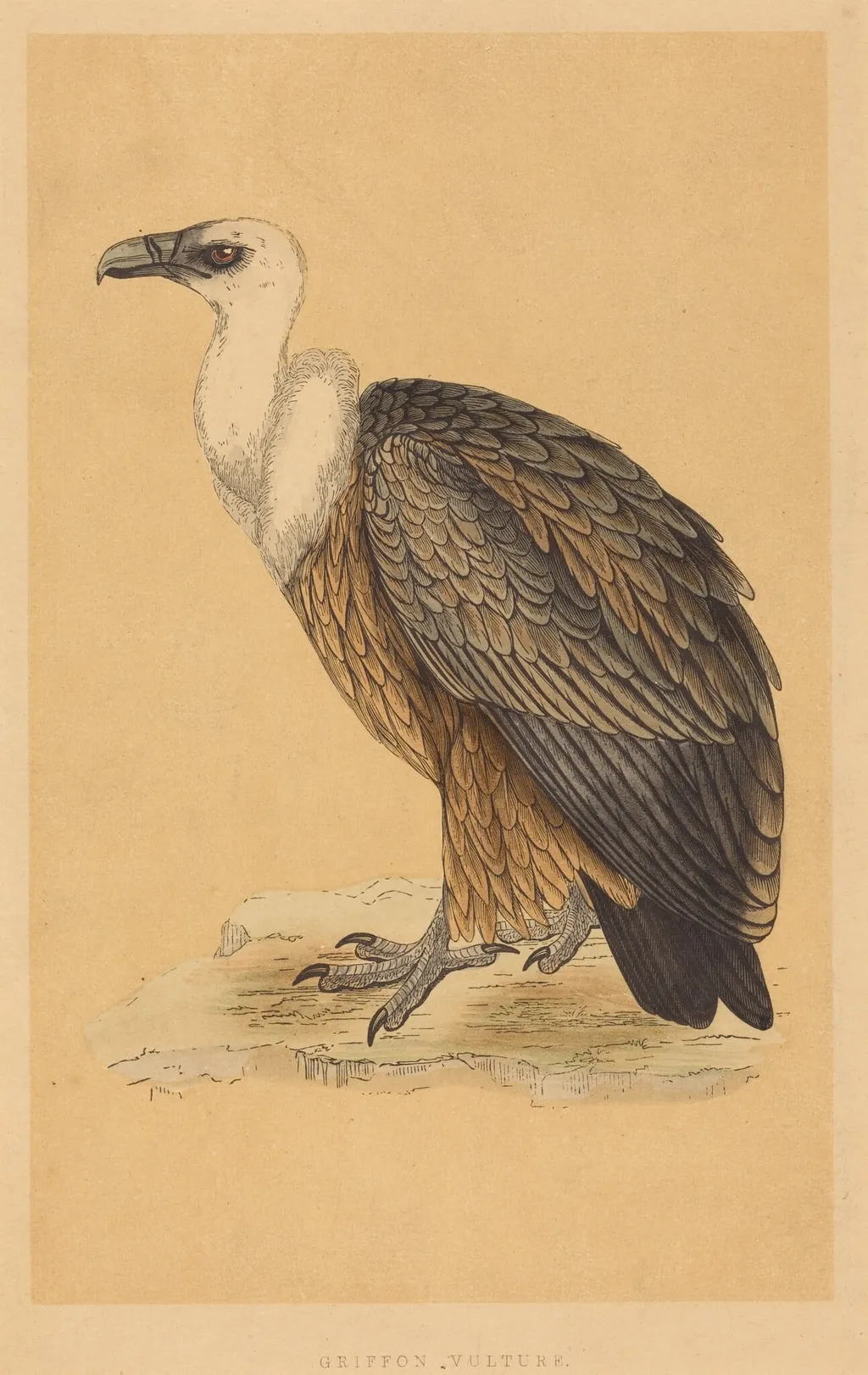
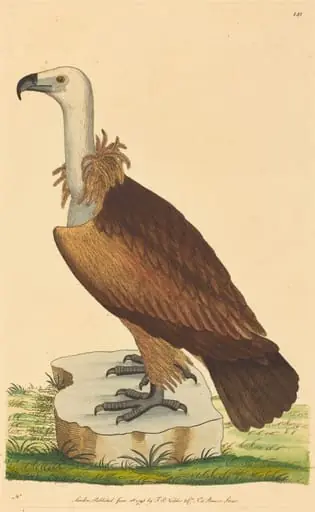
Griffon Vulture is an ink print by the Romanticist artist British 19th Century. It dates from 1850 and is held in the collection of the National Gallery of Art.
About this work
Overview
The work presents a griffon vulture perched upon a rugged stone surface. Rendered in a limited palette of brown and white, the bird dominates the composition, its hooked beak and robust legs clearly defined against an unadorned backdrop. The image occupies the entire field, emphasizing the creature’s form and texture.
Subject & Meaning
The depiction focuses on the griffon vulture, a large scavenging bird native to mountainous regions of Europe and Asia. By isolating the animal from any narrative context, the print highlights its physical characteristics—broad wings, feathered neck, and powerful stance—inviting contemplation of the species’ ecological role and the starkness of its natural habitat.
Technique & Style
Created as a lithograph that was subsequently hand‑colored, the piece combines the reproducibility of printmaking with the painterly nuance of manual pigment application. This hybrid method, popular in the nineteenth century for natural history illustration, allowed for fine line work from the lithographic stone while preserving the subtle tonal variations achievable only through hand coloration.
Context
During the 1800s, detailed animal prints served both scientific and educational purposes, often appearing in journals, atlases, and collectors’ albums. The choice of a solitary, accurately rendered griffon vulture reflects contemporary interests in documenting wildlife and disseminating knowledge about species that were less familiar to urban audiences.
Artist & collection

Artist
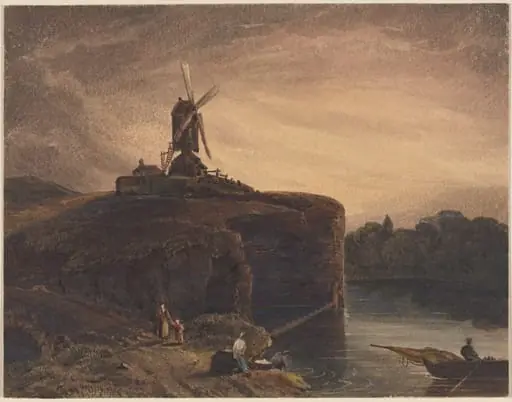
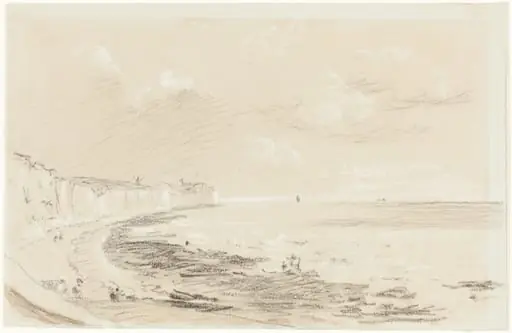
This artist’s short life left behind a quiet obsession with water—whether the churn of a mill wheel, the choppy waves off England’s south coast, or the way light bounces off pond lilies.