Artwork
Four Vultures of Different Kind
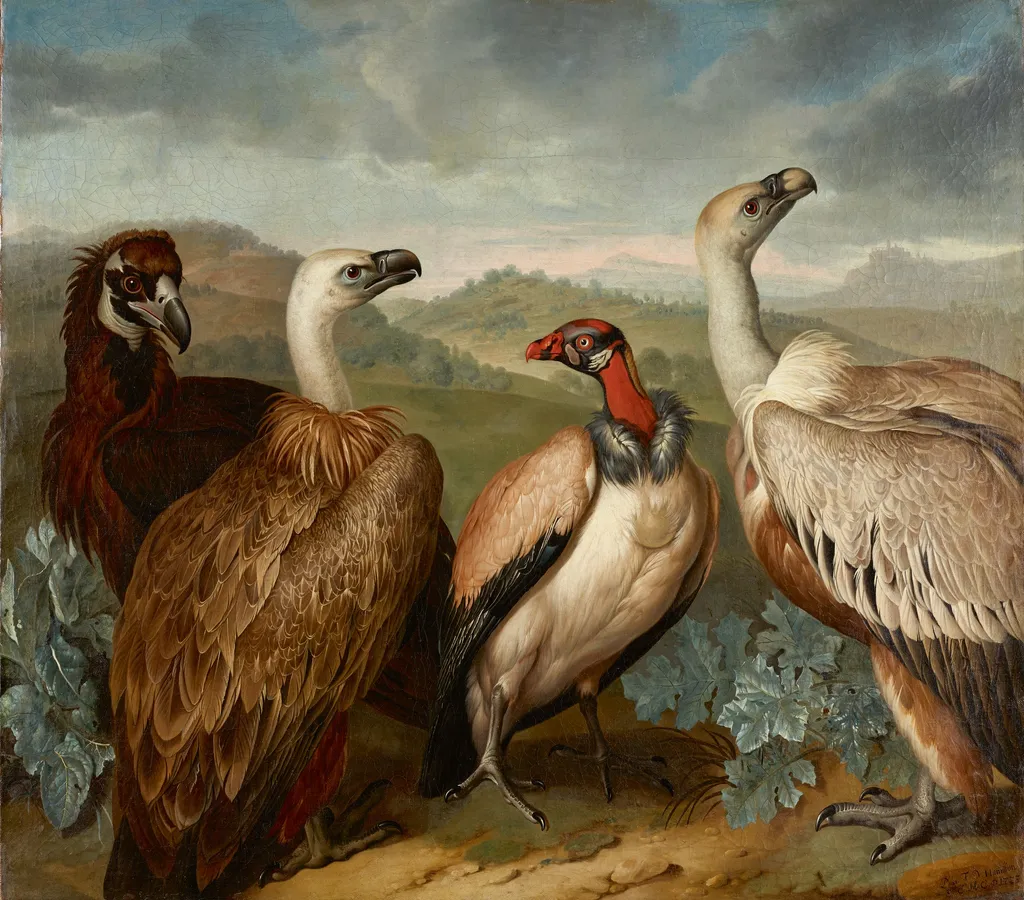
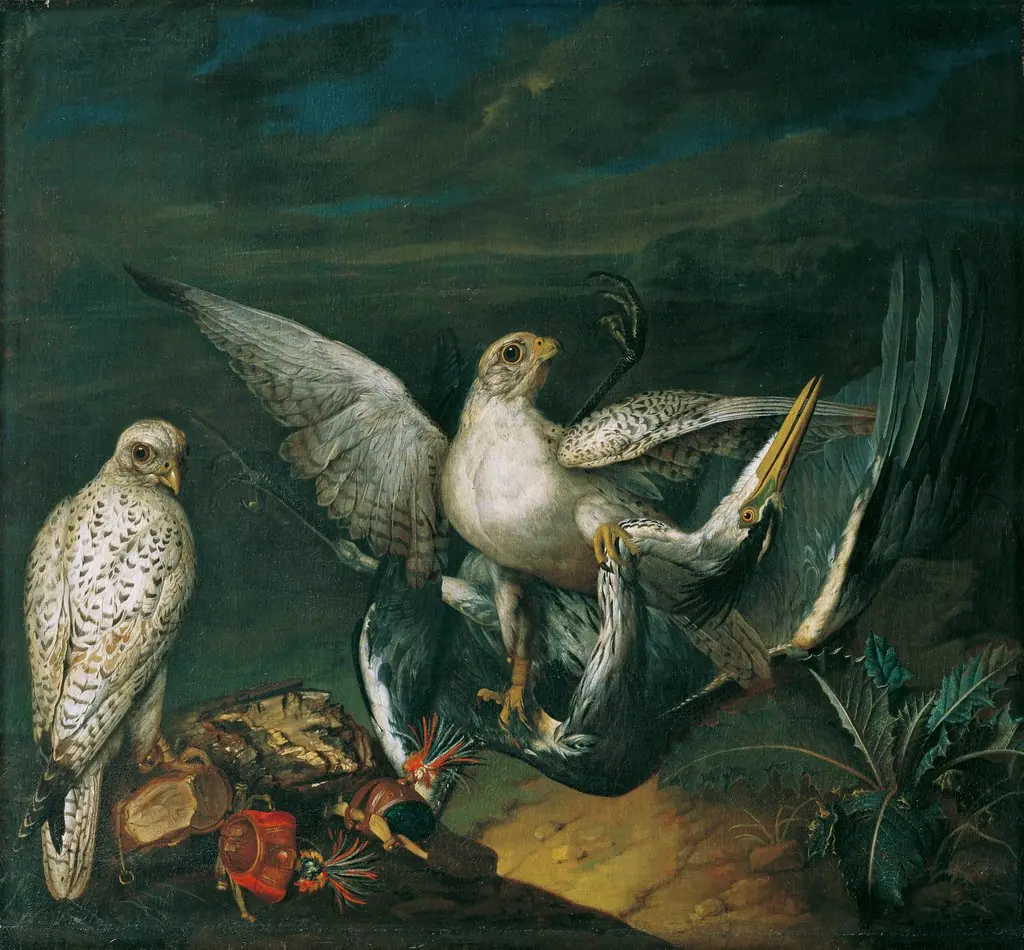
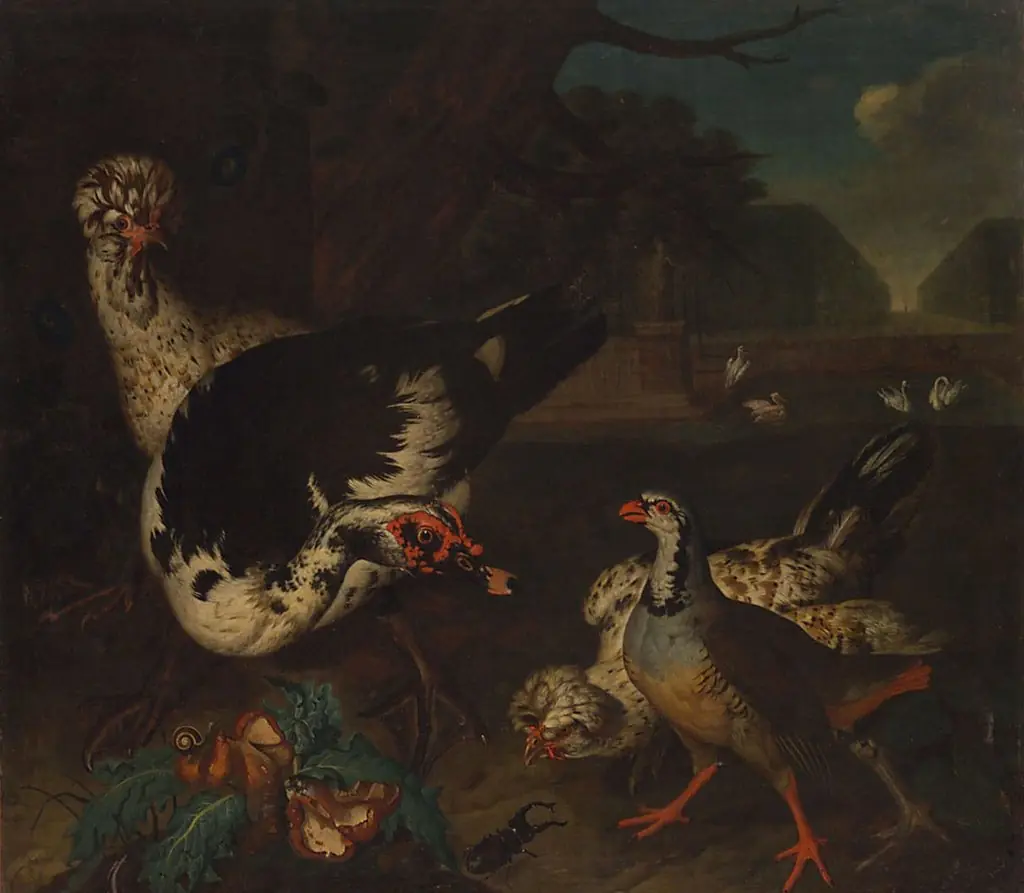
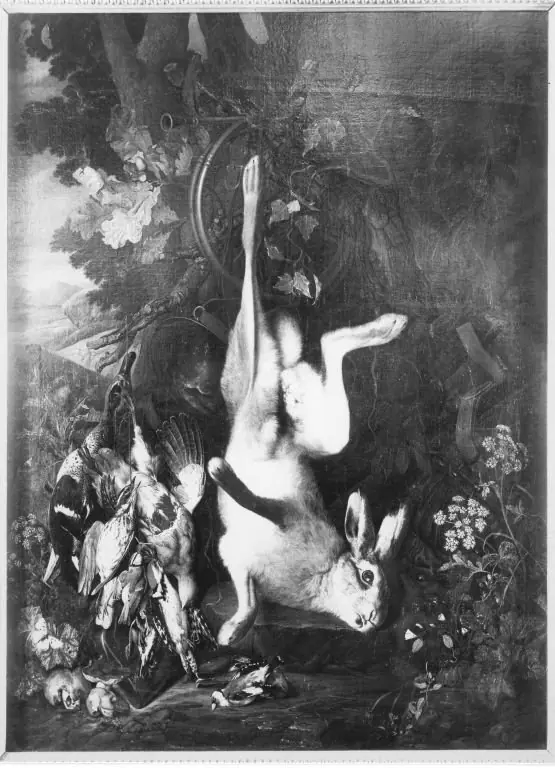
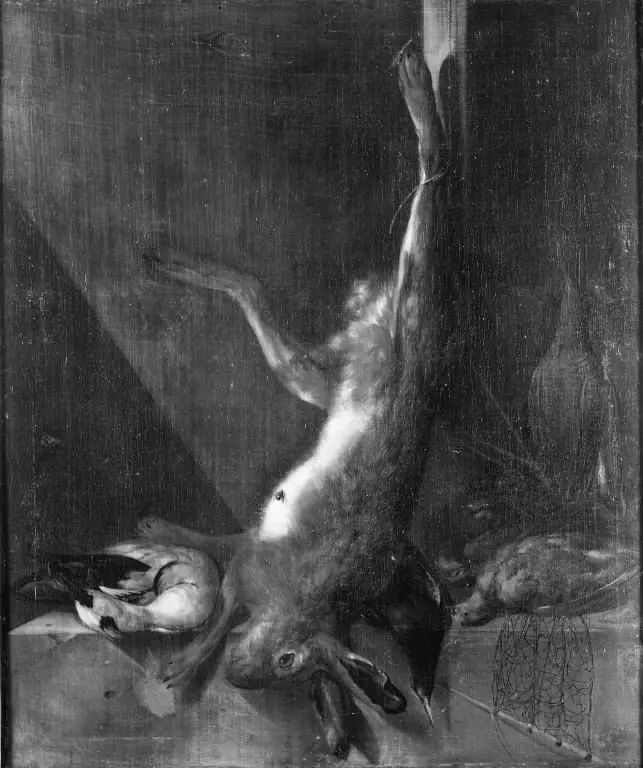
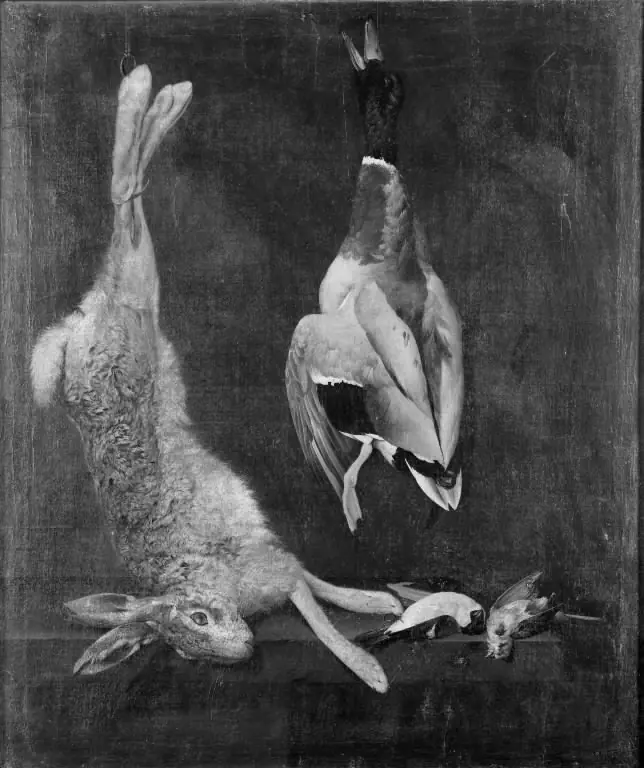
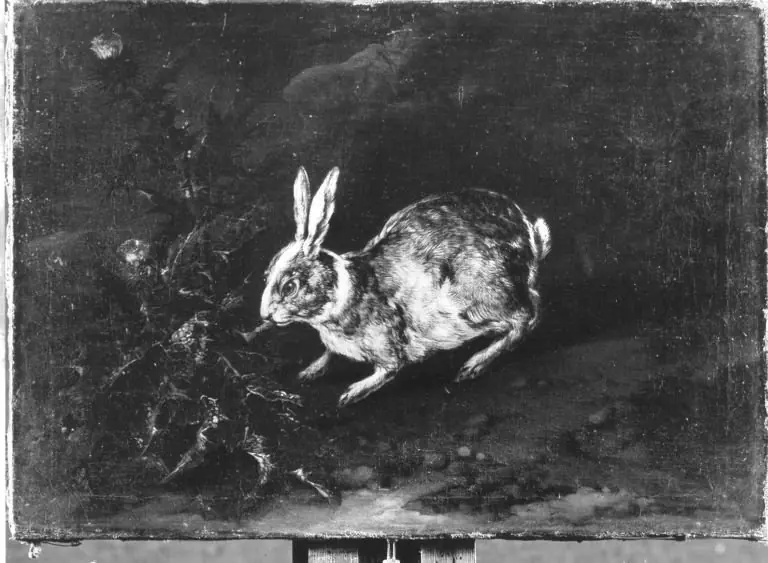
Four Vultures of Different Kind is an oil painting by the Rococo painting artist Philipp Ferdinand de Hamilton. It dates from 1723 and is held in the collection of the Kunsthistorisches Museum.
About this work
Overview
Four Vultures of Different Kind is a 1723 oil painting by Philipp Ferdinand de Hamilton, a Southern Netherlands-born artist active in Austria, now part of the Kunsthistorisches Museum's collection.
Subject & Meaning
The painting's central subject features four distinct vultures, each characterized by unique coloring and feather patterns, arranged in a line and gazing into the distance, their collective pose conveying a sense of unified contemplation.
Technique & Style
Executed in warm, earthy tones with subtle shading, the work achieves depth and textural suggestion. A soft, hazy landscape serves as the background, implying a distant horizon. The overall style aligns with the Rococo movement.
History & Provenance
Created in 1723, the painting is attributed to the Rococo period. Its provenance is documented as part of the Kunsthistorisches Museum's collection, though specific acquisition details are not provided here.
Context
As a Rococo work, Four Vultures of Different Kind reflects the period's emphasis on detail and naturalistic representation, yet its focus on birds of prey is less common within the movement's typical themes of luxury and intimacy.
Legacy
While the painting's direct influence is not highlighted, it remains a characteristic example of Hamilton's oeuvre and the Rococo style's adaptability to diverse subjects within the Kunsthistorisches Museum's holdings.
Own this work as a print
Artist & collection
Artist
Philipp Ferdinand de Hamilton (c. 1664 – 1750), was an 18th-century painter from the Southern Netherlands active in Austria.