Artwork
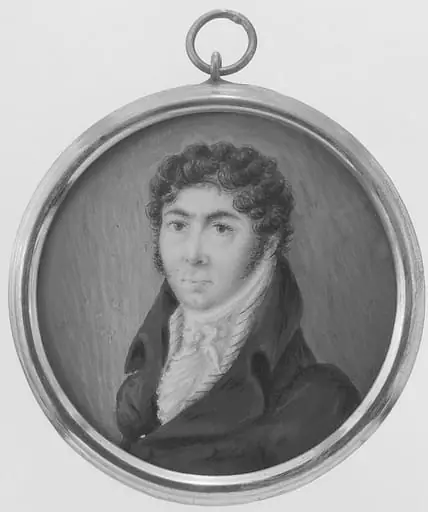
Portrait of a Young Gentleman Surrounded by Cupids; Lord Byron?
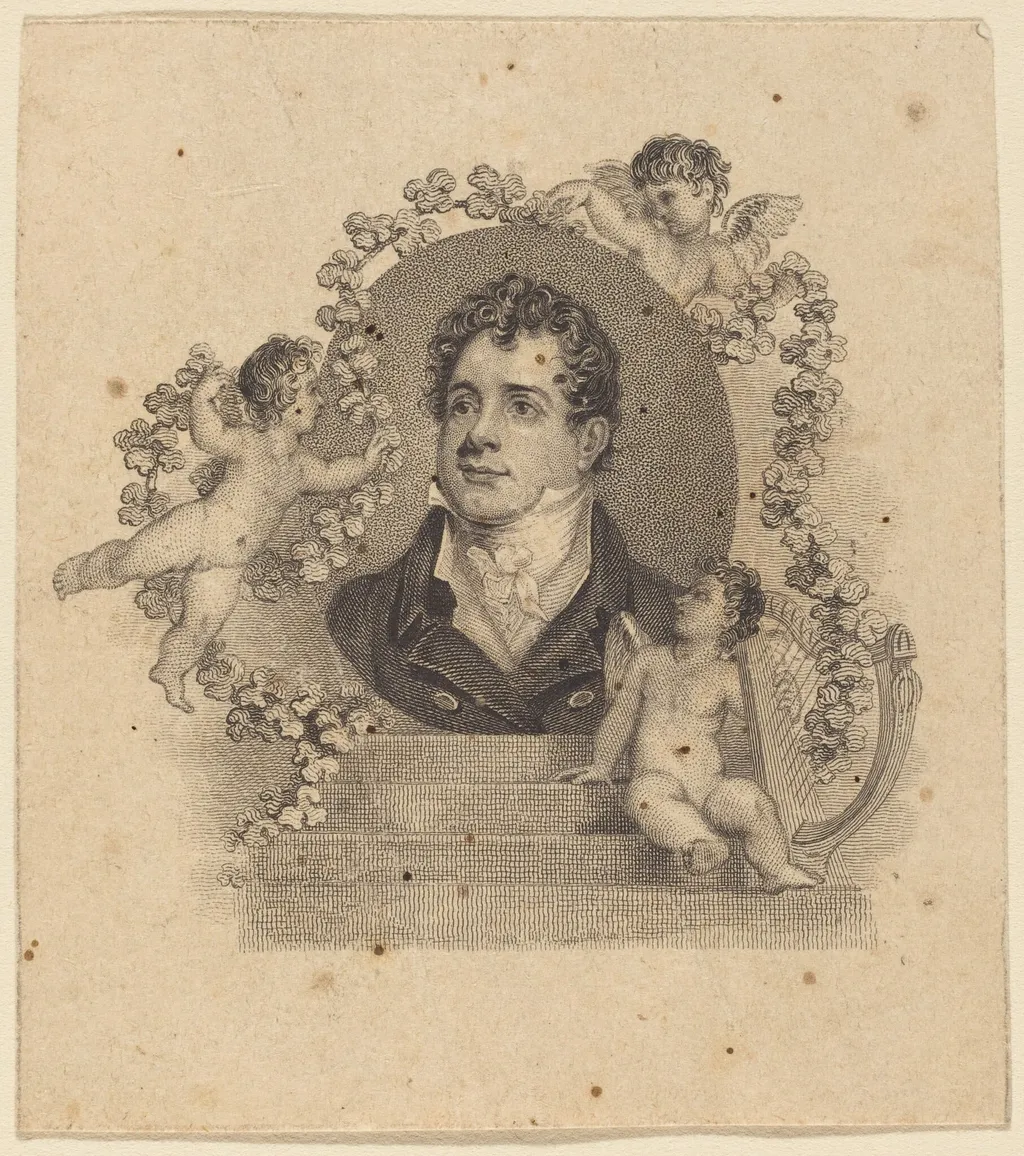
Portrait of a Young Gentleman Surrounded by Cupids; Lord Byron? is an ink print by the Romanticist artist British 19th Century. It dates from 1801 and is held in the collection of the National Gallery of Art. This print is an etching with stipple, a method that uses fine dots to build tone and texture.
About this work
Overview
The delicate handling of light and shadow, along with the ornamental figures, reflects a stylistic preference for lyrical detail over stark realism.
This print is an etching with stipple, a method that uses fine dots to build tone and texture. It portrays a young man in early 19th-century attire, framed by playful cherubs. The delicate handling of light and shadow, along with the ornamental figures, reflects a stylistic preference for lyrical detail over stark realism. The composition balances portraiture with allegorical elements, typical of Romantic-era printmaking.
Subject & Meaning
The seated youth, dressed in a dark coat and white cravat, is surrounded by cherubs engaged with flowers and a lyre. These figures suggest themes of poetic inspiration, youth, and idealized beauty. While sometimes associated with Lord Byron, the identity remains unconfirmed. The imagery evokes a literary sensibility, linking the sitter to classical muses and the romantic ideal of the sensitive, creative soul.
Technique & Style
The artist employed stipple engraving to achieve soft gradations and fine detail, avoiding bold lines in favor of tonal nuance. This technique allowed for a luminous, almost ethereal quality in the skin and fabric. The cherubs and foliage are rendered with delicate, rhythmic dots, enhancing the dreamlike atmosphere. The style aligns with contemporary British printmakers who favored intimacy and texture over dramatic contrast.
History & Provenance
The print likely dates to the 1810s–1820s, a period when literary figures were frequently idealized in visual art. Though its origin is unattributed, it reflects the popularity of engraved portraits of poets and aristocrats during the Romantic era. No definitive record of its first owner or publisher has been established, but it circulated among collectors interested in literary culture and refined graphic art.
Context
Produced during the height of Romanticism, the image responds to a cultural fascination with emotion, nature, and the artist as visionary. Cherubs and floral motifs were common in decorative arts of the time, symbolizing innocence and poetic muse. This print fits within a broader trend of blending portraiture with allegory, particularly in prints meant for private collections rather than public display.
Legacy
Though not widely reproduced or studied today, the work exemplifies how Romantic ideals were translated into intimate graphic forms. It represents a moment when printmaking served as a vehicle for personal and literary expression, bridging the gap between fine art and popular taste. Its quiet elegance continues to reflect the era’s aesthetic values without overt grandeur.
Artist & collection

Artist
This artist’s short life left behind a quiet obsession with water—whether the churn of a mill wheel, the choppy waves off England’s south coast, or the way light bounces off pond lilies.