Artwork
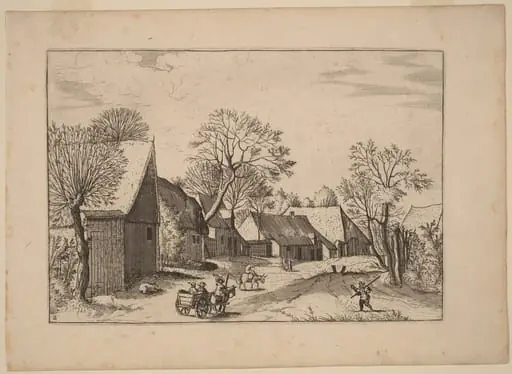
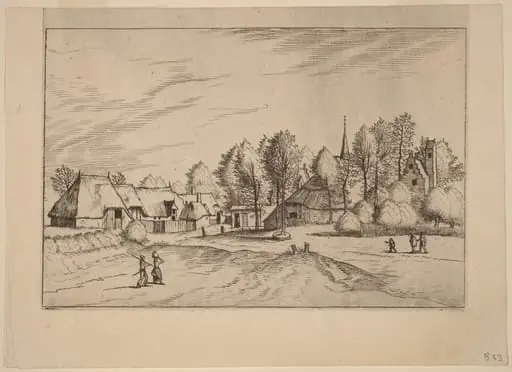
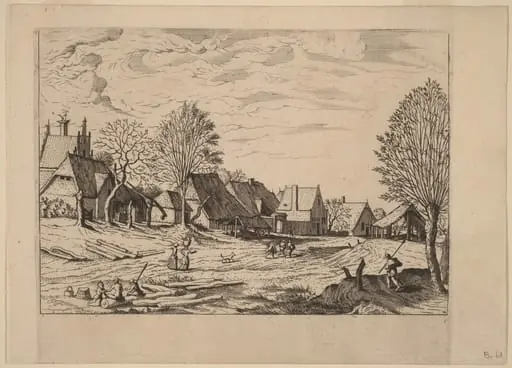
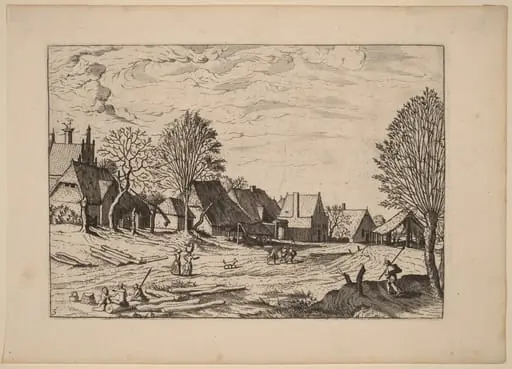
A View in Flanders
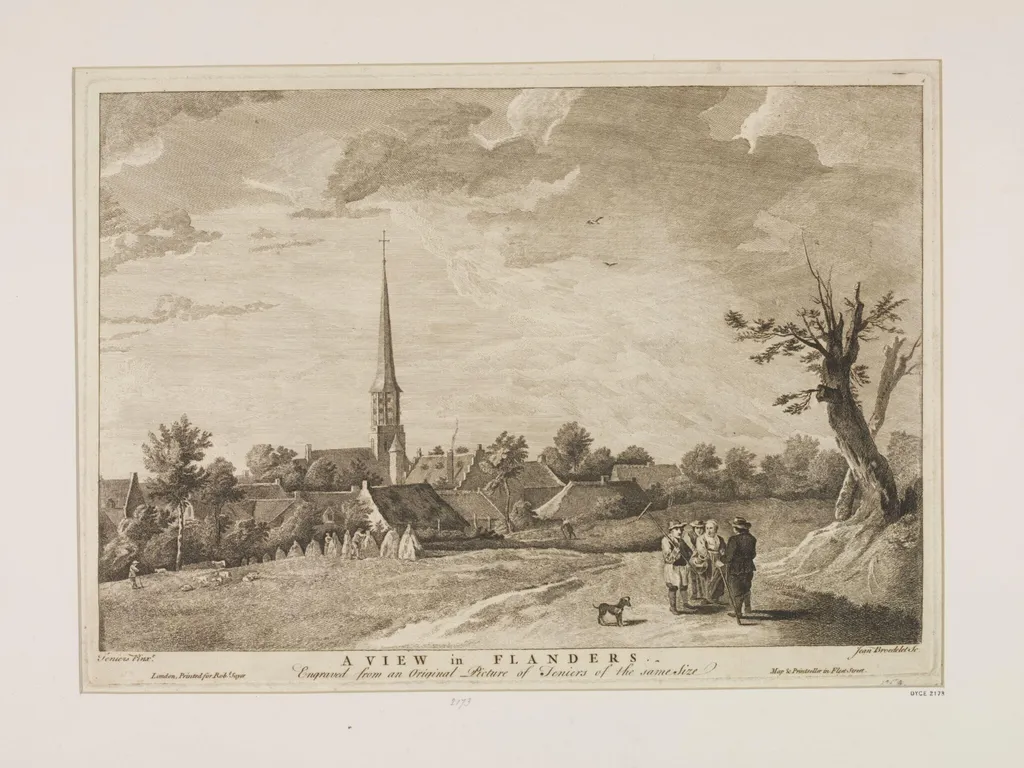
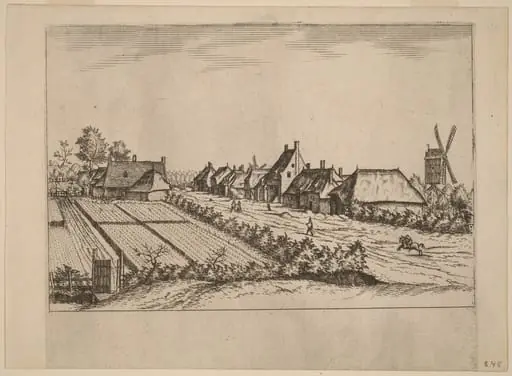
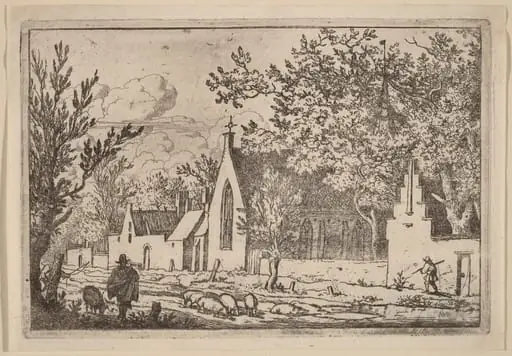
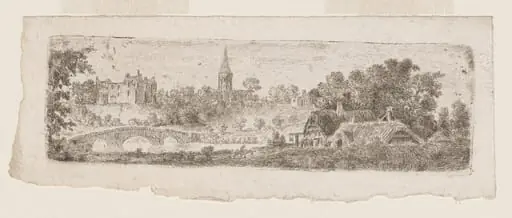
A View in Flanders is a print by Jan Van Broedelet. It dates from 1750 and is held in the collection of the Victoria and Albert Museum.
About this work
Overview
A View in Flanders is a 1750 print by Jan Van Broedelet, made as a reproductive engraving after a composition by David Teniers the Younger.
A View in Flanders is a 1750 print by Jan Van Broedelet, made as a reproductive engraving after a composition by David Teniers the Younger. Executed on paper, it translates Teniers’ original painting into a finely detailed linear format. The work belongs to a tradition of 18th-century printmaking that disseminated popular imagery across Europe, offering accessible versions of established compositions to a broader audience.
Subject & Meaning
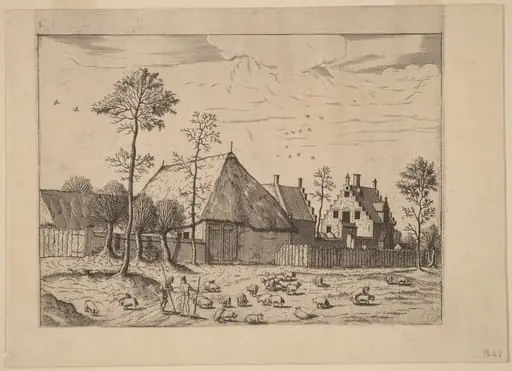
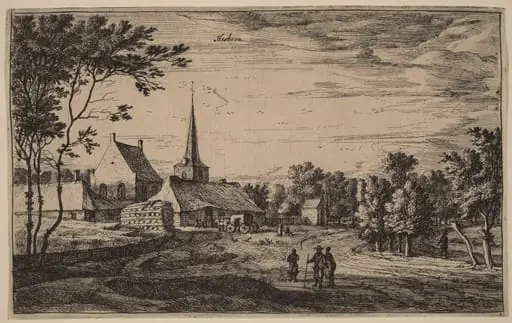
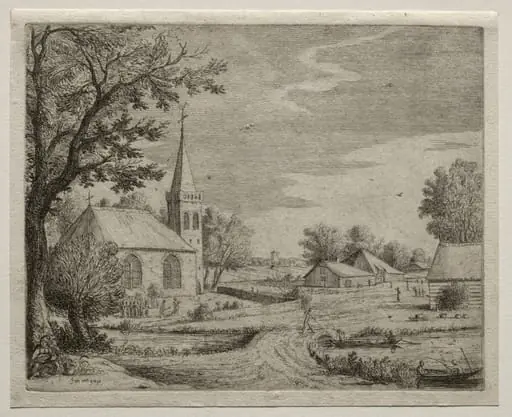
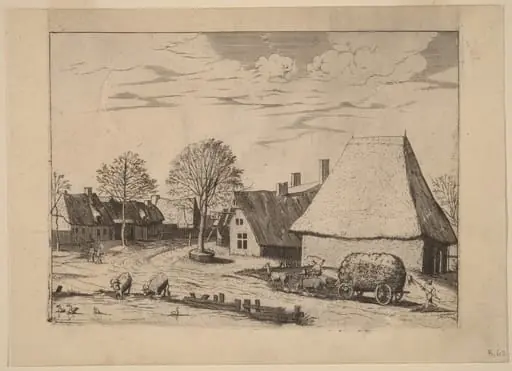
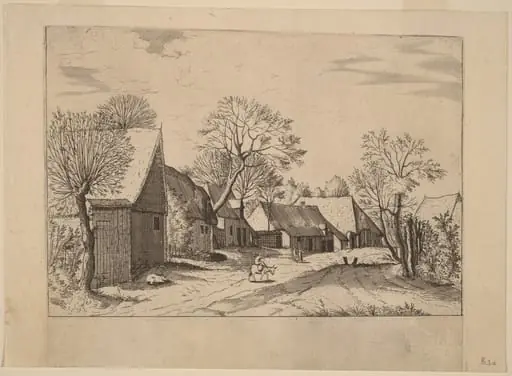
The scene portrays a tranquil Flemish village, centered on a prominent church steeple, with modest dwellings, trees, and a winding path beside a stream. Figures move quietly along the path and gather near a graveyard, suggesting daily rural life and the presence of mortality. The composition avoids drama, instead emphasizing stillness and the quiet rhythm of village existence, typical of Teniers’ genre-inspired landscapes.
Technique & Style
Van Broedelet employed fine, precise engraving lines to render texture and spatial depth. The delicate cross-hatching and controlled stroke work mimic the tonal gradations of a pen-and-ink sketch, capturing the softness of foliage, the solidity of stone buildings, and the subtle contours of the landscape. The absence of color focuses attention on form and line, characteristic of reproductive prints of the period.
History & Provenance
Created in 1750, the print reflects the enduring popularity of David Teniers’ 17th-century scenes in the 18th century. Van Broedelet, active as an engraver in the Southern Netherlands, specialized in reproducing Flemish paintings for collectors and institutions. While the original painting by Teniers is lost or unidentified, this print survives as a documented variant, with examples held in collections such as the Victoria and Albert Museum.
Context
In mid-18th-century Europe, reproductive prints served as both artistic documentation and commercial products. Flemish landscapes, especially those depicting rural life, remained desirable subjects. Van Broedelet’s work aligns with a broader trend of engravers translating earlier Dutch and Flemish masterpieces into accessible formats, catering to an expanding middle-class market interested in regional identity and pastoral imagery.
Legacy
Though not widely known as an original artist, Van Broedelet’s print preserves a visual record of Teniers’ compositional style and the aesthetic preferences of its time. It contributes to the historical understanding of how Flemish imagery was circulated and received beyond the original painting’s audience. Today, such prints are valued as cultural artifacts that bridge artistic traditions across generations.
Own this work as a print
Artist & collection
Artist
Jan Van Broedelet made small prints of everyday places in early 18th-century Flanders.