Artwork
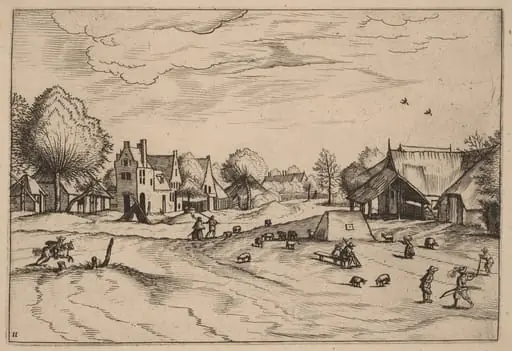
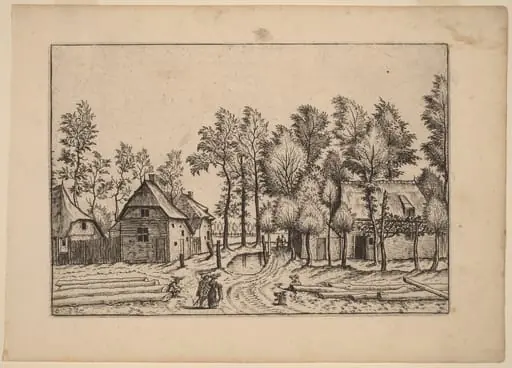
Fields and a Village Road with Post Mill
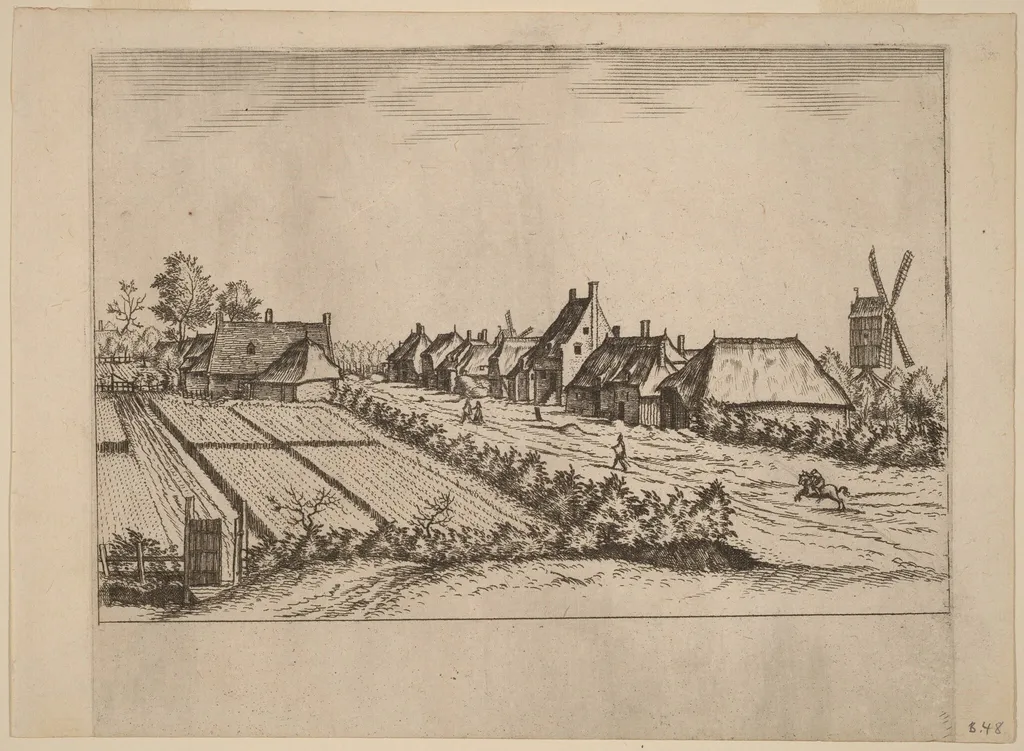
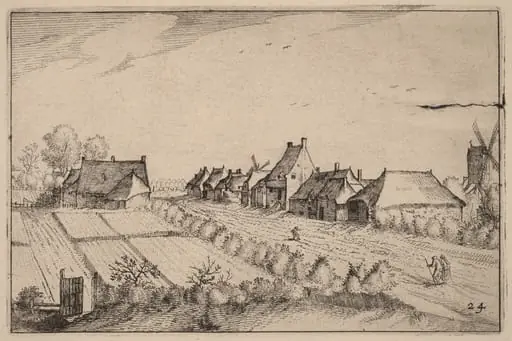
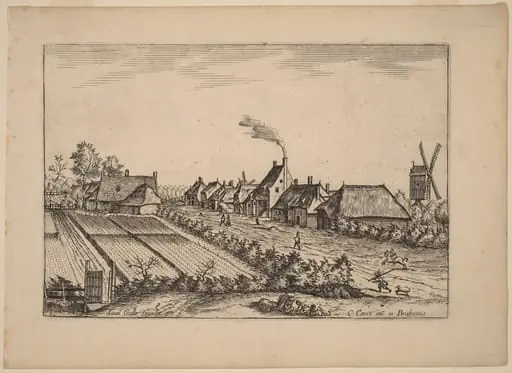
Fields and a Village Road with Post Mill is an ink print by the Renaissance artist Johannes van Doetechum the Elder. It dates from 1560 and is held in the collection of the National Gallery of Art.
About this work
Overview
This work reflects his technical precision and interest in landscape as a subject, executed during his time in Deventer before his move to Haarlem.
Created in 1560 by Johannes van Doetecum the Elder, this print combines etching with selective engraving to render a tranquil Dutch rural scene. Van Doetecum, active in the mid-16th century, was known for translating the compositions of Pieter Bruegel the Elder into print form. This work reflects his technical precision and interest in landscape as a subject, executed during his time in Deventer before his move to Haarlem.
Subject & Meaning
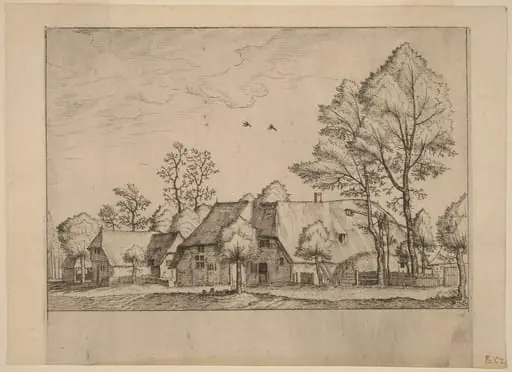
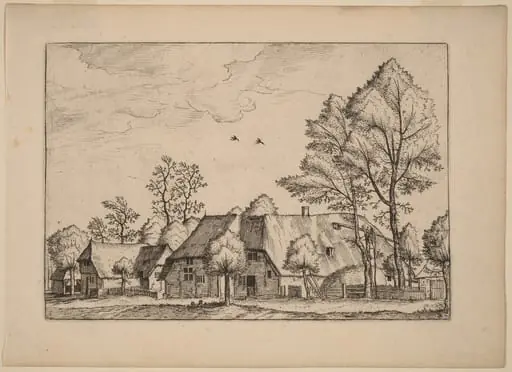
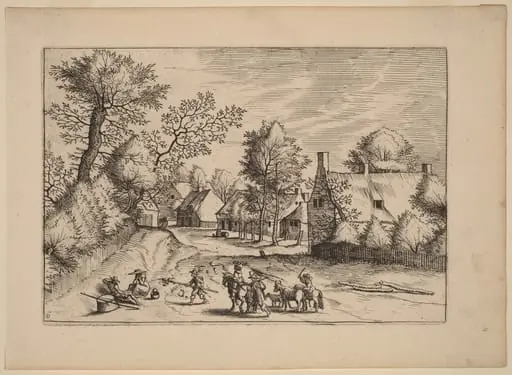
The scene portrays a quiet village road winding through cultivated fields, anchored by a post mill on the right. Small dwellings with thatched roofs, scattered figures, and livestock suggest everyday rural life. The mill, a functional structure vital to local agriculture, serves as the visual and symbolic center, representing the harmony between human labor and the natural environment in the Low Countries.
Technique & Style
Van Doetecum employed fine etched lines to establish the landscape’s tonal range, then reinforced key elements—like the mill’s structure and tree trunks—with engraved incisions for sharper definition. The composition uses receding diagonals and subtle gradations of line to suggest depth. The monochrome palette enhances the quiet, orderly atmosphere, emphasizing texture and spatial arrangement over color.
History & Provenance
The print was made during Van Doetecum’s early career in Deventer, before his relocation to Haarlem in 1578. It belongs to a body of work that adapted Bruegel’s genre scenes for print circulation, meeting demand for affordable, portable images of rural life. While its early ownership is undocumented, it entered institutional collections in the modern era, notably the National Gallery of Art in Washington.
Context
In 16th-century Netherlands, prints like this circulated widely among merchants and scholars, offering accessible glimpses of regional life. The post mill, a common technological feature, symbolized local industry. Van Doetecum’s work reflects a broader trend in Dutch printmaking: elevating ordinary landscapes and labor into subjects worthy of artistic attention, distinct from religious or mythological themes.
Legacy
Van Doetecum’s prints helped disseminate the visual language of Bruegel’s rural scenes across Europe. Though less celebrated than his contemporaries, his technical skill in combining etching and engraving influenced later landscape printmakers. This work remains a quiet testament to the dignity of everyday rural existence in the early modern Low Countries.
Own this work as a print
Artist & collection

Artist
Johannes van Doetechum the Elder
Joannes van Doetecum the Elder (1530 – 1605) was a Dutch engraver-cartographer known for his etched works after genre scenes by Pieter Bruegel the Elder and maps of various cities in the Netherlands.