Artwork
Hesbeen
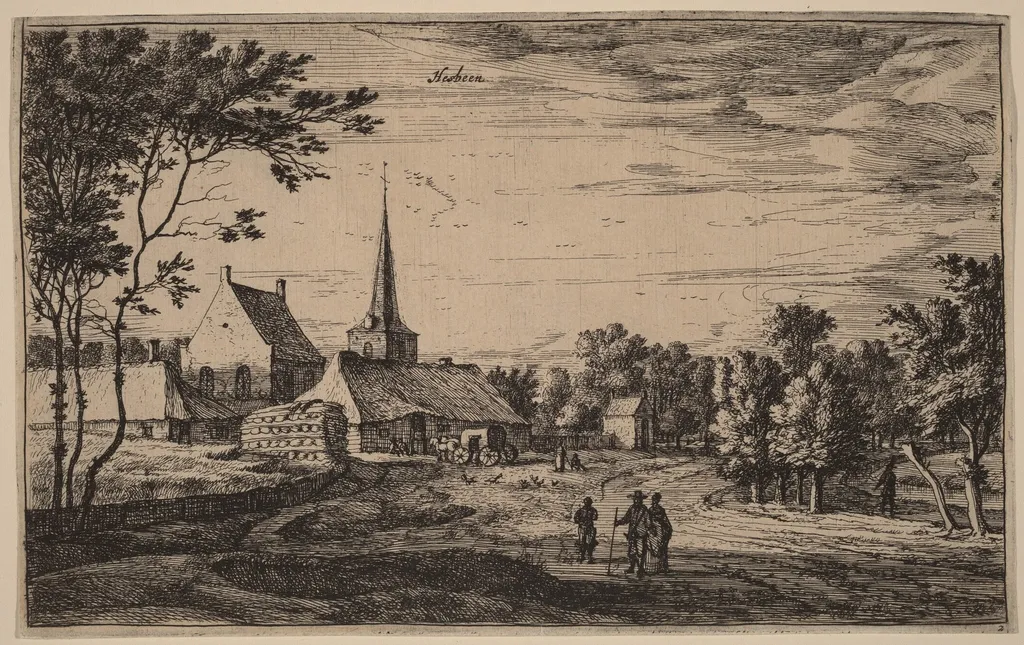
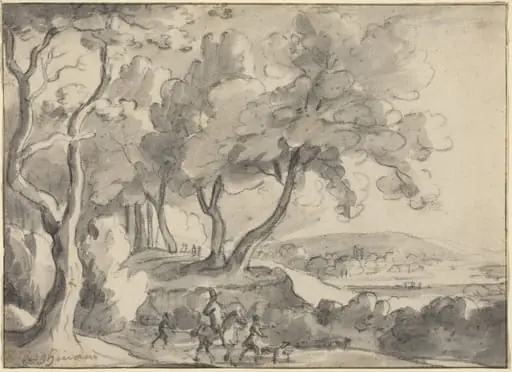
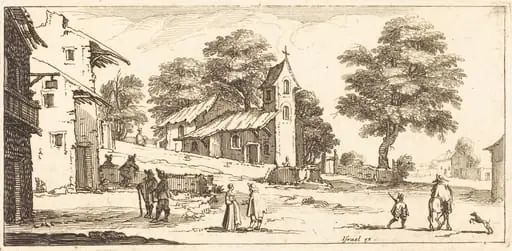
Hesbeen is an ink print by the Baroque artist Roelant Roghman. It dates from 1660 and is held in the collection of the National Gallery of Art.
About this work
Overview
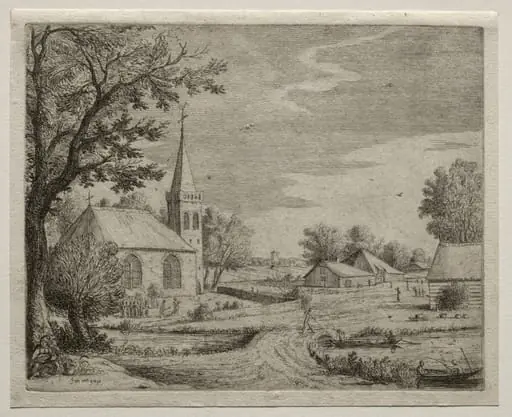
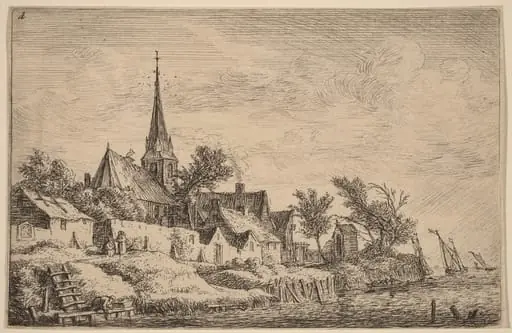
The composition is anchored by two figures strolling along the bank, one bearing a long pole, while trees frame the scene’s periphery.
Roelof Roghman’s 1660 etching titled “Hesbeen” depicts a tranquil Dutch riverside settlement. Executed on laid paper, the monochrome print presents a modest village centered around a church with a soaring steeple, flanked by thatched cottages and bordered by a calm waterway. The composition is anchored by two figures strolling along the bank, one bearing a long pole, while trees frame the scene’s periphery.
Subject & Meaning
The work captures everyday life in the small town of Hesbeen, emphasizing the harmony between architecture, nature, and human activity. The placement of the church suggests its central role in community life, while the leisurely walk of the figures conveys a sense of peaceful routine. The still water and parked boats reinforce the calm, reflective atmosphere of the locale.
Technique & Style
Roghman employed traditional copper-plate etching, incising fine lines that translate into subtle tonal variations on the laid paper. The artist’s use of linear perspective creates depth, allowing foreground elements such as the figures and trees to recede toward the distant horizon. The restrained palette of black ink against the paper’s texture highlights structural details without relying on color.
History & Provenance
Created in the mid‑seventeenth century, the print reflects the Dutch Golden Age’s interest in topographical representation. While specific ownership records are scarce, the piece has been documented in several European print collections, underscoring its value as a visual record of a lesser‑known settlement during that period.
Context
During the 1660s, Dutch artists frequently produced etchings of towns and landscapes to satisfy a growing market for topographical prints. Roghman’s work aligns with this trend, offering both an aesthetic portrayal and a documentary glimpse of rural life, complementing contemporary maps and travel accounts of the Netherlands.
Artist & collection