Artwork
Hillsborough, from the Capstone, Ilfracombe
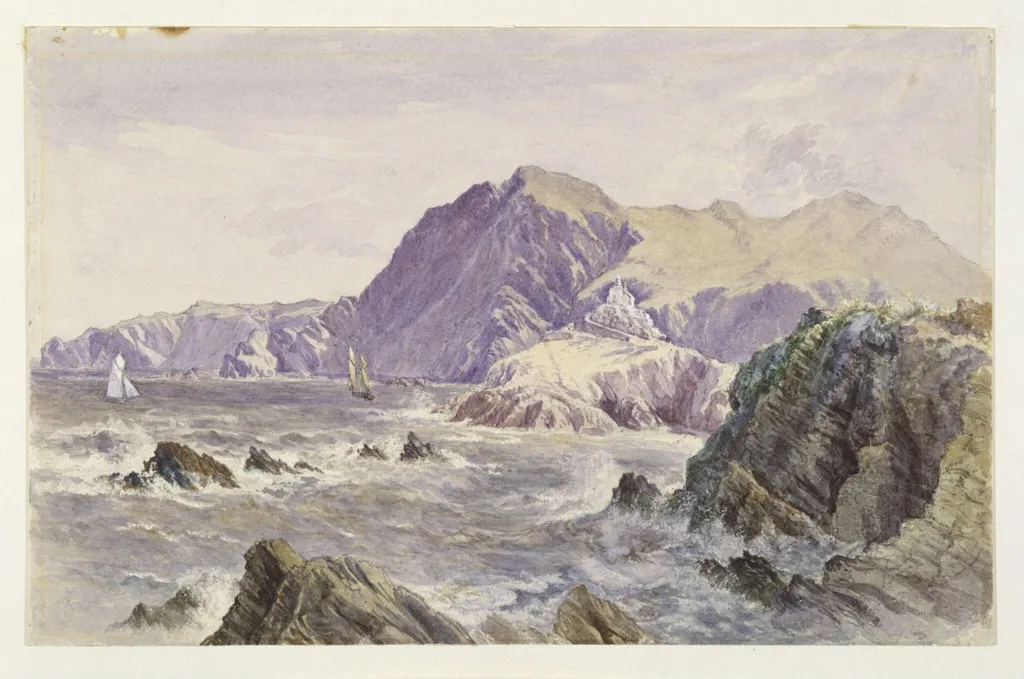
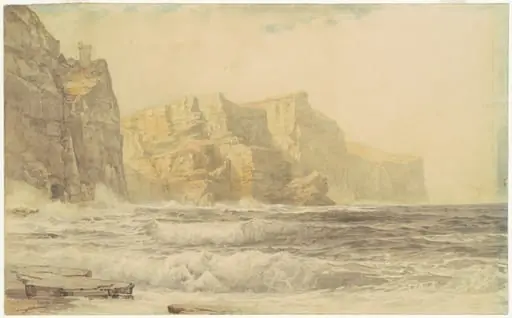
Hillsborough, from the Capstone, Ilfracombe is a watercolor work on paper by the Impressionist artist A. Newton Brooke. It dates from 1883 and is held in the collection of the Victoria and Albert Museum. Painted in 1883, this watercolour captures the coastal landscape of Hillsborough as seen from the Capstone in Ilfracombe.
About this work
Overview
The composition focuses on the rugged shoreline, with cliffs rising above a turbulent sea and two small vessels adrift near the rocks.
Painted in 1883, this watercolour captures the coastal landscape of Hillsborough as seen from the Capstone in Ilfracombe. The work is executed in transparent washes, emphasizing the transient effects of light and weather. The composition focuses on the rugged shoreline, with cliffs rising above a turbulent sea and two small vessels adrift near the rocks. The artist’s approach favors immediacy over detail, conveying the atmosphere of the place rather than its precise topography.
Subject & Meaning
The scene presents a quiet, unidealized view of the North Devon coast, devoid of human figures or architectural landmarks. The presence of two boats suggests local maritime activity, but their small scale underscores nature’s dominance. The painting reflects a contemplative engagement with the landscape—not as a picturesque postcard, but as a dynamic, elemental environment shaped by wind, tide, and time.
Technique & Style
Loose, rapid brushwork defines the water’s movement and the weathered rock surfaces. The artist employed wet-on-wet techniques to blend soft purples and grays in the distant hills, creating a hazy atmospheric effect. Contrasting with the fluid sea, the cliffs are rendered with dry, textured strokes that suggest erosion and solidity. The lack of fine detail reinforces a sense of spontaneity, aligning with observational practices common in late 19th-century British watercolour.
History & Provenance
The work was completed in 1883 during a period when British artists increasingly turned to coastal sites for direct study of natural light and form. While its early ownership is undocumented, it entered a public collection in the 20th century. Its survival as a modest watercolour from this era reflects a growing appreciation for informal, plein-air studies over grander academic compositions.
Context
This piece emerged amid a broader shift in British art toward realism and direct observation. Artists were moving away from idealized landscapes toward depictions of everyday natural environments, often influenced by French Barbizon painters and the rise of amateur watercolour societies. Ilfracombe, a growing seaside resort, attracted such artists seeking unspoiled coastal views and challenging weather conditions for study.
Legacy
Though not widely exhibited or reproduced, the painting contributes to a quiet tradition of British watercolour that valued sincerity over spectacle. Its emphasis on transient conditions and unembellished form influenced later generations of regional artists who sought to document the British coastline with honesty and restraint, preserving a record of place through subtle, observational means.
Own this work as a print
Artist & collection
Artist
This guy Brooke painted watercolors like he was packing for a trip—just the right gear, no excess.

 St. David's Head, St. Bride's Bay
 View on the Welsh Coast
 Seascape with Rocks
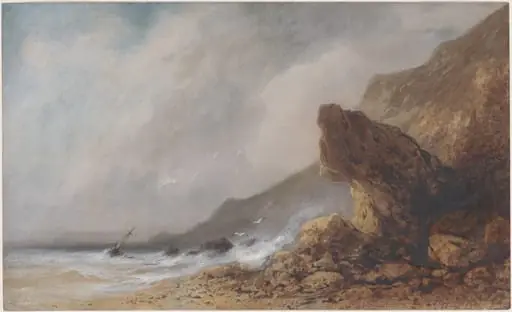 A Rocky Seacoast in a Storm
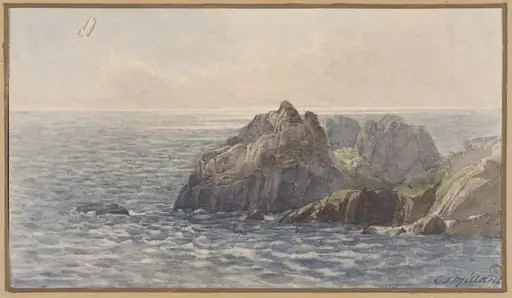 Sea Piece - Twilight
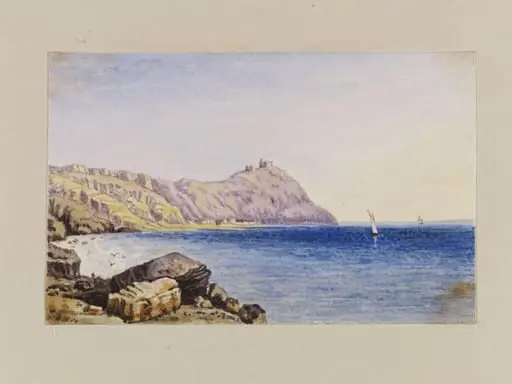 Carmel
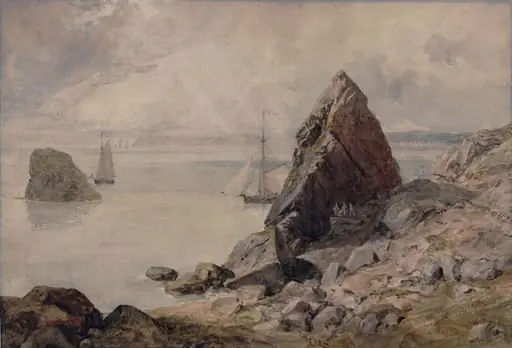 The Shag Rock, Tor Bay
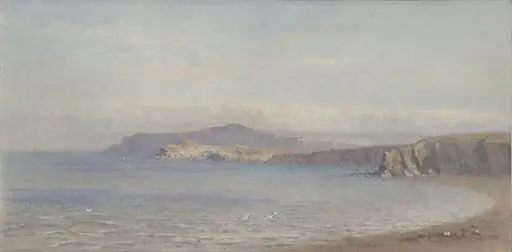 Newquay Bay, Cornwall
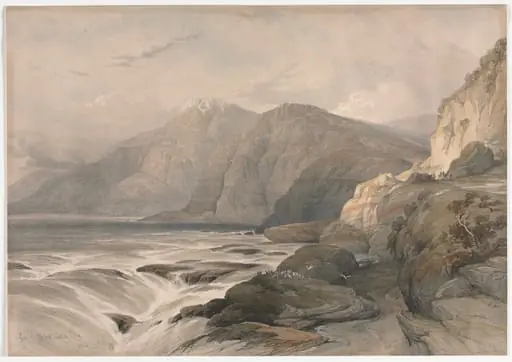 Coast of Syria
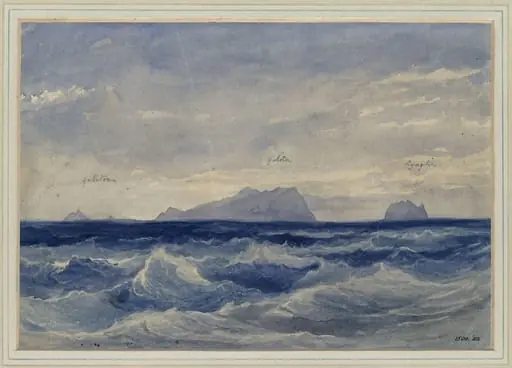 The islands of Galita, Galitona and Aguglia, off the coast of Tunis
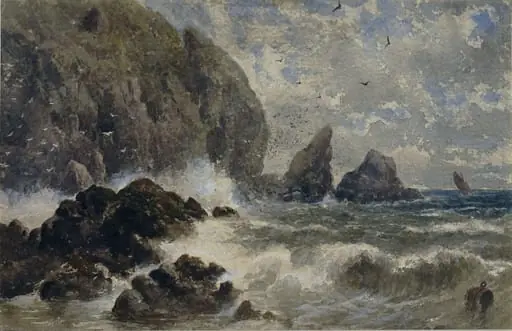 Seascape
 Baldart Castle, Kilkee, County Clare, Ireland