Artwork
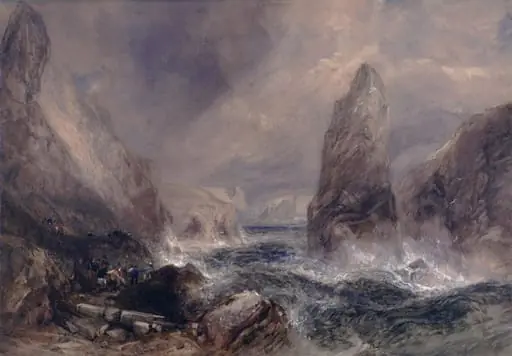
A Rocky Seacoast in a Storm
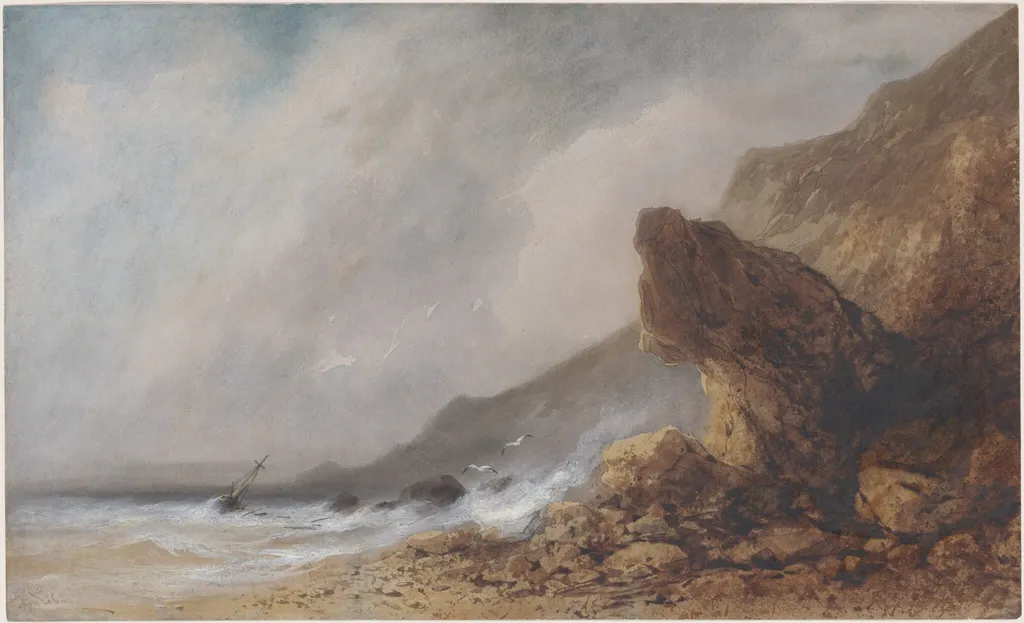
A Rocky Seacoast in a Storm is a gouache drawing by the Romanticist artist Gabriel Hippolyte Lebas. It dates from 1844 and is held in the collection of the National Gallery of Art. Created around 1844, this watercolor and gouache drawing on wove paper depicts a turbulent coastal scene.
About this work
Overview
Created around 1844, this watercolor and gouache drawing on wove paper depicts a turbulent coastal scene. The work captures the raw energy of nature through layered washes and opaque highlights, emphasizing the interplay of rock, sea, and sky. Its modest scale and delicate medium contrast with the forceful subject, reflecting a quiet but intense engagement with the sublime.
Subject & Meaning
The scene portrays a rugged shoreline battered by a storm, with churning waves crashing against dark, weathered rocks. Gulls wheel above the chaos, their small forms underscoring the vastness and indifference of the natural world. No human presence interrupts the scene, reinforcing a Romantic sensibility that finds awe and melancholy in nature’s untamed power.
Technique & Style
Lebas employed watercolor as a base, building texture with gouache for opaque highlights on foam and cloud edges, and gum arabic to control flow and sheen. The palette is restrained—grays, browns, and whites—yet the layering creates depth and movement. Brushwork is precise yet fluid, balancing atmospheric softness with the jagged solidity of the rocks.
History & Provenance
The work is attributed to Gabriel Hippolyte Lebas, a French artist active in the mid-19th century. While not widely documented in major collections, it aligns with the practices of lesser-known Romantic draftsmen who focused on landscape studies. Its survival suggests it was likely kept in private hands or used as a preparatory study rather than a public exhibition piece.
Context
Emerging during the height of Romanticism, the piece reflects a broader European interest in nature’s emotional and spiritual dimensions. Lebas’s focus on a solitary, untamed coast echoes contemporaries like Turner and Constable, though his approach is more intimate and less theatrical, favoring quiet observation over dramatic spectacle.
Legacy
Though Lebas remains a peripheral figure in art history, this work contributes to the understudied tradition of French Romantic watercolor. Its technical restraint and emotional restraint offer insight into how artists of the period conveyed the sublime without grandeur, influencing later generations who valued subtlety over spectacle in landscape representation.
Artist & collection


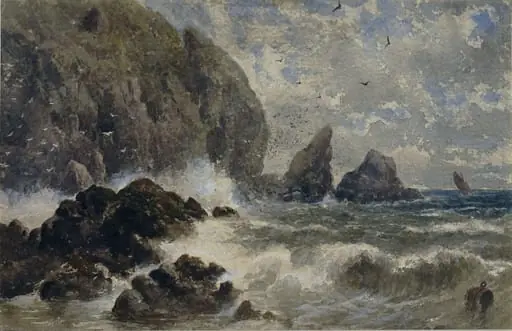 Seascape
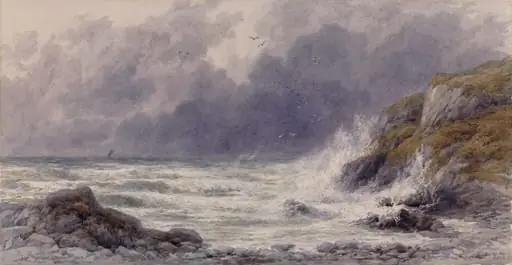 Squally Weather on the Welsh Coast
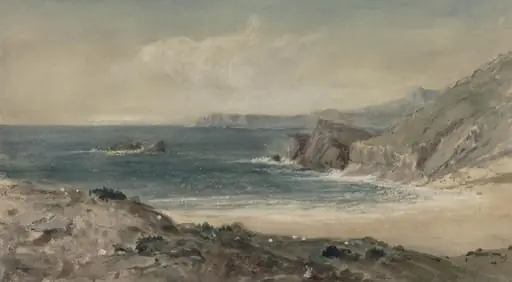 St. David's Head, St. Bride's Bay
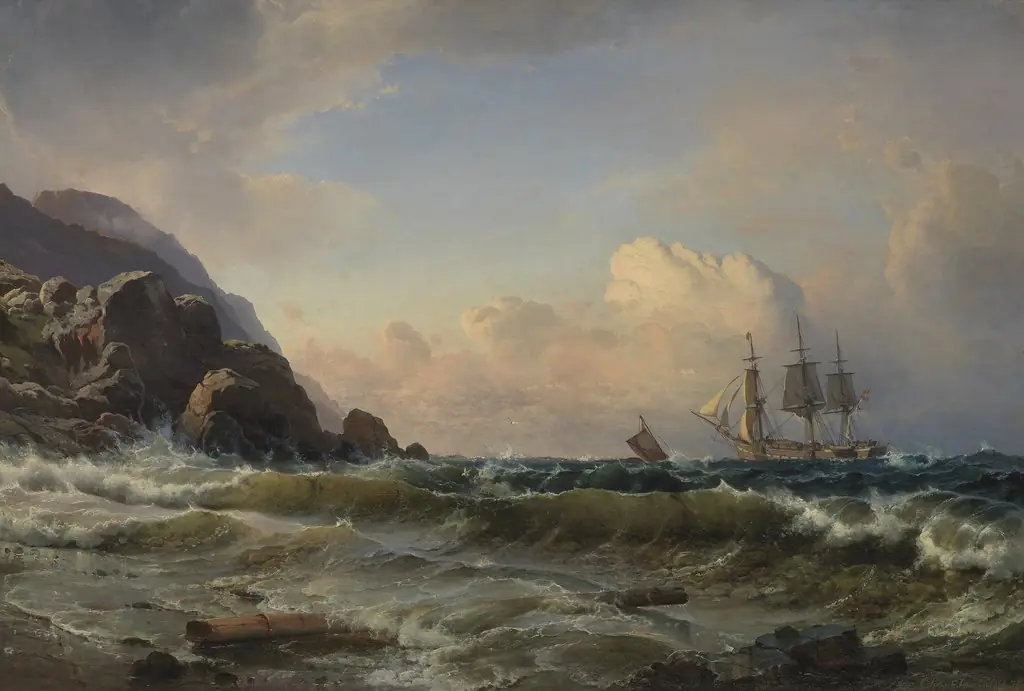 A Norwegian Coastline
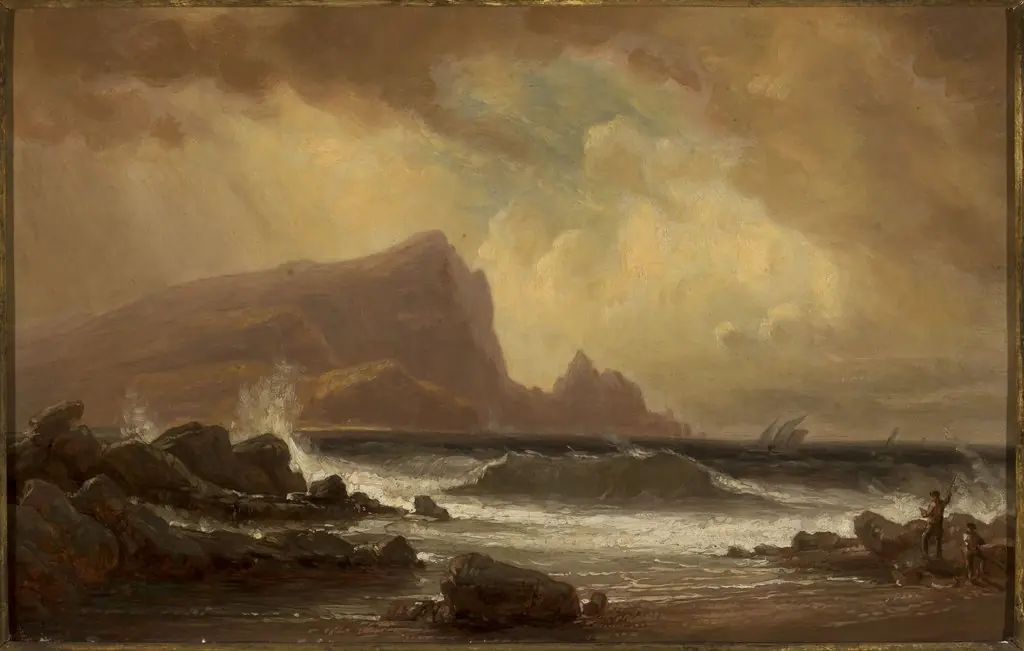 Coast of Portugal
 A Norwegian Coastline
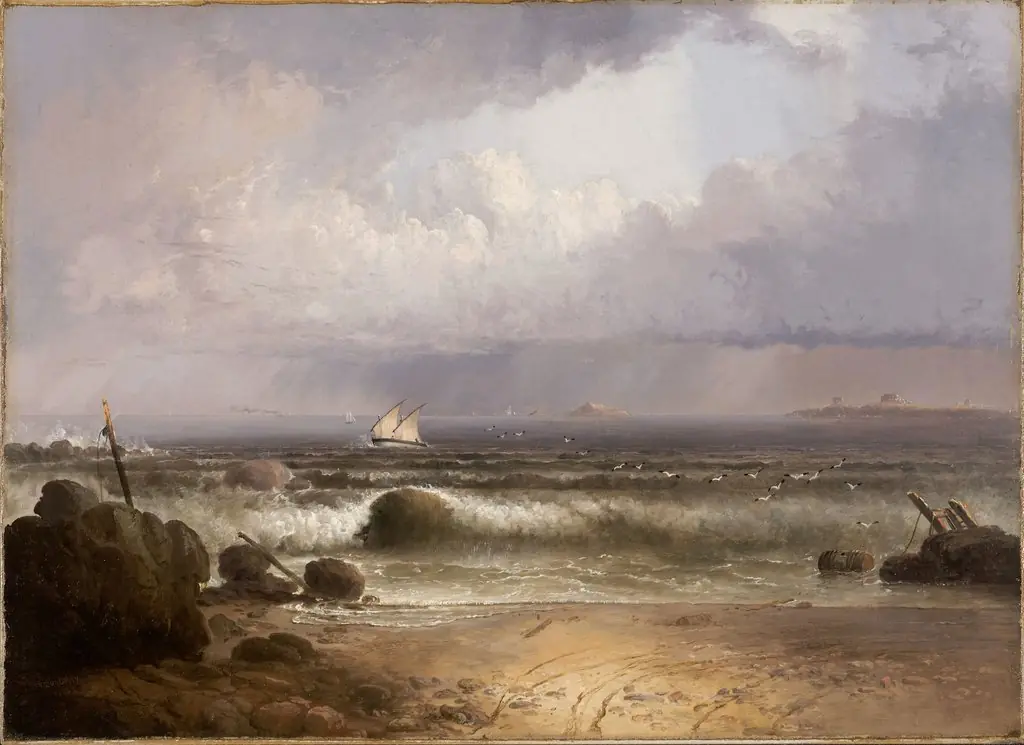 Coming Squall (Nahant Beach with a Summer Shower)
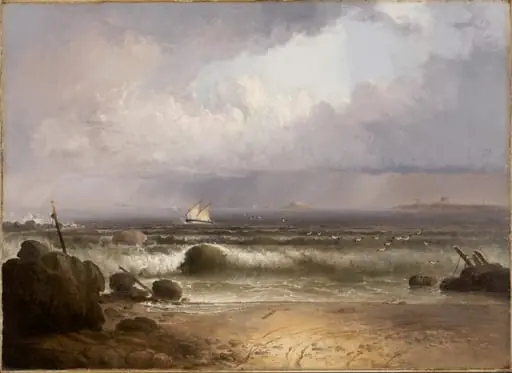 Coming Squall (Nahant Beach with a Summer Shower)
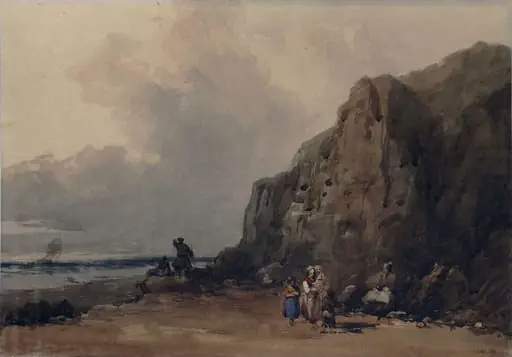 Coast scene, Isle of Wight
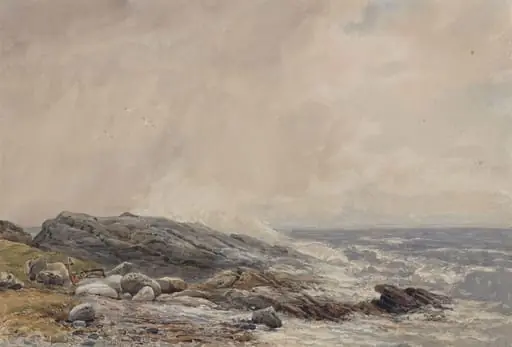 Corrie, Isle of Arran
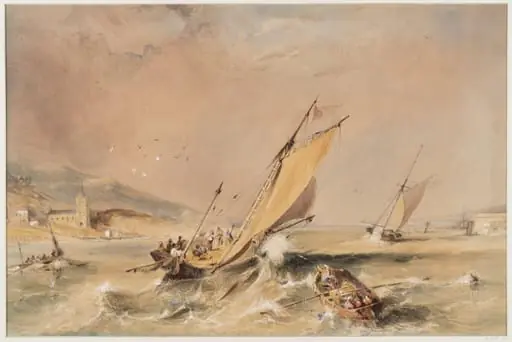 Untitled
 Kynance Cove, Cornwall