Artwork
Beggars' neighborhood
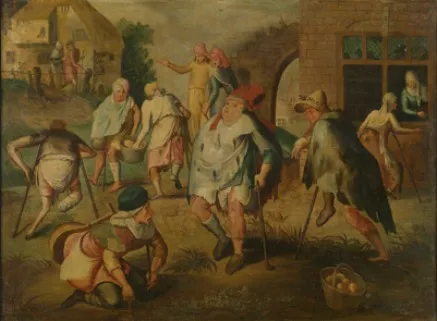
Beggars' neighborhood is an unspecified painting by the Northern Renaissance artist Master of the Prodigal Son. It dates from 1550 and is held in the collection of the Royal Museums of Fine Arts of Belgium.
About this work
The painting is a good example of the work of the Master of the Prodigal Son, who was active in the 16th century.
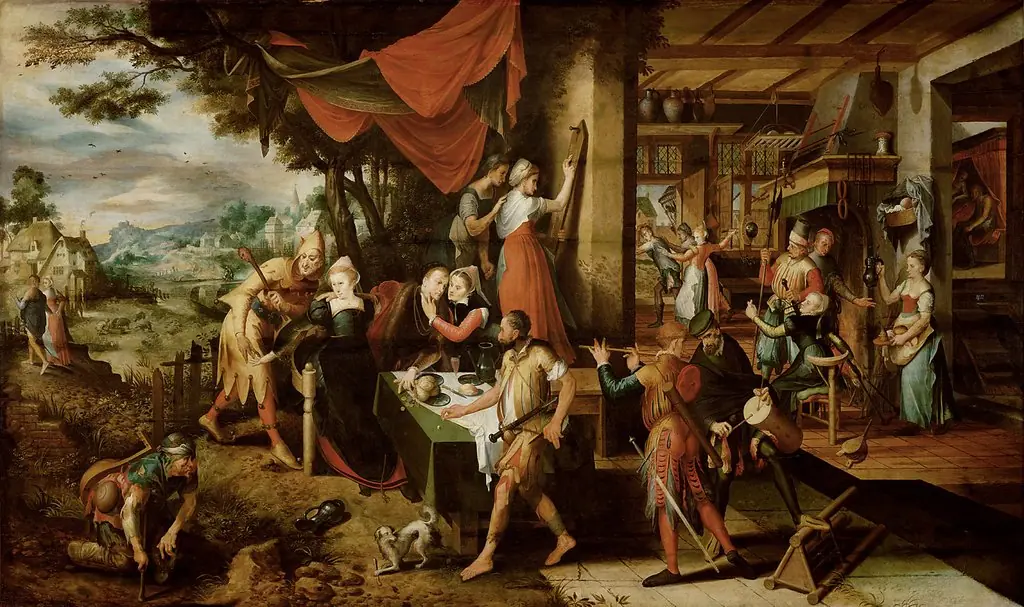
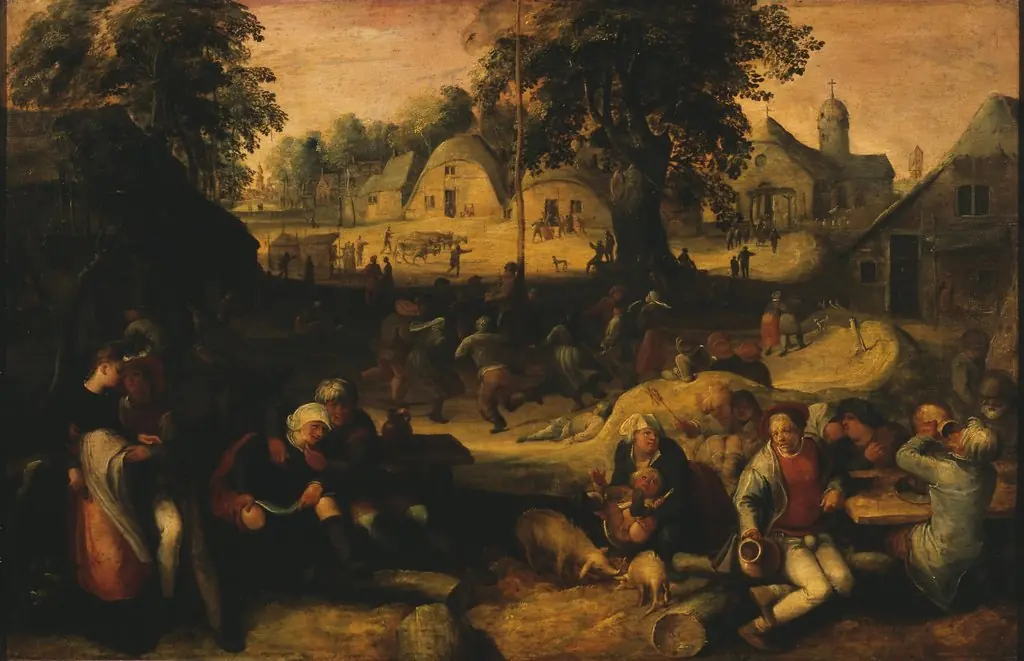
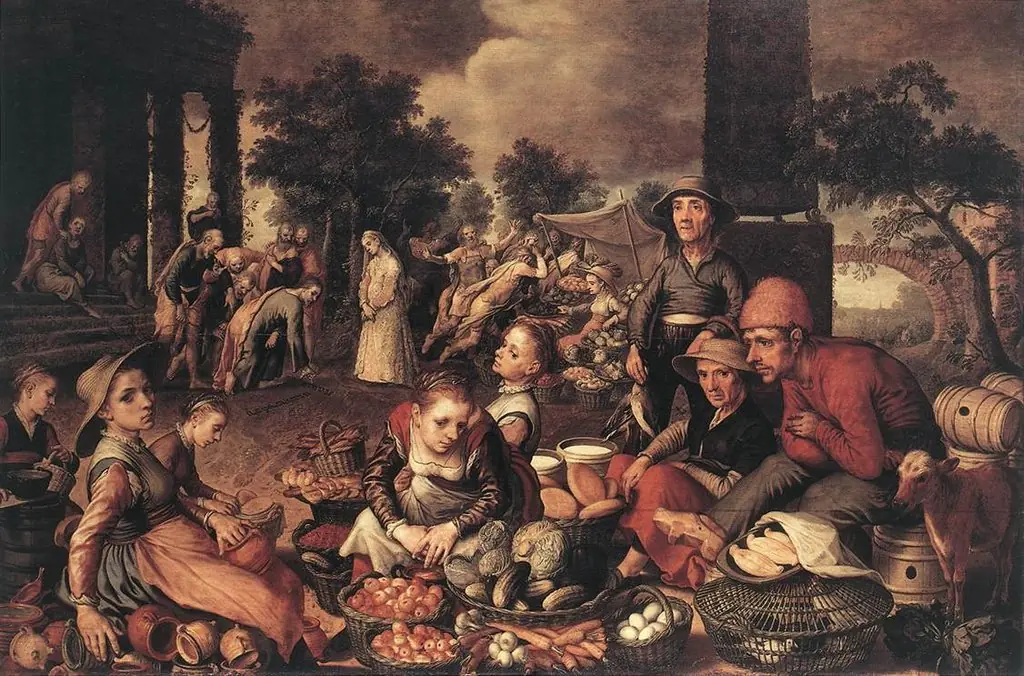
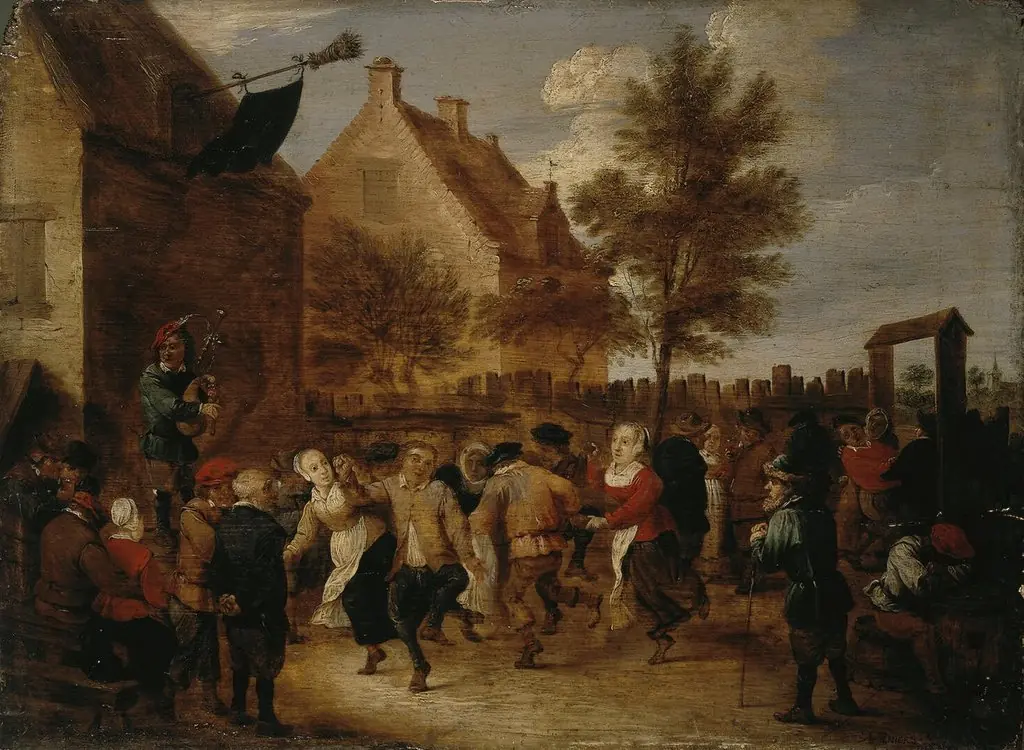
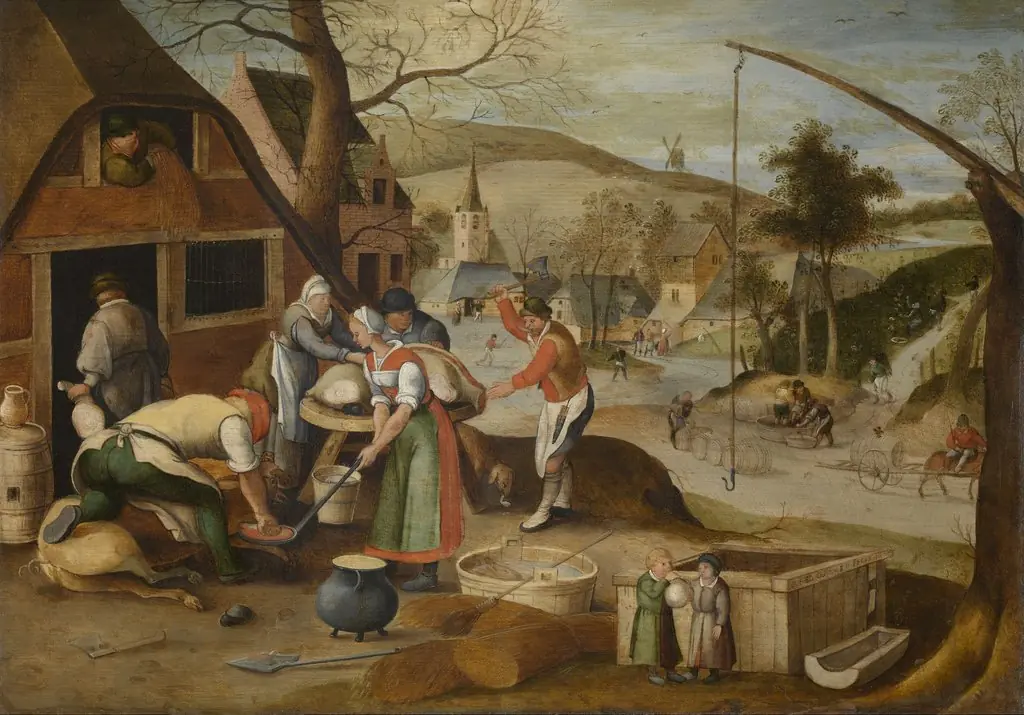
This painting shows a group of people gathered in a village. They are dressed in old-fashioned clothing, and some of them are holding sticks or baskets. In the background, there are buildings and trees.
The people in the painting seem to be going about their daily business. Some of them are talking to each other, while others are working or walking around. The atmosphere of the painting is peaceful and calm.
The painting is a good example of the work of the Master of the Prodigal Son, who was active in the 16th century. To learn more about the artist's use of chiaroscuro, impasto, and sfumato, look up Master of the Prodigal Son.
Overview
Created around 1550, *Beggars' Neighborhood* is an oil painting attributed to the Master of the Prodigal Son, a Flemish artist active in Antwerp during the mid‑sixteenth century. The work belongs to the Northern Renaissance and is held by the Royal Museums of Fine Arts of Belgium. It illustrates a modest urban scene, reflecting the genre interests of the period.
Subject & Meaning
The composition gathers a group of villagers engaged in everyday activities: some converse, others carry sticks or baskets, and a few appear to be working. The setting, with modest dwellings and trees in the distance, conveys a calm portrayal of poverty and communal life in a small town.
Technique & Style
Executed in the mannerist style prevalent in Flemish workshops, the painting employs subtle chiaroscuro to model figures and a modest use of impasto for texture. Soft transitions of tone suggest a restrained sfumato, contributing to the tranquil atmosphere of the scene.
History & Provenance
The Master of the Prodigal Son ran a sizable workshop between 1530 and 1560, producing religious, landscape, genre, and allegorical works. *Beggars' Neighborhood* entered the collection of the Royal Museums of Fine Arts of Belgium, where it remains on display as an example of mid‑sixteenth‑century Flemish painting.
Context
During the Northern Renaissance, Flemish artists increasingly turned to genre subjects that depicted the lives of ordinary people. This painting aligns with that trend, offering a visual record of urban poverty and daily routines in a period when such scenes were gaining artistic relevance.
Artist & collection
Artist
The Master of the Prodigal Son (fl. c.1530 – c.1560), was the notname given to a Flemish painter and designer of tapestries and stained glass. He was active in Antwerp where he operated a large workshop between 1530 and…

Museum
Royal Museums of Fine Arts of Belgium
Continue through works from the same source collection.