Artwork
Josephine Impératrice des Français et Reine d'Italie (Josephine, Empress of the French and Queen of Italy)
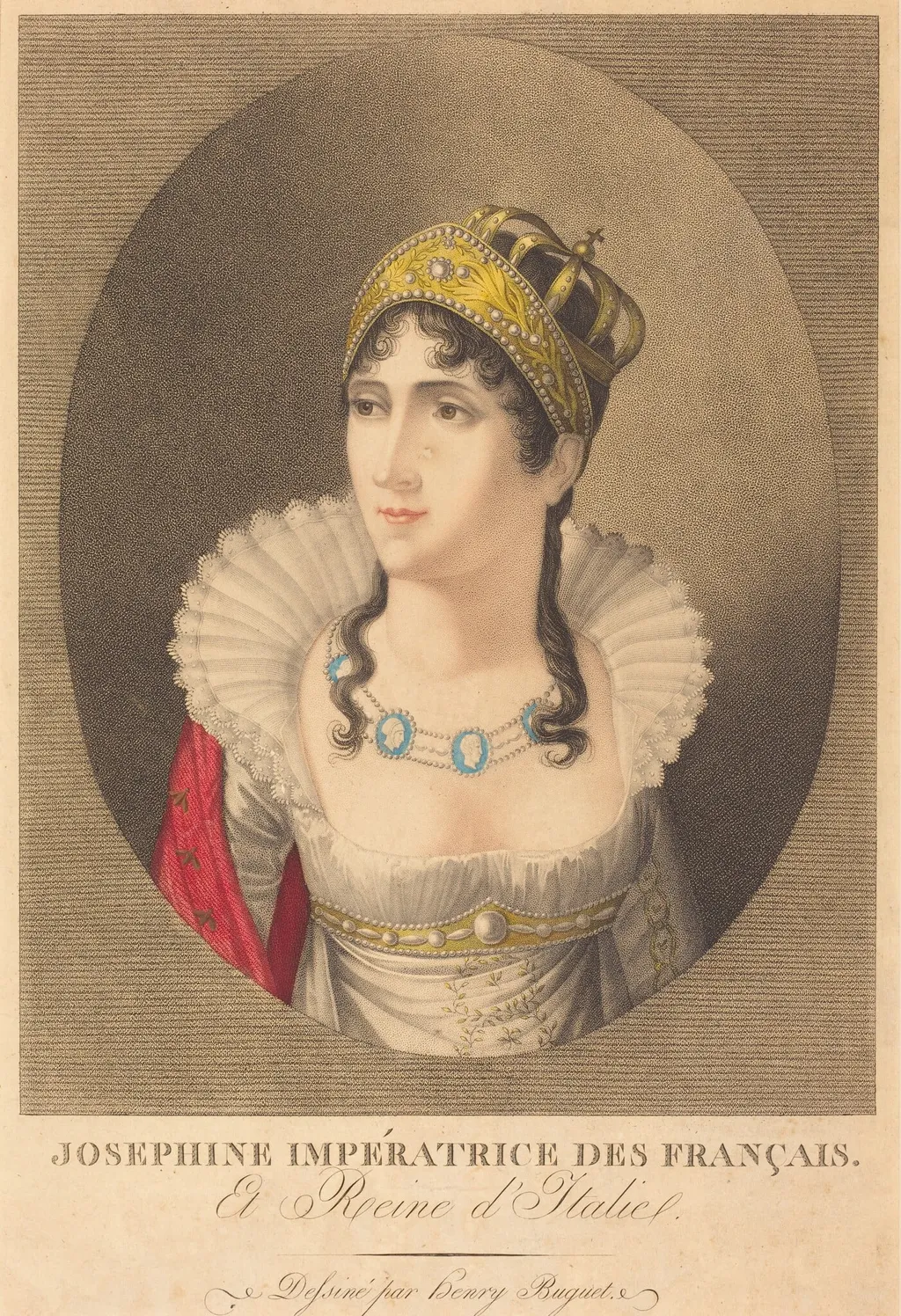
Josephine Impératrice des Français et Reine d'Italie (Josephine, Empress of the French and Queen of Italy) is an ink print by the Romanticist artist Henri Buguet. It dates from 1808 and is held in the collection of the National Gallery of Art.
About this work
Overview
This stipple engraving, produced around 1808 by Henri Buguet, depicts Joséphine de Beauharnais in her imperial role.
This stipple engraving, produced around 1808 by Henri Buguet, depicts Joséphine de Beauharnais in her imperial role. Executed in black ink with hand-applied color on wove paper, the print combines the precision of engraving with subtle tonal gradations achieved through the à la poupée inking method. The portrait presents her in formal regalia, emphasizing status through detailed rendering of fabric and adornment, while retaining the restrained elegance typical of early 19th-century French portraiture.
Subject & Meaning
Joséphine is portrayed as Empress of the French and Queen of Italy, her dual titles affirming her political significance under Napoleon’s rule. Her expression is composed and dignified, avoiding overt sentimentality. The crown, pearl necklace, and layered ruffles signify imperial authority and refined taste, while the single red sleeve introduces a restrained accent of color, subtly reinforcing her presence without embellishment. The inscription anchors her identity in official nomenclature, aligning the image with state-sanctioned representation.
Technique & Style
Buguet employed stipple engraving to model form through delicate dots, creating soft transitions in skin and fabric. The à la poupée technique allowed selective ink application, enhancing depth before hand-coloring added localized hues—particularly in the crown, collar, and necklace. The style reflects a transition from Rococo ornamentation to Neoclassical restraint, with precise lines and minimal background detail focusing attention entirely on the figure’s bearing and attire.
History & Provenance
Created shortly after Joséphine’s coronation in 1804, the print likely served as a diplomatic or commemorative object, circulated among elites and institutions loyal to the Napoleonic regime. Buguet, known for his portrait engravings, produced multiple versions of imperial figures during this period. The work’s survival in museum collections suggests it was preserved as a record of imperial iconography rather than as mass-produced ephemera.
Context
In early 19th-century France, printed portraits of royalty were tools of political legitimacy, especially when access to original paintings was limited. Joséphine’s image, widely disseminated through prints, helped solidify her public persona amid shifting political tides. This engraving aligns with a broader trend of using print media to construct and sustain the visual identity of the imperial family, balancing grandeur with the accessibility of reproduction.
Legacy
Though not as widely recognized as painted portraits, Buguet’s engraving contributed to the standardized visual representation of Joséphine during her lifetime. Its technical refinement and adherence to imperial protocol made it a reference for later reproductions. Today, it remains a documented artifact of how print culture mediated the image of power in post-revolutionary France.
Artist & collection


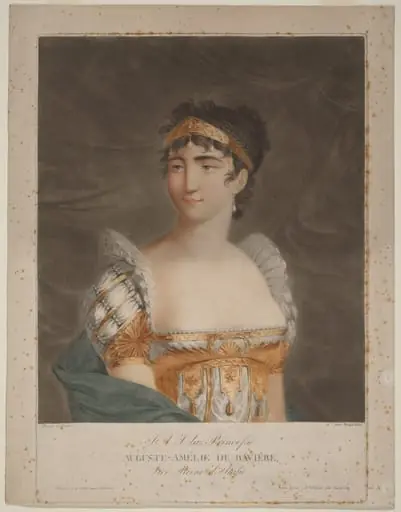 Princess Auguste Amelie of Bavaria
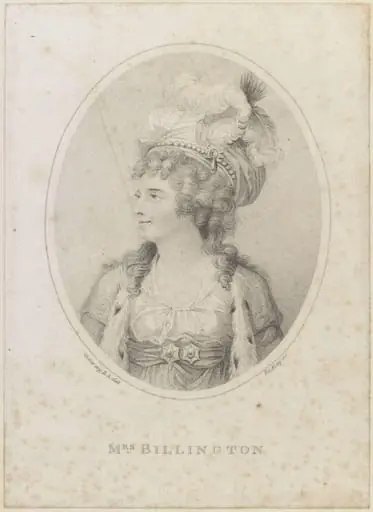 H Beard Print Collection
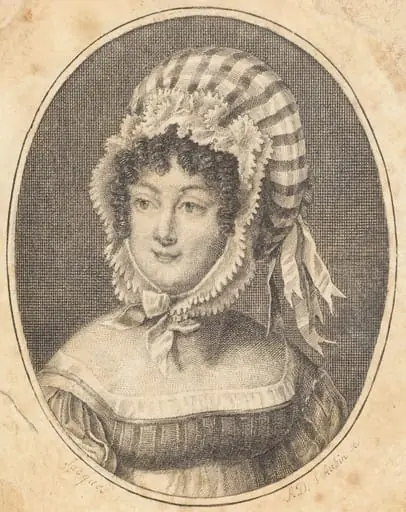 Head of a Woman Wearing a Striped Bonnet
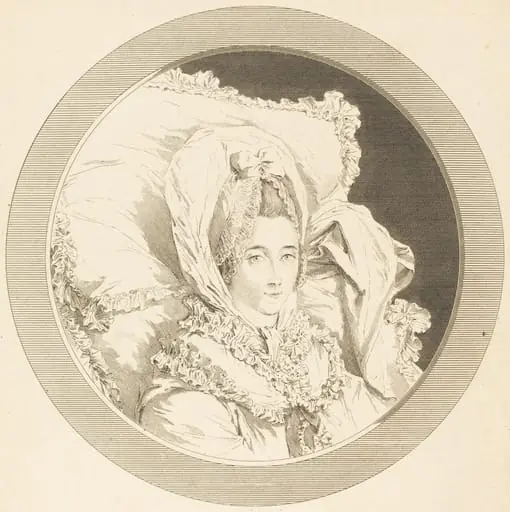 Derniere heure de la Baronne de Rebecque
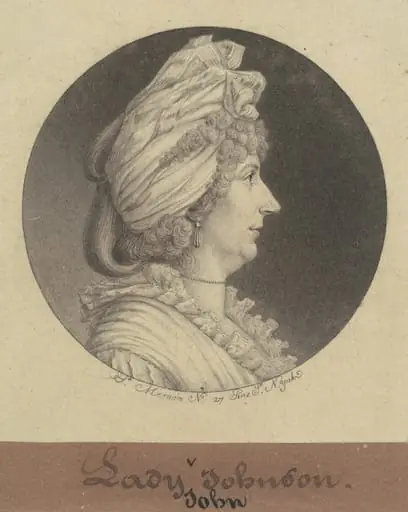 Lady Mary Watts Johnson
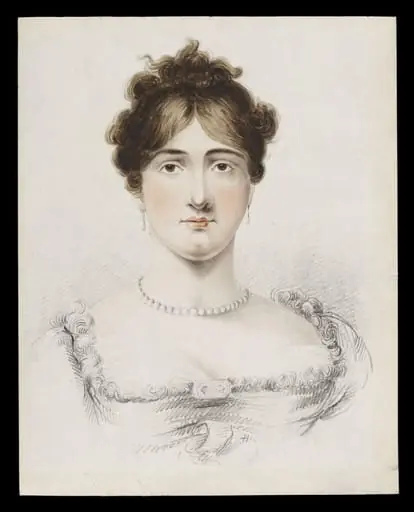 H Beard Print Collection
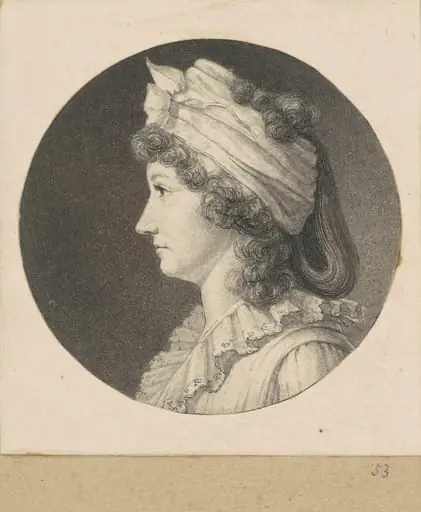 Unidentified Woman
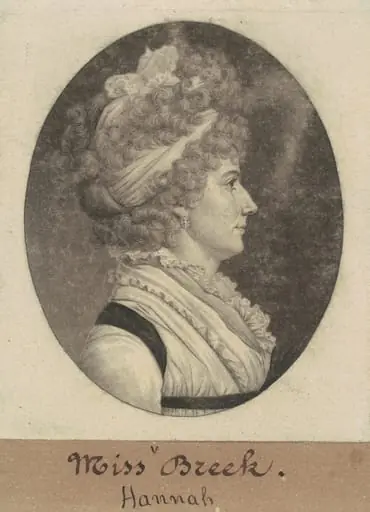 Hannah Breck
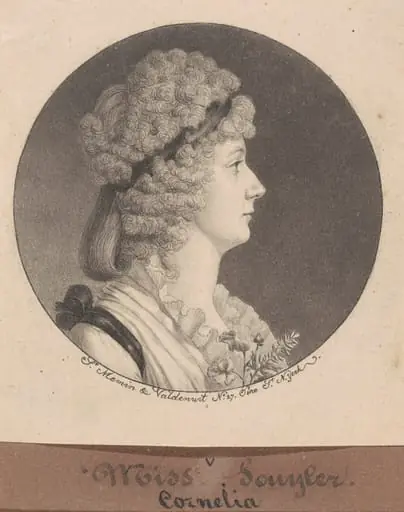 Cornelia Schuyler Morton
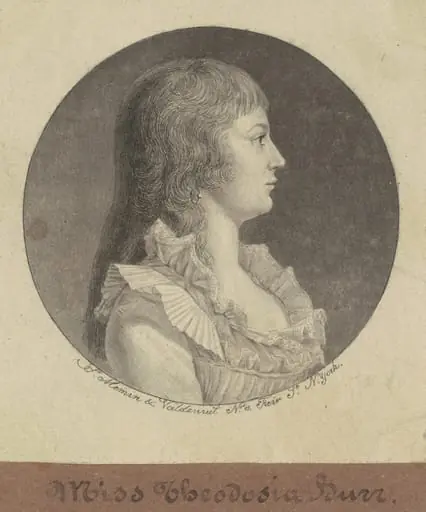 Theodosia Burr
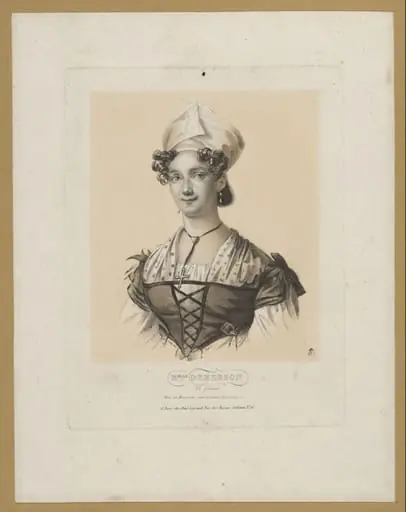 H Beard Print Collection
 Lady Dudley, Lady Jane Grey