Artwork
Derniere heure de la Baronne de Rebecque
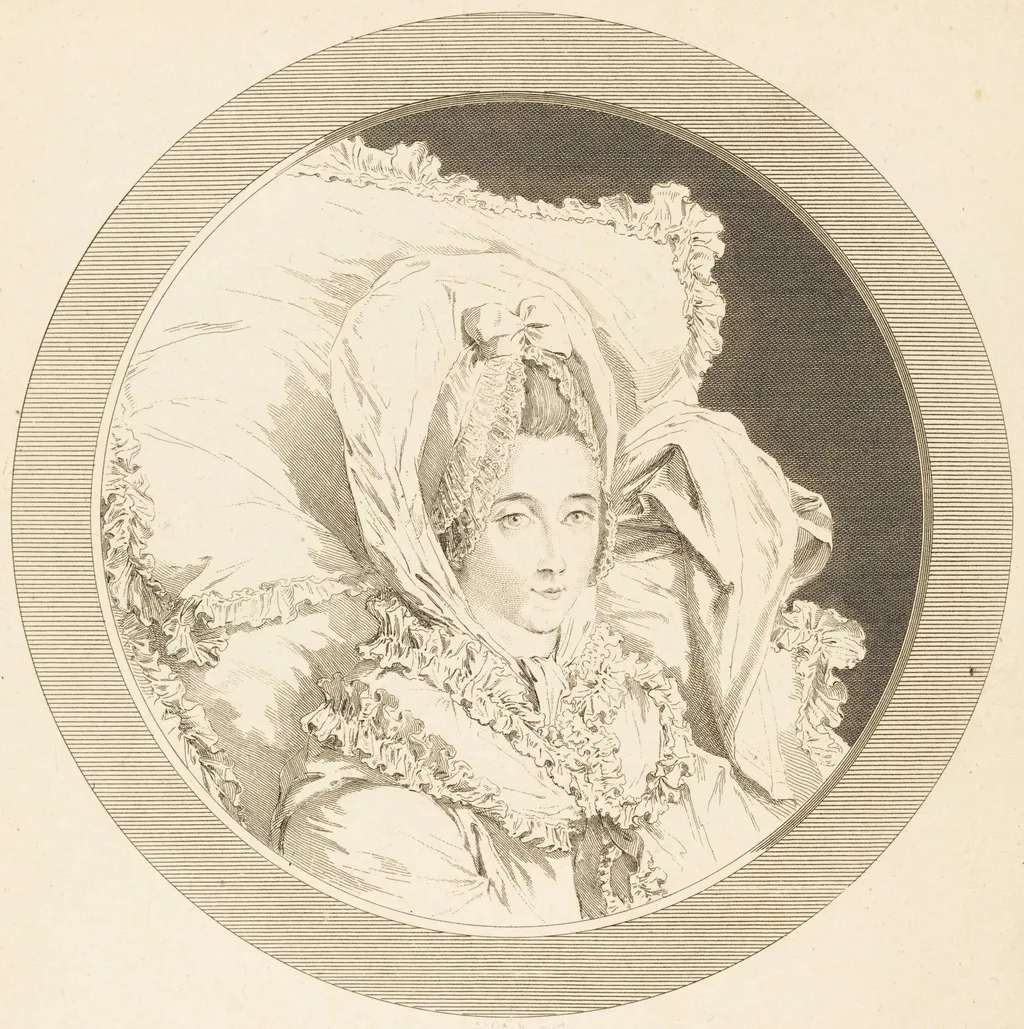
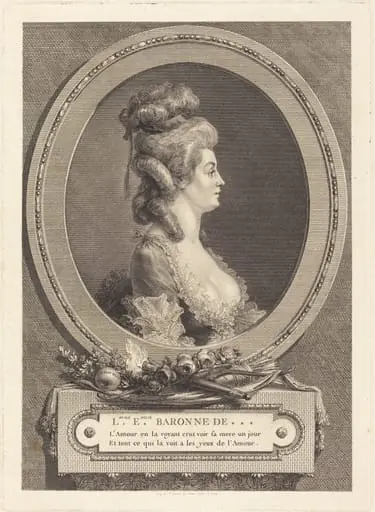
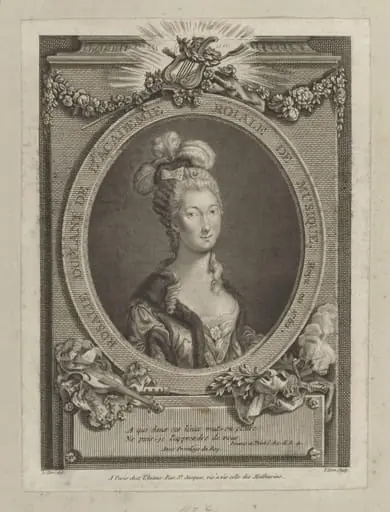
Derniere heure de la Baronne de Rebecque is an ink print by the Romanticist artist Augustin de Saint-Aubin. It dates from 1780 and is held in the collection of the National Gallery of Art.
About this work
Overview
Created in 1780 by Augustin de Saint-Aubin, this etching on laid paper captures a quiet, intimate portrait of the Baronne de Rebecque.
Created in 1780 by Augustin de Saint-Aubin, this etching on laid paper captures a quiet, intimate portrait of the Baronne de Rebecque. As part of a family known for their work in decorative arts and printmaking, Saint-Aubin applied his technical precision to a single figure, isolating her in a plain space to emphasize presence over narrative. The work belongs to a tradition of French portraiture that valued restraint and refined detail.
Subject & Meaning
The Baronne de Rebecque is depicted in a moment of stillness, her gaze serene and her posture composed. Her attire—elaborate hairstyle, draped shawl, and lace trim—signals her social standing, yet the absence of symbols of power or wealth suggests a focus on personal dignity rather than status. The title, suggesting the final hours of her life, lends a contemplative tone, though no explicit narrative is rendered.
Technique & Style
Saint-Aubin employed fine, controlled etching lines to model the contours of the face and hair, using subtle gradations of ink to suggest volume without heavy shading. The texture of lace and fabric is rendered with delicate cross-hatching, while the smooth planes of skin contrast with the intricate curls of the coiffure. The plain background eliminates distraction, directing attention to the nuanced rendering of light and form on the figure.
History & Provenance
The print was made during a period when Saint-Aubin was actively producing portraits and genre scenes for private collectors and art enthusiasts. Though specific early ownership records are sparse, the work aligns with the French print culture of the 1780s, where intimate portraits circulated among the educated elite. It remains part of institutional collections today, valued for its craftsmanship and historical resonance.
Context
In late 18th-century France, etching was a favored medium for artists seeking to explore personal expression outside the constraints of academic painting. Saint-Aubin’s work reflects this trend, drawing from the Rococo tradition’s attention to detail while anticipating the quieter, more introspective style of early Neoclassicism. His prints often served as records of individuals within aristocratic circles, preserving their likeness with quiet dignity.
Legacy
Though not widely exhibited today, the etching exemplifies the skill of French printmakers who elevated portraiture through technical subtlety. Saint-Aubin’s ability to convey character through minimal means influenced later generations of engravers. The work endures as a quiet testament to the role of print in documenting private life during a time of sweeping social change.
Artist & collection
Artist
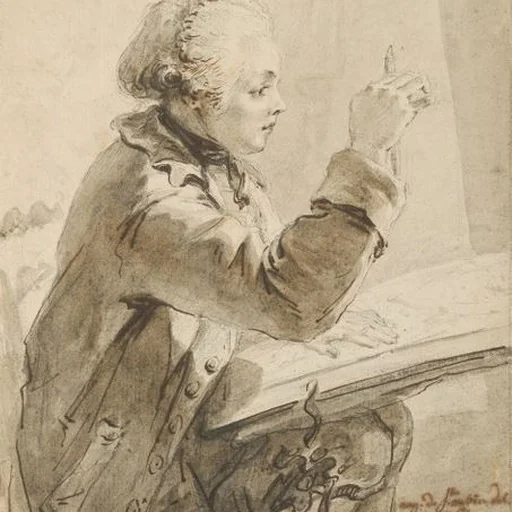
Augustin de Saint-Aubin sometimes styled Auguste de Saint-Aubin (3 January 1736 – 9 November 1807), belongs to an important dynasty of French designers and engravers.

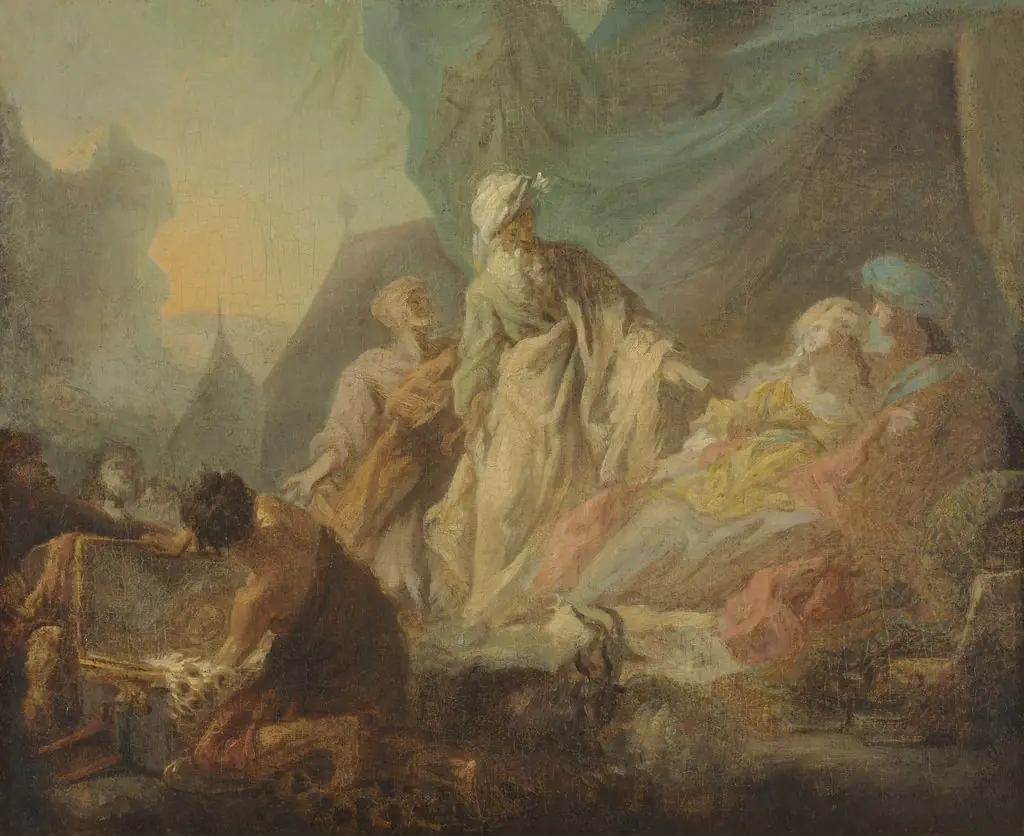 Laban Searching for His Stolen Gods
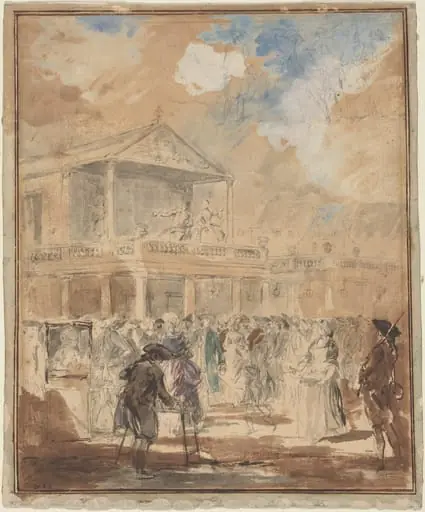 Parade (A Theatrical Procession in Paris)
 Le baiser envoyé
 Pierre Jeliote
 Le lever de la mariée russe (Custom of the Russians after the Marriage Ceremony and before the Wedding Feast)
 J.J. Rousseau
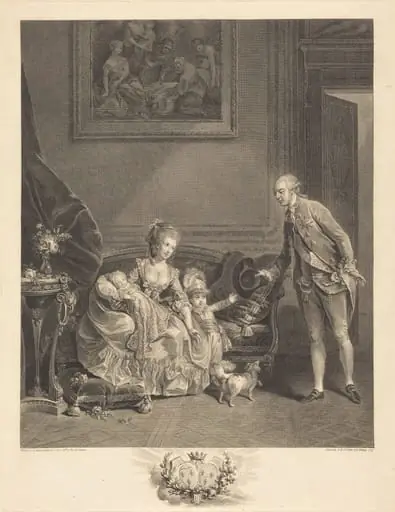 Le duc de Chartres, son epouse et ses enfants
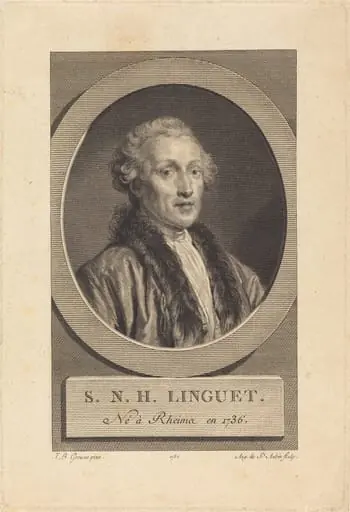 Simon-Nicolas-Henri Linguet