Artwork
Convoi Funèbre au Boulevard de Clichy (Funeral Procession on the Boulevard de Clichy)
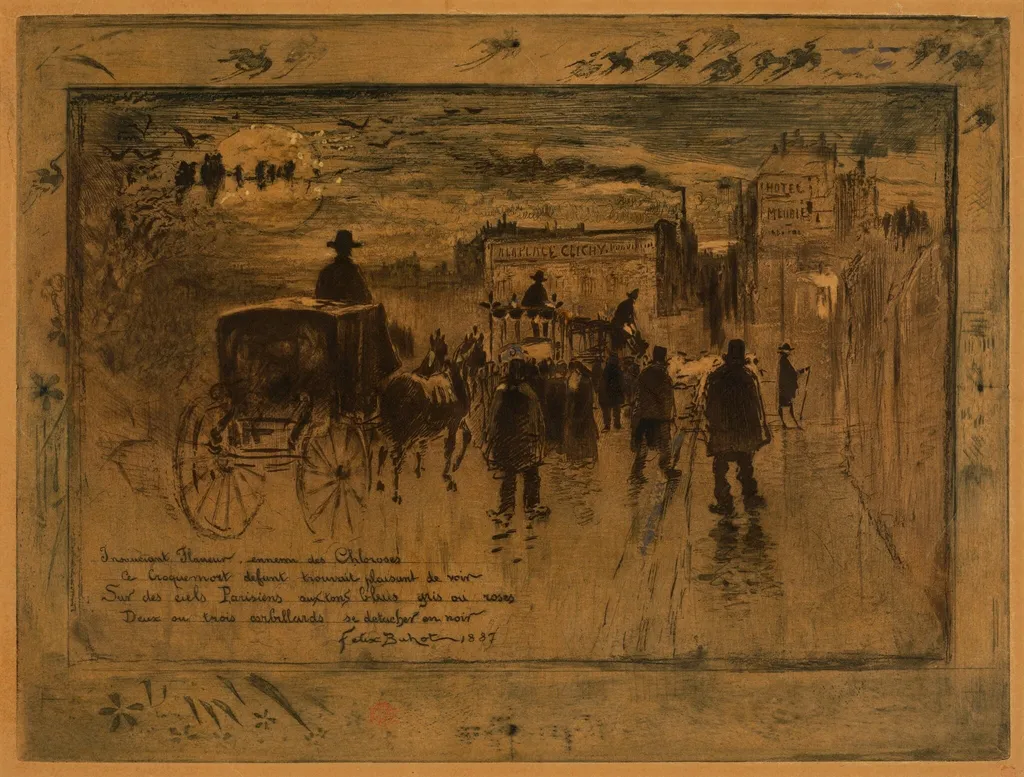
Convoi Funèbre au Boulevard de Clichy (Funeral Procession on the Boulevard de Clichy) is a watercolor print by the Impressionist artist Félix-Hilaire Buhot. It dates from 1887 and is held in the collection of the National Gallery of Art.
About this work
Overview
The work captures a fleeting urban moment with layered textures and muted tones, reflecting Buhot’s interest in the rhythms of Parisian life.
Created in 1887 by Félix-Hilaire Buhot, this print combines multiple intaglio techniques—color etching, drypoint, aquatint, roulette, and softground—over a heliogravure base. Hand-applied watercolor and gold accents on thin, turpentine-soaked Japan paper lend it a delicate, atmospheric quality. The work captures a fleeting urban moment with layered textures and muted tones, reflecting Buhot’s interest in the rhythms of Parisian life.
Subject & Meaning
The scene depicts a funeral procession moving along the Boulevard de Clichy, a bustling thoroughfare in northern Paris. A horse-drawn hearse leads the way, followed by a second carriage and a crowd of onlookers in period attire. The juxtaposition of solemn ritual against the ordinary commerce of the street—evident in signs like 'Ambiance Clichy' and 'Hotel Meublé'—suggests the inescapable presence of death within daily urban existence.
Technique & Style
Buhot employed a range of printmaking methods to achieve tonal depth and tactile variety. The heliogravure underlayer provides soft gradations, while drypoint and roulette add scratchy, irregular lines that suggest movement and texture. Watercolor washes introduce subtle color, and gold highlights catch the light like fleeting reflections. The overall effect is sketch-like and immediate, prioritizing mood over precision.
History & Provenance
The print was made during Buhot’s mature period, when he focused on documenting Parisian street scenes with documentary precision and poetic sensitivity. It was likely produced in a small edition for collectors and art societies interested in modern printmaking. Its survival in good condition reflects its careful handling and the enduring appeal of Buhot’s urban observations.
Context
In late 19th-century Paris, the Boulevard de Clichy was a liminal space—part working-class neighborhood, part entertainment district. Buhot’s depiction aligns with broader artistic interests in everyday life, influenced by Realism and early Impressionism. Unlike idealized scenes, this work embraces the杂糅 of public grief and private routine, reflecting a city where ritual and commerce coexisted without resolution.
Legacy
Buhot’s prints, including this one, contributed to the revival of etching as a medium for modern subject matter. His integration of color, texture, and spontaneous line influenced later printmakers seeking to capture urban transience. Though less widely known than his contemporaries, his work remains a quiet testament to the emotional texture of city life in the Belle Époque.
Artist & collection

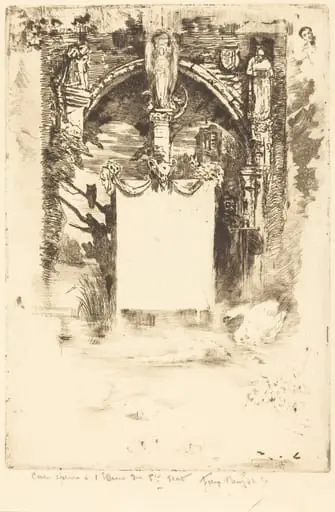 Ex-Libris pour "L'Ensorcelée" (Bookplate for "L'Ensorcelée")
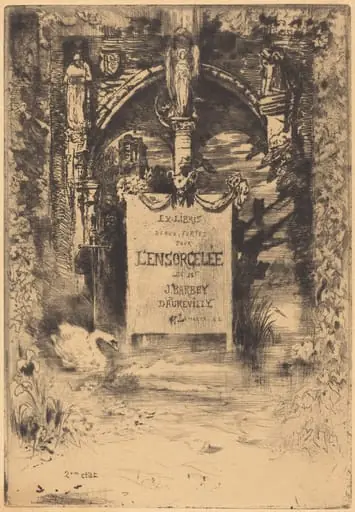 Ex-Libris pour "L'Ensorcelée" (Bookplate for "L'Ensorcelée")
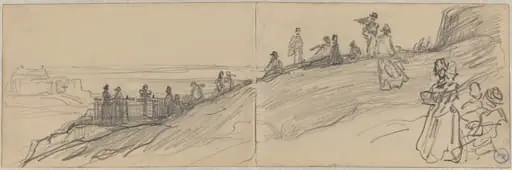 Figures on Top of a Hill, Overlooking the Sea
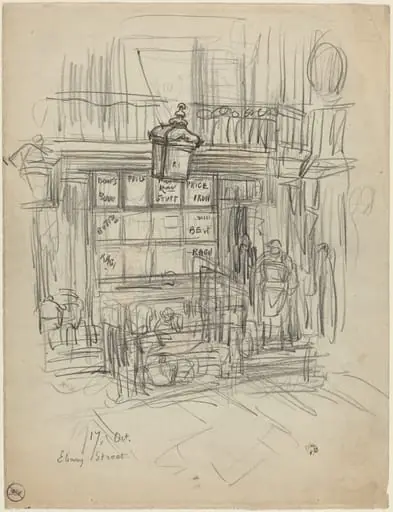 Ebury Street
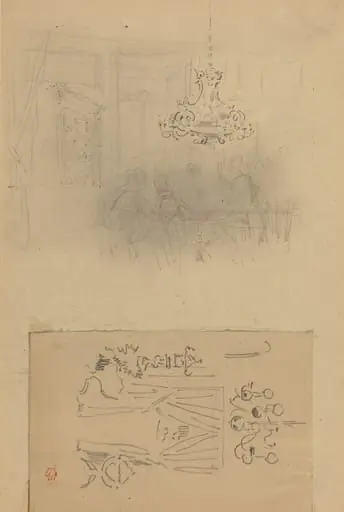 A Gathering in an Interior; A Curtained Doorway
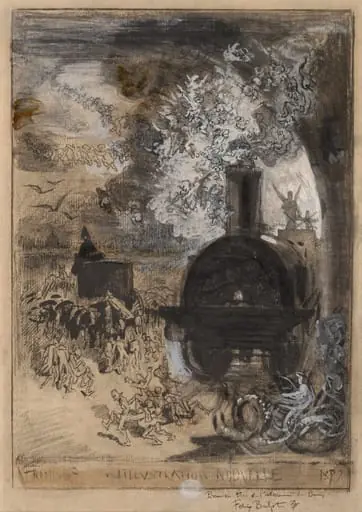 Frontispiece for L'Illustration Nouvelle: The Burial of the Burin
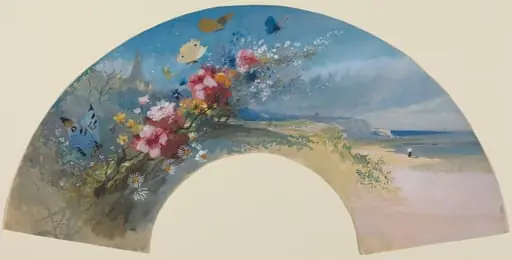 Fan with Wildflowers and Butterflies against the Norman Coast
![Gillingham Pier, London [verso], by Félix-Hilaire Buhot](https://artifactworldgallery.com/img/felix-hilaire-buhot--gillingham-pier-london-verso--641e03dd7de8217b-w320.webp) Gillingham Pier, London [verso]
Gillingham Pier, London [verso]
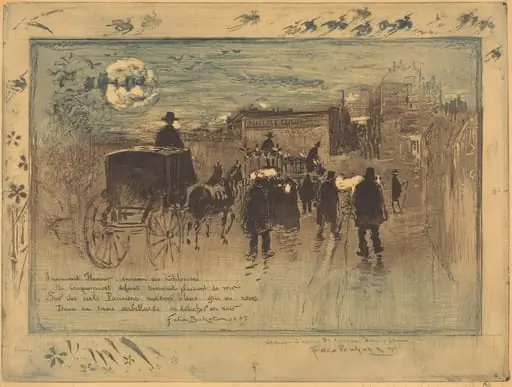 Convoi Funèbre au Boulevard de Clichy (Funeral Procession on the Boulevard de Clichy)
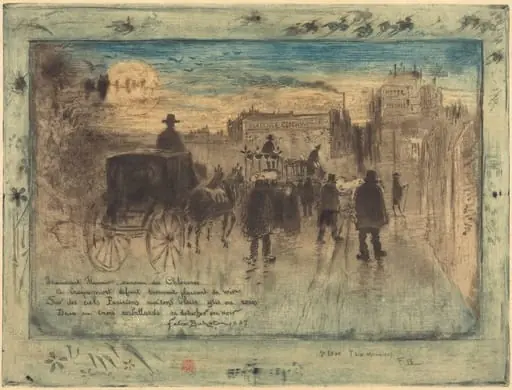 Convoi Funèbre au Boulevard de Clichy (Funeral Procession on the Boulevard de Clichy)
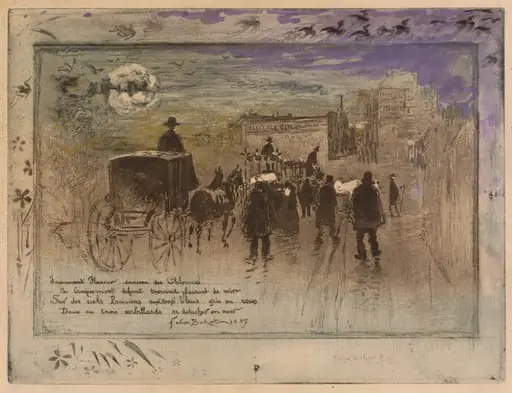 Funeral Procession on the Boulevard de Clichy
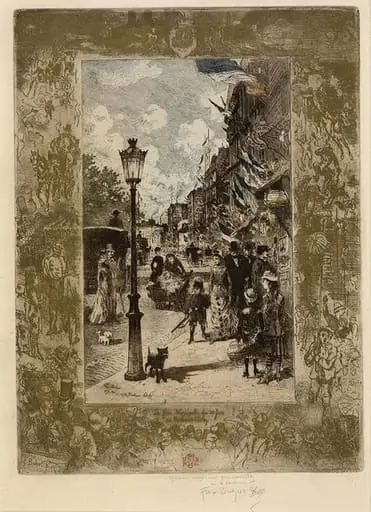 La Fête nationale au Boulevard Clichy (National Holiday on the Boulevard de Clichy)
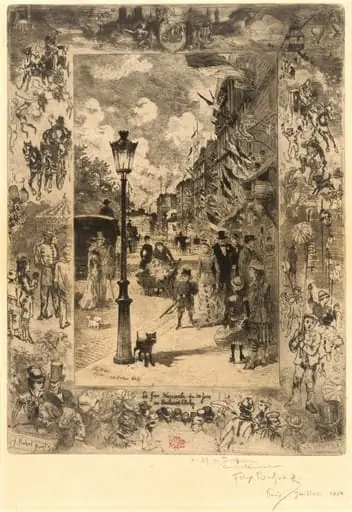 La Fête nationale au Boulevard Clichy (National Holiday on the Boulevard de Clichy)
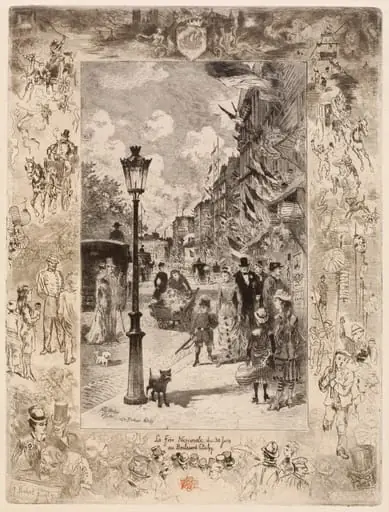 La Fête nationale au Boulevard Clichy (National Holiday on the Boulevard de Clichy)