Artwork
Le Peintre de Marine (The Marine Painter)
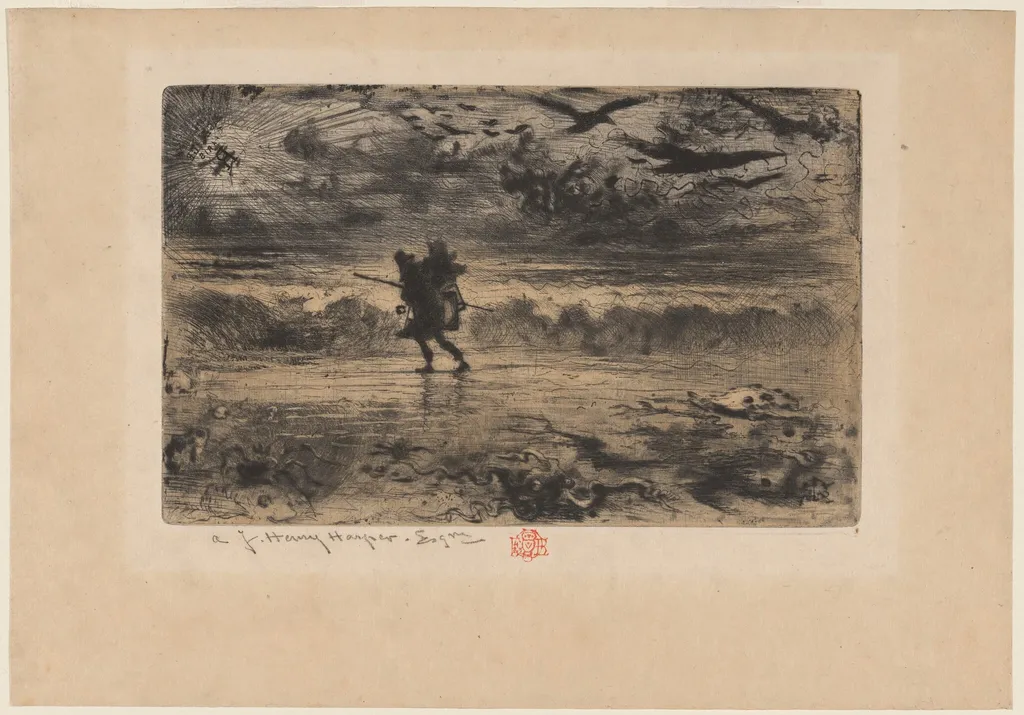
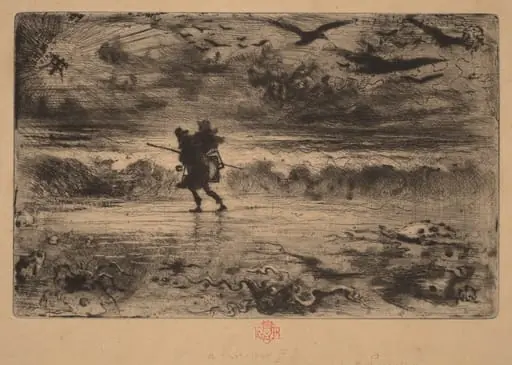
Le Peintre de Marine (The Marine Painter) is an ink print by the Impressionist artist Félix-Hilaire Buhot. It dates from 1879 and is held in the collection of the National Gallery of Art.
About this work
Overview
It depicts a solitary figure traversing a windswept shore at twilight.
Le Peintre de Marine is a print created around 1879 by Félix-Hilaire Buhot, combining etching, drypoint, aquatint, sandpaper ground, and spit bite on wove paper. It depicts a solitary figure traversing a windswept shore at twilight. The work resides in the National Gallery of Art, Washington, and exemplifies Buhot’s interest in capturing transient atmospheric conditions through layered printmaking techniques.
Subject & Meaning
The lone figure, burdened with a bundle and carrying a long pole, moves quietly along the shoreline, suggesting a laborer or artist returning from the coast. The absence of clear identity invites interpretation: the figure may represent the painter himself, a metaphor for solitary creation amid nature’s chaos. The scene evokes quiet endurance rather than narrative drama.
Technique & Style
Buhot employed multiple intaglio methods to achieve varied textures: fine etched lines define the figure, while drypoint and spit bite create grainy, atmospheric effects in the sky and surf. Sandpaper ground added coarse, irregular tones to the sand and waves. The resulting surface is tactile and dynamic, mirroring the agitation of wind and tide without idealizing form.
History & Provenance
Created in the late 1870s, the print reflects Buhot’s active engagement with the Parisian print revival. It entered the National Gallery of Art’s collection through established acquisition channels, likely as part of a broader effort to document 19th-century French graphic art. Its preservation underscores its significance within the artist’s oeuvre and the printmaking tradition of the period.
Context
In the late 19th century, French artists increasingly turned to printmaking as a medium for personal expression, moving beyond reproductive functions. Buhot, influenced by urban and coastal scenes, used etching to convey mood and movement. This work aligns with contemporaries like Whistler and Daumier, who valued the expressive potential of ink and plate over academic finish.
Legacy
Le Peintre de Marine remains a key example of Buhot’s innovative approach to printmaking, demonstrating how technical experimentation could convey emotional resonance. It influenced later artists interested in the expressive limits of etching and the depiction of everyday solitude. The work continues to be studied for its synthesis of process and perception.
Artist & collection

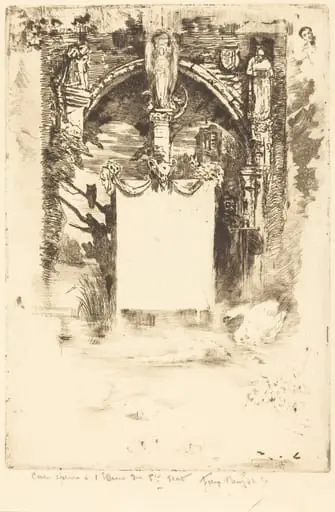 Ex-Libris pour "L'Ensorcelée" (Bookplate for "L'Ensorcelée")
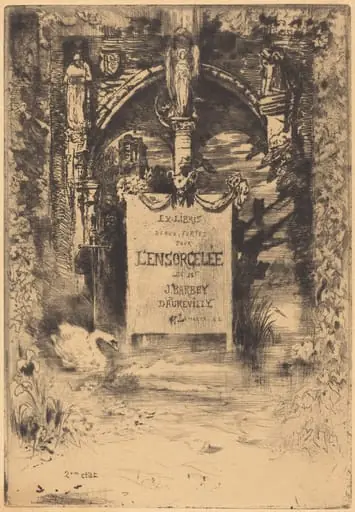 Ex-Libris pour "L'Ensorcelée" (Bookplate for "L'Ensorcelée")
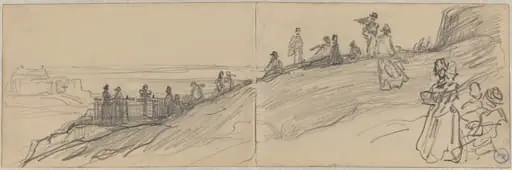 Figures on Top of a Hill, Overlooking the Sea
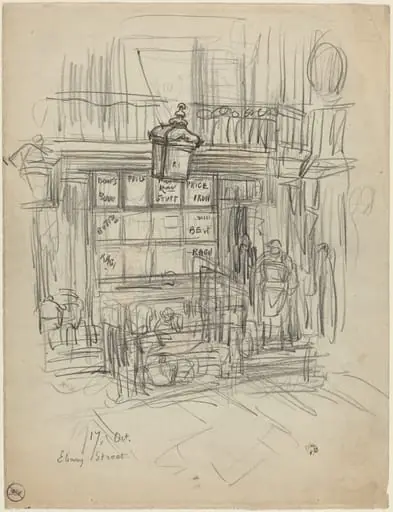 Ebury Street
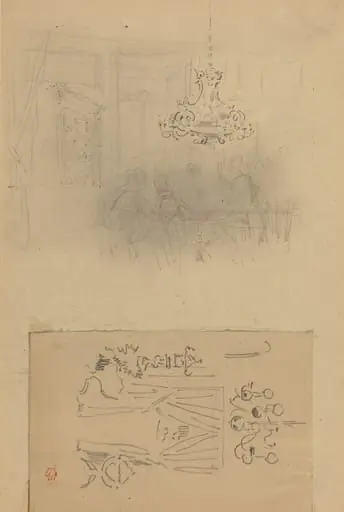 A Gathering in an Interior; A Curtained Doorway
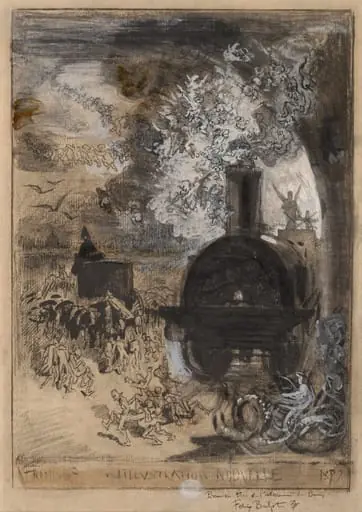 Frontispiece for L'Illustration Nouvelle: The Burial of the Burin
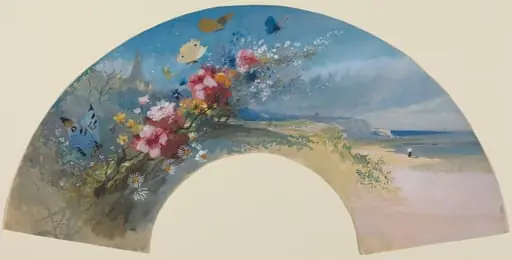 Fan with Wildflowers and Butterflies against the Norman Coast
![Gillingham Pier, London [verso], by Félix-Hilaire Buhot](https://artifactworldgallery.com/img/felix-hilaire-buhot--gillingham-pier-london-verso--641e03dd7de8217b-w320.webp) Gillingham Pier, London [verso]
Gillingham Pier, London [verso]
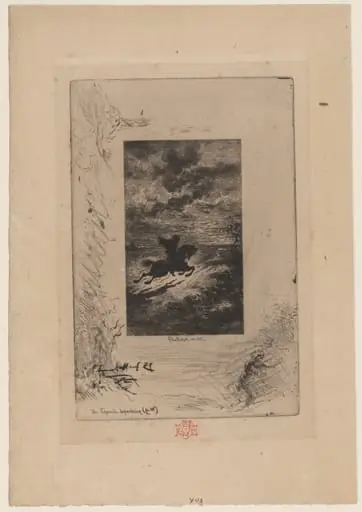 Un Chemin de perdition
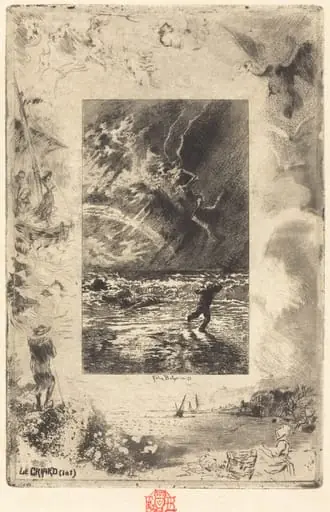 Le Criard (The Shrieker)
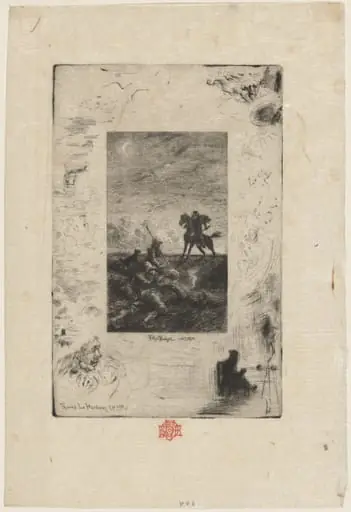 Thomas Le Hardouaye
![Landscape [Paesaggio], by Carlo Paolo Agazzi](https://artifactworldgallery.com/img/carlo-paolo-agazzi--landscape-paesaggio--e606f4ada87d2052-w320.webp) Landscape [Paesaggio]
Landscape [Paesaggio]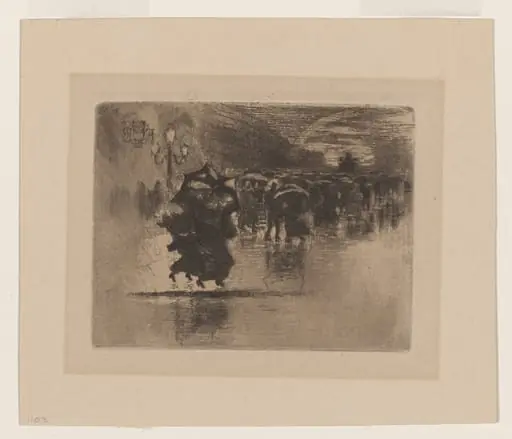 Le Petite Enterrement (The Burial -- Small Plate)
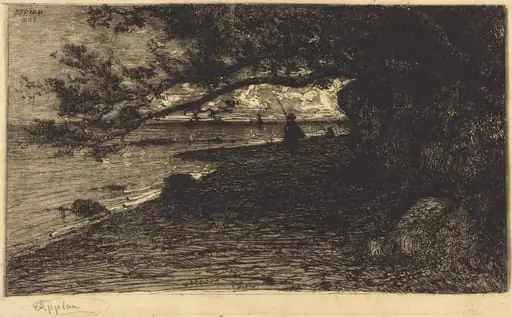 A Villefranche-sur-Mer
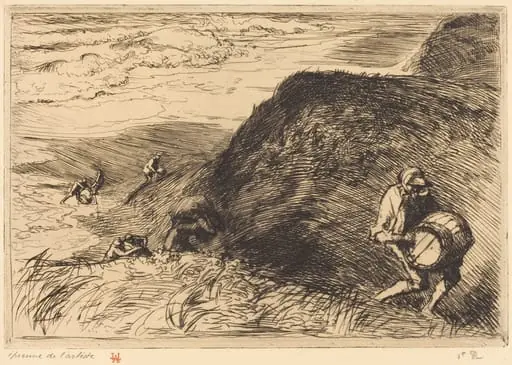 Wreckers, Saint-Jean-de-Monts (Pilleurs d'epaves, Saint-Jean-de-Monts)
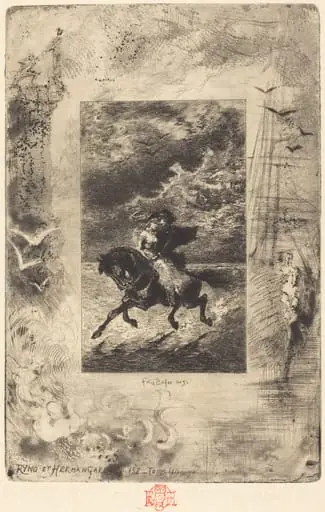 Ryno et Hermangarde
 Le Chaos (Chaos)
 L'Orage (The Storm)
 Marine: Souvenir of Medway
 The Marine Painter (Le Peintre de Marine)