Artwork
Liseuse à la Lampe (Woman Reading by Lamplight)
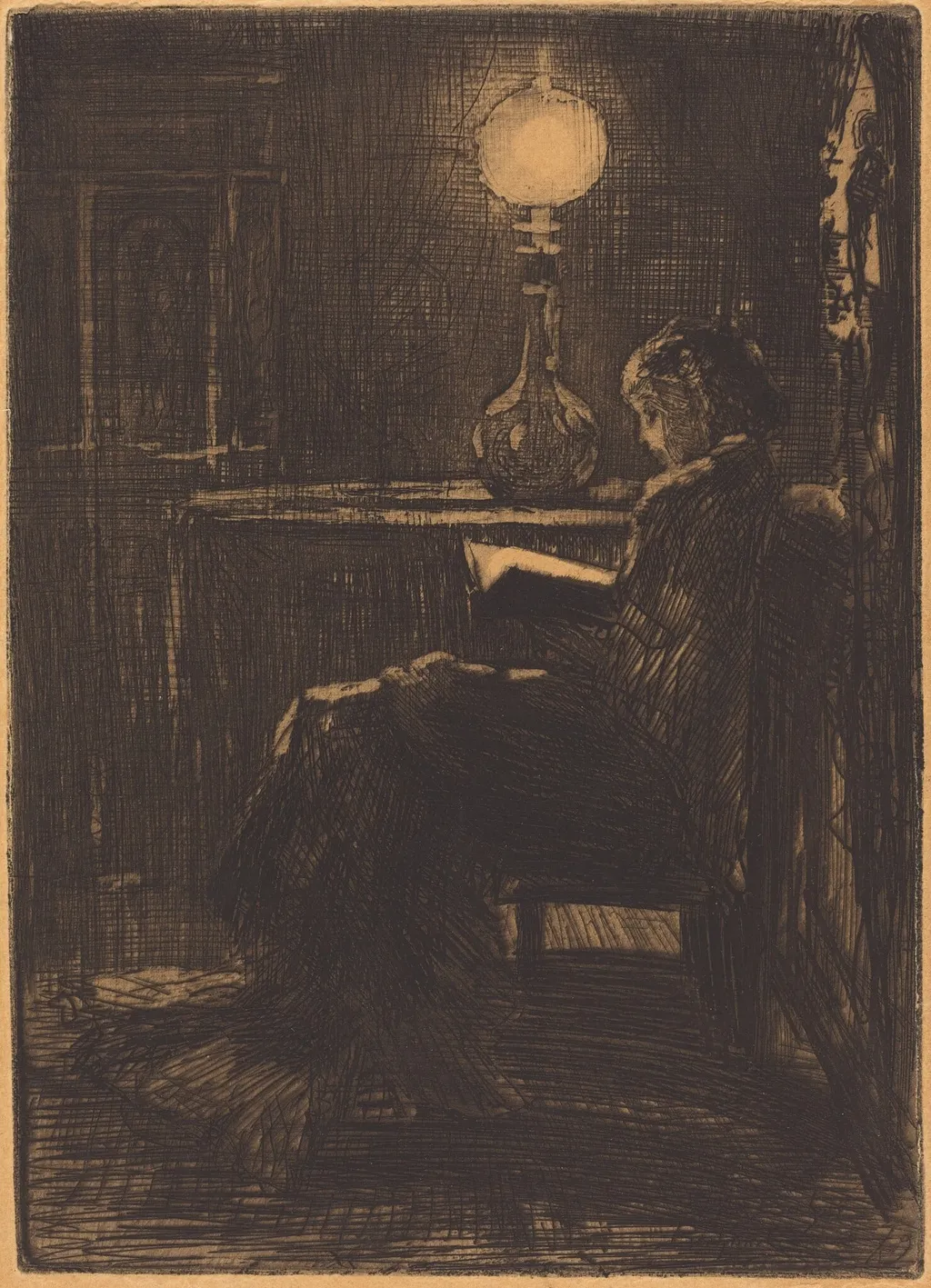
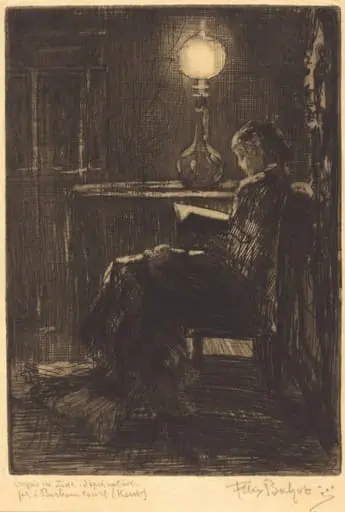
Liseuse à la Lampe (Woman Reading by Lamplight) is an ink print by the Impressionist artist Félix-Hilaire Buhot. It dates from 1879 and is held in the collection of the National Gallery of Art.
About this work
Overview
Created in 1879, Liseuse à la Lampe is an etching by Félix-Hilaire Buhot, rendered in black ink on brown wove paper.
Created in 1879, Liseuse à la Lampe is an etching by Félix-Hilaire Buhot, rendered in black ink on brown wove paper. The work captures a solitary figure engaged in quiet evening reading, illuminated by a single lamp. Buhot employed manual techniques—scraping and burnishing—to modulate tone and texture, achieving subtle gradations of light and shadow without relying on line alone. The print is held in the collection of the National Gallery of Art in Washington, D.C.
Subject & Meaning
The image depicts a woman absorbed in a book, her form softened by lamplight and her shadow elongated across the wall behind her. The scene conveys introspection and solitude, common themes in late 19th-century domestic interiors. The absence of narrative detail focuses attention on the act of reading itself—private, deliberate, and intimate—reflecting a quiet reverence for personal contemplation in an era of rapid urban change.
Technique & Style
Buhot manipulated the copper plate with fine tools, using scraping to lift ink and burnishing to smooth surfaces, creating nuanced halftones. Rather than relying on dense hatching, he built atmosphere through controlled tonal variation, allowing light to emerge from the paper’s surface. The result is a luminous, almost tactile quality in the glow of the lamp and the softness of the shadows, demonstrating his mastery of etching as a medium for atmospheric realism.
History & Provenance
The print was made in 1879 during Buhot’s most active period in Paris, where he documented urban and domestic life with keen observation. It entered the National Gallery of Art’s collection through the bequest of a major American collector, part of a broader effort in the early 20th century to preserve European graphic arts. Its preservation reflects its significance within the tradition of French printmaking of the period.
Context
In the late 1870s, Parisian artists increasingly turned to intimate, everyday scenes as industrialization reshaped social life. Buhot’s work aligns with this trend, capturing moments of stillness amid urban dynamism. His focus on interior light and quiet ritual resonated with contemporaries like Degas and Whistler, who similarly explored the interplay of artificial illumination and human presence in modern life.
Legacy
Liseuse à la Lampe exemplifies Buhot’s contribution to the revival of etching as a serious artistic medium in the 19th century. His technical precision and sensitivity to light influenced later printmakers interested in tonal subtlety over linear definition. Though less widely known than his contemporaries, his work remains a touchstone for those studying the quiet poetry of domestic scenes in print.
Artist & collection

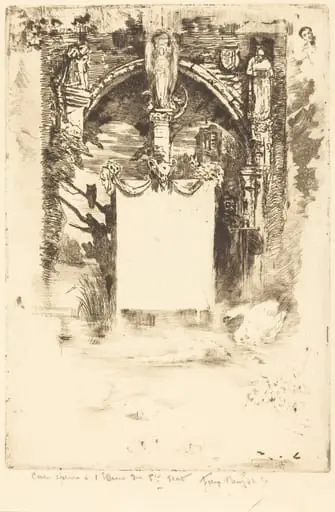 Ex-Libris pour "L'Ensorcelée" (Bookplate for "L'Ensorcelée")
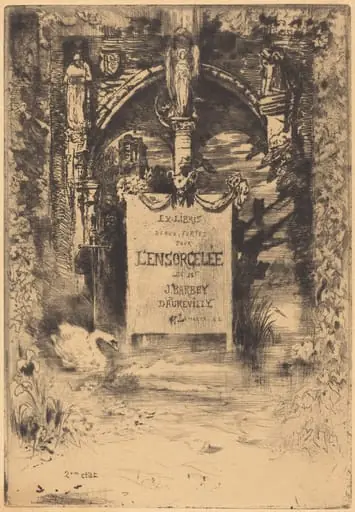 Ex-Libris pour "L'Ensorcelée" (Bookplate for "L'Ensorcelée")
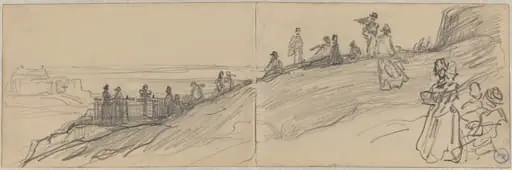 Figures on Top of a Hill, Overlooking the Sea
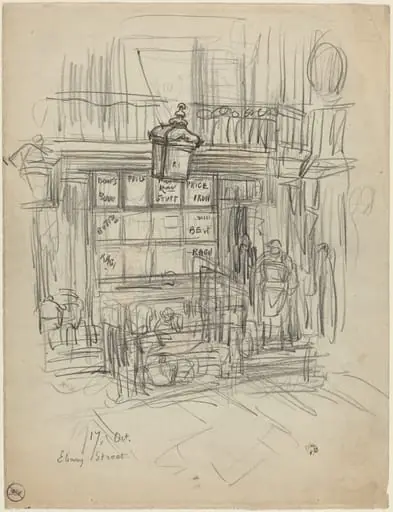 Ebury Street
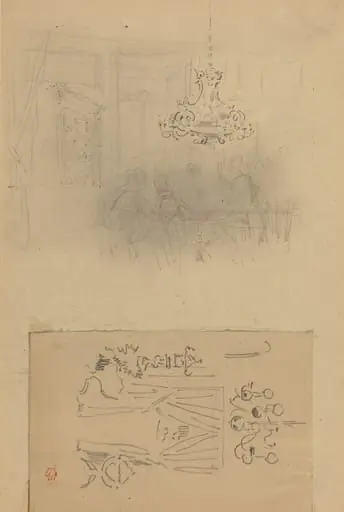 A Gathering in an Interior; A Curtained Doorway
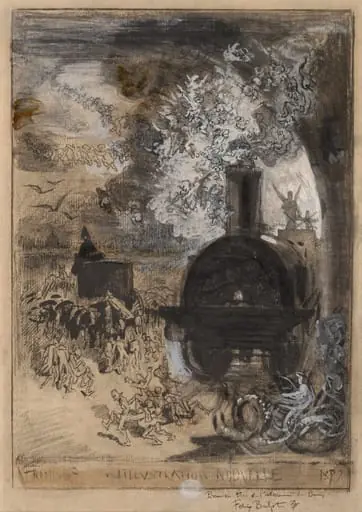 Frontispiece for L'Illustration Nouvelle: The Burial of the Burin
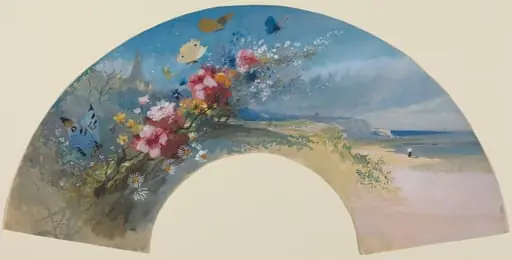 Fan with Wildflowers and Butterflies against the Norman Coast
![Gillingham Pier, London [verso], by Félix-Hilaire Buhot](https://artifactworldgallery.com/img/felix-hilaire-buhot--gillingham-pier-london-verso--641e03dd7de8217b-w320.webp) Gillingham Pier, London [verso]
Gillingham Pier, London [verso]