Artwork
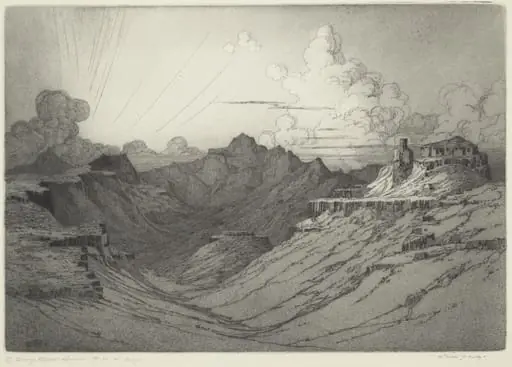
The Edge of the Desert, Arizona
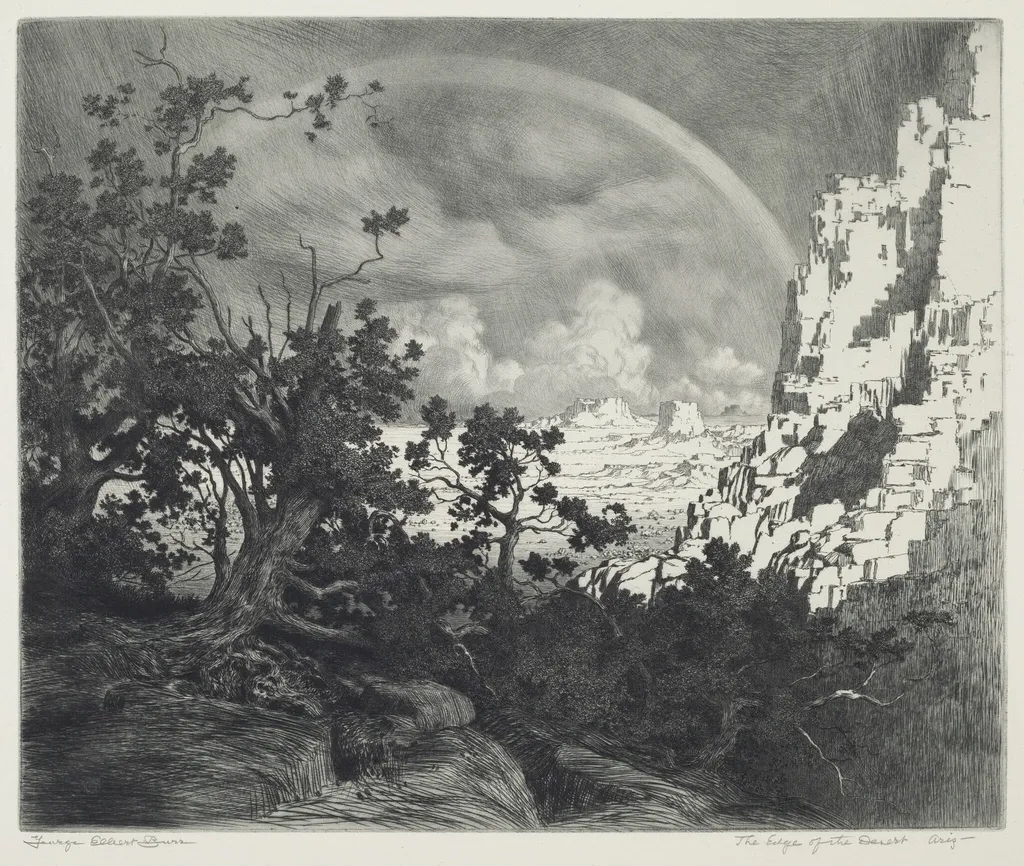
The Edge of the Desert, Arizona is an ink print by George Elbert Burr. It dates from 1926 and is held in the collection of the National Gallery of Art.
About this work
Overview
Created circa 1926, *The Edge of the Desert, Arizona* is a print by George Elbert Burr executed in etching and drypoint on laid paper. The image presents a stark desert scene rendered in a palette of black and greenish tones, with a dramatic sky, scattered trees, distant cliffs, and the suggestion of a ruined structure on the horizon.
Subject & Meaning
The composition captures a remote stretch of the American Southwest, emphasizing the harshness of the desert environment. Sparse vegetation and weathered rock formations convey a sense of isolation, while the looming clouds and stormy atmosphere hint at the volatile climate that shapes the region’s character. The title situates the view at the boundary between open desert and mountainous terrain.
Technique & Style
Burr employed both etching and drypoint to achieve varied line quality; the etched lines provide fine, controlled detail, whereas the drypoint work yields richer, burr‑laden strokes that suggest texture in the trees and rock faces. The greenish-black wash, achieved through a subtle aquatint tone, deepens the mood and enhances the contrast between sky and land.
History & Provenance
George Elbert Burr, known for his depictions of Western landscapes, produced this print during a period when he was actively documenting the arid regions of the Southwest. The work reflects his field studies of the desert’s topography in the early twentieth century and remains an example of his commitment to portraying the American West through printmaking.
Own this work as a print
Artist & collection

Artist
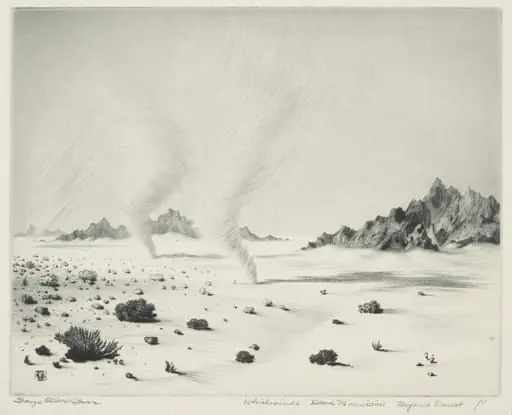
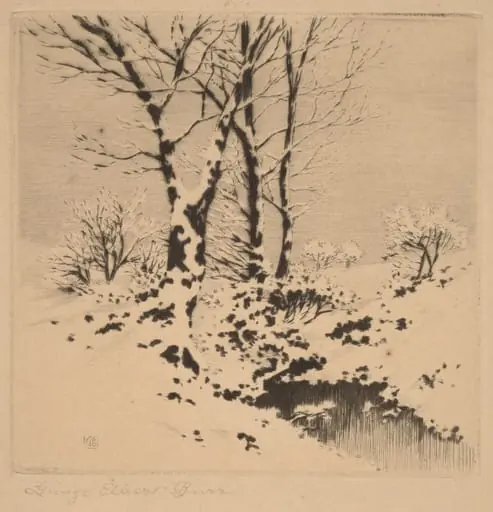
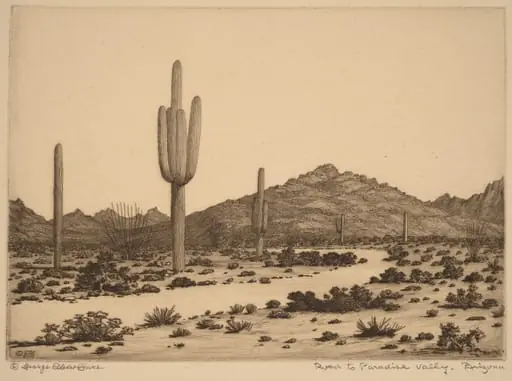
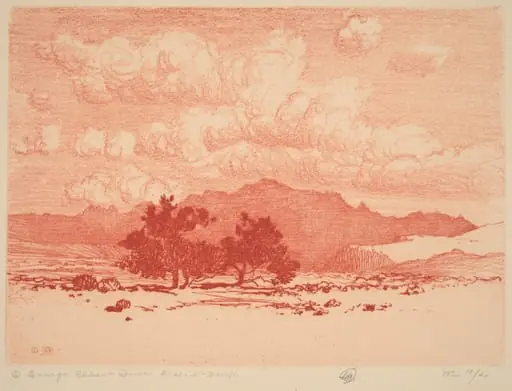
George Elbert Burr (April 14, 1859 – November 17, 1939 ) was an American printmaker and painter best known for his etchings and drypoints of the desert and mountain regions of the American West.

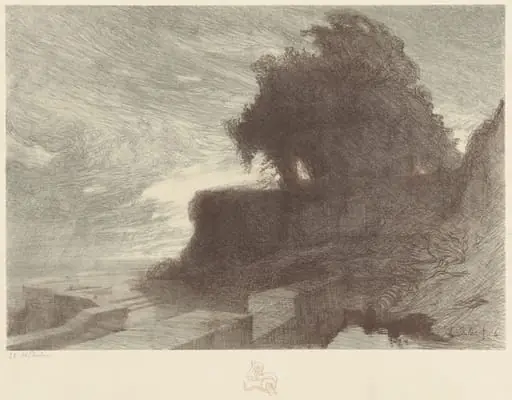 Landscape with Trees on a Bluff and a Snake Remarque
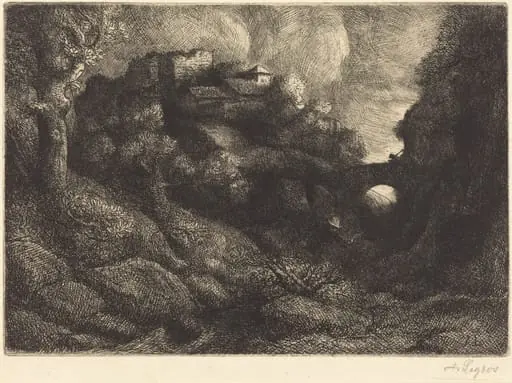 Remembrance of Italy (Souvenir d'Italie)
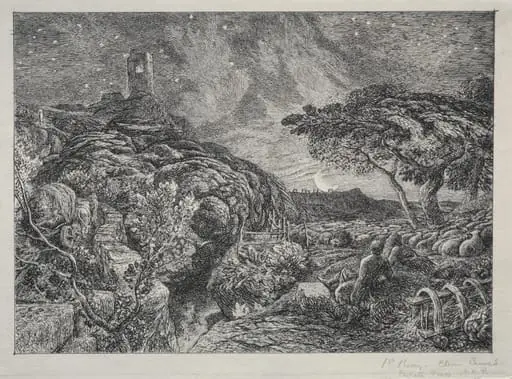 The Lonely Tower
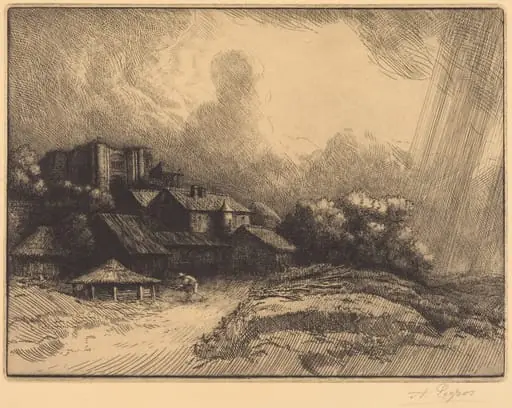 Farm at the Monastery (La ferme de l'abbaye)
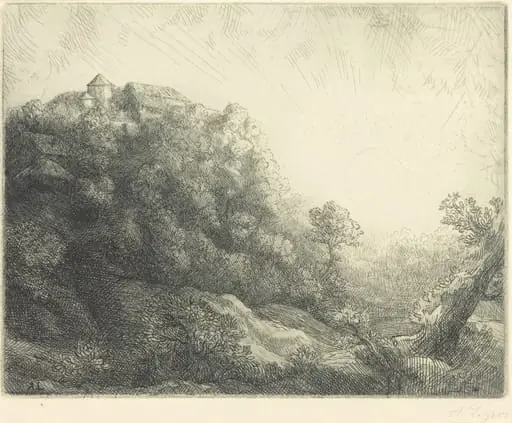 Sunrise (Lever du soleil: L'automne)
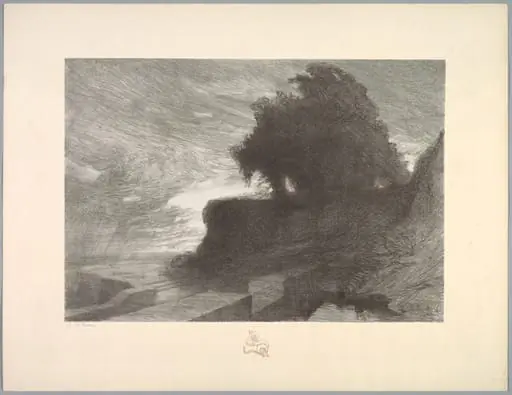 Suite de Paysages: Landscape, Plate 4, Remarque, Snake
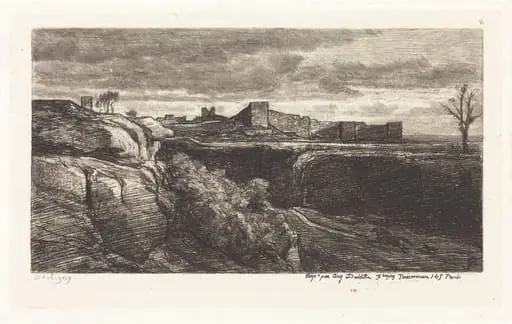 Ruins of the Chateau of Cremieux (Les Ruines du chateau de Cremieux)
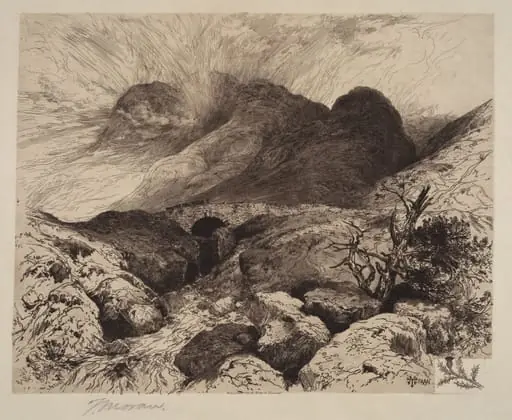 Bridge in the Pass of Glencoe—Scotland
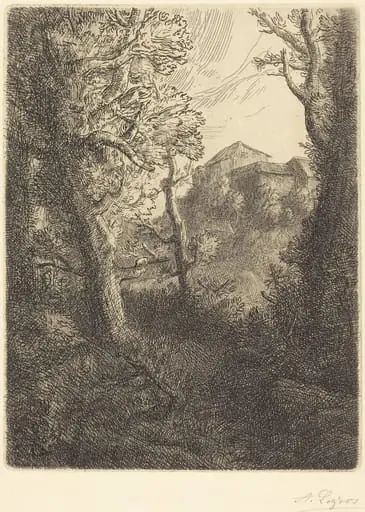 Landscape (Paysage)
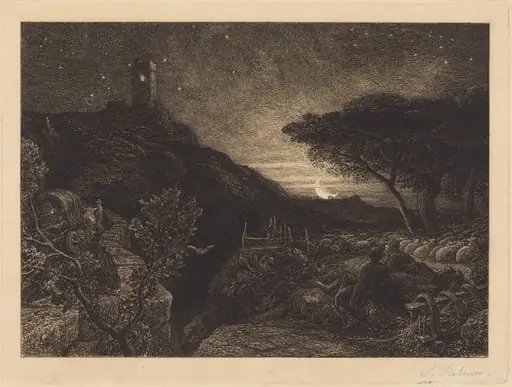 The Lonely Tower
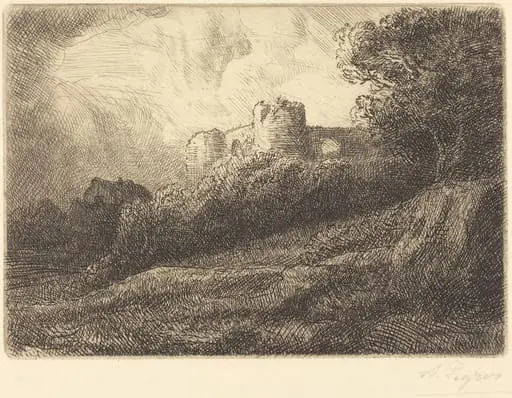 Landscape (Paysage)