Artwork
Ladies Walking
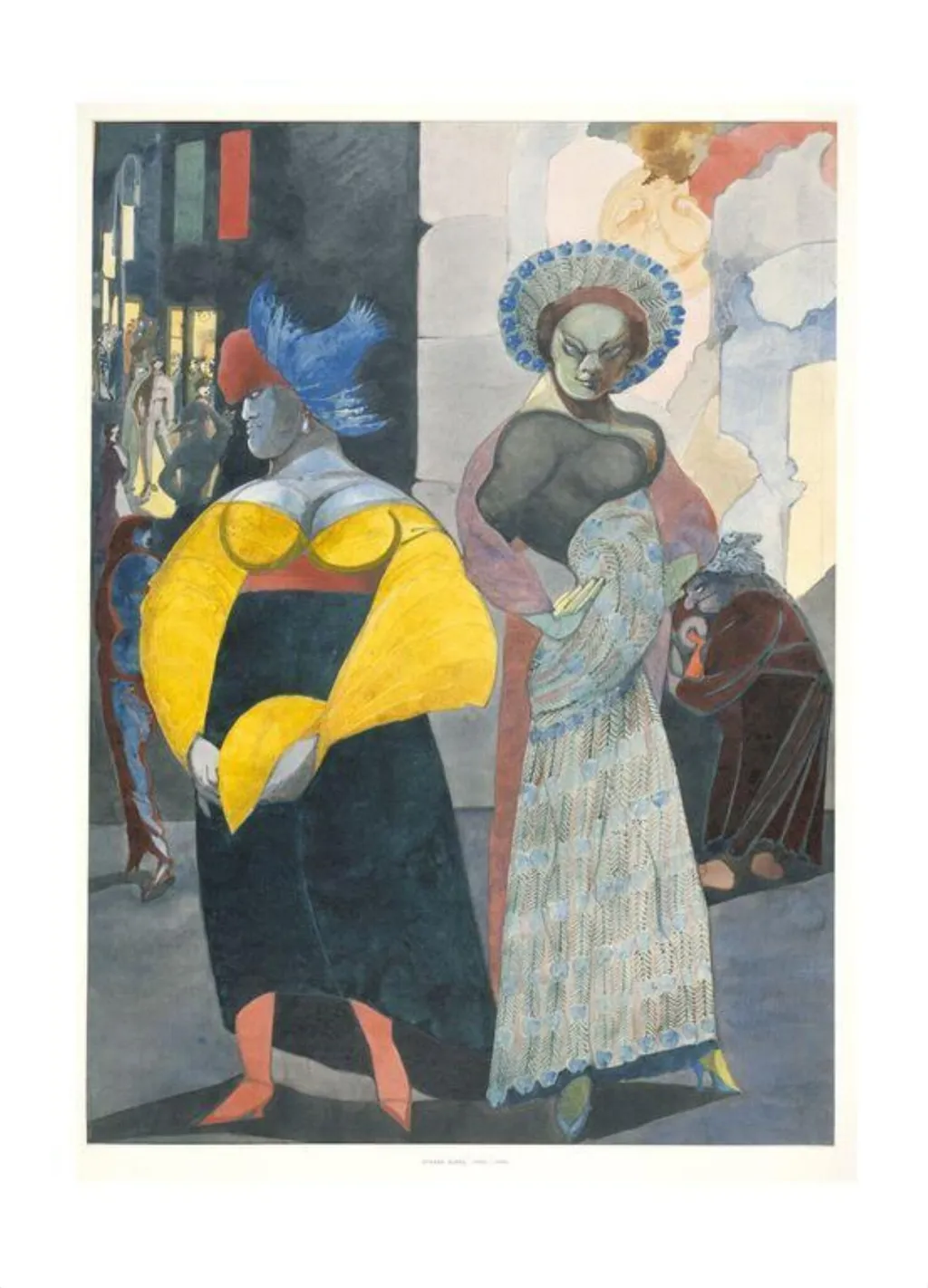
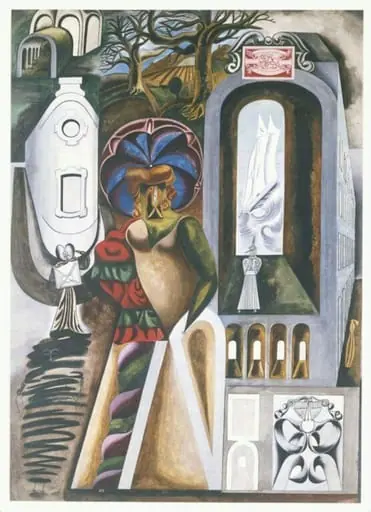
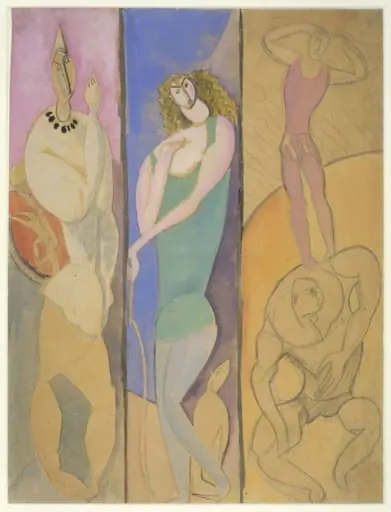
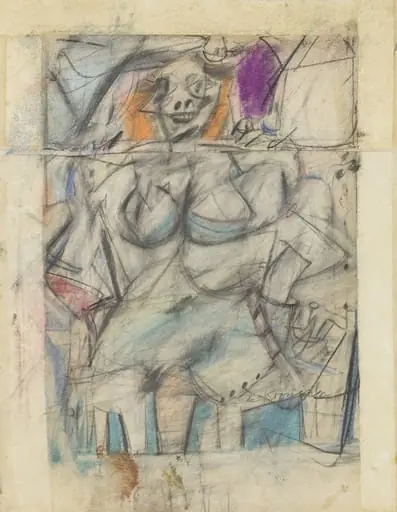
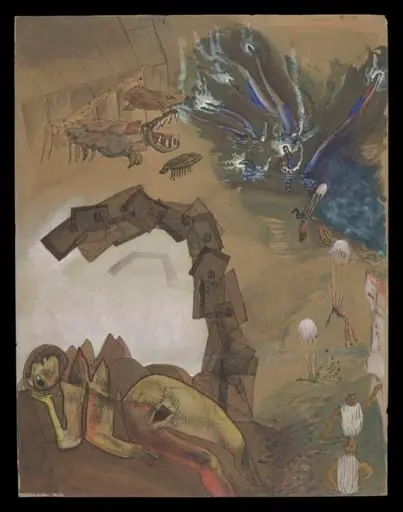
Ladies Walking is a watercolor work on paper by the Surrealist artist Edward Burra. It dates from 1947 and is held in the collection of the Victoria and Albert Museum. This watercolour by Burra captures two women walking at night, their forms sharply defined against a divided urban landscape.
About this work
Overview
This watercolour by Burra captures two women walking at night, their forms sharply defined against a divided urban landscape. The medium’s fluidity allows shadows to bleed into light, creating a sense of instability. The composition balances clarity and ambiguity, reflecting Burra’s interest in the liminal spaces of urban life—where social norms fray and unseen narratives emerge.
Subject & Meaning
The figures, dressed in tailored suits and tilted hats, move with deliberate authority through the nocturnal street. While the title alludes to prostitution, their posture resists victimhood, suggesting autonomy rather than exploitation. Burra avoids explicit narrative, instead inviting speculation about identity and power in spaces where daylight’s rules no longer apply.
Technique & Style
Burra employs watercolour’s inherent transparency to layer light and shadow, creating a chiaroscuro effect without heavy outlines. The pigment bleeds at the edges, dissolving boundaries between figure and environment. This technique mirrors the psychological tension of the scene—control and chaos coexisting, as if the night itself is dissolving under scrutiny.
History & Provenance
Created in the 1930s, this work emerged during Burra’s sustained engagement with urban nightlife and marginal figures. It was likely made in London, where he observed the city’s undercurrents of vice and resilience. The piece remained in private hands until its inclusion in institutional collections, where it became a touchstone for his exploration of social ambiguity.
Context
In interwar Britain, artists increasingly turned to the city’s nocturnal margins to examine shifting gender roles and class boundaries. Burra’s work aligns with broader Surrealist interests in the subconscious and the uncanny, yet his focus remained grounded in observed reality—capturing the quiet defiance of women navigating spaces designed to obscure them.
Legacy
The watercolour endures as a quiet study in visual tension—where light defines form but shadow suggests meaning. Burra’s refusal to resolve the scene’s moral or social implications invites ongoing interpretation. It stands as a precursor to later postwar art that prioritized psychological nuance over narrative clarity.
Artist & collection

Artist
Edward John Burra CBE was an English painter, draughtsman, and printmaker, best known for his depictions of the urban underworld, Black culture and the Harlem scene of the 1930s.