Artwork
Sălcii la Bucium
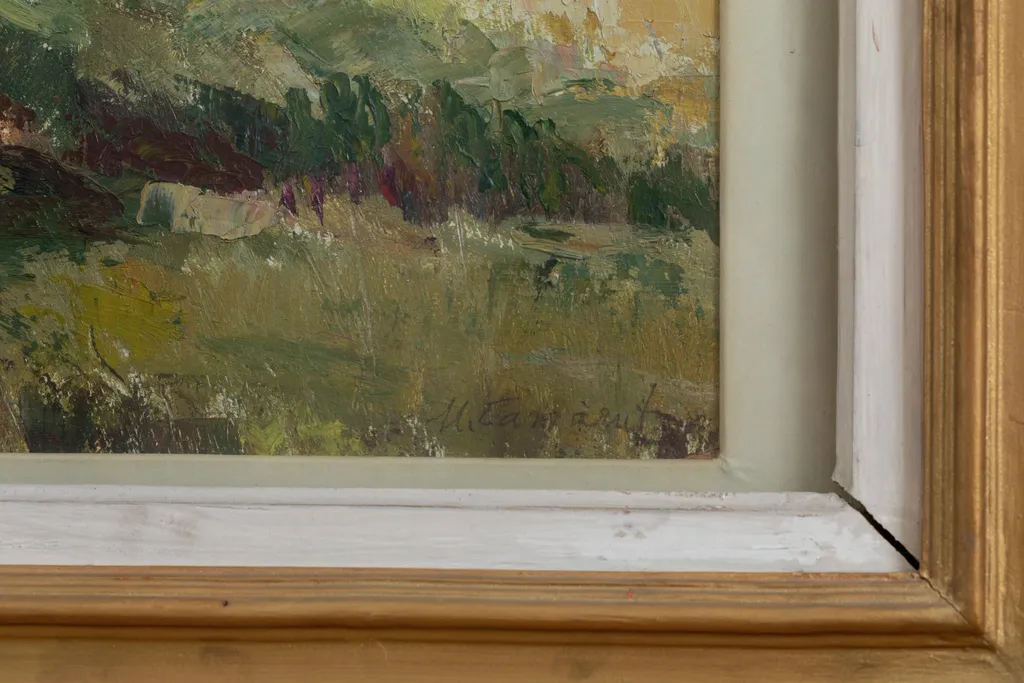
Sălcii la Bucium is a print by Cămăruț Mihai. It dates from 1942 and is held in the collection of the Moldova National Museum Complex.
About this work
Overview
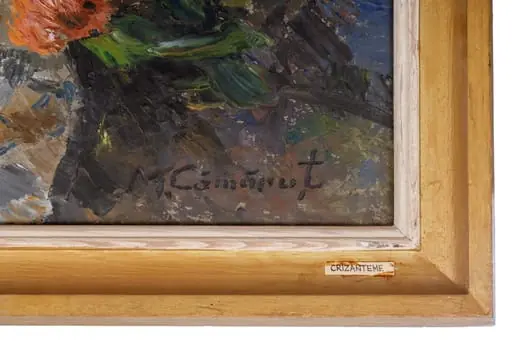
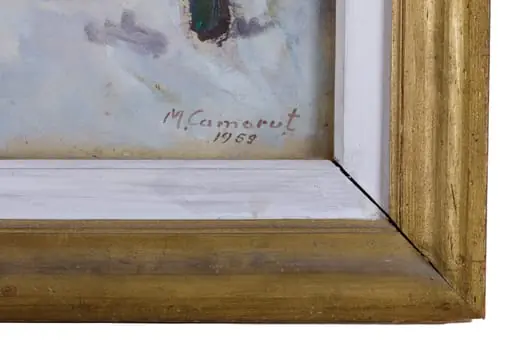
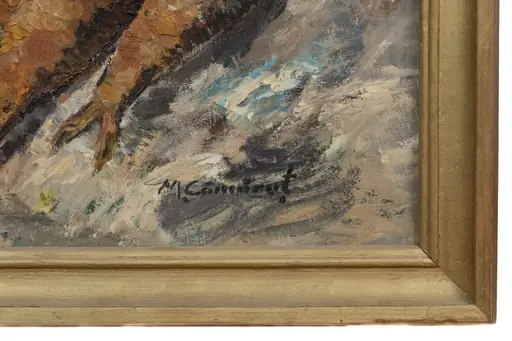
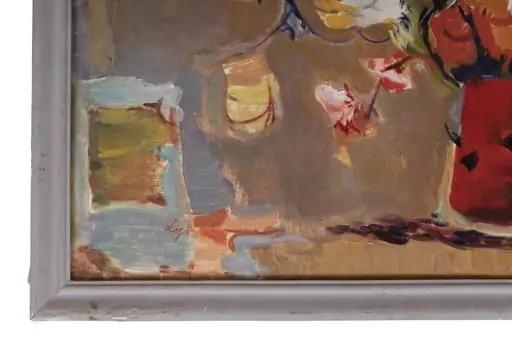
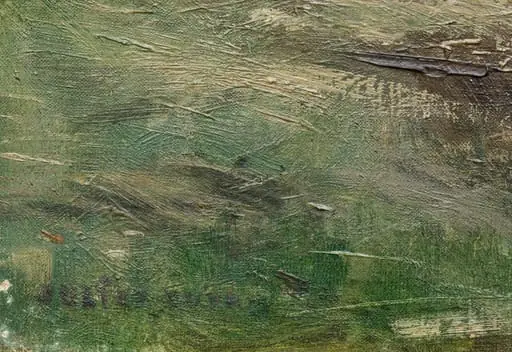
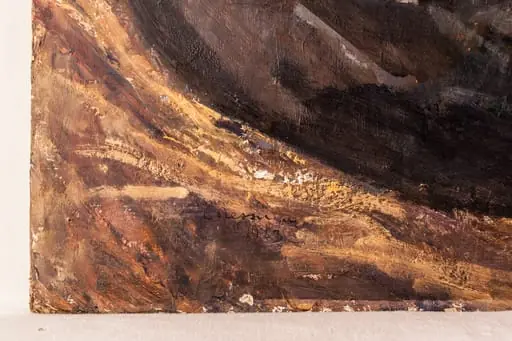
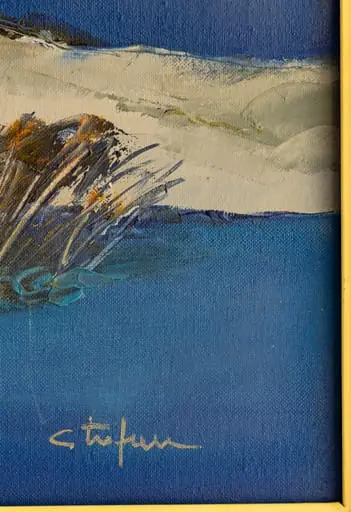
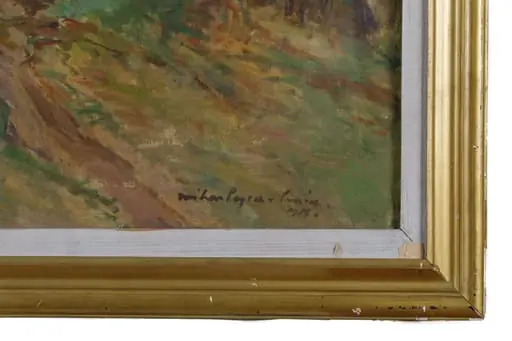
The artist’s signature appears faintly in one corner, hinting at a personal, unpolished approach to the subject.
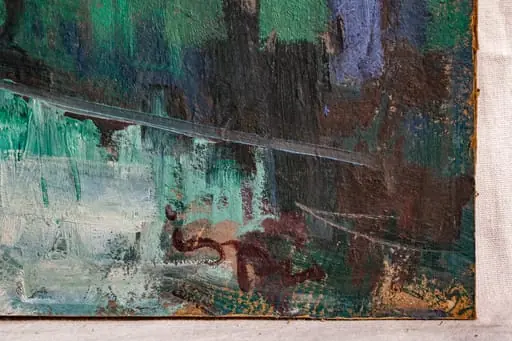
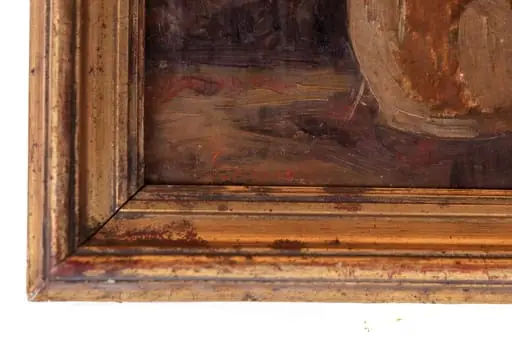
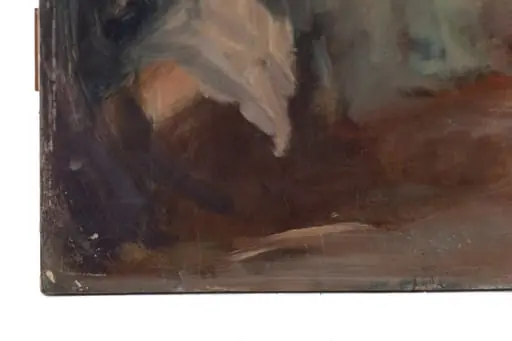
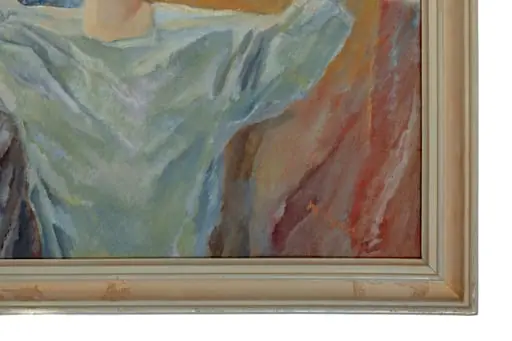
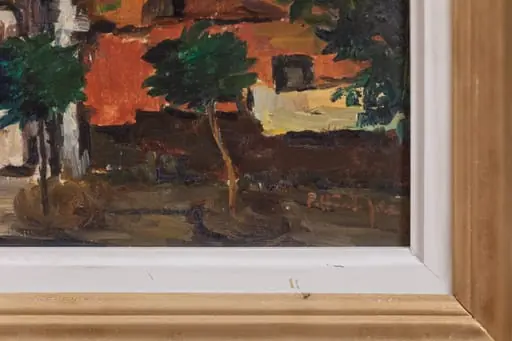
Sălcii la Bucium, dated around 1942, is a landscape painting by Romanian artist Cămăruț Mihai. Executed in oil or similar medium, it captures a rural scene near Bucium with loose, gestural brushwork. The composition is dominated by muted greens and browns, suggesting trees and earth without precise definition. The artist’s signature appears faintly in one corner, hinting at a personal, unpolished approach to the subject.
Subject & Meaning
The painting depicts a quiet stretch of countryside, likely a wooded path or road winding through a grove of willows. There is no narrative or human presence—only the quiet rhythm of nature. The blurred forms and lack of detail suggest an emphasis on atmosphere over documentation, reflecting a contemplative engagement with the land rather than a topographical record.
Technique & Style
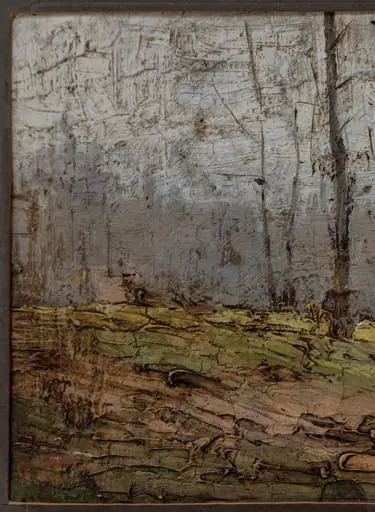
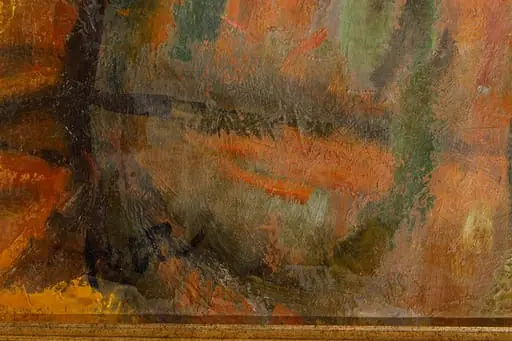
Mihai employs thick, uneven brushstrokes that build texture rather than define form. The paint is applied with urgency, creating a sense of immediacy. Colors are restrained, grounded in earth tones, with darker areas suggesting shadow or depth. The work leans toward expressive abstraction, prioritizing tactile surface and emotional tone over realism or precision.
History & Provenance
The painting’s early history is undocumented, and its exhibition record remains sparse. It likely remained in private hands in Romania, possibly within the artist’s circle or local collectors. No major institutional acquisitions or public displays are recorded prior to recent scholarly interest, suggesting it was not widely circulated during the artist’s lifetime.
Context
Created during World War II, the work reflects a retreat from public or political themes into intimate, personal observation. In a period marked by upheaval, Mihai’s focus on quiet rural scenes aligns with a broader trend among Romanian artists seeking solace in the natural world. The style echoes regional modernist tendencies that valued emotional resonance over academic detail.
Legacy
Sălcii la Bucium contributes to an understudied body of Romanian interwar landscape painting that prioritized mood and materiality. While not widely known outside regional circles, it exemplifies a quiet, textured approach to nature that distinguishes Mihai’s work from more formalist contemporaries. Its preservation offers insight into lesser-documented artistic responses to a turbulent era.
Artist & collection
Artist
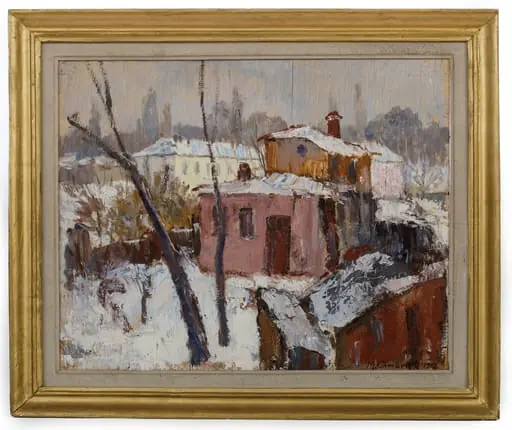
Cămăruț Mihai made prints and still-life paintings in mid-20th-century Romania. You’ll find still, glowing oranges in Natură moartă - portocale and snowy hills in Peisaj de iarnă, both quiet scenes that feel close to…