Artwork
Scrumbii afumate
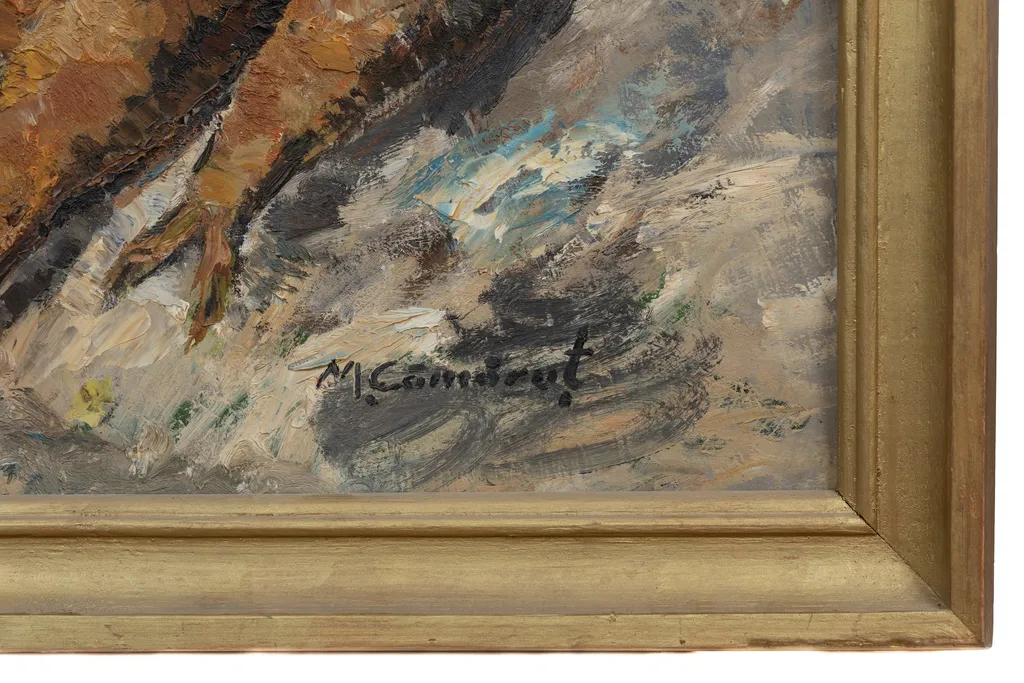
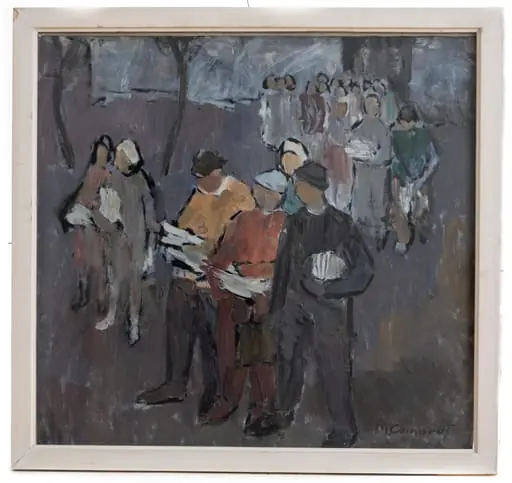
Scrumbii afumate is a print by Cămăruț Mihai. It dates from 1942 and is held in the collection of the Moldova National Museum Complex. Scrumbii afundate, executed around 1942 by Romanian painter Mihai Cămăruț, presents an intimate view of an abstracted surface.
About this work
Overview
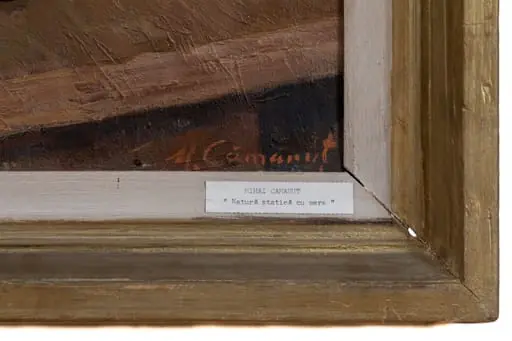
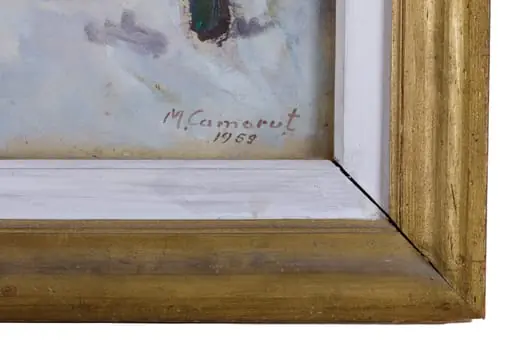
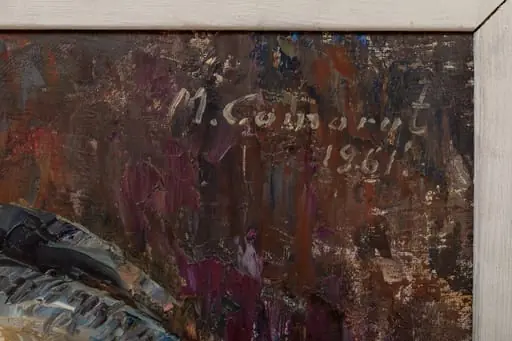
Cămăruț,” appears in the lower right, while the wooden frame remains partially visible, hinting at the work’s original display conditions.
Scrumbii afundate, executed around 1942 by Romanian painter Mihai Cămăruț, presents an intimate view of an abstracted surface. The canvas is dominated by a tumult of earthy browns, muted blues and stark whites that interlock in a dynamic, almost chaotic rhythm. A modest signature, “M. Cămăruț,” appears in the lower right, while the wooden frame remains partially visible, hinting at the work’s original display conditions.
Technique & Style
The surface is built up with heavy impasto, the paint applied in thick, overlapping layers that catch light and create a palpable relief. Brushwork is loose and gestural, suggesting a rapid, perhaps spontaneous execution. The uneven blending of hues and the visible texture give the composition a raw, unfinished quality, reminiscent of a study or sketch rather than a polished finish.
Subject & Meaning
Absent any representational cues, the work functions as an exploration of materiality and motion. The swirling strokes may evoke natural phenomena such as wind or water, while the earthy palette grounds the piece in a tactile, almost primal sensibility. The title, translating to “smoked swirls,” reinforces an association with vaporous, fleeting forms.
History & Provenance
Created during the early 1940s, a period marked by political upheaval in Romania, the painting’s early ownership record is sparse. It later entered private collections before being documented by the museum’s cataloguing team. No exhibition history is currently recorded, and the work remains attributed solely to Cămăruț based on the signed inscription.
Context
Cămăruț’s oeuvre from the 1940s often reflects a transition from academic training toward more expressive, textural approaches. This piece aligns with broader European trends of the time, where artists experimented with thick paint application and abstracted forms to convey emotional intensity. Its modest scale and raw execution place it alongside contemporaneous sketches that prioritize gesture over detailed representation.
Artist & collection
Artist
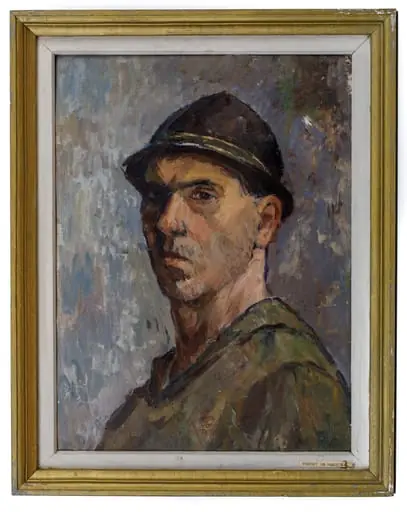
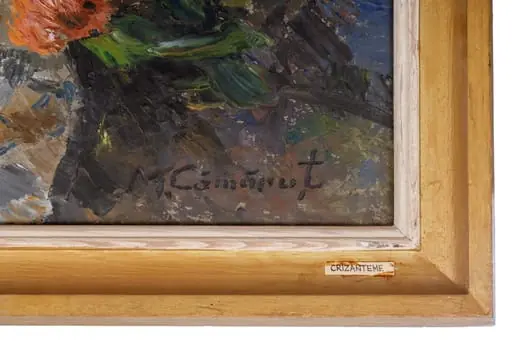
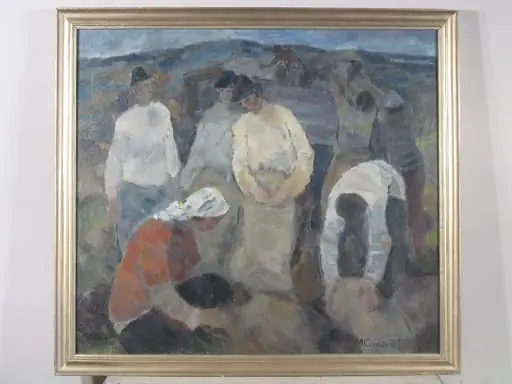
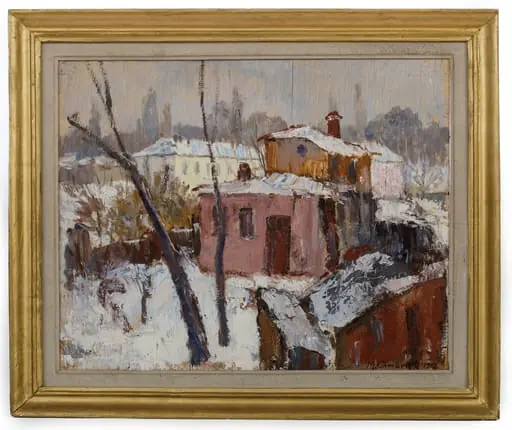
Cămăruț Mihai made prints and still-life paintings in mid-20th-century Romania. You’ll find still, glowing oranges in Natură moartă - portocale and snowy hills in Peisaj de iarnă, both quiet scenes that feel close to…