Artwork
Hovedbygningen på Gisselfeld Kloster
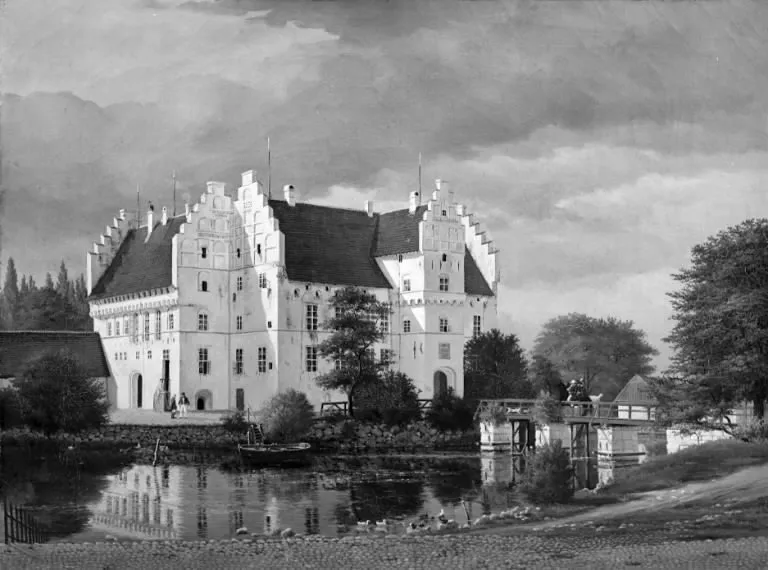
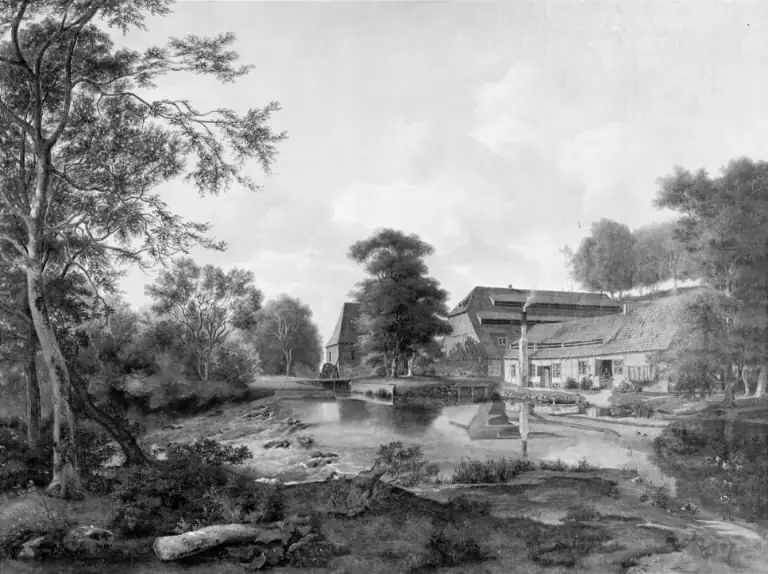
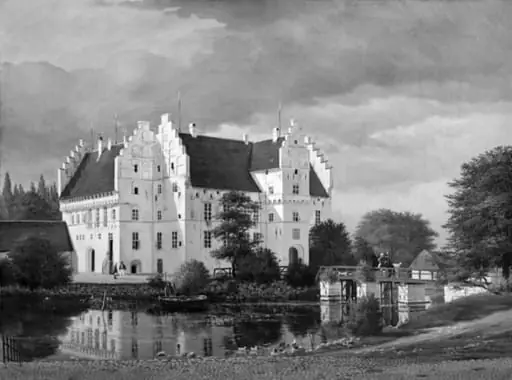
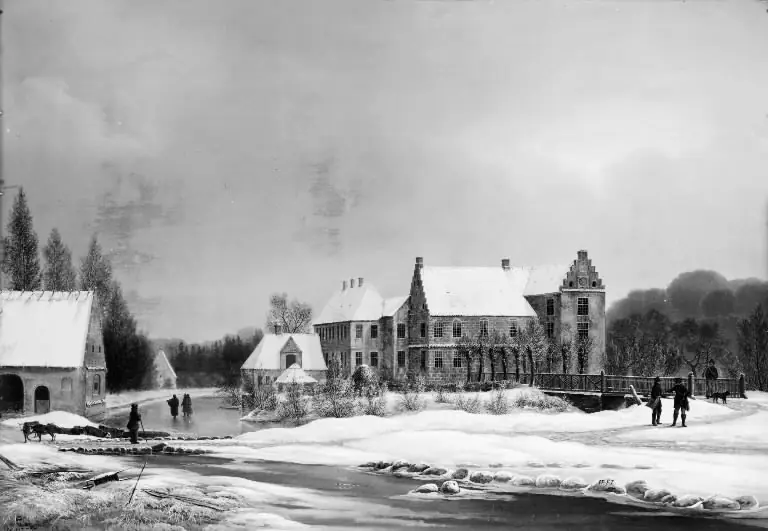
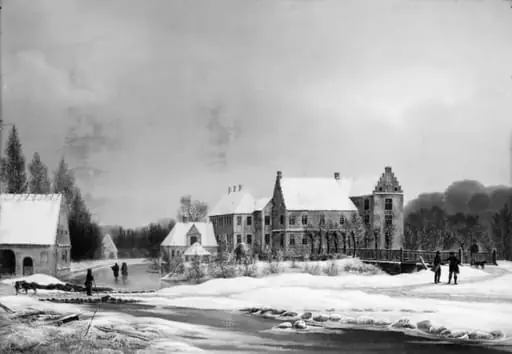
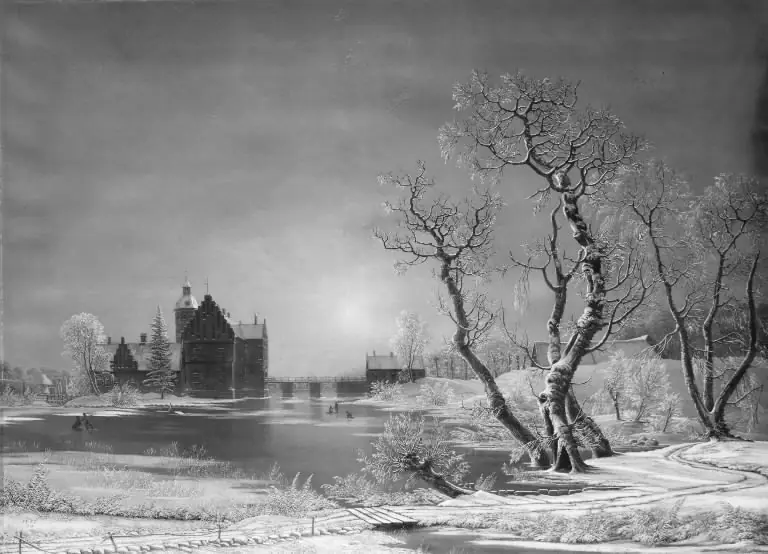
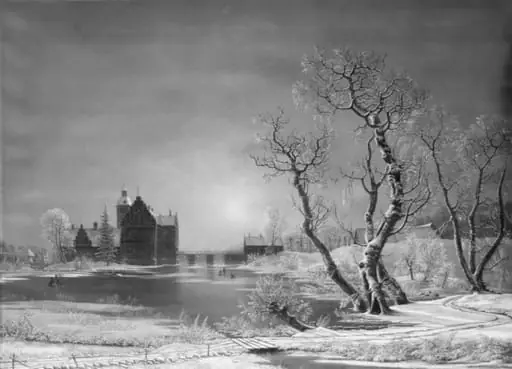
Hovedbygningen på Gisselfeld Kloster is an oil painting by C.V.M. Jensen. It dates from 1836 and is held in the collection of the Statens Museum for Kunst. Painted in 1836 by C.
About this work
Overview
Rendered with careful attention to architectural detail and natural surroundings, the painting reflects a quiet, contemplative mood.
Painted in 1836 by C.V.M. Jensen, this oil work captures the main building of Gisselfeld Kloster, a historic Danish estate. Rendered with careful attention to architectural detail and natural surroundings, the painting reflects a quiet, contemplative mood. It is part of the permanent collection at Statens Museum for Kunst in Copenhagen, where it remains a representative example of early 19th-century Danish landscape painting.
Subject & Meaning
The composition centers on the white-clad main building of the monastery estate, its symmetrical facade and dark tiled roof anchoring the scene. Surrounding trees and still water frame the structure, while a small boat and distant figures suggest human presence without disruption. The image conveys order and stillness, evoking the monastery’s enduring role as a place of retreat and continuity within the Danish countryside.
Technique & Style
Jensen employed chiaroscuro to model the building’s surfaces, enhancing volume through subtle shifts in light and shadow. The brushwork is restrained, favoring smooth transitions over texture, and the palette is muted, dominated by whites, grays, and earth tones. The water reflects the sky and architecture with minimal distortion, reinforcing the painting’s calm, measured rhythm.
History & Provenance
The painting was completed during a period of renewed interest in Denmark’s monastic heritage. It entered the collection of Statens Museum for Kunst shortly after its creation, likely acquired as part of a broader effort to document national architectural landmarks. Its provenance remains unbroken since its completion, with no record of public exhibition beyond institutional holdings.
Context
In the 1830s, Danish artists increasingly turned to local landscapes and historic buildings as subjects, moving away from idealized foreign scenes. Gisselfeld Kloster, once a Cistercian monastery, had been repurposed as a noble estate, making it a symbol of layered Danish history. Jensen’s depiction aligns with this national trend, emphasizing quiet dignity over dramatic narrative.
Legacy
Though not widely reproduced, the painting is recognized within Danish art history as a precise and restrained example of topographical realism. It contributes to the understanding of how 19th-century painters engaged with heritage sites, balancing documentation with atmospheric tone. Its continued presence in the national museum underscores its role as a quiet witness to Denmark’s cultural memory.
Artist & collection