Artwork
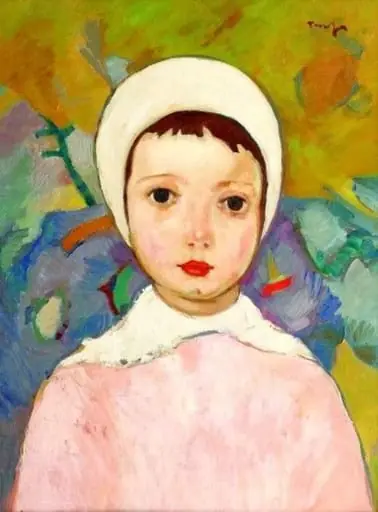
Portet de fetiță
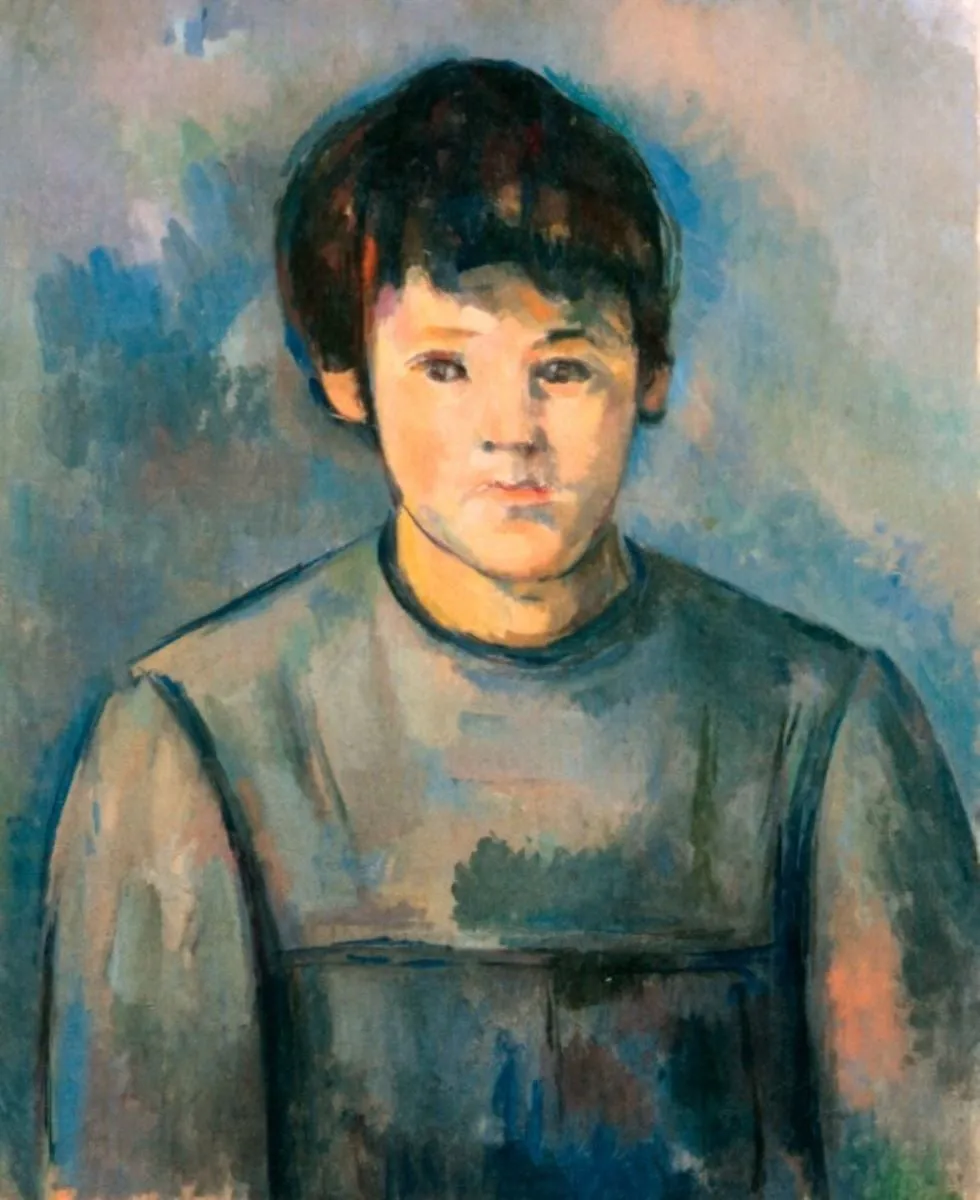
Portet de fetiță is an unspecified painting by Paul Cézanne. It dates from 1896 and is held in the collection of the National Museum of Art of Romania.
About this work
Overview
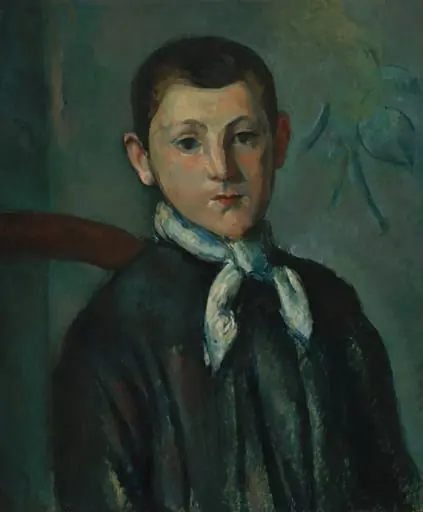
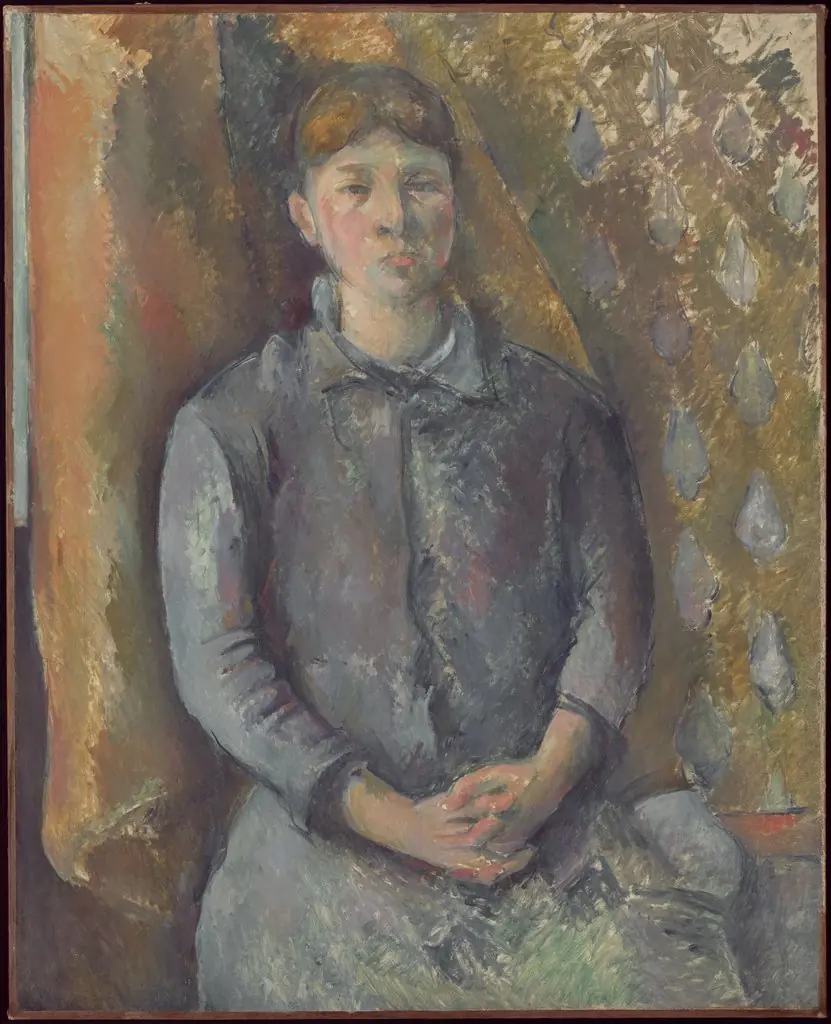
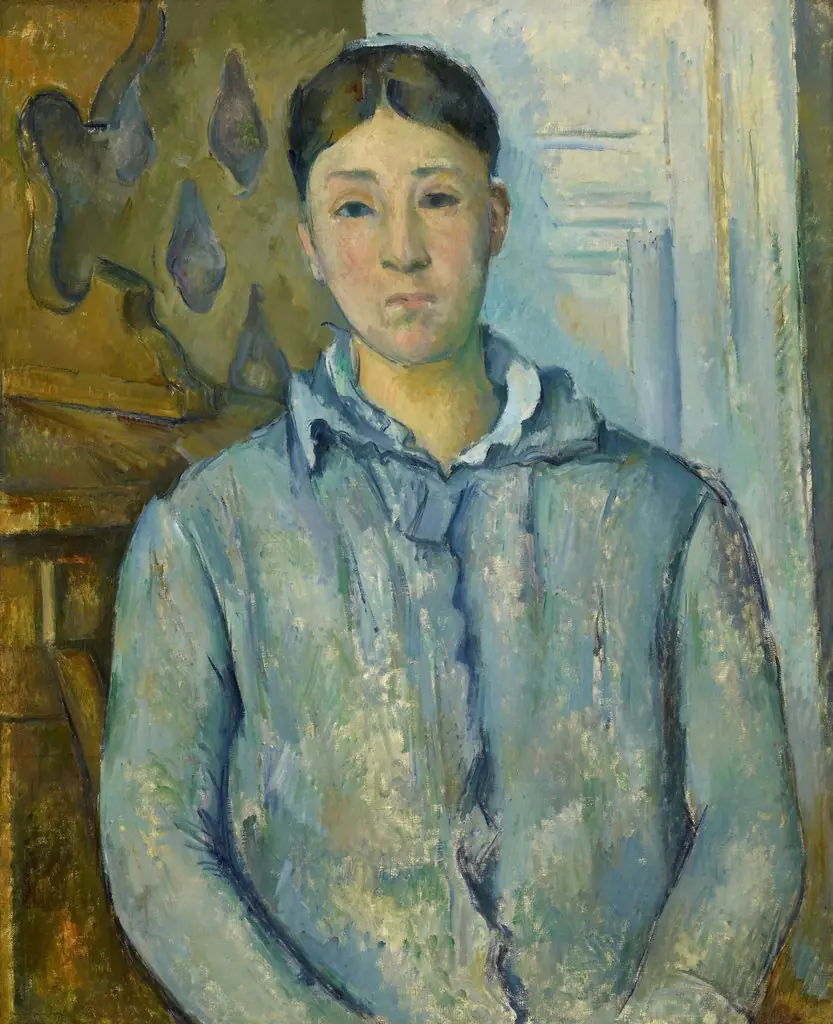
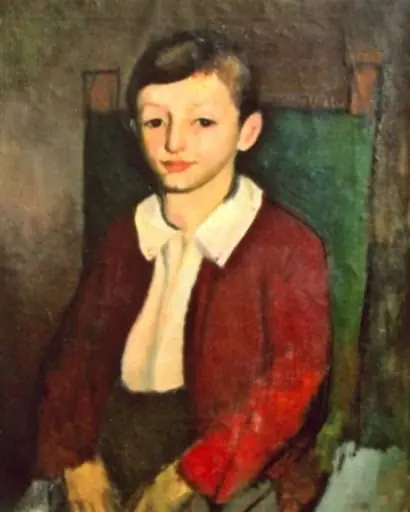
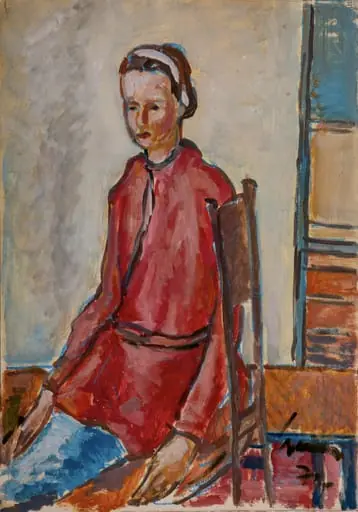
Created in 1896, this oil painting by Paul Cézanne presents a solitary figure rendered in a restrained palette. The composition centers on a youth whose direct gaze meets the viewer, set against a background of muted blues and grays that emphasize the figure’s presence without distraction.
Subject & Meaning
The work depicts a young boy with dark hair, his expression neutral yet subtly intense. Dressed in a gray shirt marked by a black vertical stripe, his posture and steady eye contact suggest a moment of quiet contemplation, inviting viewers to consider the inner life of the sitter.
Technique & Style
Cézanne employs visible, short brushstrokes that build texture across the canvas, especially in the background’s atmospheric tones. The limited color scheme of blues, grays, and muted earth tones reflects his late-period interest in tonal harmony and structural simplification, while the brushwork conveys a tactile surface.
History & Provenance
Painted toward the end of Cézanne’s career, the piece entered private collections before being documented in early 20th‑century catalogues of his work. Its provenance traces through several European owners, eventually reaching a museum collection where it is displayed as part of the artist’s portrait series.
Artist & collection
Artist
Paul Cézanne painted French landscapes and still lifes at the turn of the 20th century, bridging Impressionism and a new way of seeing form.