Artwork
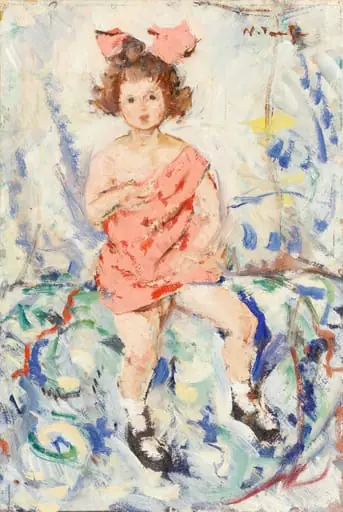
Fetiță în roz
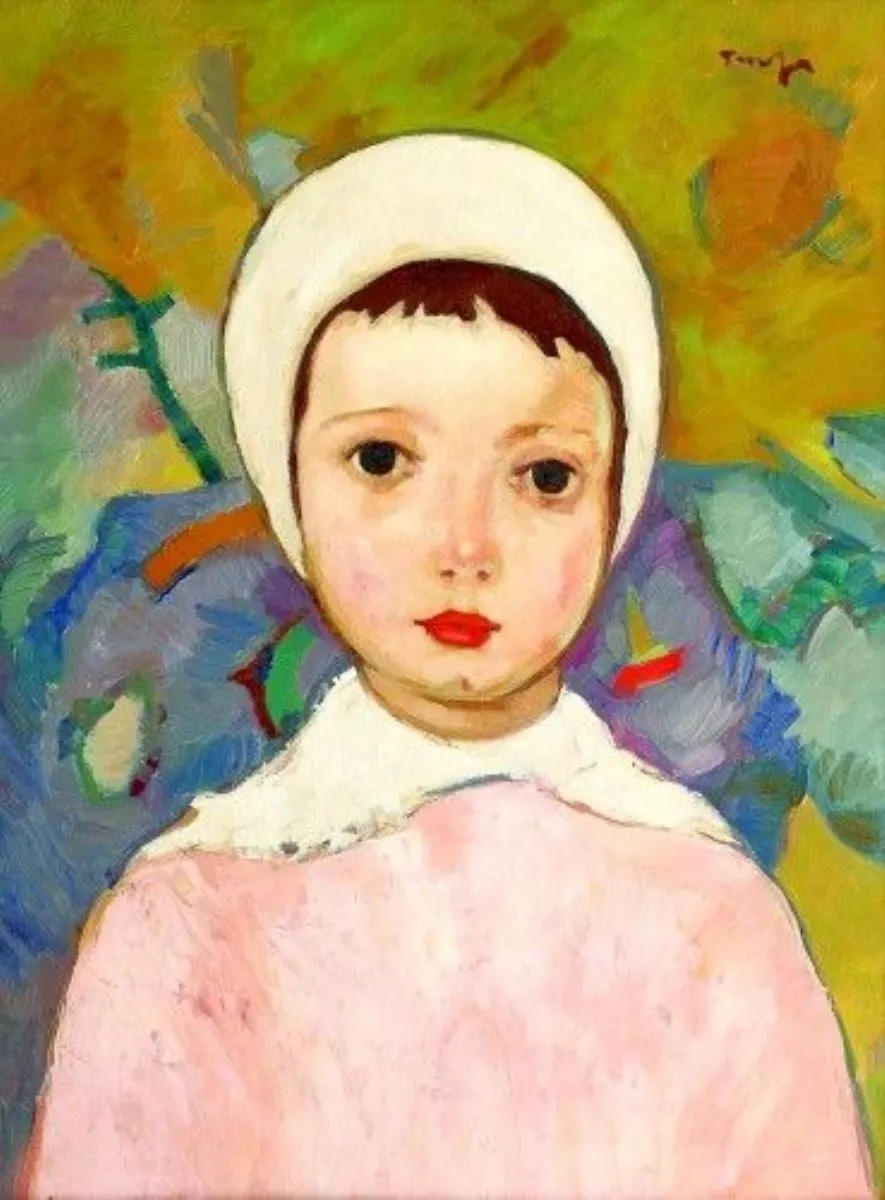
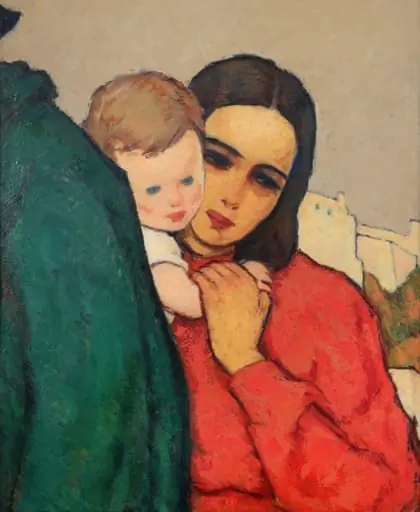
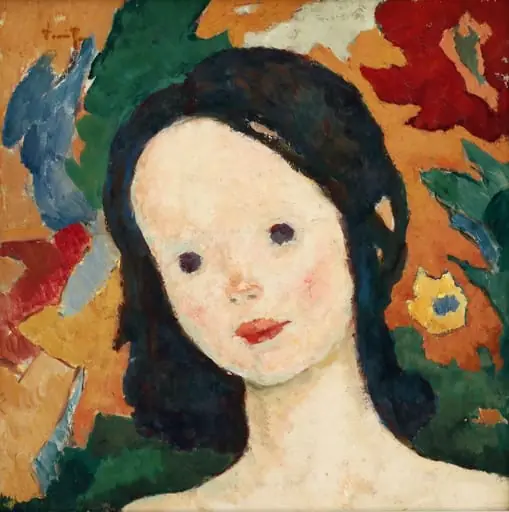
Fetiță în roz is an unspecified painting by Nicolae Tonitza. It is held in the collection of the Colecție particulară - Monaco. This image depicts a young girl dressed in a light pink dress and white cap, rendered with energetic, unrefined brushwork.
About this work
Overview
The background consists of bold, unmixed patches of green, yellow, and blue, creating a dynamic but non-naturalistic setting.
This image depicts a young girl dressed in a light pink dress and white cap, rendered with energetic, unrefined brushwork. The background consists of bold, unmixed patches of green, yellow, and blue, creating a dynamic but non-naturalistic setting. The child’s features are simplified—dark eyes and a red mouth—emphasizing expression over detail. The overall effect is spontaneous, with visible texture and a sense of immediacy in the application of paint.
Subject & Meaning
The subject is a child, portrayed without narrative context or symbolic props. Her neutral gaze and minimal facial features invite quiet contemplation rather than emotional storytelling. The choice of a pink dress and white cap suggests youth and innocence, but the abstract background resists conventional sentimentality. The focus remains on presence rather than identity, leaving interpretation open.
Technique & Style
Thick, uneven brushstrokes define the composition, with paint applied in a loose, almost gestural manner. Colors are applied directly from the tube, avoiding blending, resulting in a vibrant, tactile surface. The impasto technique creates physical texture, particularly in the dress and background. The child’s face is rendered with deliberate simplicity, contrasting with the chaotic energy of the surroundings.
History & Provenance
The work’s origin and ownership history are not documented in available records. It is cataloged as an image without attribution to a known artist or date. Its classification as a standalone visual artifact suggests it may have been produced outside formal artistic institutions, possibly as a private or experimental study.
Context
The style aligns with early 20th-century movements that prioritized emotional expression over realism, such as Expressionism or Fauvism. The disregard for anatomical precision and the use of non-naturalistic color reflect a broader shift away from academic conventions. However, without a known artist or provenance, its specific cultural or artistic lineage remains uncertain.
Legacy
The work exemplifies a tendency in modern visual culture to value rawness and immediacy in representation. Its informal technique and lack of traditional composition have influenced later approaches to depicting childhood in non-idealized terms. While not widely exhibited or studied, it contributes to a broader understanding of informal modernist practices.
Artist & collection
Artist
Nicolae Tonitza painted quiet still lifes and village scenes, often showing colorful vegetables on a table or blooming flowers in simple pots.