Artwork
Portret de copil
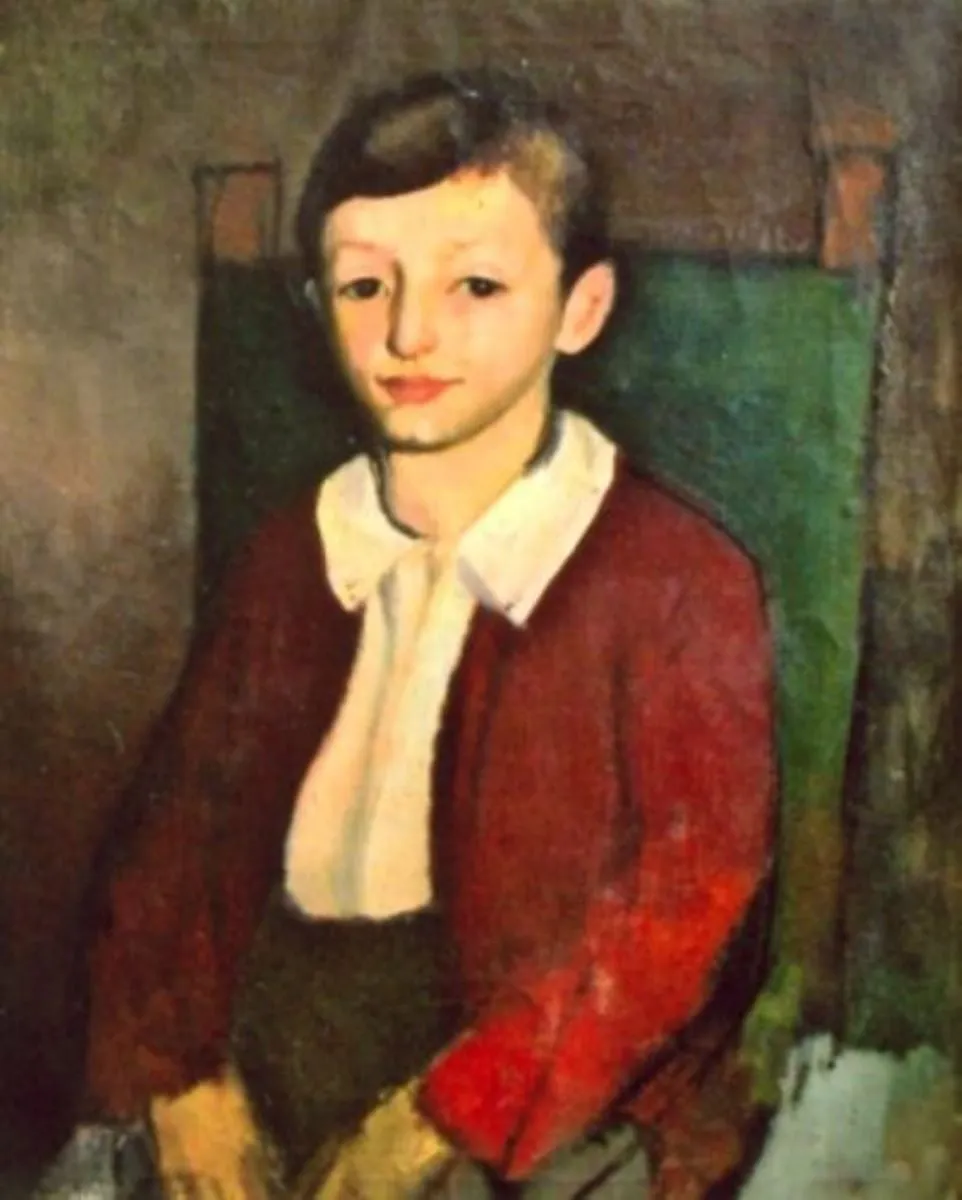
Portret de copil is an unspecified painting by Corneliu Baba. It dates from 1972 and is held in the collection of the Argeș County Museum.
About this work
Overview
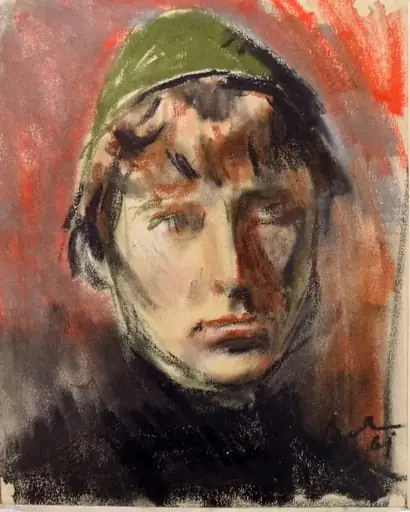
Painted in 1972 by Corneliu Baba, this portrait captures a young boy in quiet stillness. The composition isolates the figure against an indistinct, tonal background, drawing focus to the child’s face and attire. The work belongs to Baba’s later period, marked by a heightened emphasis on materiality and emotional restraint.
Subject & Meaning
The subject is a boy with short blond hair and a solemn gaze, dressed in a red sweater over a white collared shirt. His expression is neither playful nor theatrical, suggesting introspection or quiet endurance. The absence of context or narrative cues invites contemplation of childhood as a state of inner presence rather than external story.
Technique & Style
Baba applied paint thickly in bold, directional strokes, particularly on the sweater, using impasto to create a tactile, almost sculptural surface. The texture contrasts with the blurred, loosely rendered background, enhancing the boy’s physical presence. The brushwork is deliberate yet unrefined, emphasizing material weight over polished finish.
History & Provenance
The painting was completed during Baba’s mature phase in Romania, a time when state artistic expectations often clashed with personal expression. Though not widely exhibited internationally at the time, it remained within the artist’s circle and later entered public collections, reflecting its significance in his oeuvre.
Context
Created during the later years of communist Romania, the portrait diverges from official socialist realism by rejecting idealization. Baba’s focus on psychological depth and physical texture aligns with a broader trend among Romanian artists who sought authenticity through formal experimentation rather than political messaging.
Legacy
This portrait exemplifies Baba’s distinctive approach to figuration, where emotional gravity is conveyed through texture and tone rather than expression. It has influenced later Romanian painters interested in the materiality of paint and the quiet dignity of ordinary subjects, securing its place in postwar Eastern European art.
Artist & collection
Artist
Corneliu Baba made prints and paintings that feel like quiet stories, often borrowing from older art.