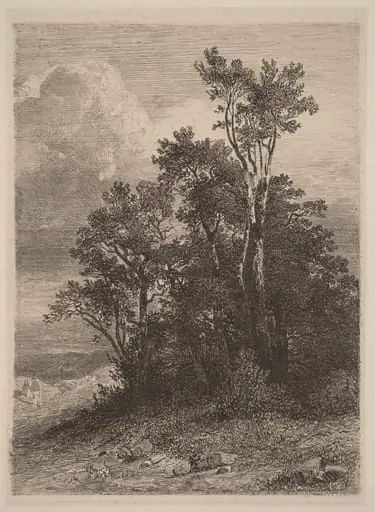
Artwork
Ancient Trees on a Hillside
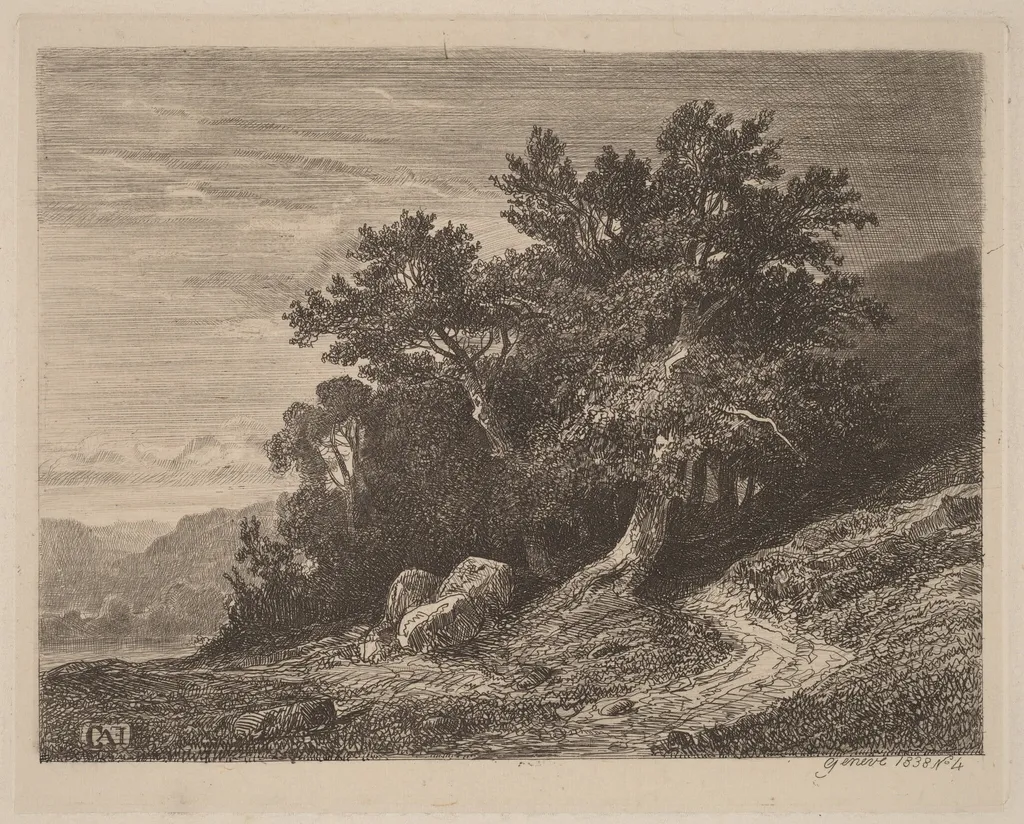
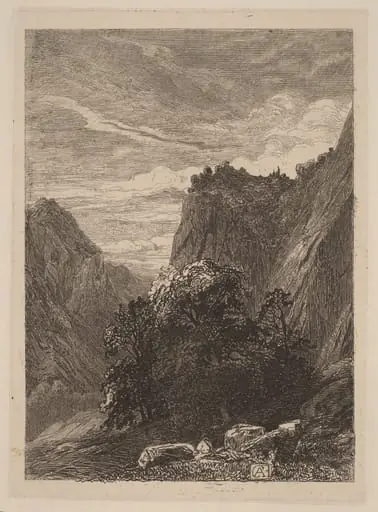
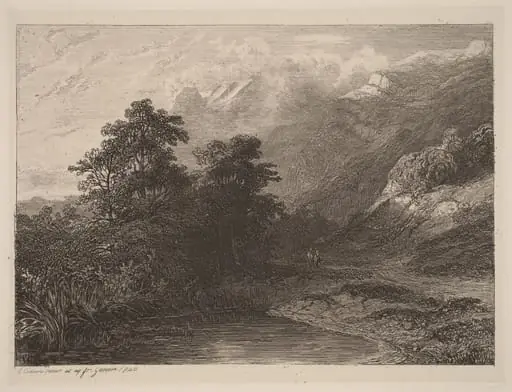
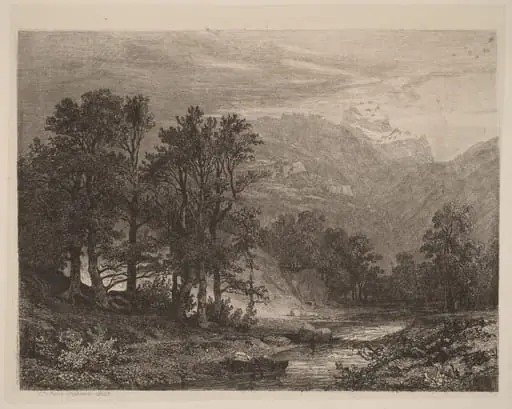
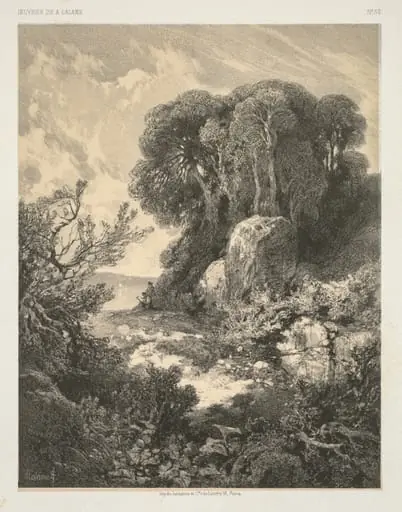
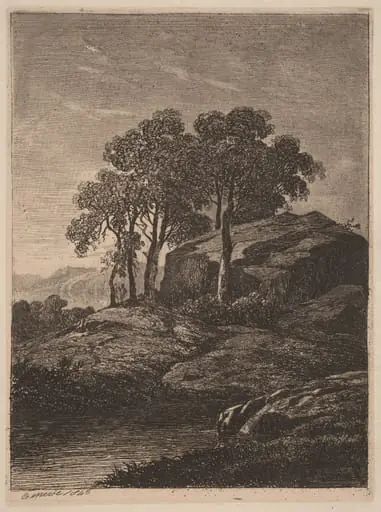
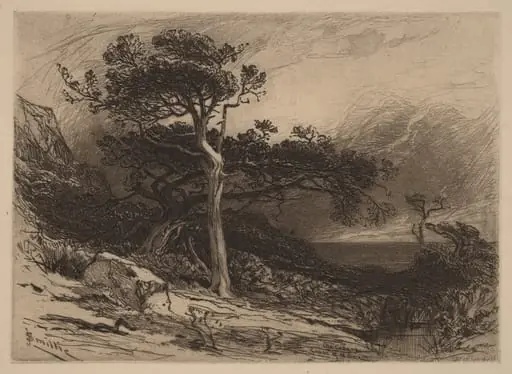
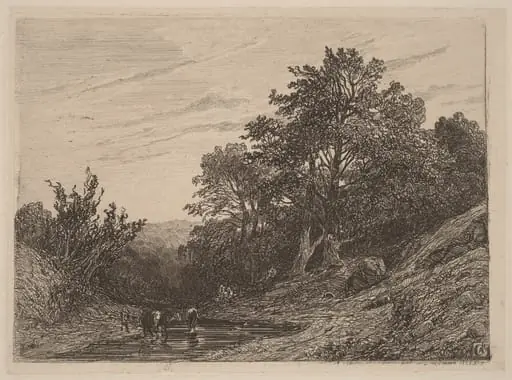
Ancient Trees on a Hillside is an ink print by the Romanticist artist Alexandre Calame. It dates from 1838 and is held in the collection of the National Gallery of Art.
About this work
Overview
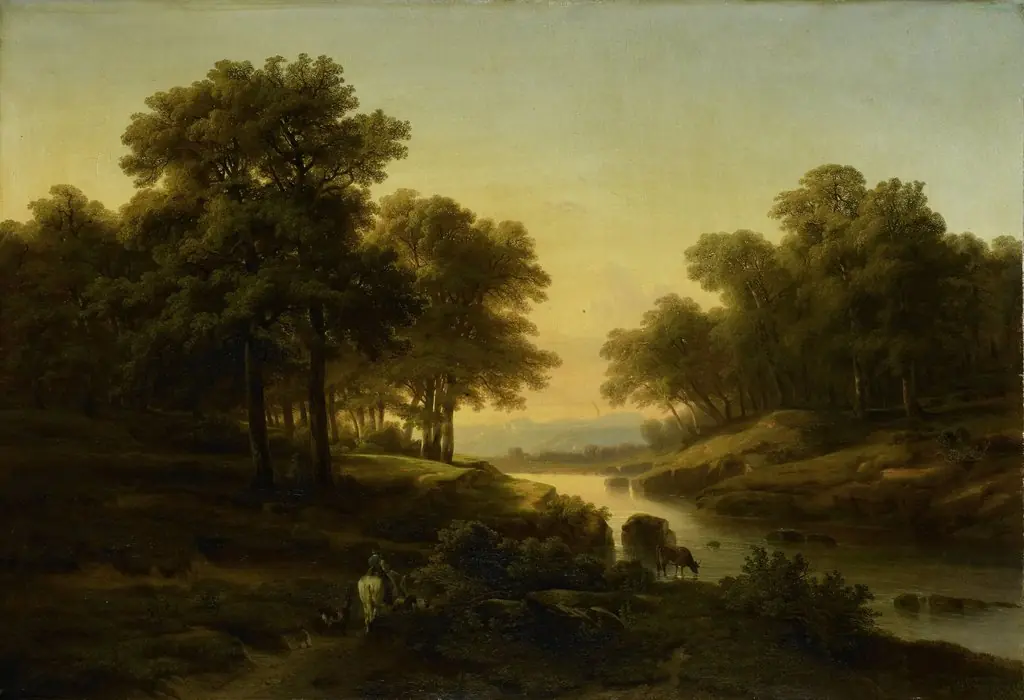
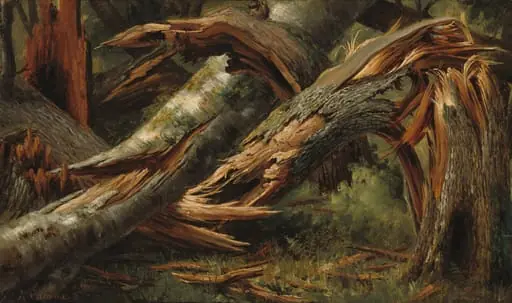
Created in 1838, Alexandre Calame’s print titled *Ancient Trees on a Hillside* is an etching executed on chine collé. The work presents a solitary, weathered tree anchored to a steep, rocky slope, its twisted limbs reaching toward a muted sky. A narrow stream winds below, suggesting the persistence of water amid the harsh terrain.
Subject & Meaning
The composition centers on the lone tree, whose gnarled bark and uneven branches convey a sense of endurance against the elements. The juxtaposition of the rugged hillside and the gentle flow of the stream hints at a dialogue between permanence and change, reflecting 19th‑century Romantic interests in nature’s power and mystery.
Technique & Style
Calame employed traditional etching methods, incising fine lines into a metal plate before transferring the image onto a paper support bonded to a thin layer of paper (chine collé). Delicate hatching creates subtle shading, rendering the tree’s texture and the rock’s surface with precision, while the overall tonal restraint aligns with the period’s emphasis on naturalistic detail.
History & Provenance
The print was produced during Calame’s early career, a time when he was establishing his reputation for Alpine landscapes. While specific ownership records are limited, the work has appeared in several 19th‑century print collections and remains documented in museum inventories as an example of his printmaking output.
Own this work as a print
Artist & collection