Artwork
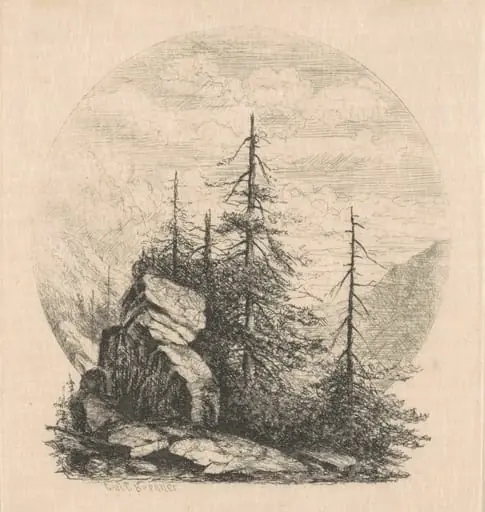
Pines on a Mountaintop at Night
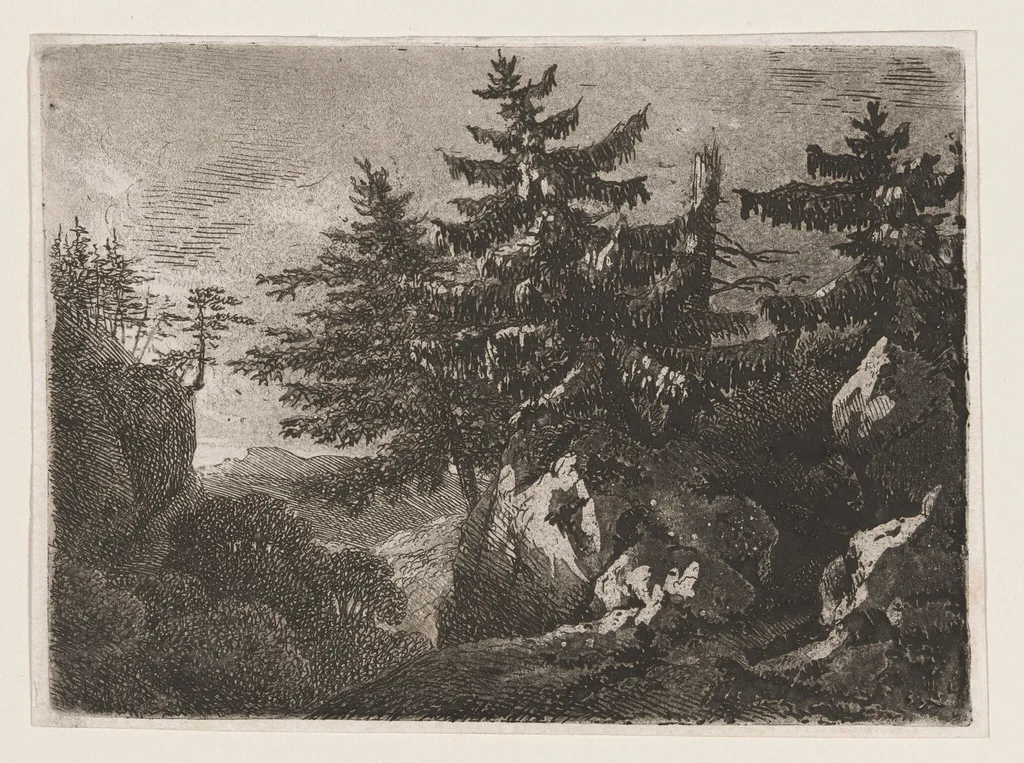
Pines on a Mountaintop at Night is an ink print by the Romanticist artist Anton Kölbl. It dates from 1779 and is held in the collection of the National Gallery of Art.
About this work
Overview
, and exemplifies the atmospheric landscape tradition emerging in Central European printmaking during the late 18th century.
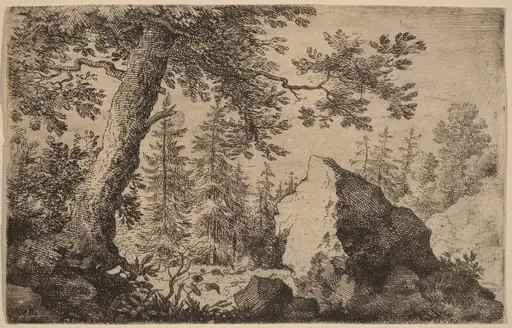
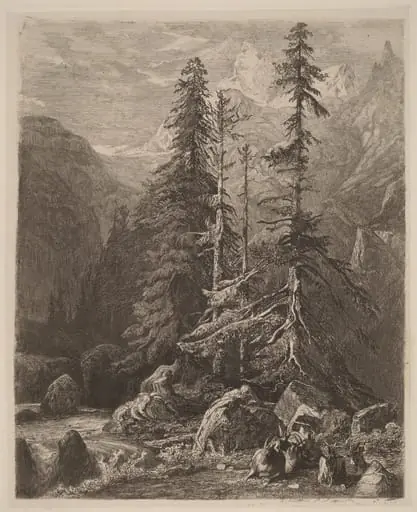
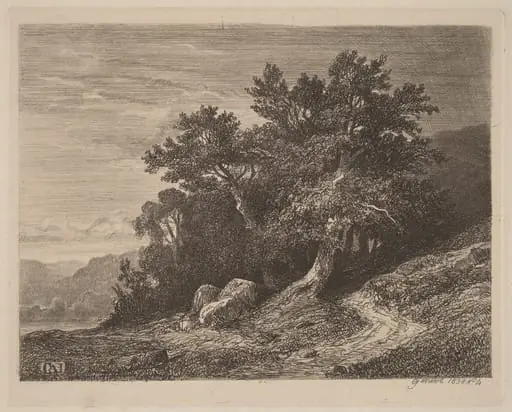
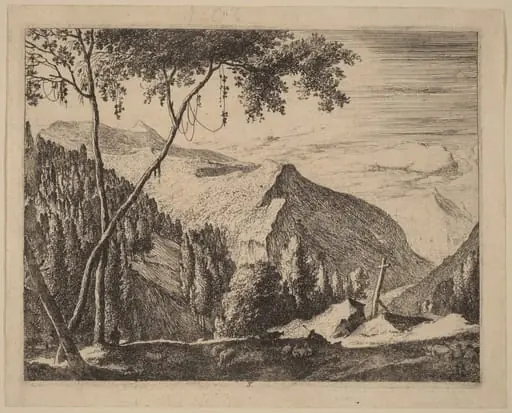
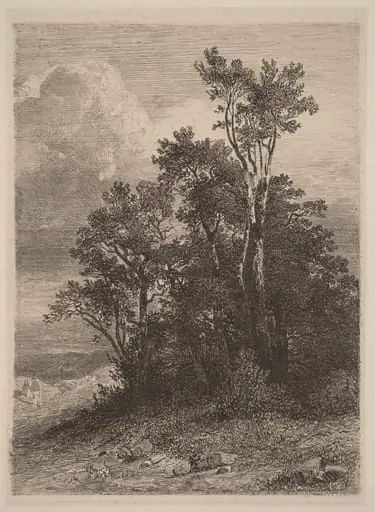
Pines on a Mountaintop at Night is an 1779 print by Anton Kölbl, executed in etching and aquatint on laid paper. It depicts a nocturnal mountain landscape dominated by dense pines, rendered with careful line work and tonal gradations. The work resides in the collection of the National Gallery of Art in Washington, D.C., and exemplifies the atmospheric landscape tradition emerging in Central European printmaking during the late 18th century.
Subject & Meaning
The scene portrays a solitary, mist-shrouded forest on a rugged hillside under a dimly lit sky. The towering pines, tightly grouped and sharply defined, contrast with the soft, receding shadows of the valleys. There is no human presence, suggesting a contemplative engagement with nature’s quiet grandeur. The composition evokes solitude and the sublime, aligning with emerging sensibilities toward wild, untamed landscapes.
Technique & Style
Kölbl combined etching for precise linear detail with aquatint to achieve subtle tonal transitions. Fine, incised lines define the pine branches, while graded washes of ink suggest atmospheric haze and depth. The dark valleys and uneven terrain are rendered through varied ink density, creating a sense of texture and recession. This method allowed for both clarity and ambiguity, enhancing the nocturnal mood without relying on bright highlights.
History & Provenance
Created in 1779, the print entered the National Gallery of Art’s collection through established acquisition channels, though its earlier ownership history is not publicly documented. It reflects the growing interest in landscape as an independent subject in printmaking during the late Enlightenment, when artists increasingly turned to nature for aesthetic and emotional expression beyond religious or mythological themes.
Context
In the late 18th century, European printmakers increasingly explored natural scenery with emotional nuance, influenced by Romantic ideals and scientific observation of terrain. Kölbl’s work aligns with contemporaries who favored moody, atmospheric views over idealized panoramas. The use of aquatint, then a relatively new technique, enabled artists to mimic the soft effects of ink washes, bridging painting and print traditions.
Legacy
Though not widely known today, Kölbl’s print contributes to the broader evolution of landscape printmaking in Central Europe. Its technical precision and atmospheric sensitivity reflect a shift toward personal, observational artistry. The work remains a quiet example of how print media expanded access to nuanced natural imagery, influencing later generations of topographical and Romantic printmakers.
Own this work as a print
Artist & collection