Artwork
The Three Fates
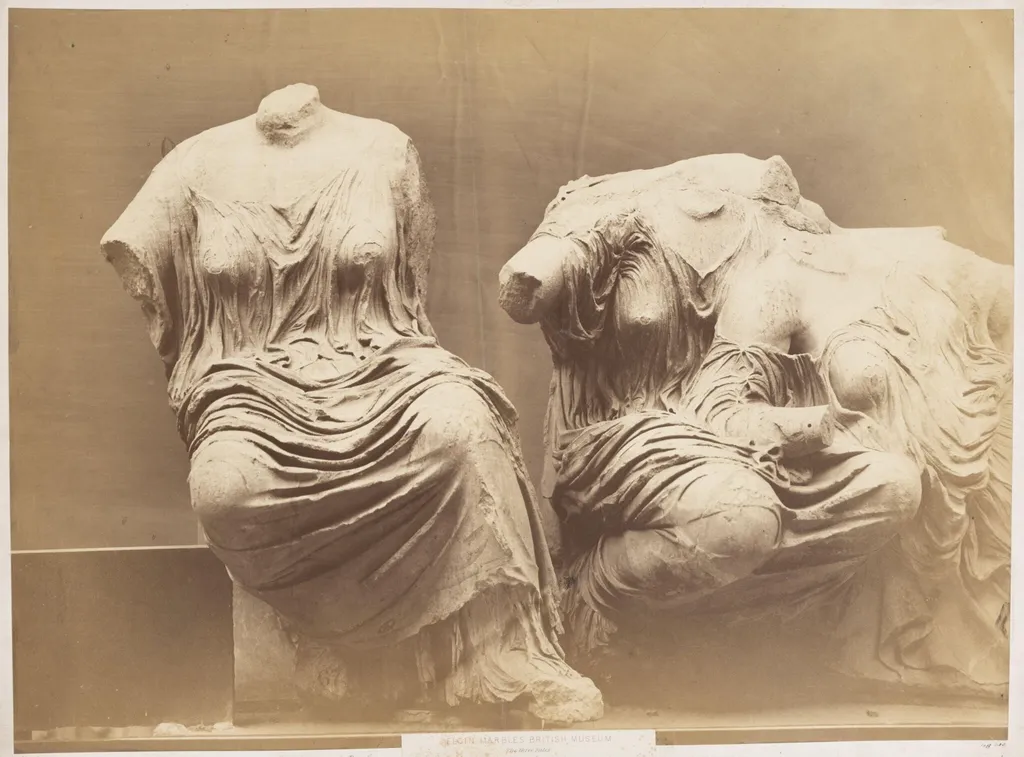
The Three Fates is a photographic photography by the Impressionist artist Leonida Caldesi. It dates from 1860 and is held in the collection of the Victoria and Albert Museum.
About this work
One woman sits with her legs tucked under her, the other leans forward with a child on her lap.
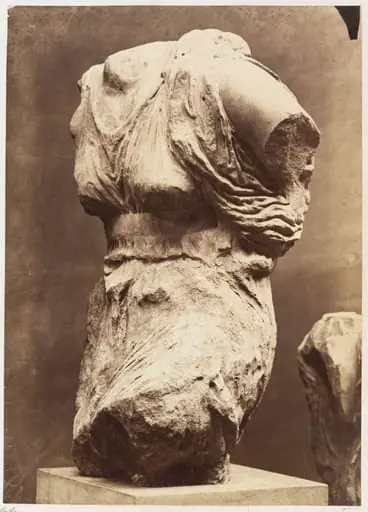
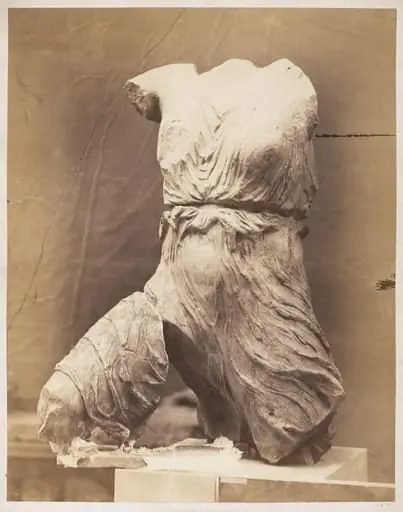
This photo shows two broken statues of women. They’re missing heads and arms. The fabric they wear is carved in thick, wavy lines. One woman sits with her legs tucked under her, the other leans forward with a child on her lap.
The photo was taken in 1860. These statues were likely made to look like ancient Greek or Roman work. The artist tried to copy old styles but used modern tools.
Check out Caldesi, Leonida for more about the artist who took this photo.
Overview
Leonida Caldesi’s photograph entitled *The Three Fates* dates from 1860 and is part of the collection of the Victoria and Albert Museum. The image captures two fragmentary marble figures, each lacking heads and arms, and presents them against a neutral background that emphasizes their sculptural form.
Subject & Meaning
The two statues depict female figures rendered in a classical idiom, one seated with her legs drawn close and the other leaning forward while holding a child on her lap. Their incomplete state—missing heads and limbs—suggests a focus on the remaining drapery and posture, inviting contemplation of loss and the passage of time.
Technique & Style
Both figures are carved in a manner that imitates ancient Greek or Roman sculpture, with thick, undulating lines that suggest the folds of fabric. The photographer’s choice to frame the fragments highlights the texture of the stone and the chiaroscuro created by the lighting, underscoring the juxtaposition of antiquarian form and 19th‑century photographic practice.
History & Provenance
The photograph was produced in 1860, a period when interest in classical antiquity was high among European artists and collectors. Caldesi, an Italian photographer active in the mid‑19th century, documented the statues, which were likely created to emulate classical models using contemporary tools and techniques. The print later entered the Victoria and Albert Museum’s holdings, where it remains accessible to the public.
Context
During the mid‑1800s, the revival of classical motifs permeated decorative arts and academic training. Caldesi’s work reflects this trend, capturing the tension between the idealized past and the modern means of representation. The photograph serves as a visual record of how 19th‑century creators engaged with ancient aesthetics while employing the emerging medium of photography.
Artist & collection
Artist
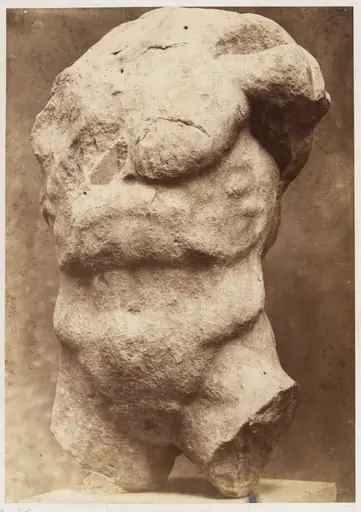
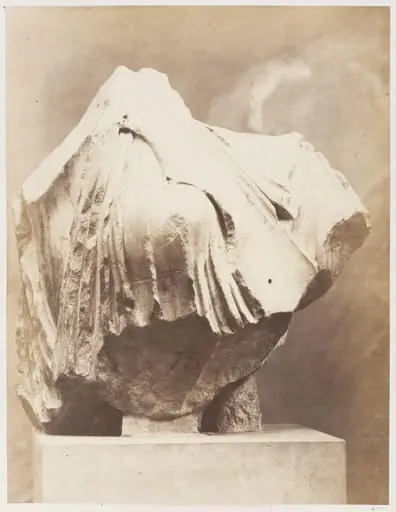
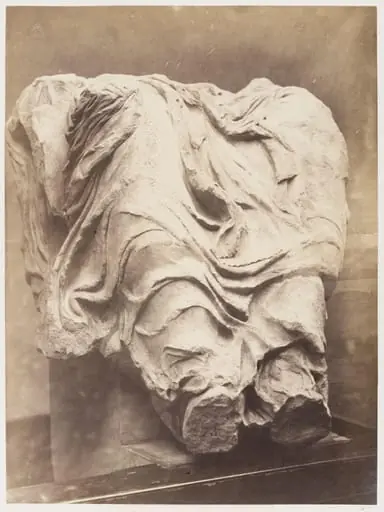
Leonida Caldesi made photographs of classical sculptures in 1860. His images show pieces like *Torso of Cecrops* and *A Fragment of the Statue of Minerva*. These photos freeze ancient fragments in crisp detail. They sit…

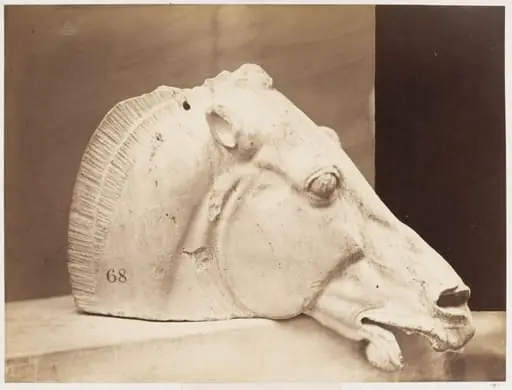
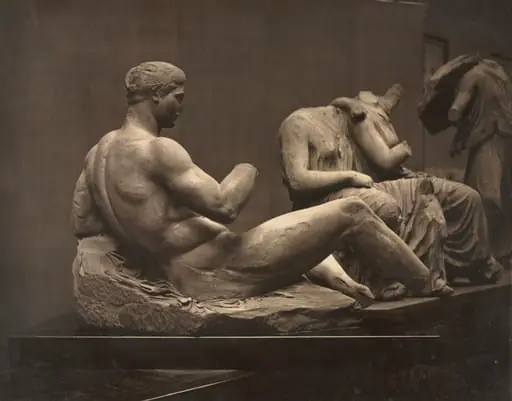 Sculptures from the Parthenon, British Museum
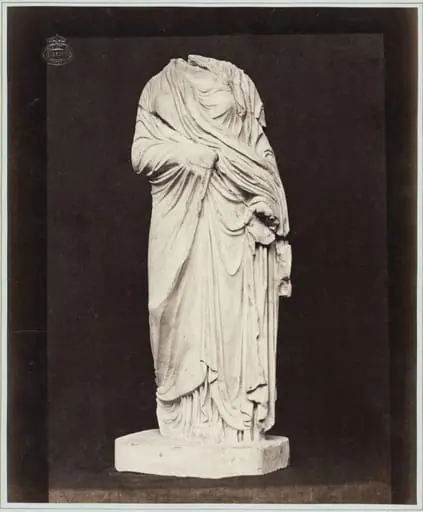 Marble statue of a headless draped figure
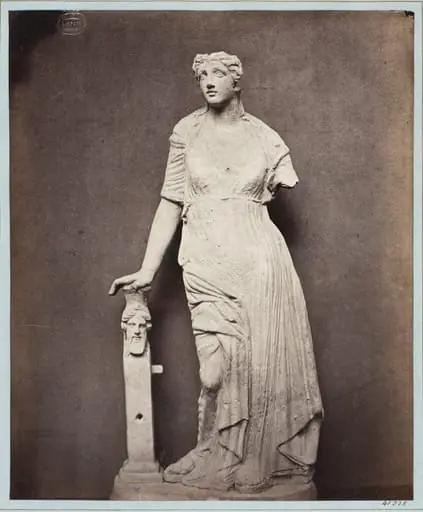 Venus leaning on a bearded Herma statuette in terra cotta
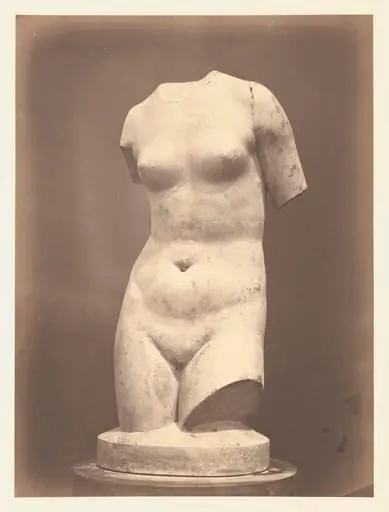 Venus
Venus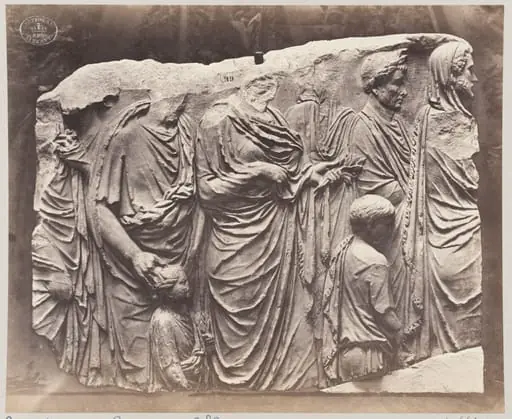 Portion of a marble sarcophagus of procession of draped figures
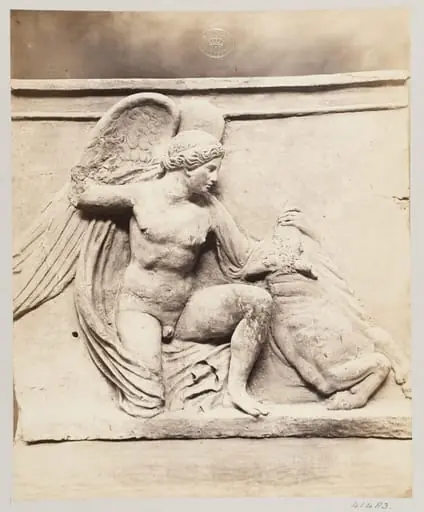 Winged figure slaying a bull in terra cotta
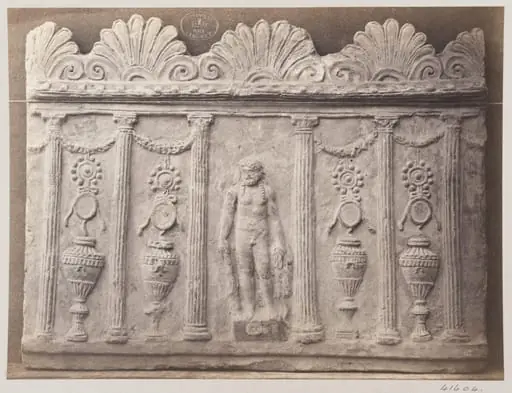 Bas-relief of Temple of Hercules in terra cotta