Artwork
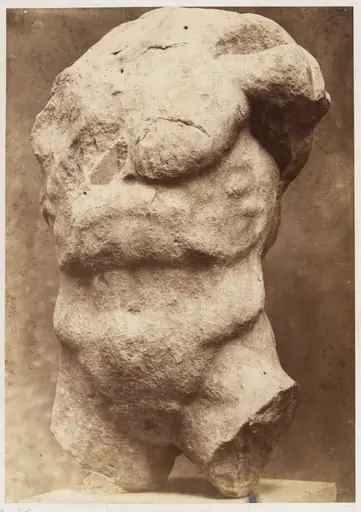
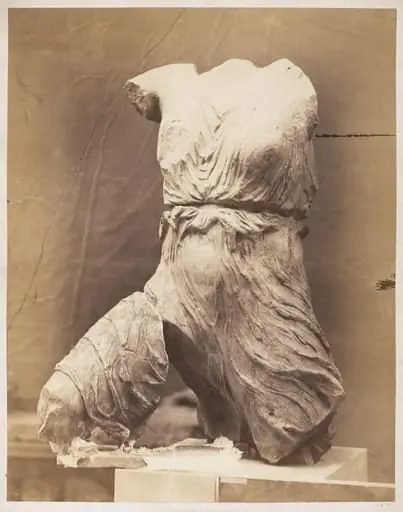
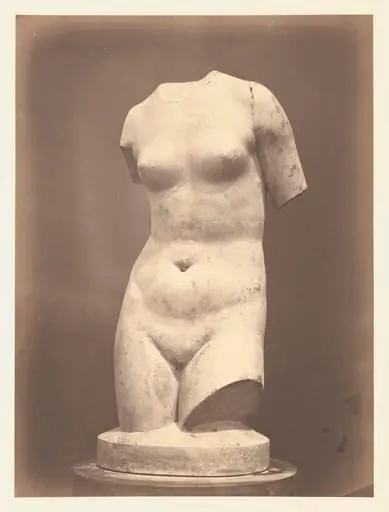
Torso of Nike Apteros
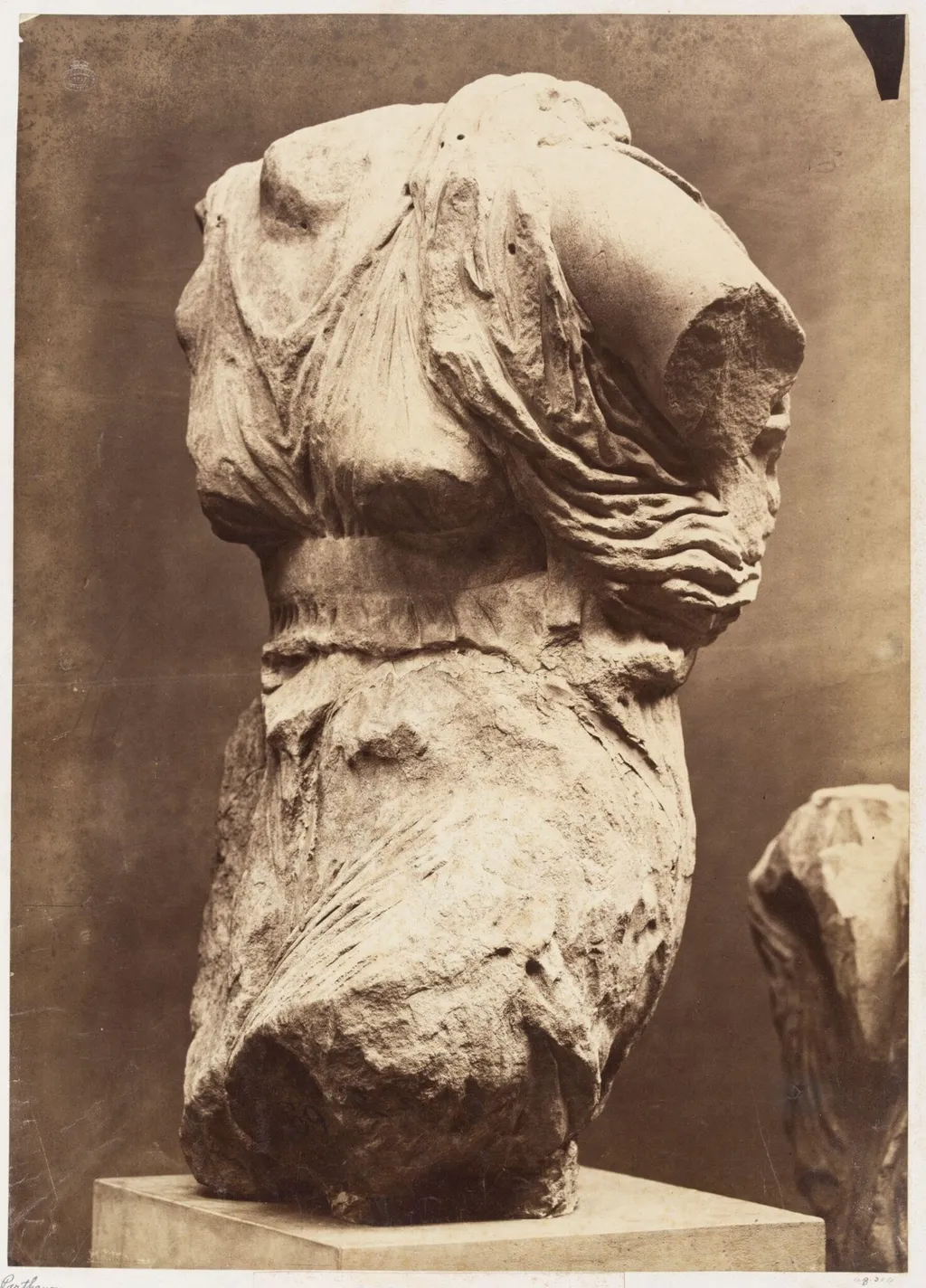
Torso of Nike Apteros is a photographic photography by the Impressionist artist Leonida Caldesi. It dates from 1860 and is held in the collection of the Victoria and Albert Museum.
About this work
Overview
The photograph’s faded tonality and soft focus reflect 19th-century photographic techniques, emphasizing texture over detail.
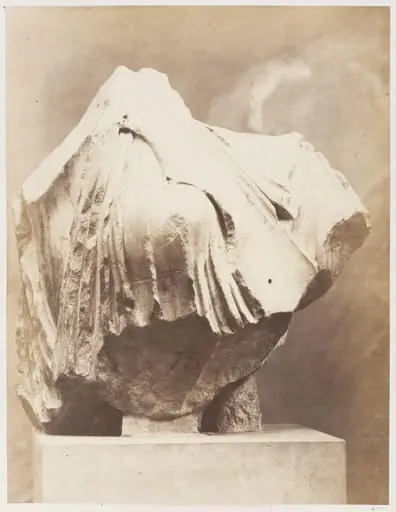
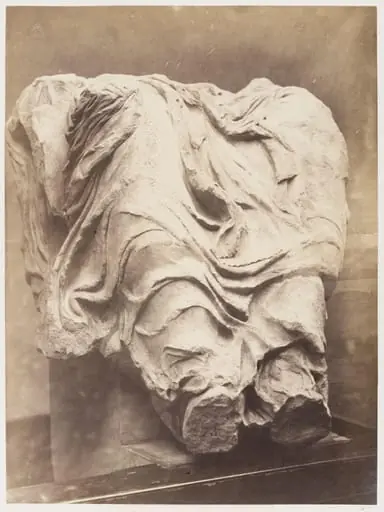
A black-and-white photograph taken in 1860 by Leonida Caldesi captures the upper torso of a broken statue believed to represent Nike Apteros, the Wingless Victory. The image records a fragment of ancient stone sculpture, preserved in the collection of the Victoria and Albert Museum. The photograph’s faded tonality and soft focus reflect 19th-century photographic techniques, emphasizing texture over detail.
Subject & Meaning
The fragment depicts the upper body of a figure once associated with Nike Apteros, a variant of the Greek goddess of victory depicted without wings. The absence of head, limbs, and wings suggests either ancient damage or deliberate truncation. The draped fabric implies movement or divine presence, though the statue’s original context—whether votive, architectural, or funerary—remains uncertain.
Technique & Style
The photograph renders the statue’s weathered surface with careful attention to light and shadow, highlighting the coarse carving of the drapery and the uneven texture of the stone. The stiff, angular folds of the fabric contrast with the smooth, worn planes of the torso, revealing the sculptor’s intent and the effects of time. The image’s muted tones and grain reflect the limitations and aesthetic of early photographic processes.
History & Provenance
The original statue likely dates to the Hellenistic or Roman period, though its exact origin is undocumented. The photograph was made in 1860 by Leonida Caldesi, an Italian photographer known for documenting classical fragments. The image entered the Victoria and Albert Museum’s collection as part of its broader effort to preserve visual records of antiquities during the 19th century.
Context
In the mid-19th century, European institutions systematically photographed ancient sculptures to support scholarly study and public education. This image reflects that movement, capturing a fragment that may have once adorned a temple or public monument. The focus on broken forms underscores a growing interest in archaeology as a discipline grounded in material evidence rather than idealized reconstructions.
Legacy
The photograph endures as a record of a lost or damaged artifact, preserving details that may no longer be visible on the original. It exemplifies how 19th-century photography became a tool for archival preservation, especially for fragments that lacked full scholarly attention. Its continued presence in the V&A’s collection affirms its role in the documentation of classical heritage.
Artist & collection
Artist
Leonida Caldesi made photographs of classical sculptures in 1860. His images show pieces like *Torso of Cecrops* and *A Fragment of the Statue of Minerva*. These photos freeze ancient fragments in crisp detail. They sit…