Artwork
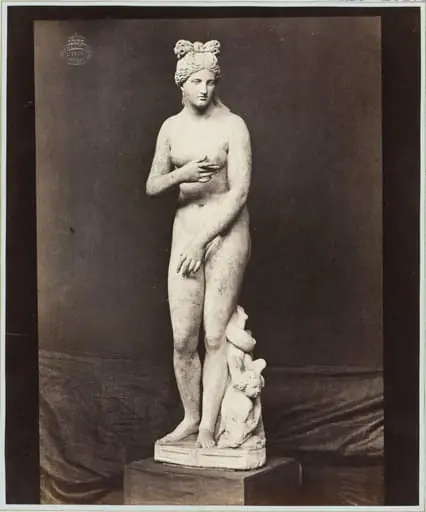
Venus leaning on a bearded Herma statuette in terra cotta
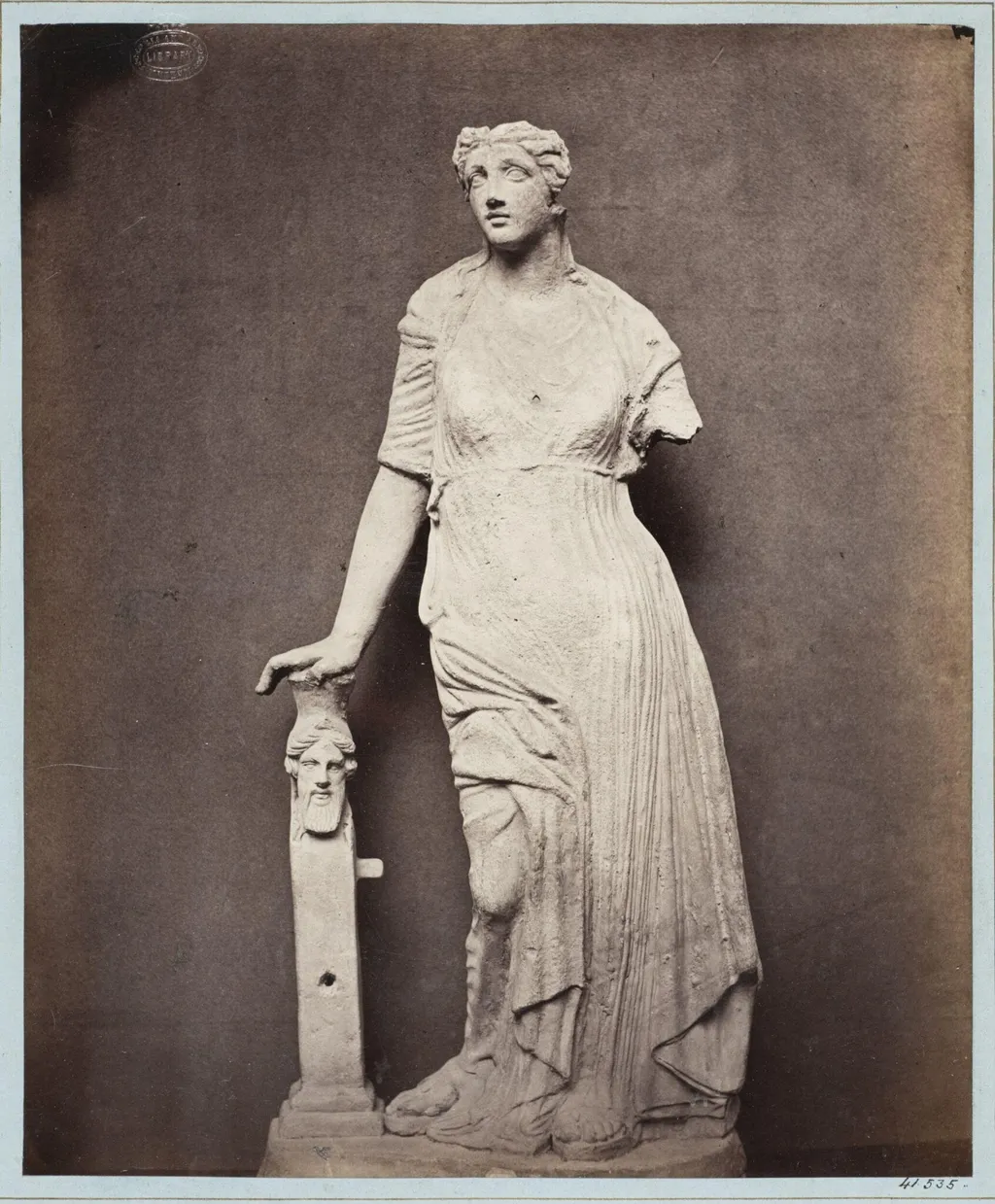
Venus leaning on a bearded Herma statuette in terra cotta is a photographic photography by the Impressionist artist Louise Laffon. It dates from 1864 and is held in the collection of the Victoria and Albert Museum. The Victoria and Albert Museum began collecting photographs in 1852, becoming the first museum to do so.
About this work
Overview
Under Henry Cole’s leadership, photographs were acquired not as art but as educational tools for artists and students.
The Victoria and Albert Museum began collecting photographs in 1852, becoming the first museum to do so. Under Henry Cole’s leadership, photographs were acquired not as art but as educational tools for artists and students. These images supplemented traditional reproductions and were managed through the National Art Library. The museum employed its own photographers and also sourced images from independent practitioners, including women who contributed significantly to its visual archive.
Subject & Meaning
The photograph depicts a terra cotta statuette of Venus resting against a bearded herma, a classical form combining a human head with a pillar-like torso. The image serves a documentary function, capturing the sculpture’s form and detail for study. It reflects the museum’s broader effort to systematically record antiquities, making them accessible for academic analysis and artistic reference beyond physical access to the original object.
Technique & Style
The photograph is a gelatin silver print, likely produced using the wet plate process common in the 1860s. Its composition is formal and neutral, emphasizing clarity over aesthetic flourish. Lighting is even, minimizing shadows to reveal surface texture and contour. The image prioritizes accuracy, aligning with the museum’s goal of creating reliable visual records for educational use rather than artistic expression.
History & Provenance
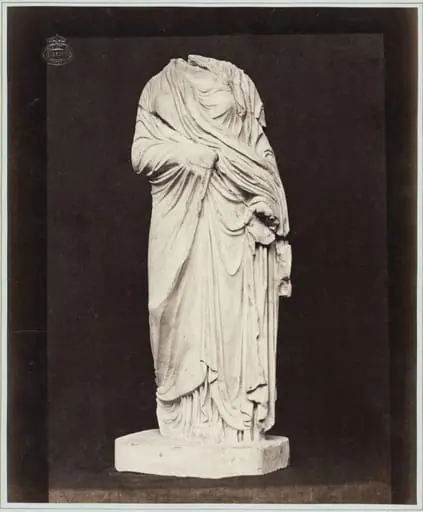
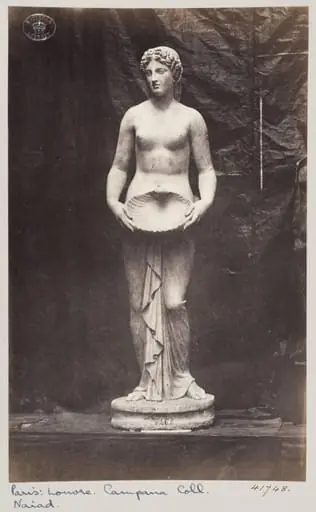
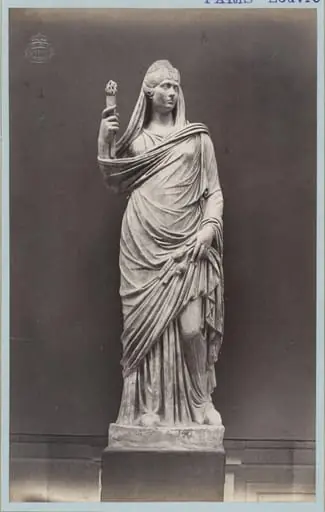
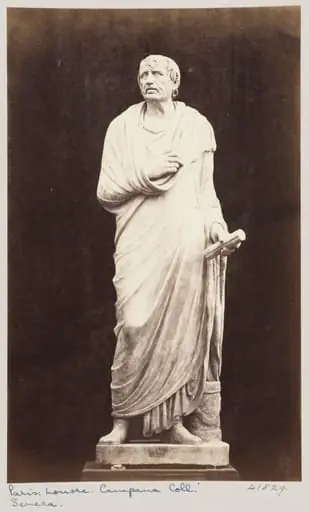
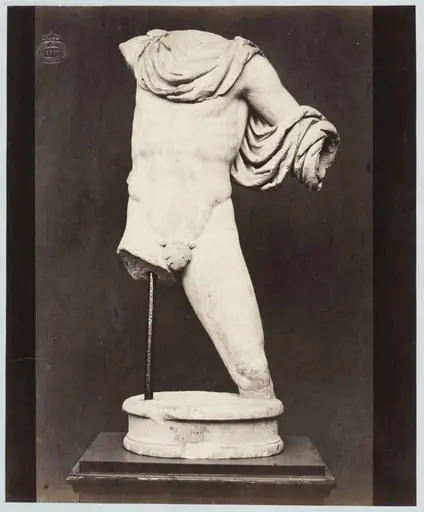
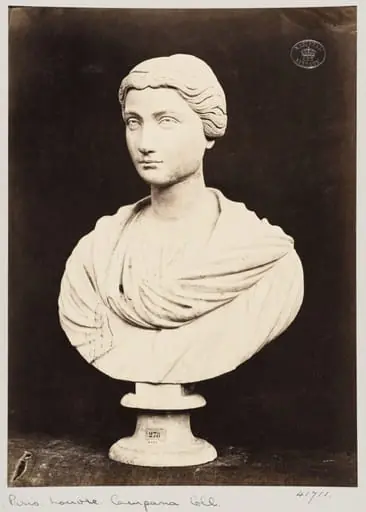
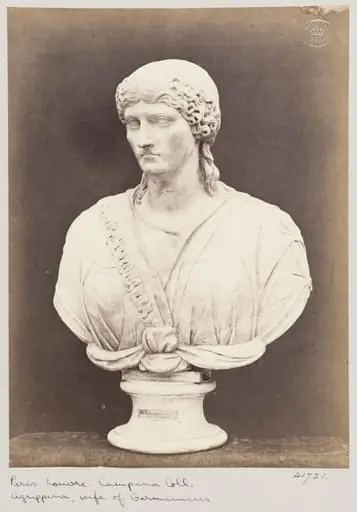
In 1864, the V&A acquired 500 photographs from Louise Laffon’s series documenting the Campana Collection in Paris. Laffon, one of the earliest female members of Le Société Française de la Photographie, was commissioned through the agent E. Cappe. These images entered the museum’s collection as part of its expanding visual archive, bridging European institutions and supporting scholarly access to antiquities held abroad.
Context
During the mid-19th century, museums increasingly turned to photography to democratize access to collections. The V&A’s initiative aligned with broader educational reforms in design and the arts. Female photographers like Laffon and Isabel Agnes Cowper were integral to this effort, though their roles were often unacknowledged. Their work helped establish photography as a practical tool in institutional scholarship.
Legacy
Laffon’s photographs remain part of the V&A’s historical archive, illustrating early institutional uses of photography in art education. Their preservation underscores the museum’s pioneering role in documenting cultural heritage through the lens. These images continue to inform conservation and curatorial research, offering a visual record of 19th-century collecting practices and the quiet contributions of women in photographic history.
Artist & collection
Artist
Louise Laffon (1828–1885), was a French photographer and painter. She was one of the first female professional photographers in France. She had a studio in Paris between 1859 and 1876.

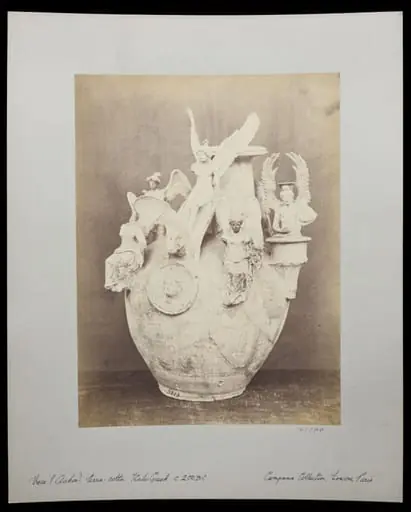 Perfume Burner in terra cotta
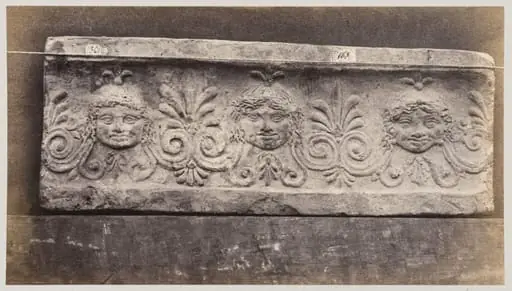 Three masques of gorgons in terra cotta
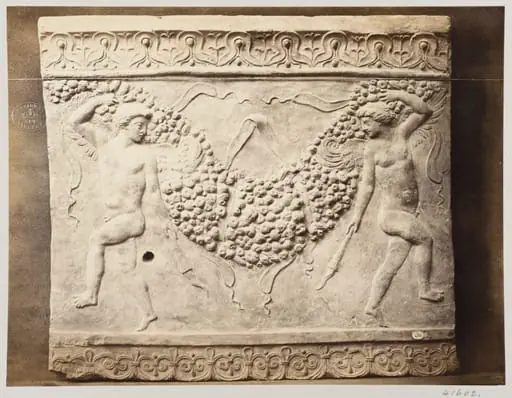 Bas-relief of portion of frieze of dancing figures with torches bearing festoon of fruit in terra cotta
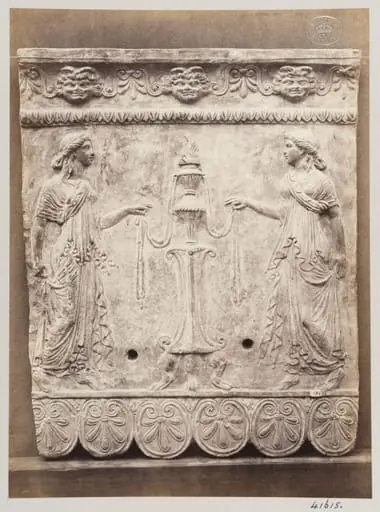 Bas-relief portion of a frieze of two draped females and an altar in terra cotta
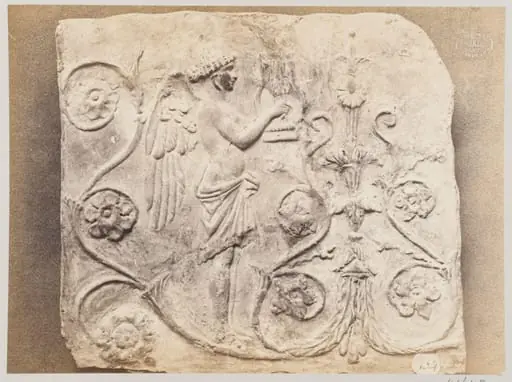 Bas-relief of a geni and a lyre in terra cotta
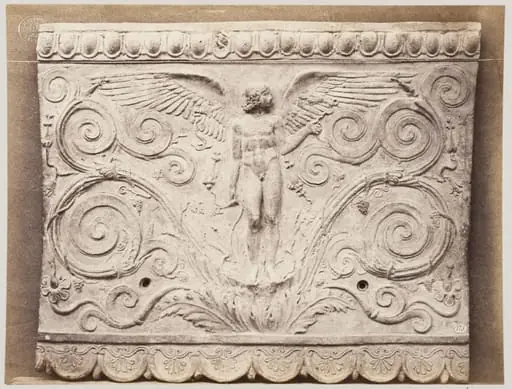 Bas-relief of a portion of frieze of Eros with scrollwork in terra cotta
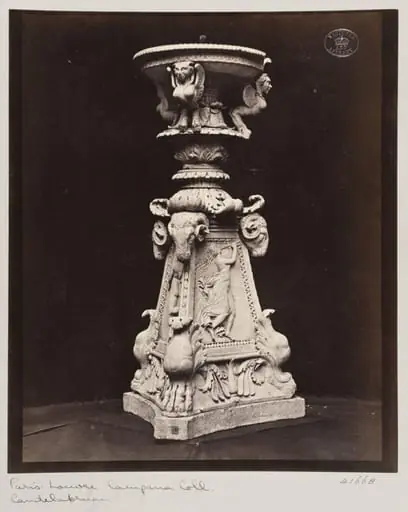 Marble sculptured fountain
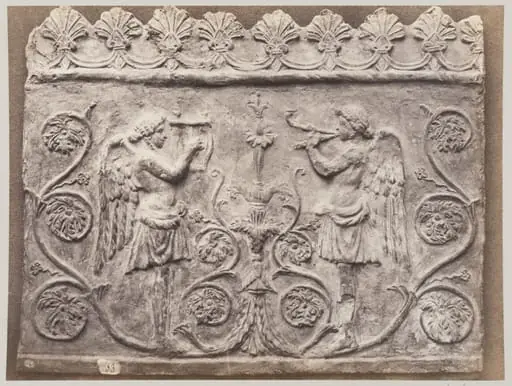 Bas-relief portion of frieze of Genii with double flutes and lyre