Artwork
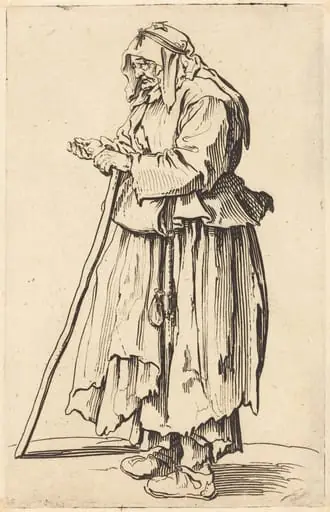
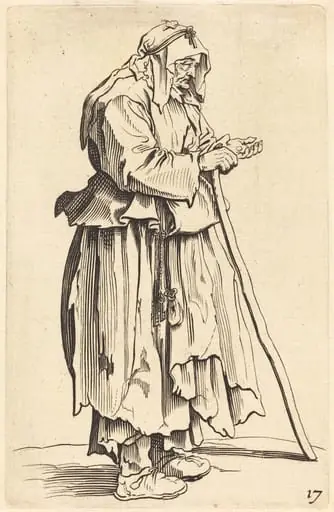
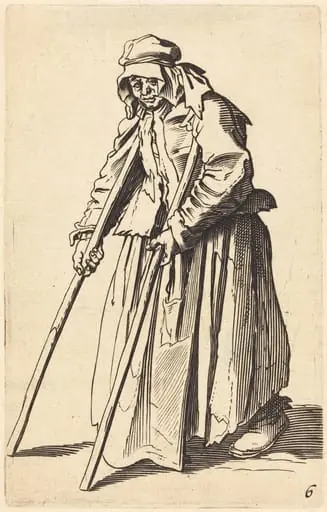
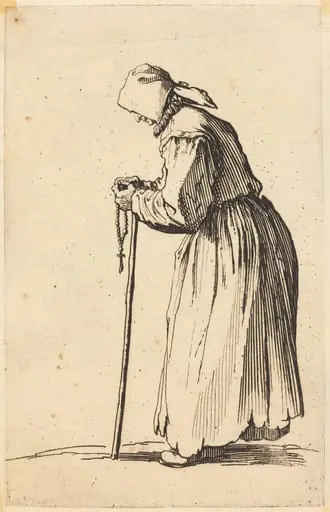
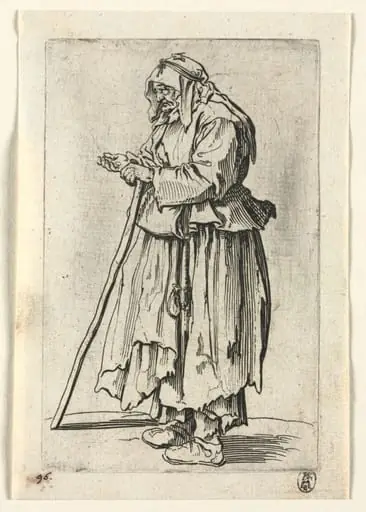
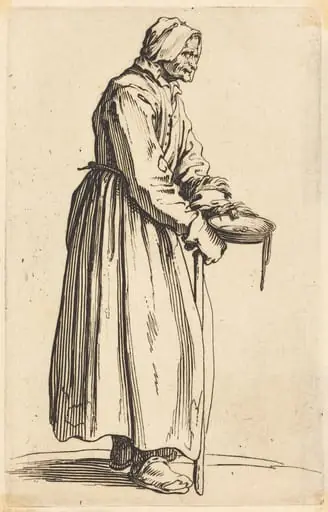
Beggar Woman Receiving Charity
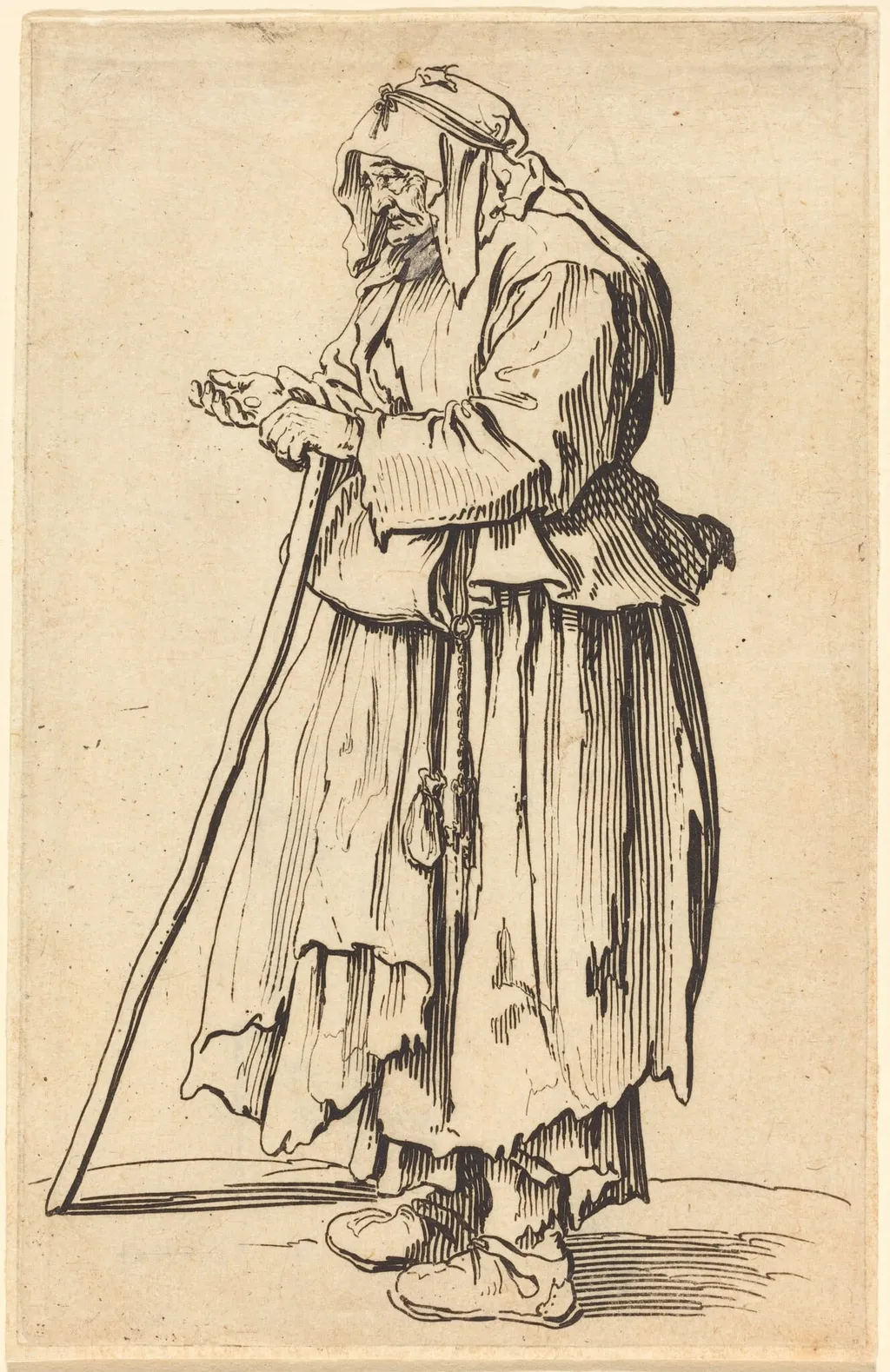
Beggar Woman Receiving Charity is an ink print by the Baroque artist Jacques Callot. It dates from 1622 and is held in the collection of the National Gallery of Art.
About this work
Overview
Created around 1622 by Jacques Callot, this etching on laid paper captures a moment of quiet exchange between a destitute woman and an unseen benefactor. As one of over 1,400 prints by the Lorrainer artist, it exemplifies his focus on everyday life among the poor. The work belongs to a broader series documenting social margins, rendered with meticulous detail and emotional restraint.
Subject & Meaning
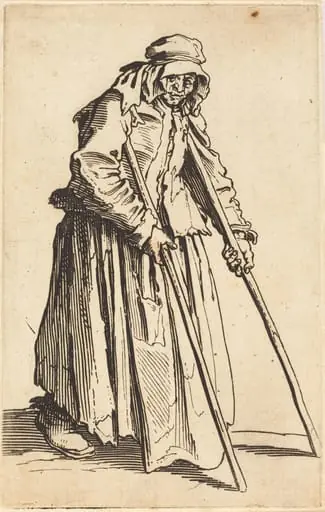
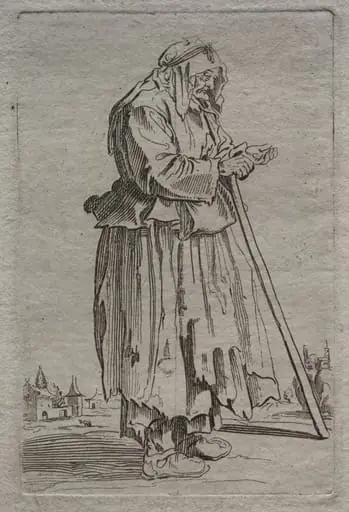
The figure is a woman in extreme poverty, wrapped in a frayed scarf and draped in a loose, tattered robe. Barefoot and hunched, she extends a hand in silent supplication while clutching a small bag—perhaps her only possession. The absence of the donor emphasizes her isolation, framing charity as a fleeting, anonymous act. The image conveys dignity amid destitution without overt sentimentality.
Technique & Style
Callot used fine, layered etching lines to model form and texture, creating a sense of volume in the woman’s clothing through overlapping strokes. The rough, energetic contours suggest urgency or empathy, translating physical hardship into visual rhythm. The use of laid paper, with its subtle watermark texture, enhances the tactile quality of the print, grounding the scene in material reality.
History & Provenance
Though its early ownership is undocumented, it entered institutional collections in the 19th century as interest grew in Northern European printmaking.
The print emerged during Callot’s mature period in Florence, where he was influenced by Italian artistic traditions and the social conditions of early 17th-century Europe. Though its early ownership is undocumented, it entered institutional collections in the 19th century as interest grew in Northern European printmaking. Its survival reflects its status as a representative work of social observation in print.
Context
In early 1600s Europe, widespread poverty and displacement followed war, famine, and religious conflict. Callot’s prints responded to this reality, offering unidealized portrayals of beggars, soldiers, and laborers. Unlike religious or mythological subjects, his scenes drew attention to the overlooked, aligning with a growing humanist interest in individual experience over grand narratives.
Legacy
Callot’s approach influenced later generations of printmakers who sought to document social conditions with precision and empathy. His technical innovations in etching, particularly in rendering texture and movement, became foundational in the medium. This work remains a quiet but enduring record of how art can bear witness to vulnerability without exploitation.
Artist & collection

Artist
Jacques Callot was a baroque printmaker and draftsman from the Duchy of Lorraine.

 Holy Family at supper
 Restoration of the Aqueduct at Pisa
 Restoration of the Aqueduct at Pisa
 Square in Paris with Many Figures
 Square in Paris with Many Figures
 Horsemen Attacked by Robbers
 HOW WILL A COVERED PART BE CORRECTED?HOW WIKA A COVERED HEART DEED CORRECTED?
![Christ Walking on the Water [second plate], by Jacques Callot](https://artifactworldgallery.com/img/jacques-callot--christ-walking-on-the-water-second-plate--2069f3bfe4cb2126-w320.webp) Christ Walking on the Water [second plate]
Christ Walking on the Water [second plate]