Artwork
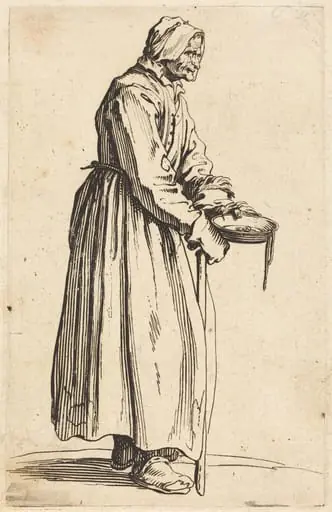
Beggar Woman Receiving Charity
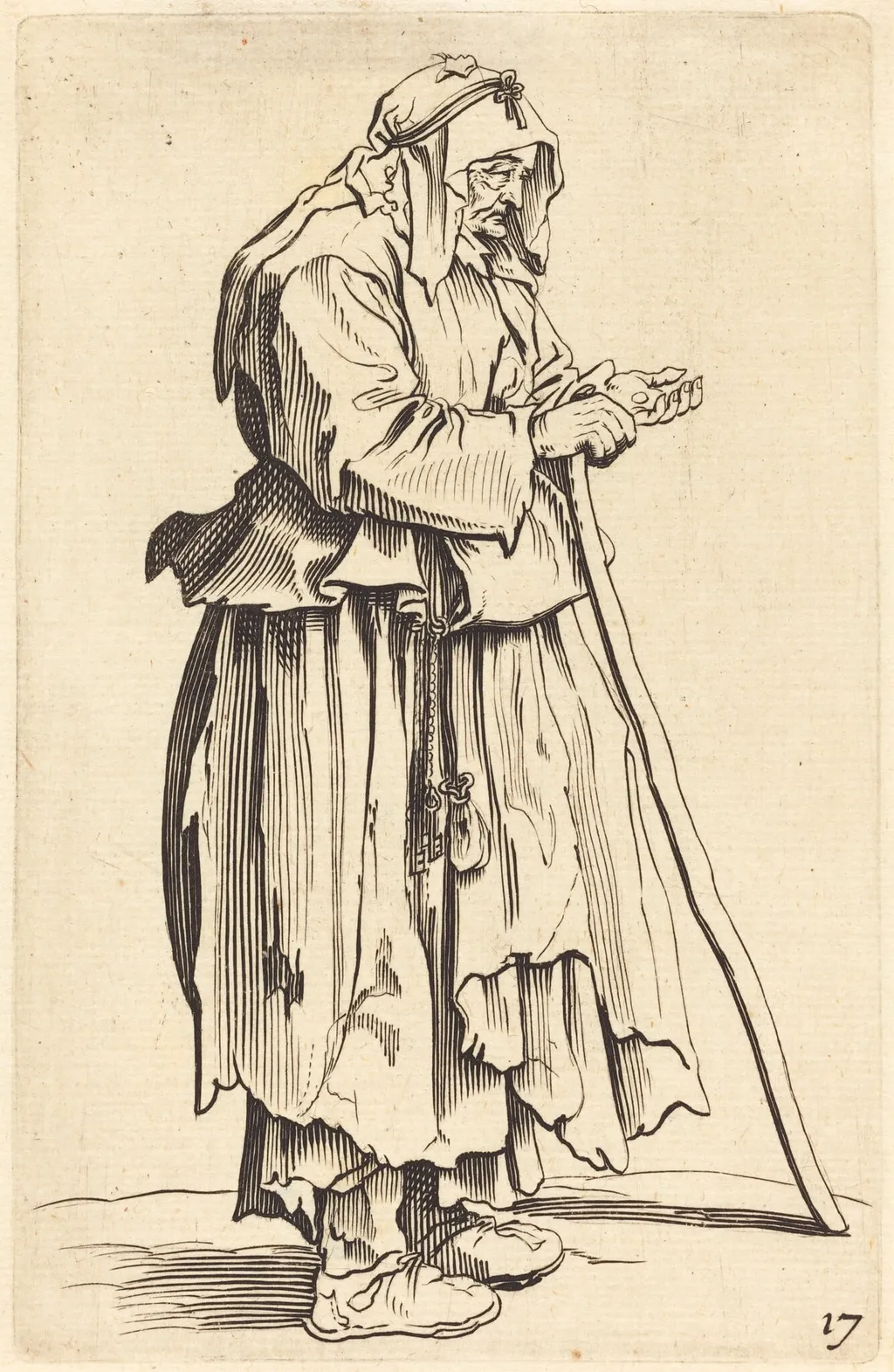
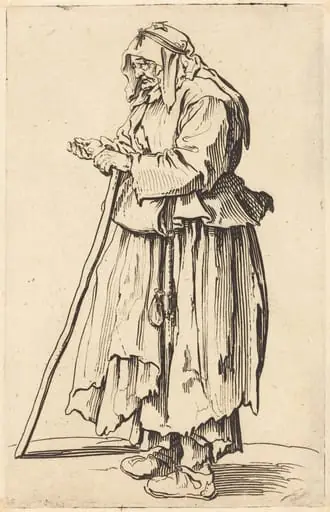
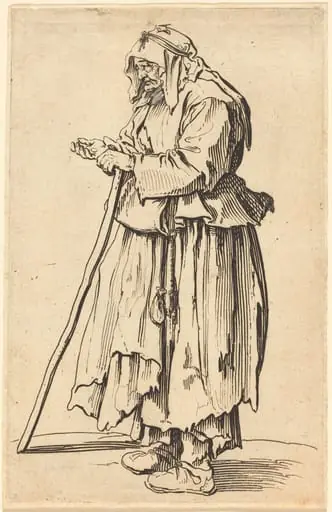
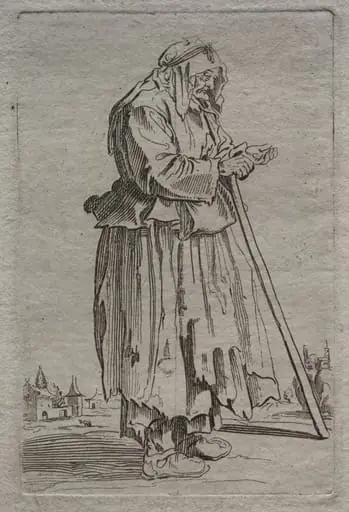
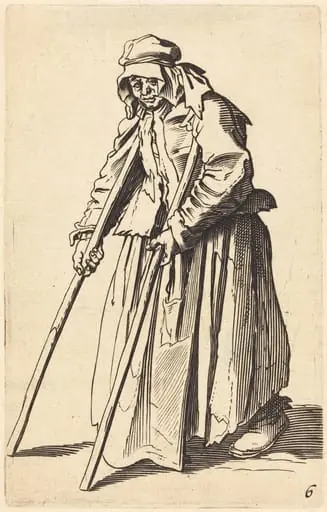
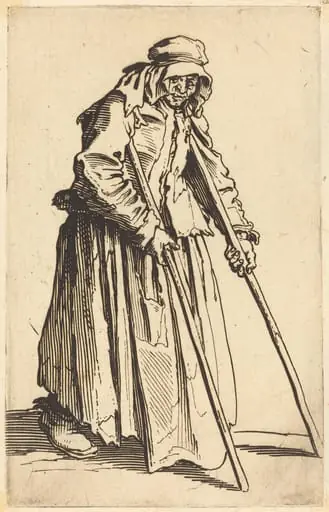
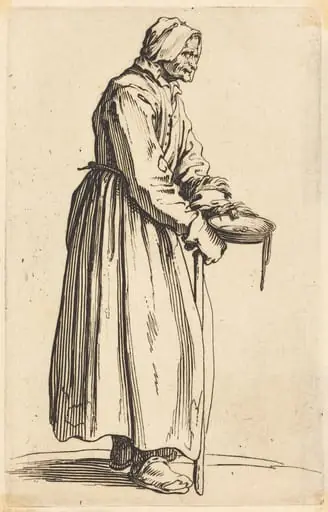
Beggar Woman Receiving Charity is an ink print by the Baroque artist French 17th Century. It dates from 1622 and is held in the collection of the National Gallery of Art. This etching depicts a destitute woman receiving alms from an unseen benefactor.
About this work
Overview
The artist employs chiaroscuro to model form with subtle light, directing attention to her face and hands as the emotional core of the scene.
This etching depicts a destitute woman receiving alms from an unseen benefactor. Rendered in muted tones on laid paper, the composition centers on her bowed posture and clasped hands, conveying quiet submission. The dark, unmodeled background isolates her figure, emphasizing her vulnerability. The artist employs chiaroscuro to model form with subtle light, directing attention to her face and hands as the emotional core of the scene.
Subject & Meaning
The woman, dressed in tattered garments and a draped cloak, embodies poverty without overt despair. Her stillness and folded hands suggest dignity in hardship, not plea. The absence of the donor underscores the anonymity of charity, focusing instead on the recipient’s humanity. The image resists sentimentality, presenting need as a quiet, everyday reality rather than a dramatic spectacle.
Technique & Style
Executed as an etching on laid paper, the work uses fine, controlled lines to define texture in fabric and skin. The limited palette enhances the somber mood, while chiaroscuro models the figure with soft gradations of light and shadow. The background remains largely unworked, deepening the sense of isolation. The technique aligns with Northern Baroque printmaking traditions that favored intimate, psychologically resonant scenes.
History & Provenance
The print’s origin is tied to 17th-century Northern European print culture, where depictions of the poor were common in religious and moral contexts. While the artist’s identity is not specified, the style reflects influences from contemporaries who documented social realities through print. Early ownership records are sparse, but such works were often collected by private patrons interested in devotional or humanitarian themes.
Context
Created during the Baroque period, the image aligns with a broader trend in Northern Europe of portraying marginalized figures with empathy. Religious institutions and civic charities increasingly emphasized almsgiving, and prints like this served both devotional and social functions. Unlike grand historical scenes, this work elevates the ordinary, reflecting a shift toward human-centered narratives in visual culture.
Legacy
The etching contributes to a visual tradition that humanized poverty without romanticizing it. Its restrained aesthetic influenced later realist prints and drawings that sought to depict social conditions with quiet accuracy. Though not widely reproduced, it remains a representative example of how printmaking gave voice to the unseen in early modern society.
Artist & collection

Artist
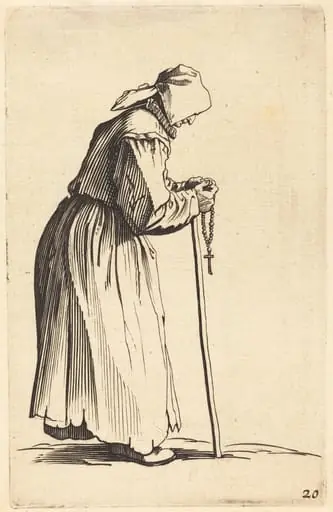
Seventeenth-century French printmakers turned ink into story. Their tools were burin and acid, paper their stage. Look at the Beggar Woman with Rosary (1622), etched on laid paper, her hands folded around faith, or The…