Artwork
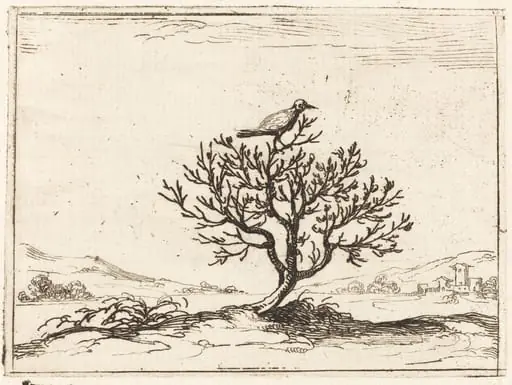
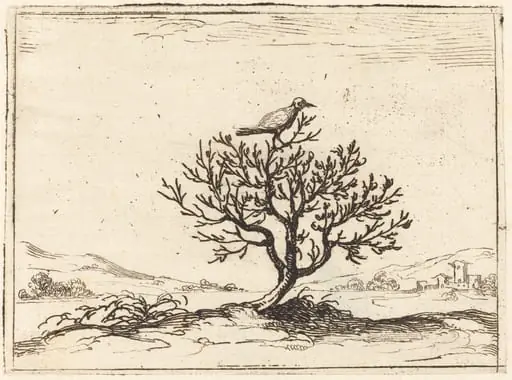
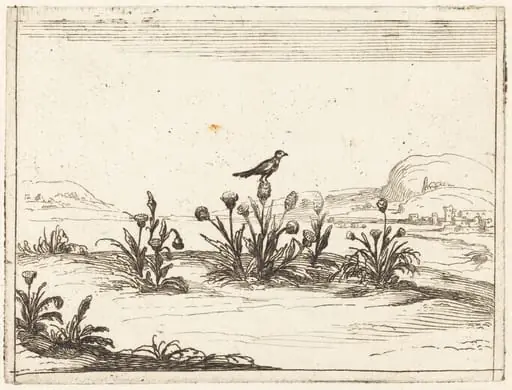
Bird Perched in a Thistle
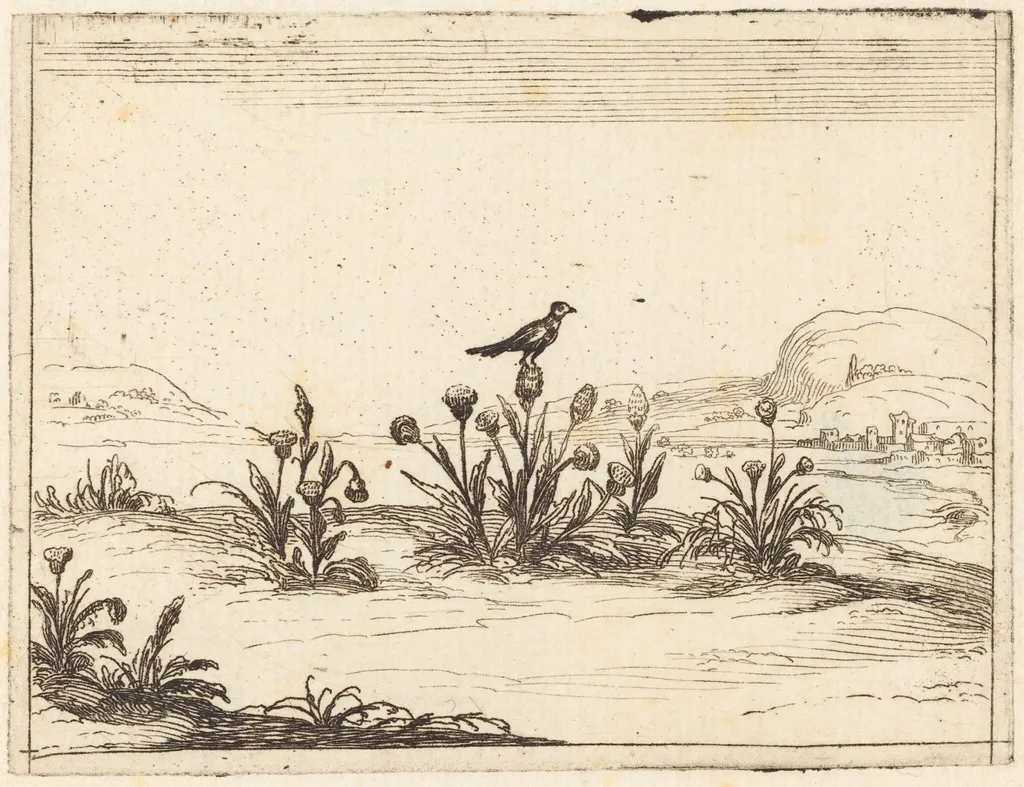
Bird Perched in a Thistle is an ink print by the Baroque artist Jacques Callot. It dates from 1628 and is held in the collection of the National Gallery of Art.
About this work
Overview
Unlike his more dramatic scenes of war or society, this work focuses on stillness and subtle detail, reflecting a quieter facet of his practice.
Created in 1628 by Jacques Callot, *Bird Perched in a Thistle* is a small etching on laid paper that captures a solitary bird resting on a spiky plant amid a quiet rural landscape. As one of over 1,400 prints by the Lorrainer artist, it exemplifies his interest in natural observation and atmospheric depth. Unlike his more dramatic scenes of war or society, this work focuses on stillness and subtle detail, reflecting a quieter facet of his practice.
Subject & Meaning
The central figure—a small bird perched on a thistle—is rendered with precision, emphasizing its fragility and isolation. The thistle, a resilient plant often associated with hardship, contrasts with the bird’s delicate form. The distant hills and faint outline of a town suggest a broader world beyond the immediate scene, inviting contemplation of nature’s quiet persistence. No overt narrative is present; the image resonates through restraint and observation.
Technique & Style
Callot employed fine-line etching to achieve delicate textures and nuanced tonal gradations. The bird’s feathers, the thistle’s spines, and the soft contours of the hills are rendered with meticulous control, showcasing his mastery of the medium. The use of laid paper enhances the tactile quality of the print, while the muted palette and minimal contrast contribute to a subdued, atmospheric mood characteristic of his later works.
History & Provenance
The print was produced during Callot’s mature period in Nancy, after years of working in Florence and Paris. Though not widely exhibited in his lifetime, it was likely circulated among collectors of prints and naturalistic studies. Its survival in good condition reflects its modest scale and the care taken by private owners. No documented royal or institutional provenance is known, suggesting it remained in private hands.
Context
In early 17th-century Europe, printmaking flourished as a means of documenting everyday life and landscape. Callot’s work stood apart for its attention to detail and rejection of idealization. While contemporaries focused on grand narratives, he turned to quiet moments—animals, peasants, rural views—elevating the ordinary through technical precision and compositional calm.
Legacy
Though less famous than his battle scenes or grotesques, *Bird Perched in a Thistle* exemplifies Callot’s broader contribution to the evolution of the etched landscape. His ability to convey atmosphere and quiet emotion through fine lines influenced later generations of printmakers, particularly those interested in naturalism and intimate observation over spectacle.
Artist & collection
Artist
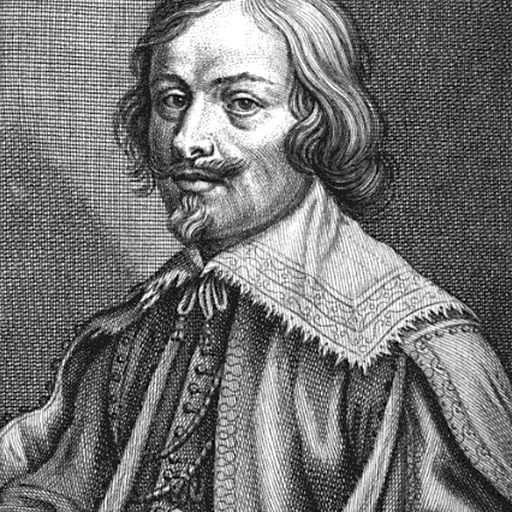
Jacques Callot was a baroque printmaker and draftsman from the Duchy of Lorraine.

 Holy Family at supper
 Restoration of the Aqueduct at Pisa
 Restoration of the Aqueduct at Pisa
 Square in Paris with Many Figures
 Square in Paris with Many Figures
 Horsemen Attacked by Robbers
 HOW WILL A COVERED PART BE CORRECTED?HOW WIKA A COVERED HEART DEED CORRECTED?
![Christ Walking on the Water [second plate], by Jacques Callot](https://artifactworldgallery.com/img/jacques-callot--christ-walking-on-the-water-second-plate--2069f3bfe4cb2126-w320.webp) Christ Walking on the Water [second plate]
Christ Walking on the Water [second plate]