Artwork
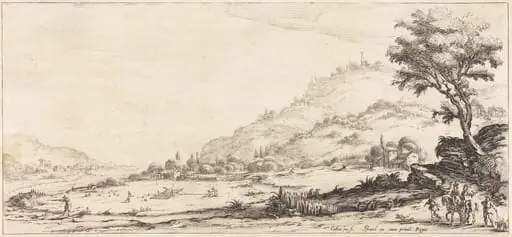
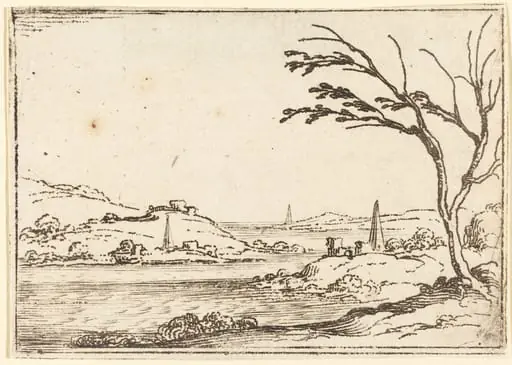
The Nile Flooding
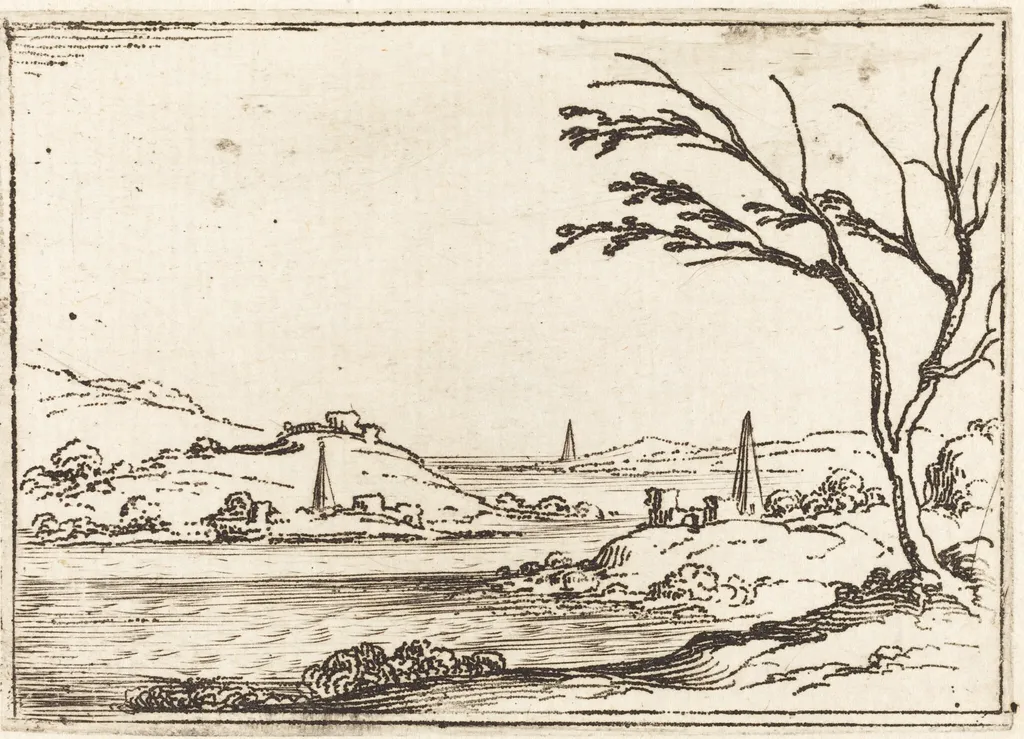
The Nile Flooding is an ink print by the Renaissance artist Jacques Callot. It dates from 1628 and is held in the collection of the National Gallery of Art.
About this work
Overview
The Nile Flooding is an etching on laid paper created by Jacques Callot in 1628. It is one of over 1,400 etchings produced by the French artist, who was known for documenting scenes of his time.
Subject & Meaning
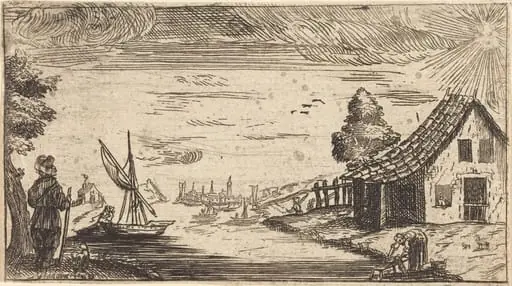
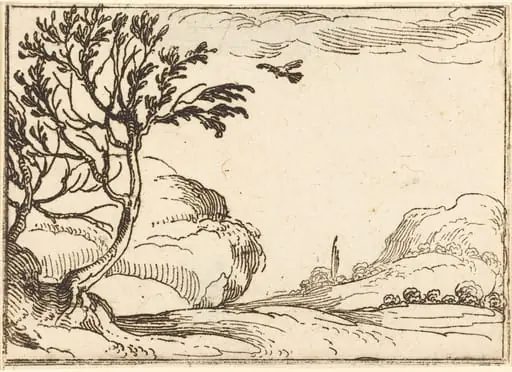
The etching depicts a serene river scene with gentle waves, small boats, and a bare tree on the right bank. The image may reflect Callot's interest in chronicling natural phenomena and contemporary life.
Technique & Style
Callot used lines to create depth in the etching, achieving a sense of smoothness in the water and distance in the hills. This technique was characteristic of etchings, where ink is pressed into a metal plate to produce prints.
Artist & collection

Artist
Jacques Callot was a baroque printmaker and draftsman from the Duchy of Lorraine.

 Holy Family at supper
 Restoration of the Aqueduct at Pisa
 Restoration of the Aqueduct at Pisa
 Square in Paris with Many Figures
 Square in Paris with Many Figures
 Horsemen Attacked by Robbers
 HOW WILL A COVERED PART BE CORRECTED?HOW WIKA A COVERED HEART DEED CORRECTED?
![Christ Walking on the Water [second plate], by Jacques Callot](https://artifactworldgallery.com/img/jacques-callot--christ-walking-on-the-water-second-plate--2069f3bfe4cb2126-w320.webp) Christ Walking on the Water [second plate]
Christ Walking on the Water [second plate]
![Landscape with Sail Boats [bottom plate], by Augustin Hirschvogel](https://artifactworldgallery.com/img/augustin-hirschvogel--landscape-with-sail-boats-bottom-plate--80a2ff7dde9c982b-w320.webp)