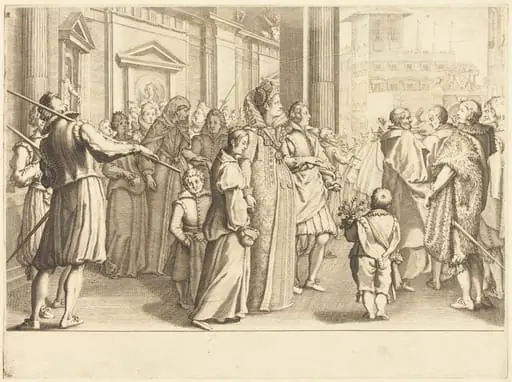
Artwork
Caesar's Coin
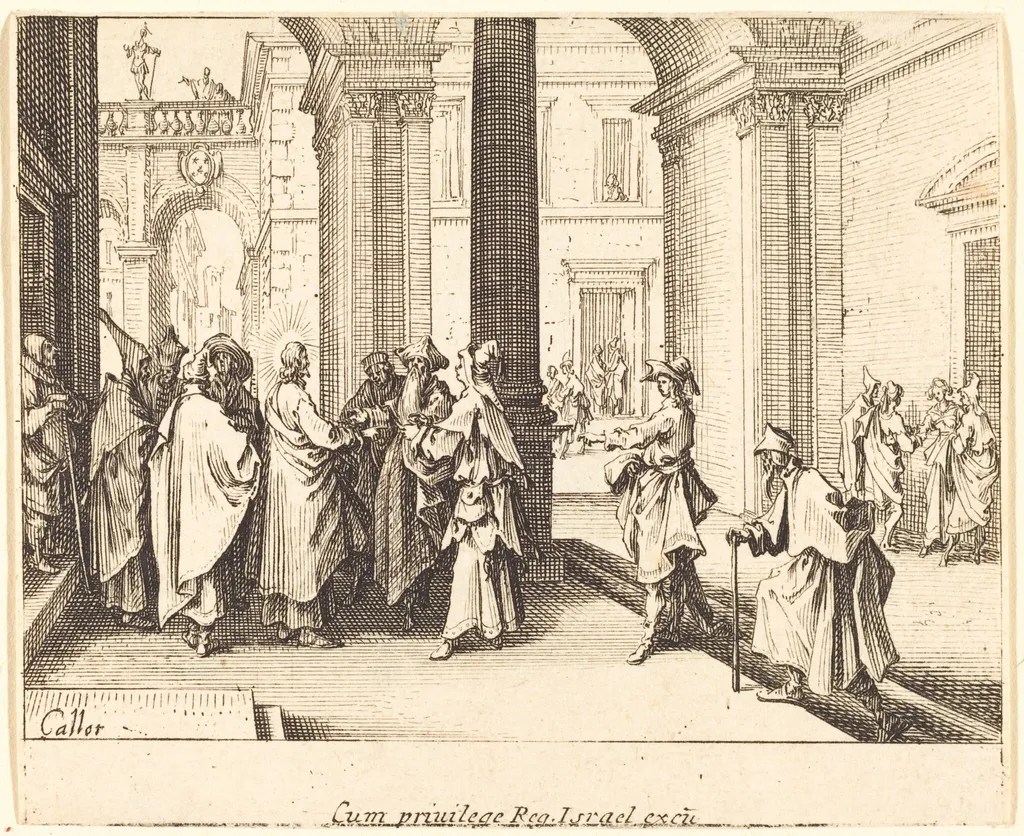
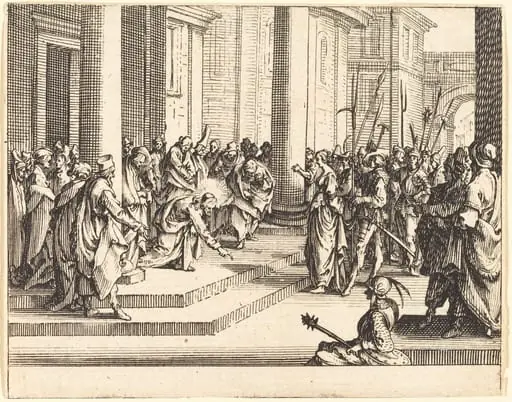
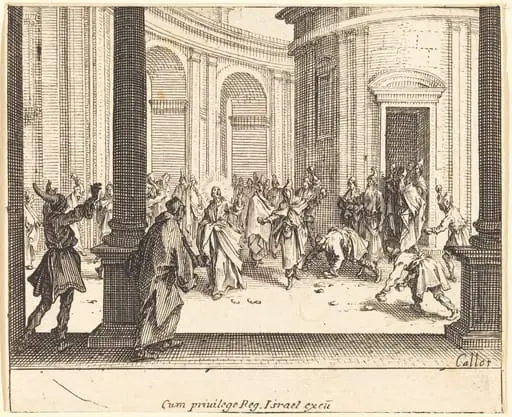
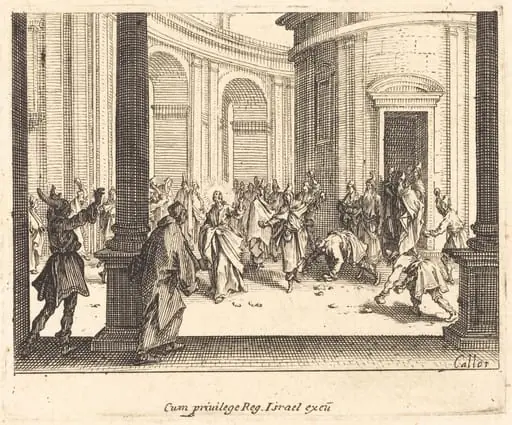
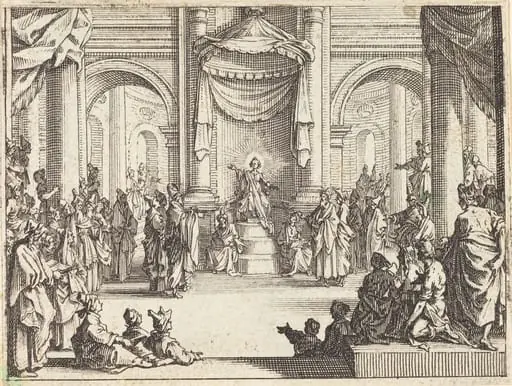
Caesar's Coin is an ink print by the Baroque artist Jacques Callot. It dates from 1635 and is held in the collection of the National Gallery of Art.
About this work
Overview
Caesar's Coin is a 1635 etching on laid paper by Jacques Callot, a prolific French Baroque printmaker from Lorraine, known for documenting contemporary life through over 1,400 etchings.
Subject & Meaning
The print depicts a bustling encounter between two distinct groups in a grand, columned setting. Figures in long robes and staffs confront those in simpler attire, including a cane-bearing individual. The scene alludes to themes of coins and privilege, though its specific narrative remains ambiguous.
Technique & Style
Callot's characteristic style is evident in the combination of intricately detailed figures set against a sweeping background. Sharp lines generate a sense of dynamic movement, evoking a pushing crowd.
History & Provenance
Created in 1635, the etching exemplifies Callot's ability to merge detailed figural work with expansive landscapes, a hallmark of his Baroque printmaking approach.
Context
Within Callot's oeuvre, Caesar's Coin sits alongside other works capturing 17th-century life, including military, court, and religious scenes, offering a glimpse into the era's social dynamics.
Artist & collection
Artist
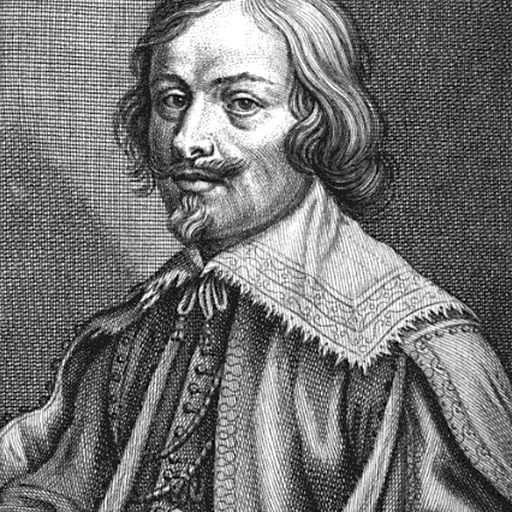
Jacques Callot was a baroque printmaker and draftsman from the Duchy of Lorraine.

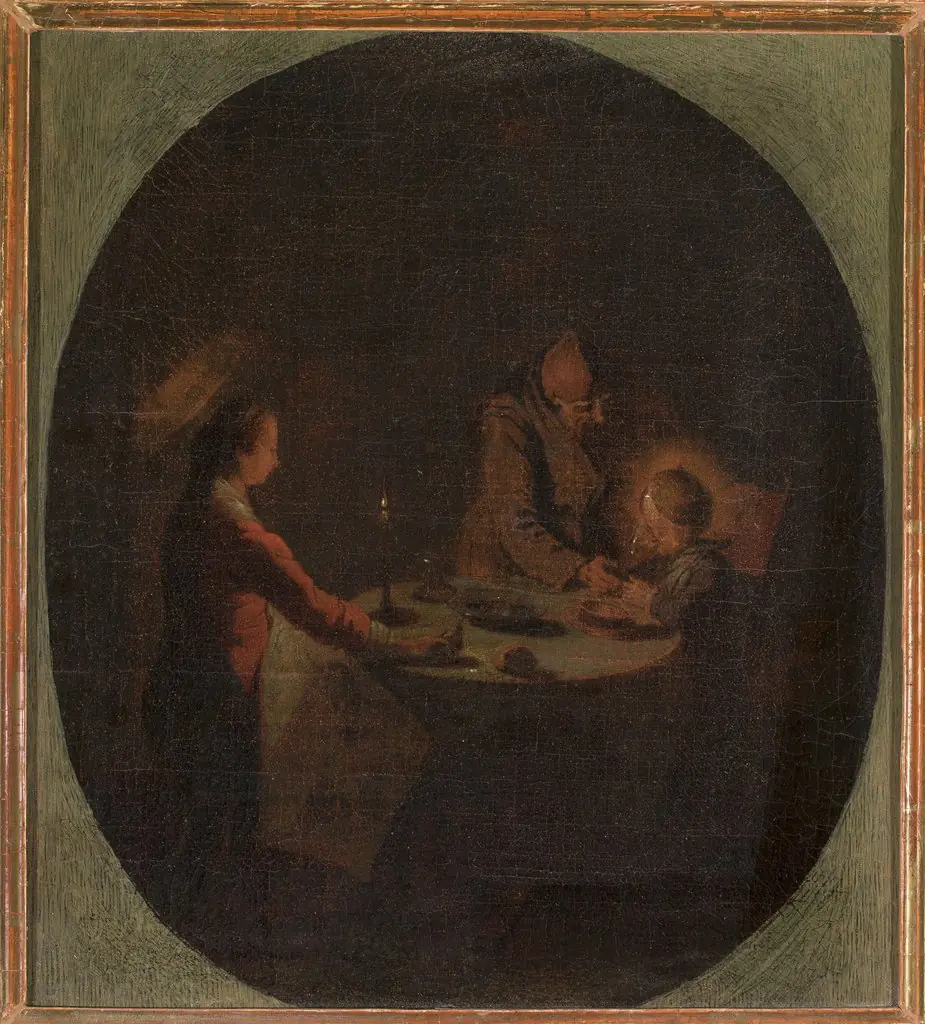 Holy Family at supper
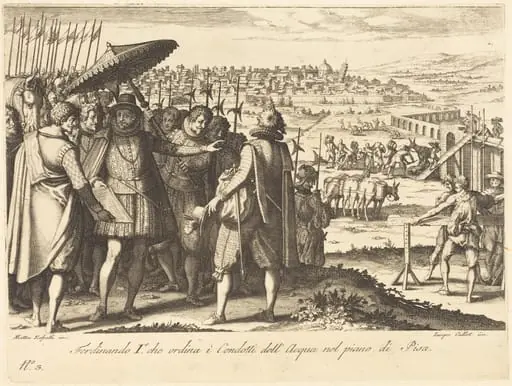 Restoration of the Aqueduct at Pisa
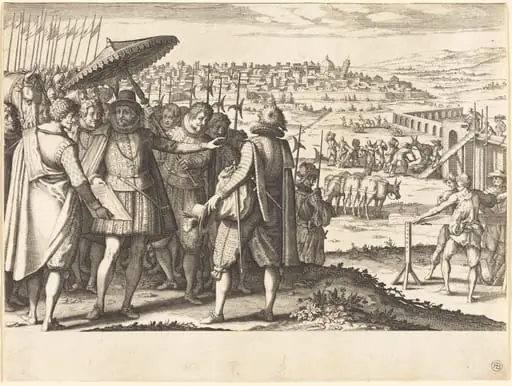 Restoration of the Aqueduct at Pisa
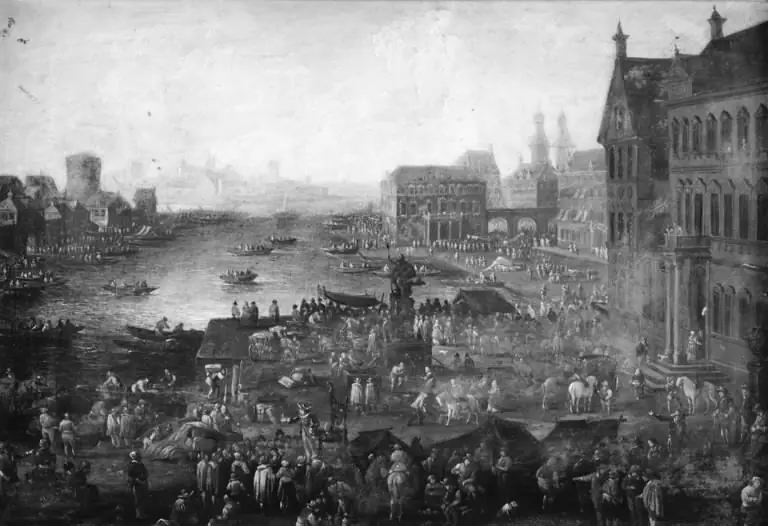 Square in Paris with Many Figures
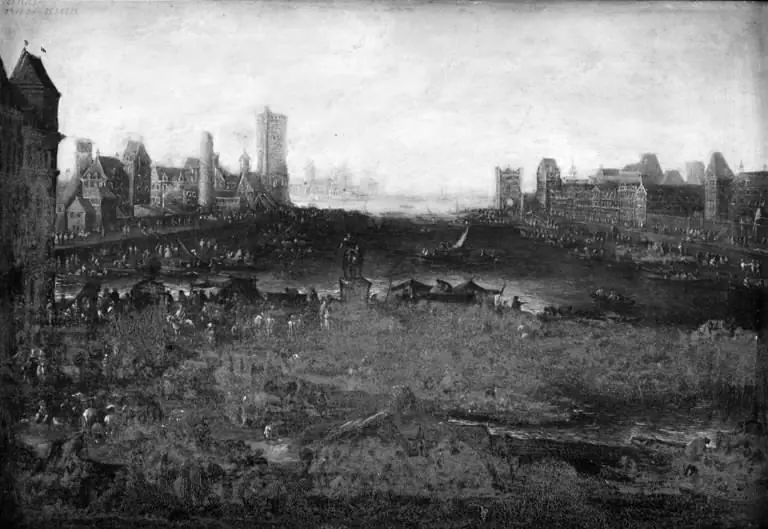 Square in Paris with Many Figures
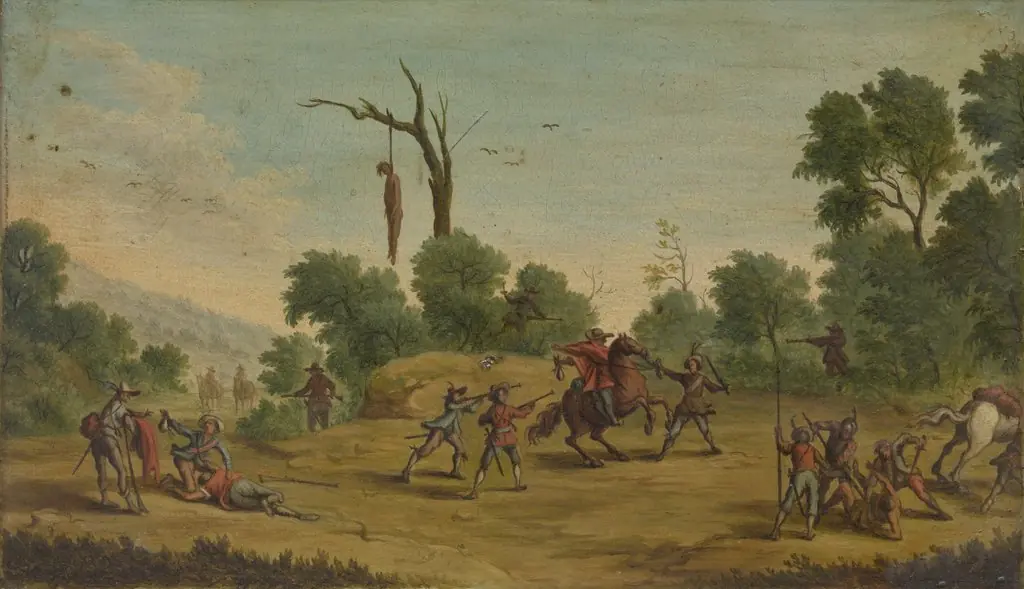 Horsemen Attacked by Robbers
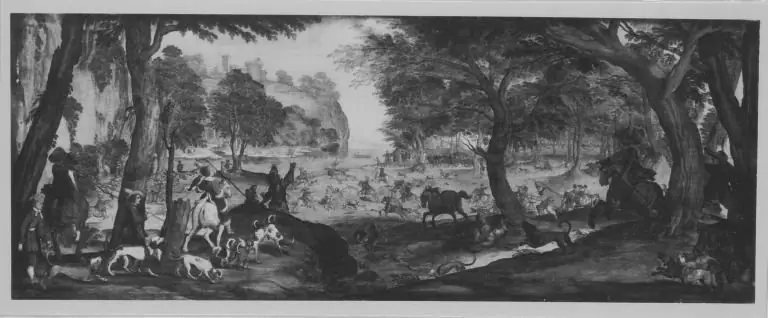 HOW WILL A COVERED PART BE CORRECTED?HOW WIKA A COVERED HEART DEED CORRECTED?
![Christ Walking on the Water [second plate], by Jacques Callot](https://artifactworldgallery.com/img/jacques-callot--christ-walking-on-the-water-second-plate--2069f3bfe4cb2126-w320.webp) Christ Walking on the Water [second plate]
Christ Walking on the Water [second plate]