Artwork
Stoning of Jesus
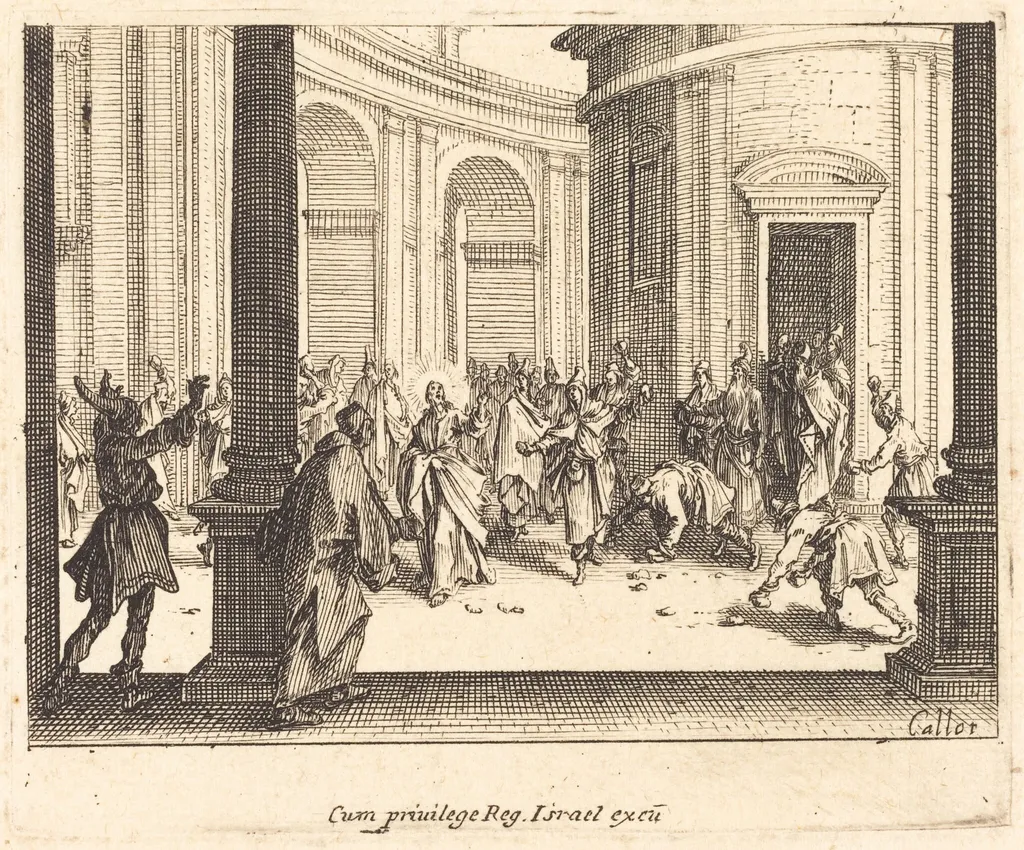
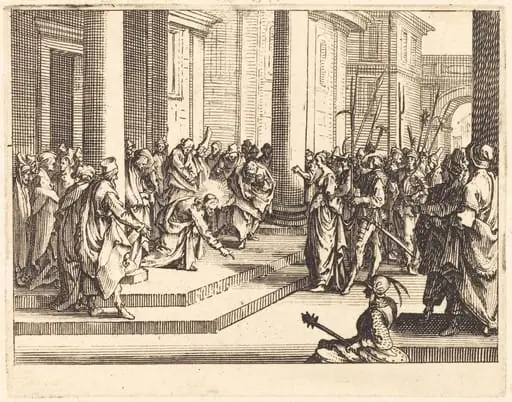
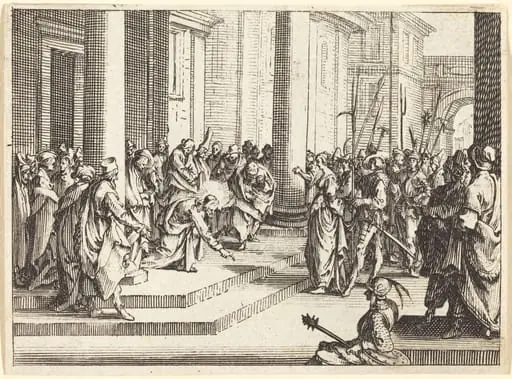
Stoning of Jesus is an ink print by the Baroque artist Jacques Callot. It dates from 1635 and is held in the collection of the National Gallery of Art.
About this work
Overview
Stoning of Jesus is a 1635 etching on laid paper by Jacques Callot, a prolific French Baroque printmaker and draftsman from Lorraine, known for his diverse output of over 1,400 etchings.
Subject & Meaning
The print depicts a chaotic biblical scene of the stoning of Jesus, conveying tension through the poses and reactions of the crowd amidst architectural elements like tall columns. The subject is part of Callot's broader exploration of religious narratives alongside contemporary and historical themes.
Technique & Style
Executed in black-and-white, the etching utilizes sharp lines characteristic of the medium during this period, effectively capturing movement and emotion among the figures. The composition includes scattered objects and varied postures, enhancing the sense of turmoil.
History & Provenance
Created in 1635, this work is one piece within a series by Callot dedicated to biblical stories, reflecting his practice of documenting a wide range of subjects.
Context
Callot's work, including 'Stoning of Jesus', was influenced by the technical capabilities of etching, which allowed for detailed, expressive prints. Understanding the etching process provides insight into how artists like Callot achieved such nuanced designs.
Artist & collection
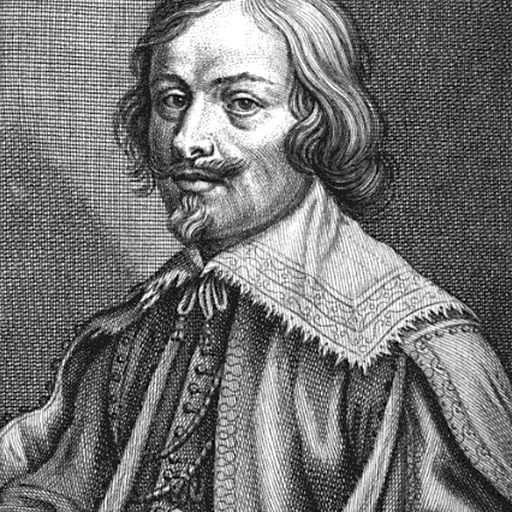
Artist
Jacques Callot was a baroque printmaker and draftsman from the Duchy of Lorraine.

 Holy Family at supper
 Restoration of the Aqueduct at Pisa
 Restoration of the Aqueduct at Pisa
 Square in Paris with Many Figures
 Square in Paris with Many Figures
 Horsemen Attacked by Robbers
 HOW WILL A COVERED PART BE CORRECTED?HOW WIKA A COVERED HEART DEED CORRECTED?
![Christ Walking on the Water [second plate], by Jacques Callot](https://artifactworldgallery.com/img/jacques-callot--christ-walking-on-the-water-second-plate--2069f3bfe4cb2126-w320.webp) Christ Walking on the Water [second plate]
Christ Walking on the Water [second plate]