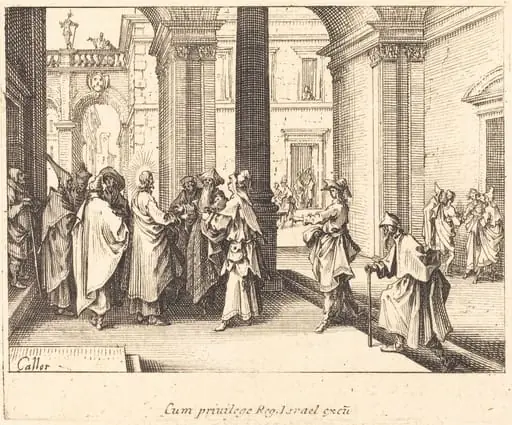
Artwork
Christ and the Woman Taken in Adultery
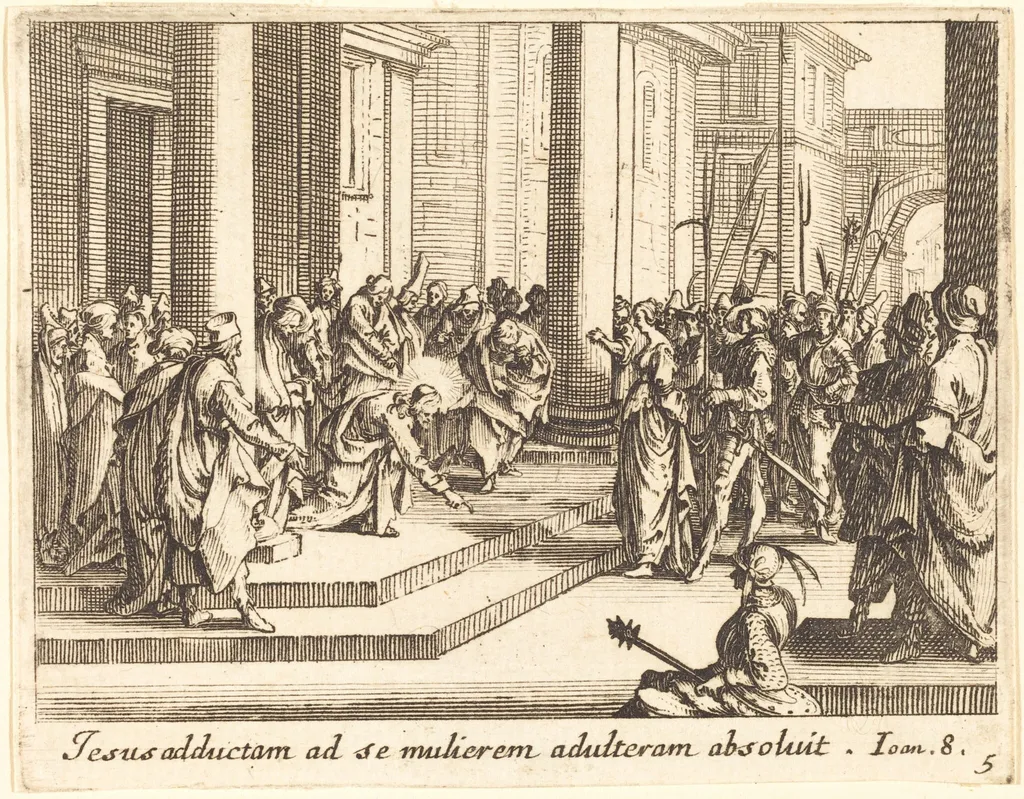
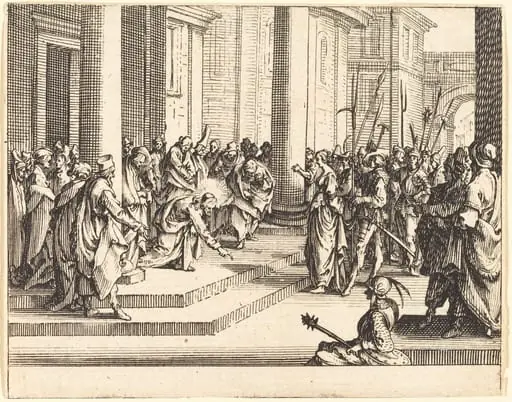
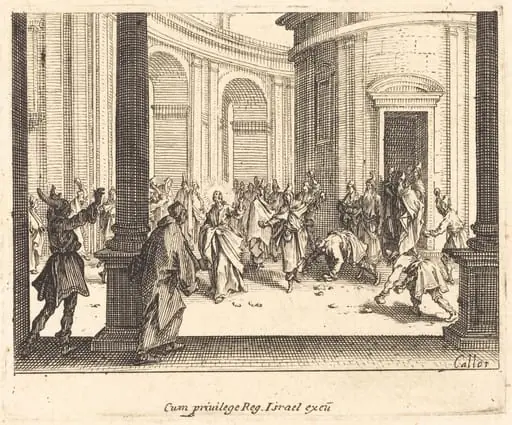
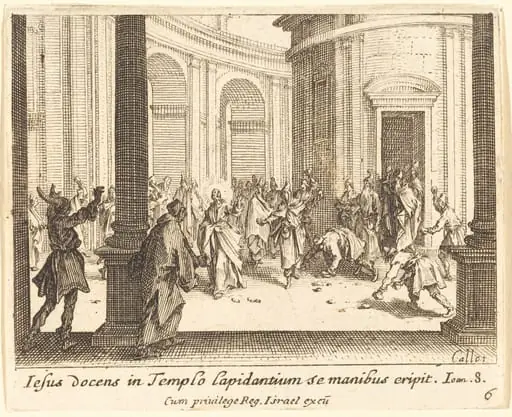
Christ and the Woman Taken in Adultery is an ink print by the Baroque artist Jacques Callot. It dates from 1635 and is held in the collection of the National Gallery of Art.
About this work
Overview
Jacques Callot’s 1635 etching *Christ and the Woman Taken in Adultery* presents a bustling courtyard scene in which a kneeling woman is surrounded by a restless crowd. The composition places armed men on the right, a disputatious group in the centre, and architectural arches in the distance, creating a sense of imminent judgment within a compact, narrative space.
Subject & Meaning
The print visualises the biblical episode in which Jesus confronts those ready to stone an accused adulteress. By depicting the tension of the assembled onlookers and the woman’s humbled posture, Callot emphasizes themes of mercy, moral authority, and the clash between public condemnation and divine compassion.
Technique & Style
Executed in etching on laid paper, the work relies on precise, incisive lines that convey the kinetic energy of the crowd. Callot’s characteristic attention to detail renders individual gestures and architectural elements, while the contrast of dense foreground figures against a more open background reflects Baroque interests in drama and spatial depth.
History & Provenance
Born circa 1592 in Lorraine, Callot produced more than 1,400 etchings that document a wide range of contemporary subjects, from military life to religious narratives. This particular print belongs to his series of devotional images and has circulated among collectors of early modern prints, appearing in several European collections before entering its present museum holding.
Own this work as a print
Artist & collection
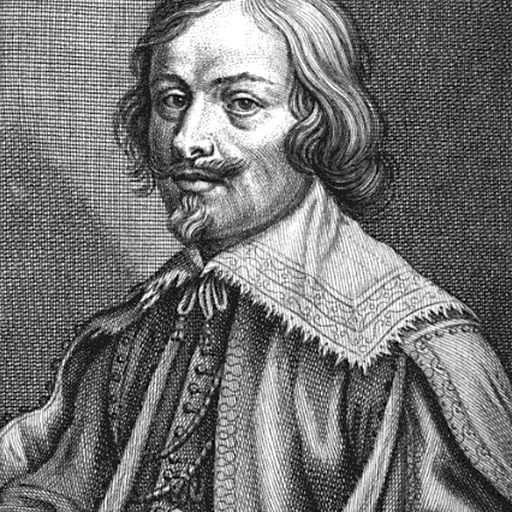
Artist
Jacques Callot was a baroque printmaker and draftsman from the Duchy of Lorraine.

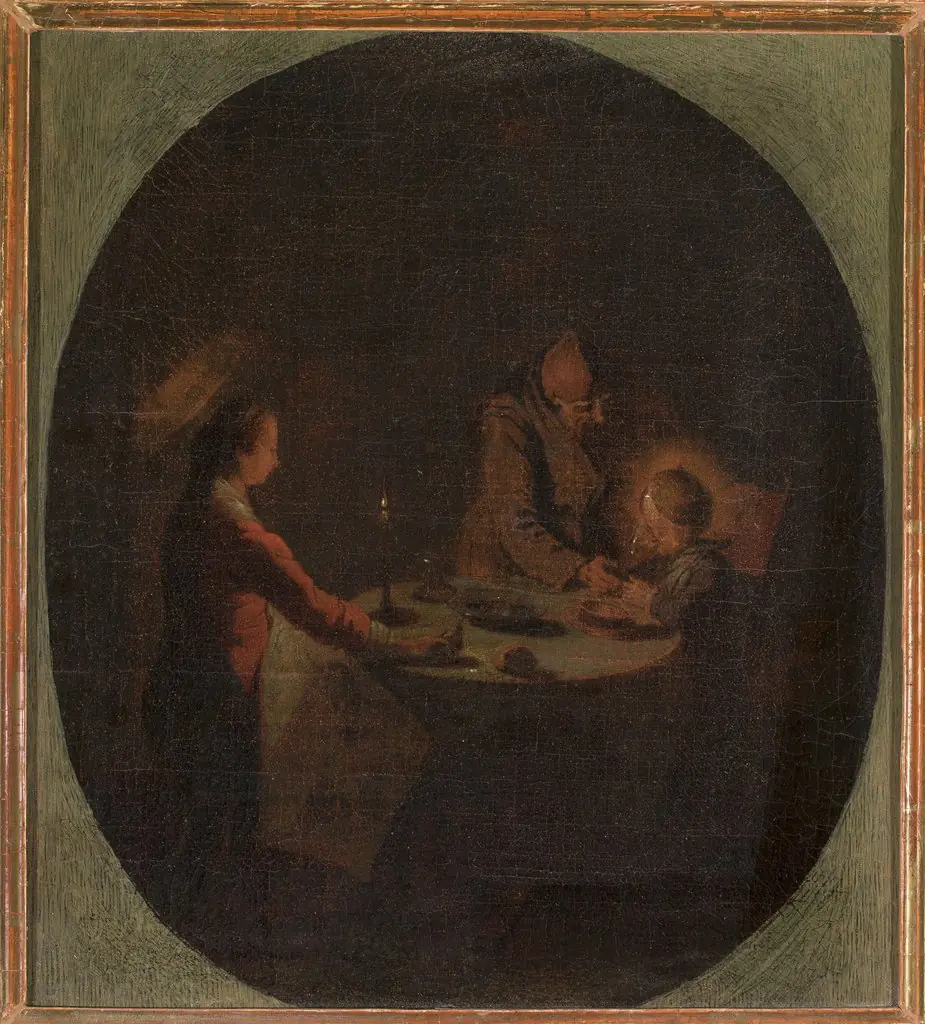 Holy Family at supper
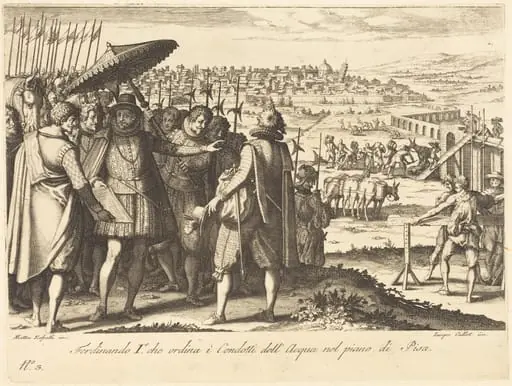 Restoration of the Aqueduct at Pisa
 Restoration of the Aqueduct at Pisa
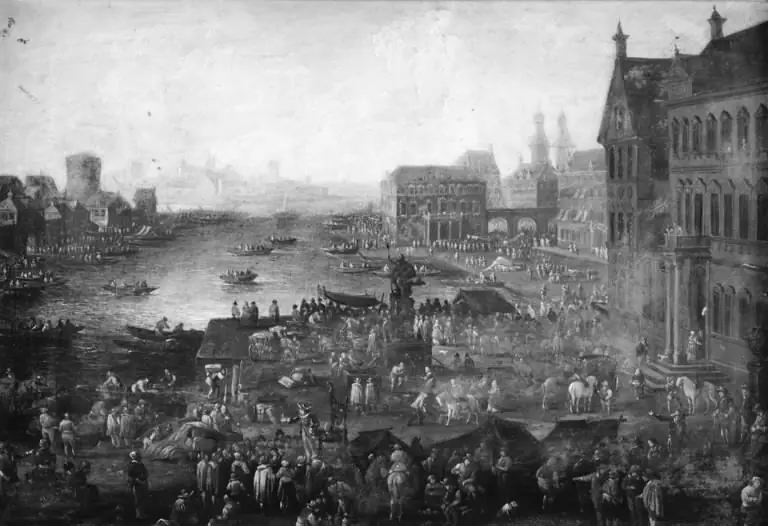 Square in Paris with Many Figures
 Square in Paris with Many Figures
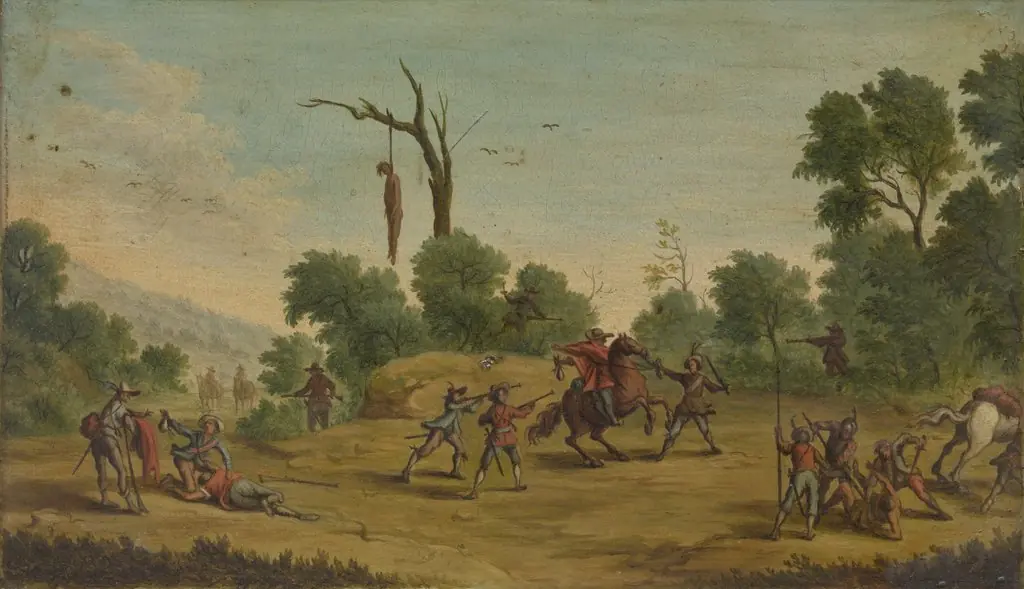 Horsemen Attacked by Robbers
 HOW WILL A COVERED PART BE CORRECTED?HOW WIKA A COVERED HEART DEED CORRECTED?
![Christ Walking on the Water [second plate], by Jacques Callot](https://artifactworldgallery.com/img/jacques-callot--christ-walking-on-the-water-second-plate--2069f3bfe4cb2126-w320.webp) Christ Walking on the Water [second plate]
Christ Walking on the Water [second plate]