Artwork
Construction and Fortification of the Port of Livorno
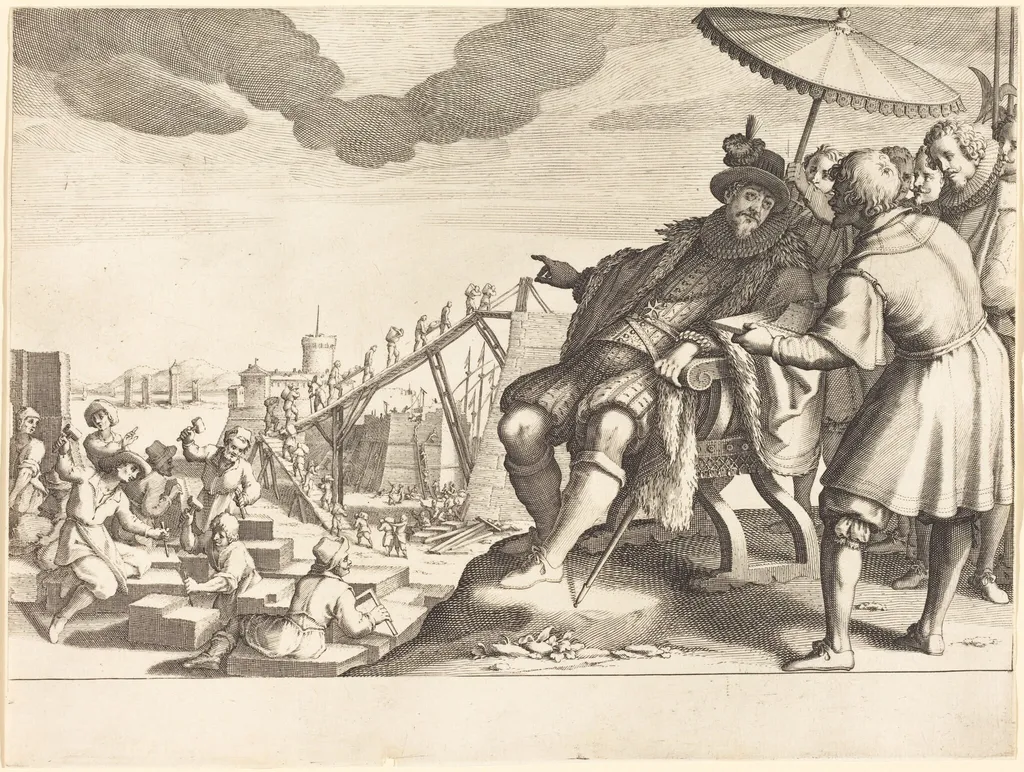
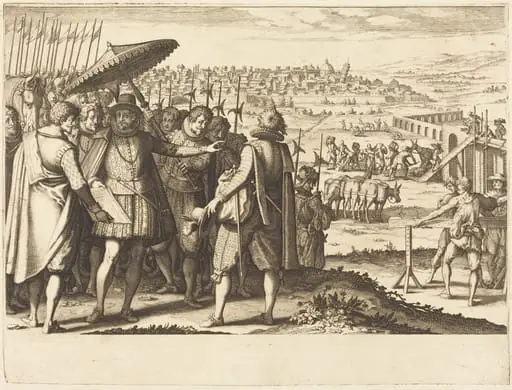
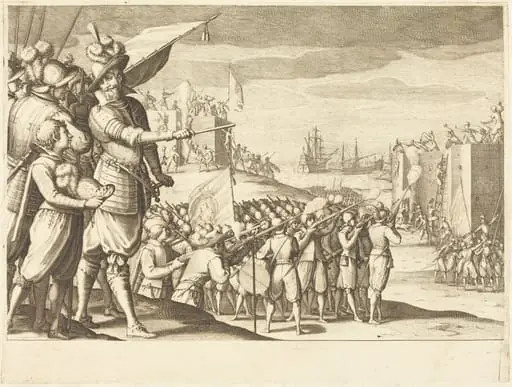
Construction and Fortification of the Port of Livorno is an ink print by the Baroque artist Jacques Callot. It dates from 1614 and is held in the collection of the National Gallery of Art.
About this work
Overview
Jacques Callot, a French printmaker active in the early seventeenth century, created the engraving *Construction and Fortification of the Port of Livorno* around 1614. Executed on laid paper, the print records the ongoing development of Livorno’s harbor, emphasizing both the architectural expansion and the defensive works that were being erected at the time.
Subject & Meaning
The composition highlights the collaborative effort involved in maritime construction and the strategic importance of the port.
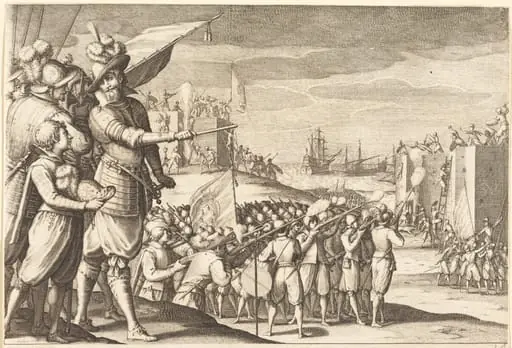
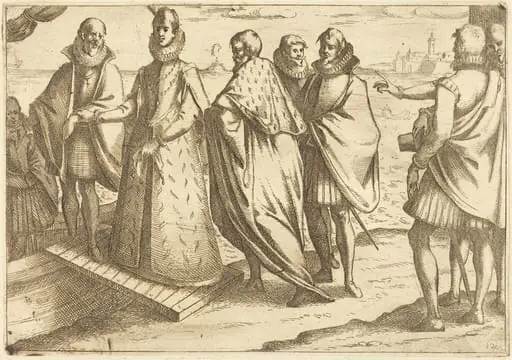
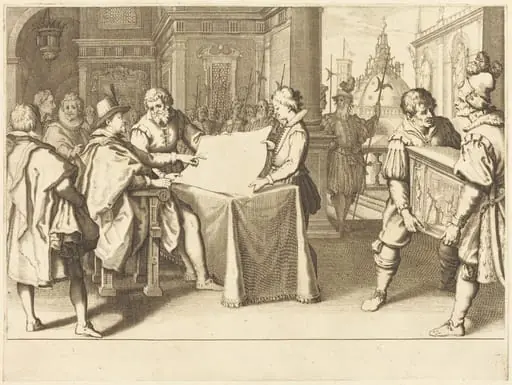
The image presents a bustling shipyard where a large vessel is being assembled. Laborers raise timber beams, stand on scaffolding, and attend to the hull, while onlookers—among them a man in a coat and hat gesturing toward the ship and a woman with an umbrella—observe the activity from nearby steps. The composition highlights the collaborative effort involved in maritime construction and the strategic importance of the port.
Technique & Style
Callot employs dense cross‑hatching to render shadows, texture, and the intricate details of the scene. This fine network of lines creates a sense of depth and movement, allowing the viewer to discern individual figures, the rigging of the ship, and the surrounding architecture. The precision of the line work reflects Callot’s reputation for meticulous documentation in his prints.
History & Provenance
Produced during Callot’s prolific period in which he generated more than 1,400 etchings, the print forms part of his broader visual record of contemporary life, especially military and urban subjects. While the original ownership trail is not fully documented, the work has been held in several European collections and is frequently cited in studies of early modern port architecture.
Context
Livorno’s harbor was a key Mediterranean hub in the early seventeenth century, and its fortifications were central to the city’s economic and defensive strategies. Callot’s depiction offers historians a visual source for the layout and construction techniques of the era. The print also exemplifies the baroque period’s interest in detailed, observational representation of public works.
Artist & collection
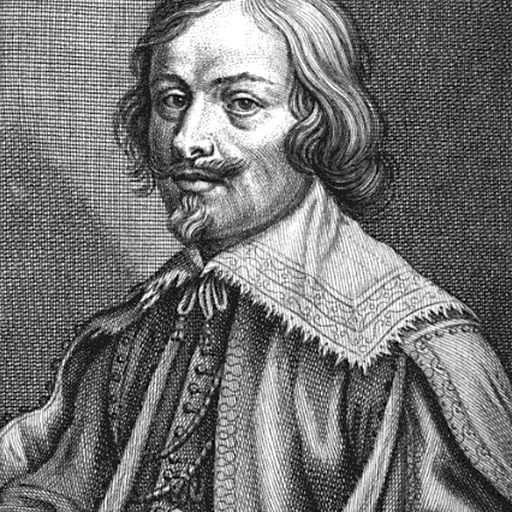
Artist
Jacques Callot was a baroque printmaker and draftsman from the Duchy of Lorraine.

 Holy Family at supper
 Restoration of the Aqueduct at Pisa
 Restoration of the Aqueduct at Pisa
 Square in Paris with Many Figures
 Square in Paris with Many Figures
 Horsemen Attacked by Robbers
 HOW WILL A COVERED PART BE CORRECTED?HOW WIKA A COVERED HEART DEED CORRECTED?
![Christ Walking on the Water [second plate], by Jacques Callot](https://artifactworldgallery.com/img/jacques-callot--christ-walking-on-the-water-second-plate--2069f3bfe4cb2126-w320.webp) Christ Walking on the Water [second plate]
Christ Walking on the Water [second plate]