Artwork
Restoration of the Duomo, Florence
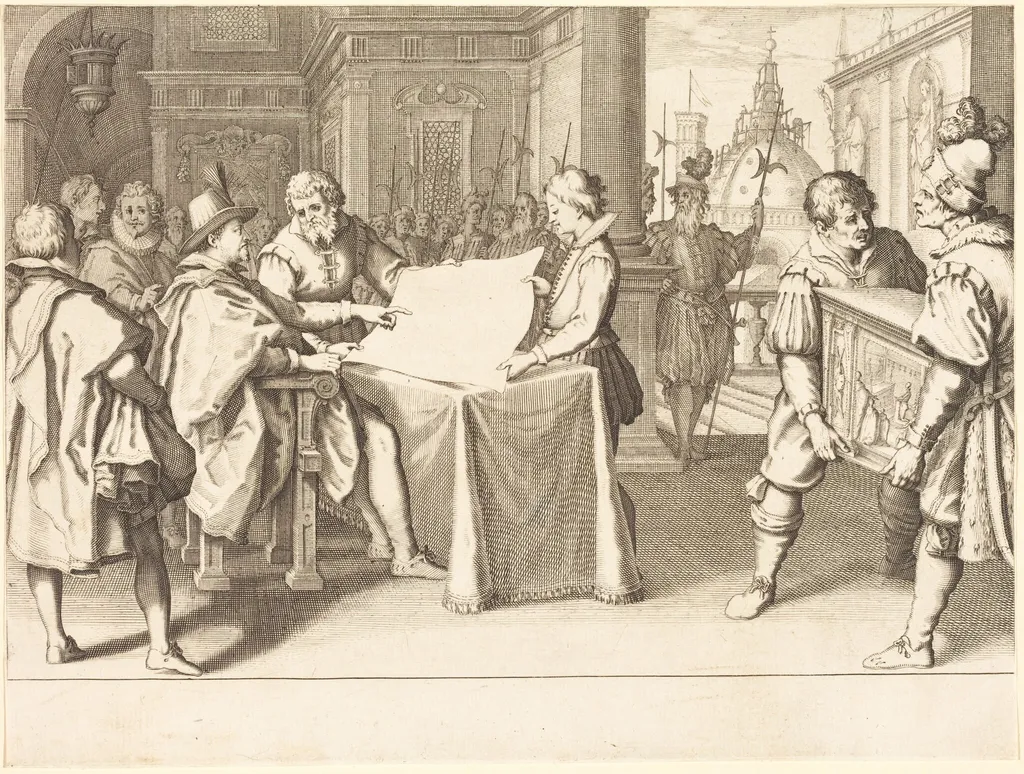
Restoration of the Duomo, Florence is an ink print by the Baroque artist Jacques Callot. It dates from 1614 and is held in the collection of the National Gallery of Art.
About this work
Overview
Unlike painted compositions, the work relies on incised metal lines to produce a detailed monochrome image, characteristic of early 17th-century printmaking.
Created around 1614 by French printmaker Jacques Callot, this engraving on laid paper captures a moment of architectural upkeep at Florence’s cathedral. Unlike painted compositions, the work relies on incised metal lines to produce a detailed monochrome image, characteristic of early 17th-century printmaking. Callot, trained in the Northern European tradition, documented urban and religious scenes with precision, and this piece reflects his engagement with Italian civic life during his time in Florence.
Subject & Meaning
The scene centers on a group of men gathered around a large rolled blueprint, one gesturing as he explains structural details. Others observe intently, suggesting a collaborative effort in planning repairs. Behind them, the dome of Santa Maria del Fiore rises above the city, with ships visible on the Arno, anchoring the action in Florence’s commercial and spiritual heart. The image conveys the institutional care required to maintain monumental religious architecture.
Technique & Style
Callot employed fine, controlled engraving lines to render textures in fabric, stone, and architectural surfaces. The composition uses layered perspective to distinguish foreground figures from the distant dome and river, enhancing spatial depth. His meticulous line work captures subtle variations in light and shadow, typical of his mastery in etching and engraving. The absence of color emphasizes form and detail, aligning with the print’s documentary intent.
History & Provenance
Callot produced this print during his stay in Florence, likely commissioned or inspired by local interest in the cathedral’s ongoing maintenance. The work circulated among collectors and architects in Italy and beyond, valued for its accuracy and technical finesse. No early ownership records are known, but its survival in multiple museum collections suggests early recognition of its historical and artistic merit.
Context
In early 17th-century Florence, the cathedral dome—designed by Brunelleschi—remained a symbol of civic pride and engineering achievement. Regular upkeep was essential, and such repairs were public affairs involving engineers, masons, and patrons. Callot’s print aligns with a broader European trend of documenting urban infrastructure, reflecting growing interest in the mechanics of city life and the preservation of heritage.
Legacy
This engraving stands as a rare visual record of architectural conservation practices in Renaissance Italy. While not widely reproduced in popular media, it has been studied by historians of printmaking and urban development. Callot’s attention to detail in labor and structure influenced later topographical printmakers, preserving a moment of quiet, collective effort behind one of Europe’s most enduring monuments.
Artist & collection
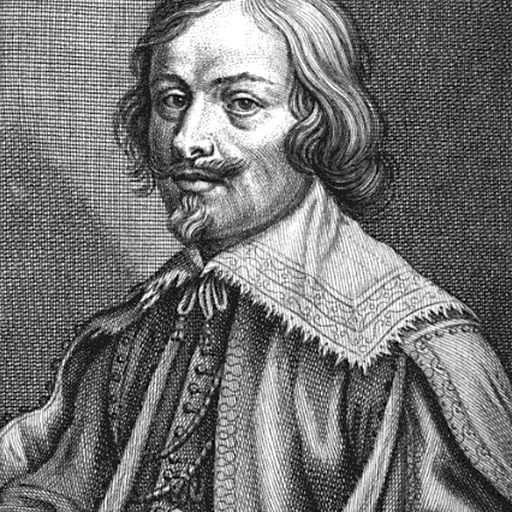
Artist
Jacques Callot was a baroque printmaker and draftsman from the Duchy of Lorraine.

 Holy Family at supper
 Restoration of the Aqueduct at Pisa
 Restoration of the Aqueduct at Pisa
 Square in Paris with Many Figures
 Square in Paris with Many Figures
 Horsemen Attacked by Robbers
 HOW WILL A COVERED PART BE CORRECTED?HOW WIKA A COVERED HEART DEED CORRECTED?
![Christ Walking on the Water [second plate], by Jacques Callot](https://artifactworldgallery.com/img/jacques-callot--christ-walking-on-the-water-second-plate--2069f3bfe4cb2126-w320.webp) Christ Walking on the Water [second plate]
Christ Walking on the Water [second plate]
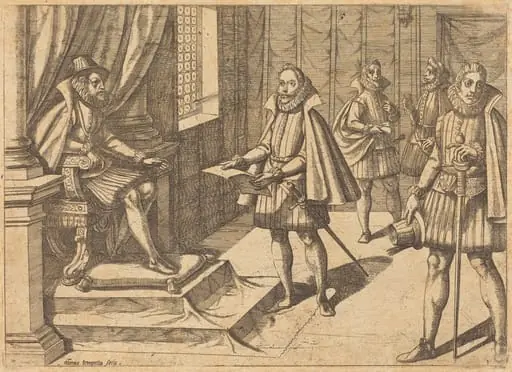 Philip II of Spain on His Throne
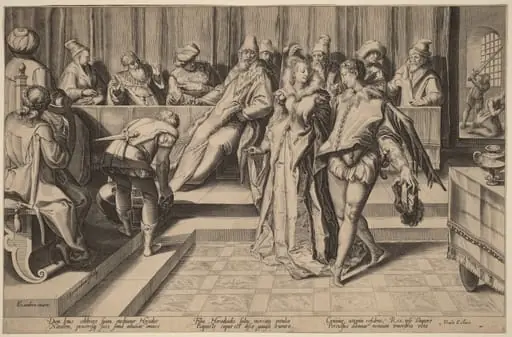 Salome Dancing Before Herod
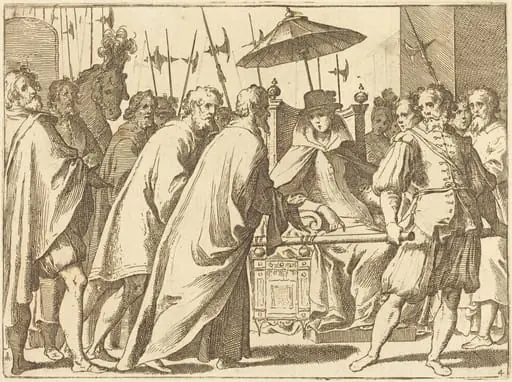 Margaret of Austria Being Carried in a Chaise
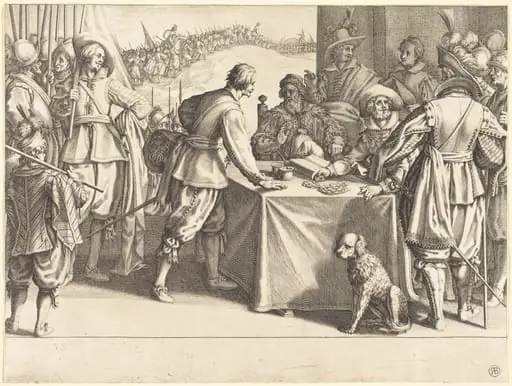 The Hiring of the Troops
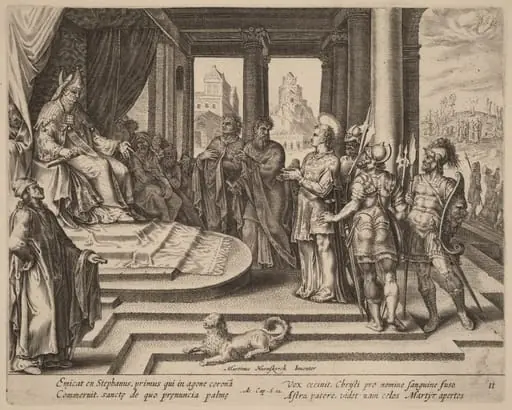 Saint Stephen before the Council
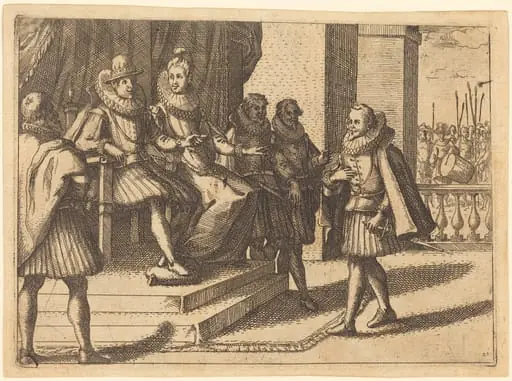 King and Queen in Consultation about the Turks
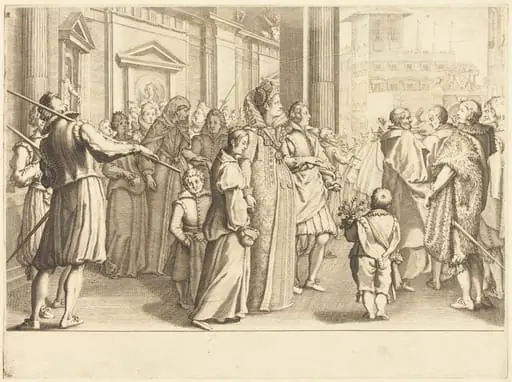 Grand Duchess at the Procession of the Young Girls
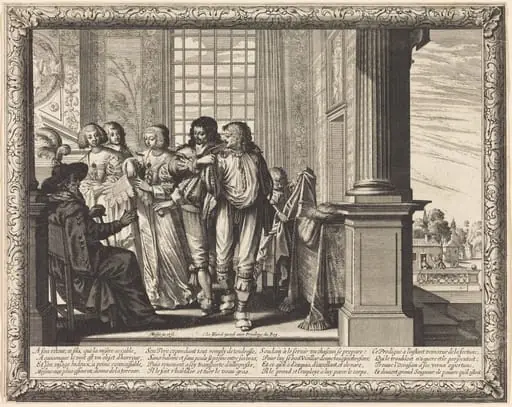 The Prodigal Son's Father Orders the Best Robe and the Slaughter of the Fatted Calf
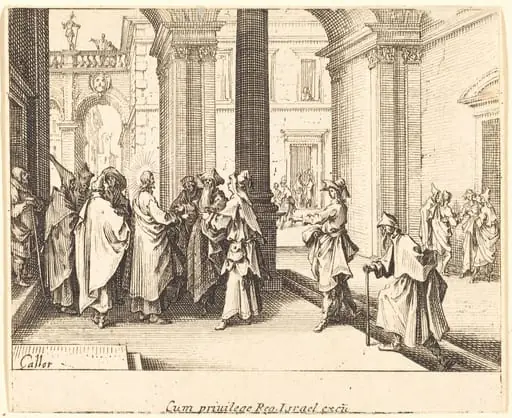 Caesar's Coin
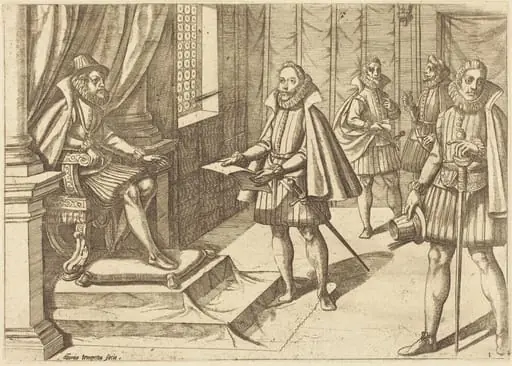 Philip II of Spain on His Throne