Artwork
Restoration of the Duomo, Florence
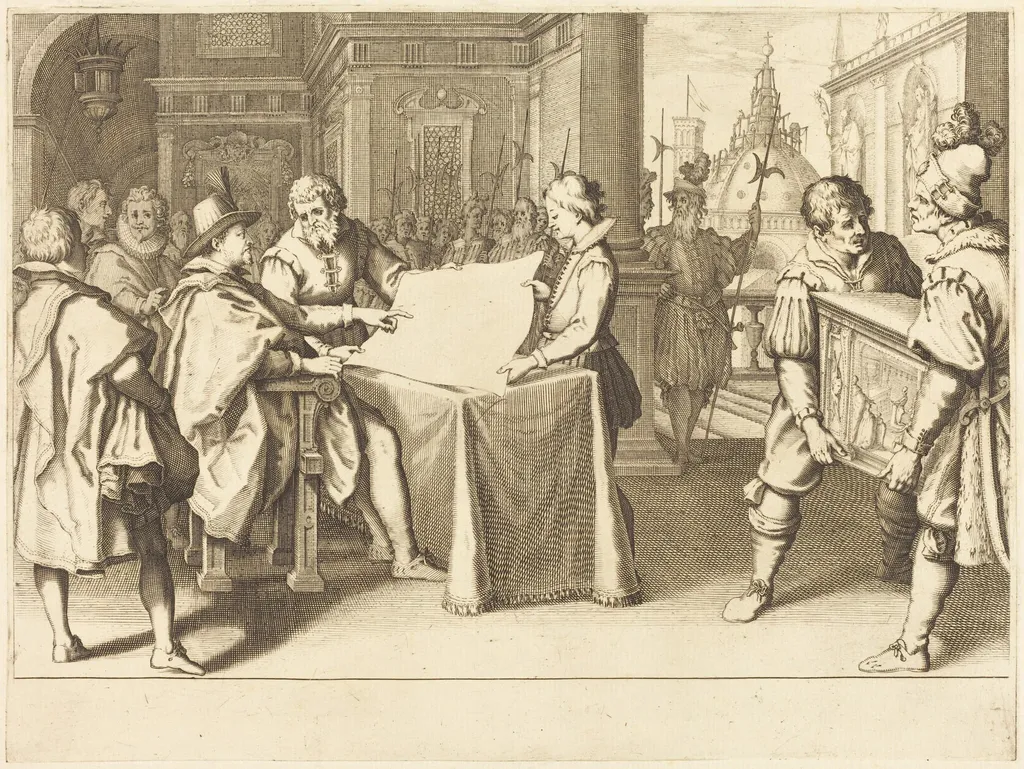
Restoration of the Duomo, Florence is an ink print by the Baroque artist Jacques Callot. It dates from 1614 and is held in the collection of the National Gallery of Art.
About this work
Overview
This engraving, created circa 1614 by Jacques Callot, depicts the ongoing construction and restoration efforts at Florence’s Duomo. A product of Callot’s mature period, the work exemplifies his ability to merge architectural precision with lively human activity. Executed on laid paper, the print remains a restrike, preserving the original composition’s intricate detail.
Subject & Meaning
The scene centers on a group of figures gathered around a table, likely architects or overseers examining plans for the cathedral’s dome.
The scene centers on a group of figures gathered around a table, likely architects or overseers examining plans for the cathedral’s dome. One individual gestures toward a rolled document, suggesting a moment of deliberation or instruction. The surrounding workers and the distant facade of the Duomo underscore the collaborative nature of large-scale Renaissance construction, framing the image as both a technical record and a social narrative.
Technique & Style
Callot employed engraving, a method involving incised lines on a metal plate, to achieve the print’s fine detailing. His controlled cross-hatching and stippling create depth, texture, and tonal variation, distinguishing folds in fabric, facial expressions, and architectural elements. The composition balances human figures with urban scale, a hallmark of Callot’s Baroque-era draftsmanship, where clarity and dynamism coexist.
History & Provenance
Produced in the early 17th century, the engraving reflects Callot’s engagement with Italian subjects during his time in Florence. As a restrike, this impression derives from the original plate, though its precise lineage remains unrecorded. Callot’s prolific output—over 1,400 prints—ensured the circulation of his works across European collections, where they were valued for both artistic and documentary merits.
Context
The print emerges from a period of renewed interest in Florence’s architectural heritage, particularly Brunelleschi’s dome, which had become a symbol of civic pride. Callot’s depiction aligns with his broader practice of documenting contemporary events, from military campaigns to urban life. His work bridges the gap between artistic representation and historical record, offering insight into the labor and organization behind Renaissance construction.
Legacy
Callot’s engravings influenced subsequent generations of printmakers, particularly in their fusion of narrative and technical precision. This image, like others in his oeuvre, preserves a moment in the Duomo’s history while demonstrating the medium’s capacity to convey both human and architectural scale. Its continued study underscores the role of prints in disseminating knowledge of Renaissance engineering and Baroque-era urbanism.
Artist & collection
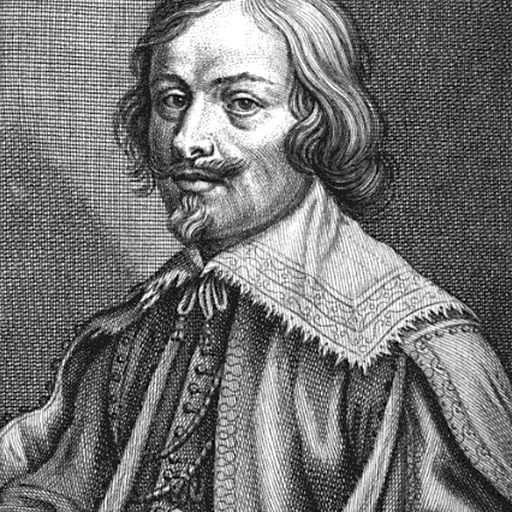
Artist
Jacques Callot was a baroque printmaker and draftsman from the Duchy of Lorraine.

 Holy Family at supper
 Restoration of the Aqueduct at Pisa
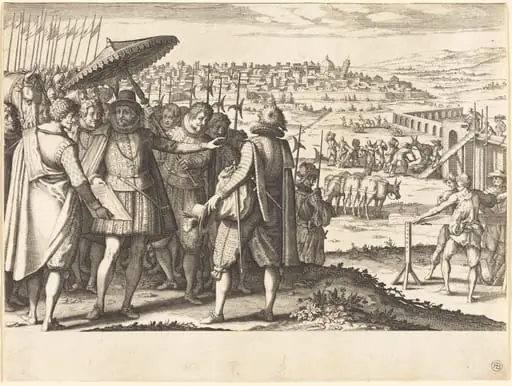 Restoration of the Aqueduct at Pisa
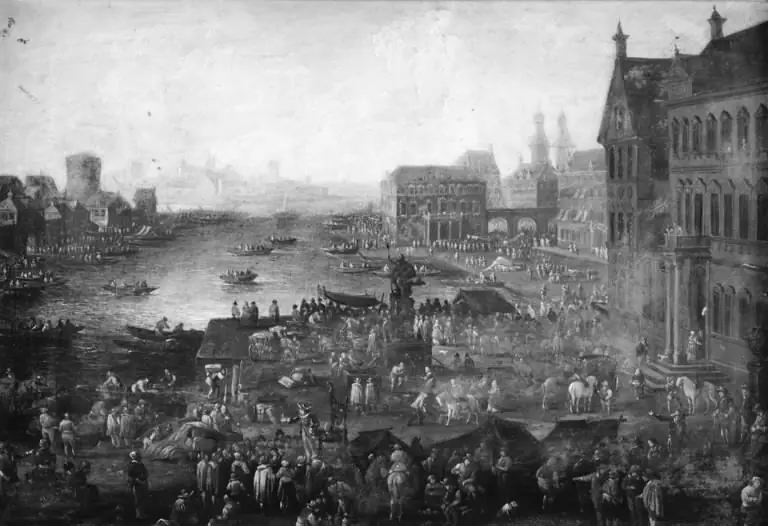 Square in Paris with Many Figures
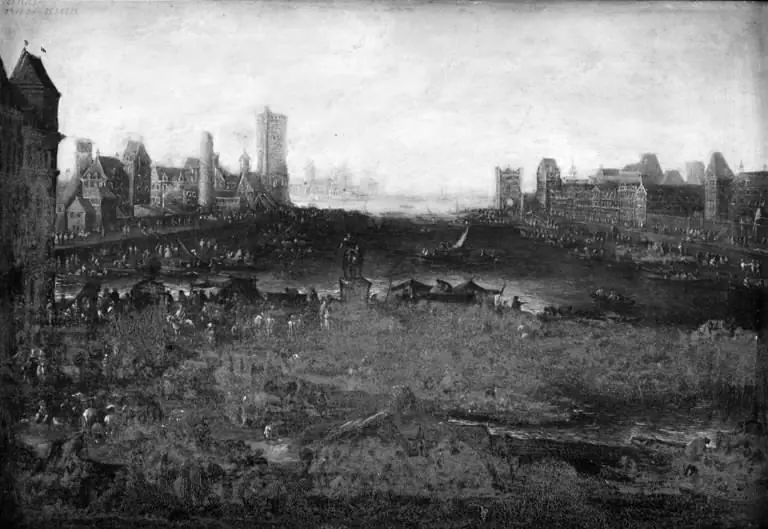 Square in Paris with Many Figures
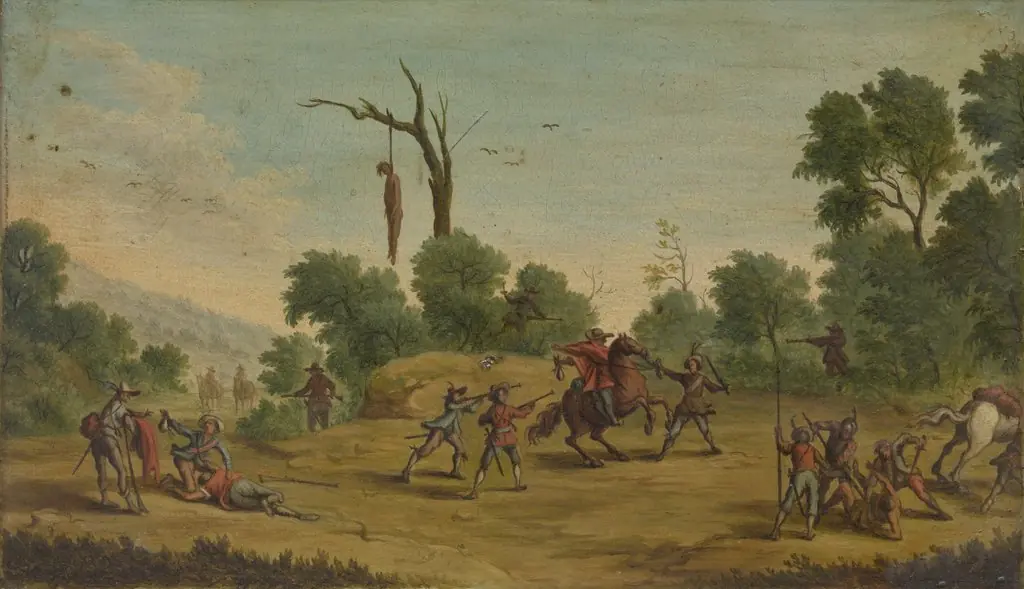 Horsemen Attacked by Robbers
 HOW WILL A COVERED PART BE CORRECTED?HOW WIKA A COVERED HEART DEED CORRECTED?
![Christ Walking on the Water [second plate], by Jacques Callot](https://artifactworldgallery.com/img/jacques-callot--christ-walking-on-the-water-second-plate--2069f3bfe4cb2126-w320.webp) Christ Walking on the Water [second plate]
Christ Walking on the Water [second plate]
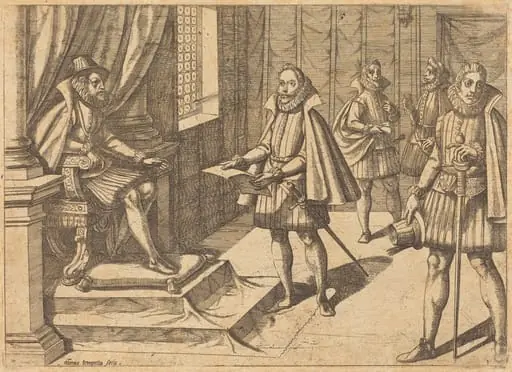 Philip II of Spain on His Throne
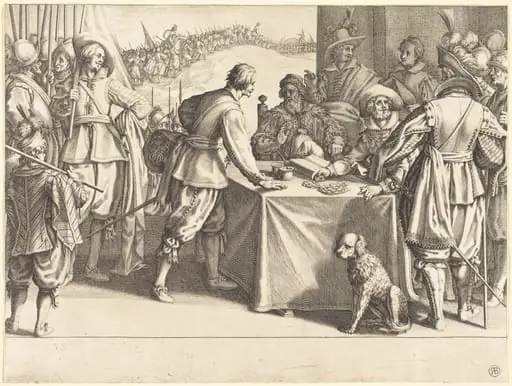 The Hiring of the Troops
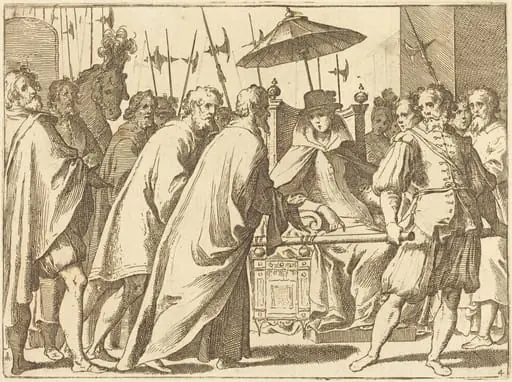 Margaret of Austria Being Carried in a Chaise
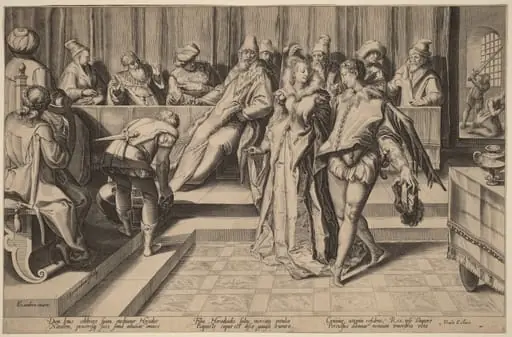 Salome Dancing Before Herod
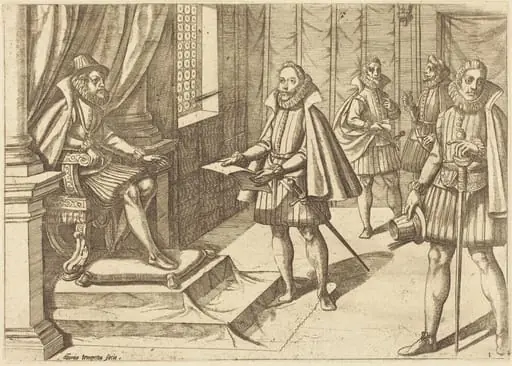 Philip II of Spain on His Throne
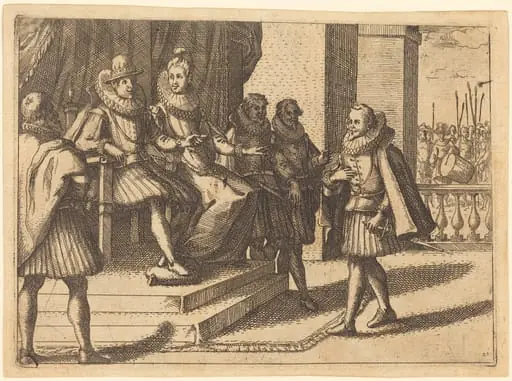 King and Queen in Consultation about the Turks
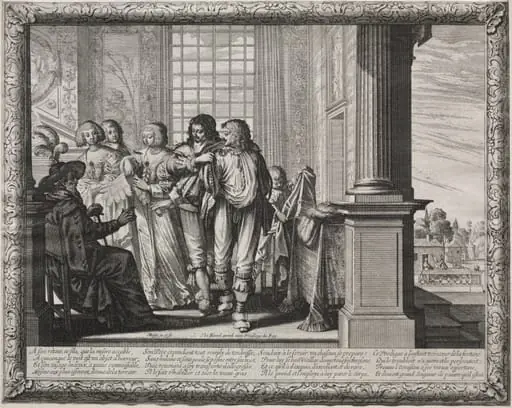 The Prodigal Son: Dressing for the Feast
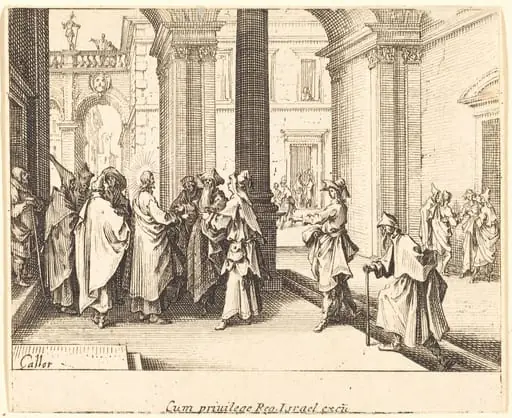 Caesar's Coin
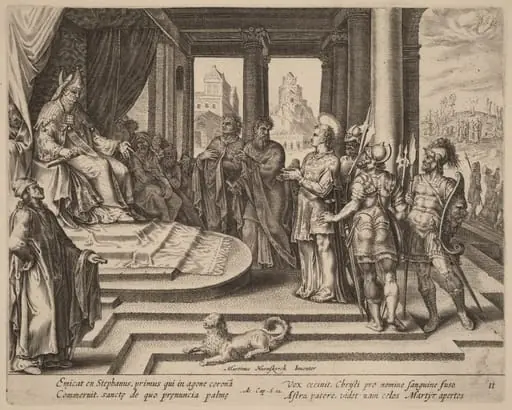 Saint Stephen before the Council
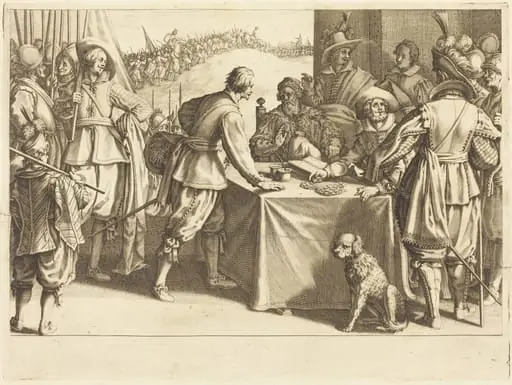 The Hiring of the Troops