Artwork
Conversion of Paul
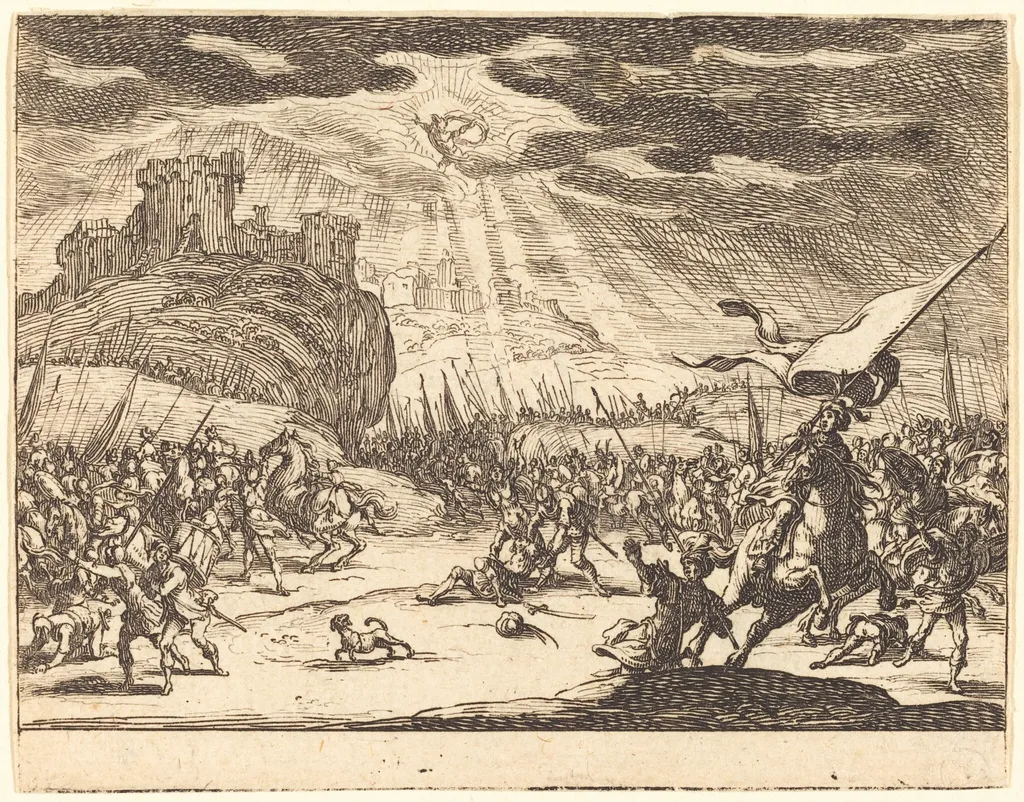
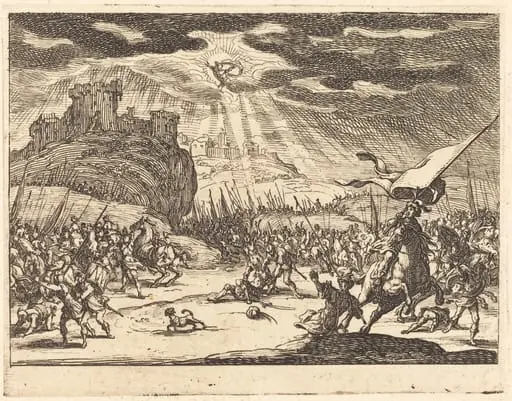
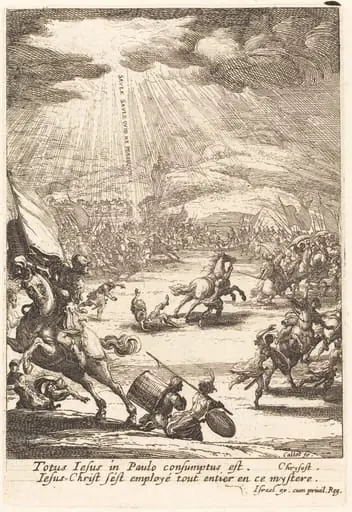
Conversion of Paul is an ink print by the Baroque artist Jacques Callot. It dates from 1635 and is held in the collection of the National Gallery of Art.
About this work
Overview
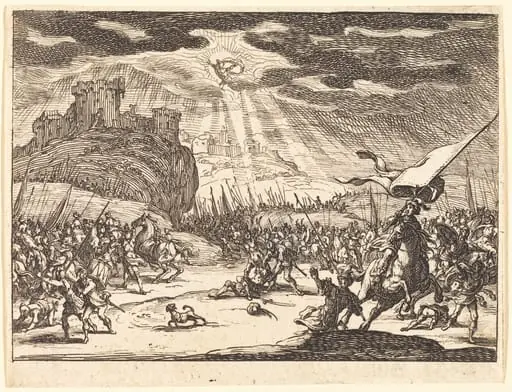
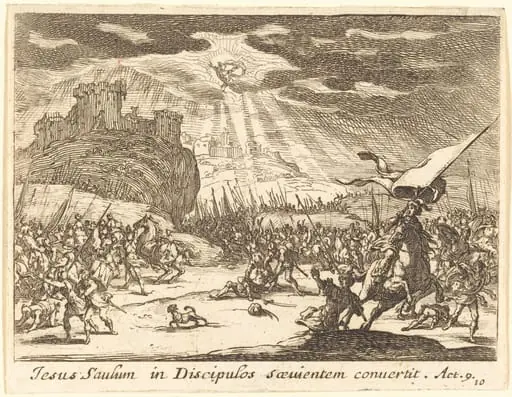
Jacques Callot’s *Conversion of Paul* (1635) is an etching executed on laid paper. The image captures the moment Saul, later Paul, is thrown from his horse on a dusty road, blinded by a sudden flash of light while his companions react in alarm. The composition combines dynamic movement with a detailed setting, illustrating Callot’s command of narrative printmaking in the early Baroque era.
Subject & Meaning
The work depicts the biblical episode from Acts in which Saul experiences a divine revelation that transforms him into the apostle Paul. The dramatic fall, the blinding light, and the panic of the soldiers convey the sudden, overwhelming nature of the conversion, emphasizing themes of spiritual awakening and divine intervention.
Technique & Style
Callot employed both drypoint and traditional etching on a single plate.
Callot employed both drypoint and traditional etching on a single plate. Drypoint delivers crisp, incisive lines that define the figures and the horse, while the etched areas provide subtle tonal gradations for shadows and atmospheric depth. This combination yields a texture that balances sharp edges with softened modeling, allowing intricate details such as armor plates and facial expressions to emerge.
History & Provenance
Born circa 1592 in Lorraine, Callot produced more than 1,400 prints over his career, ranging from military subjects to religious narratives. *Conversion of Paul* belongs to his early mature period, when he was refining the technical innovations that would influence later printmakers. The print has been held in several European collections, reflecting its circulation among connoisseurs of Baroque graphic art.
Context
The etching aligns with the Baroque interest in dramatic, emotionally charged religious scenes intended to engage viewers. Callot’s attention to detail in the background and his use of light to highlight the supernatural moment echo contemporary trends in painting and print, while his precise rendering of contemporary armor situates the biblical story within a recognizable 17th‑century visual language.
Artist & collection
Artist
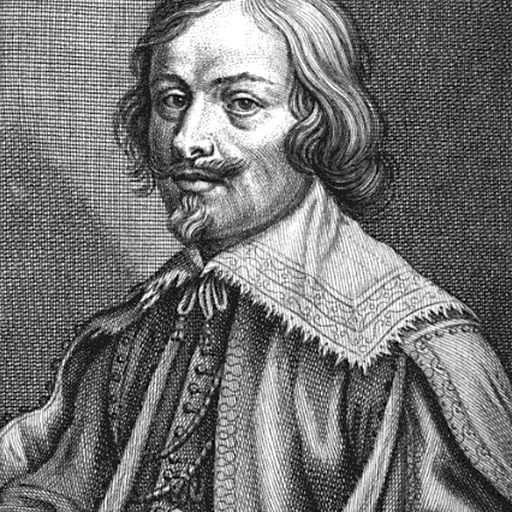
Jacques Callot was a baroque printmaker and draftsman from the Duchy of Lorraine.

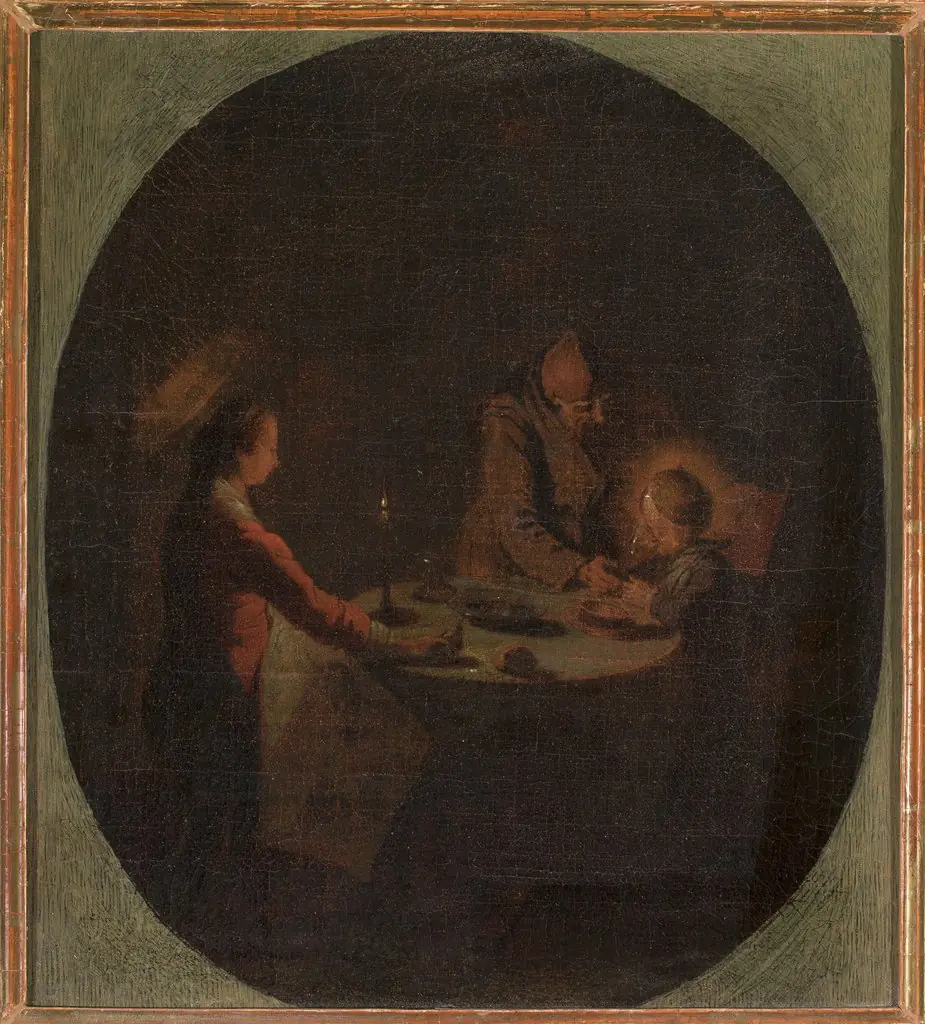 Holy Family at supper
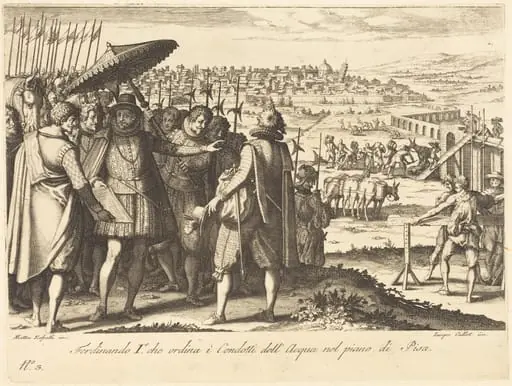 Restoration of the Aqueduct at Pisa
 Restoration of the Aqueduct at Pisa
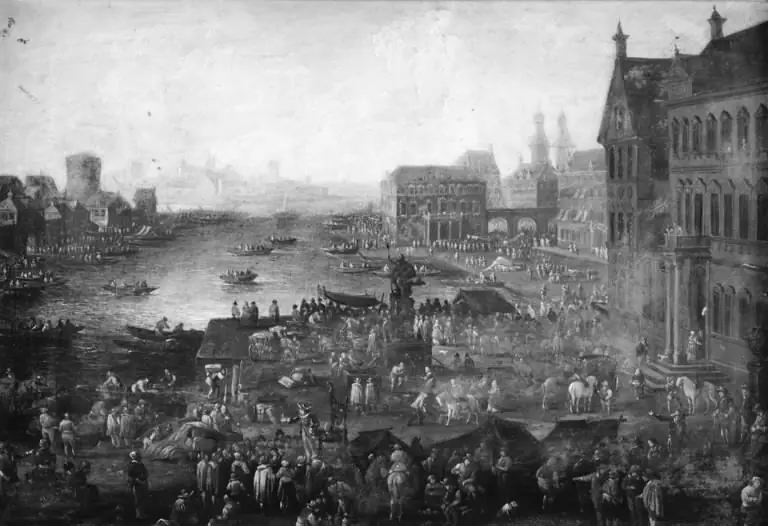 Square in Paris with Many Figures
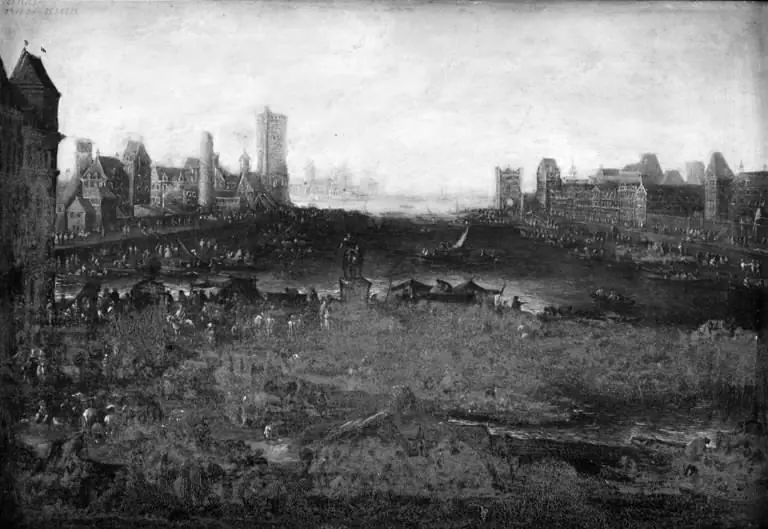 Square in Paris with Many Figures
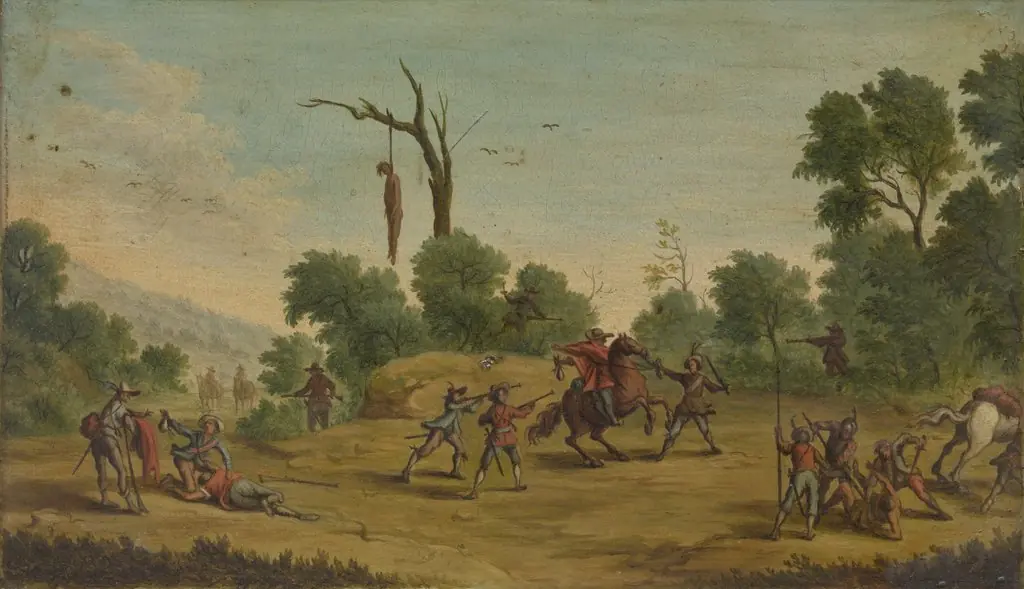 Horsemen Attacked by Robbers
 HOW WILL A COVERED PART BE CORRECTED?HOW WIKA A COVERED HEART DEED CORRECTED?
![Christ Walking on the Water [second plate], by Jacques Callot](https://artifactworldgallery.com/img/jacques-callot--christ-walking-on-the-water-second-plate--2069f3bfe4cb2126-w320.webp) Christ Walking on the Water [second plate]
Christ Walking on the Water [second plate]