Artwork
Conversion of Paul
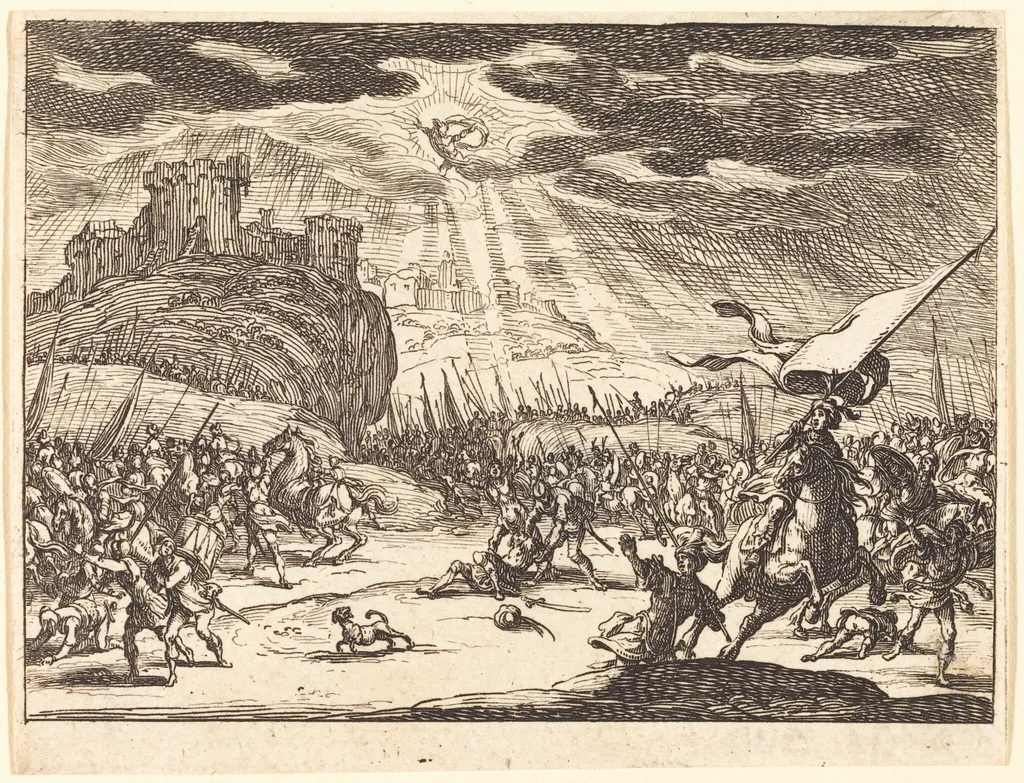
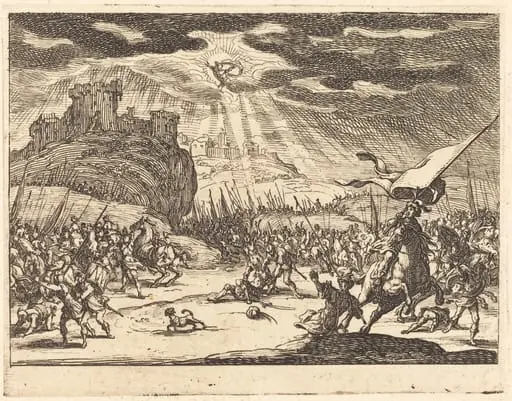
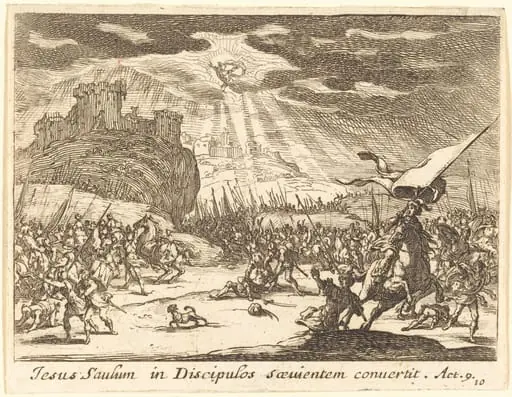
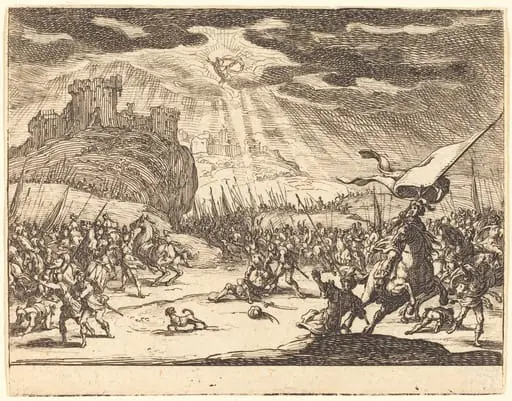
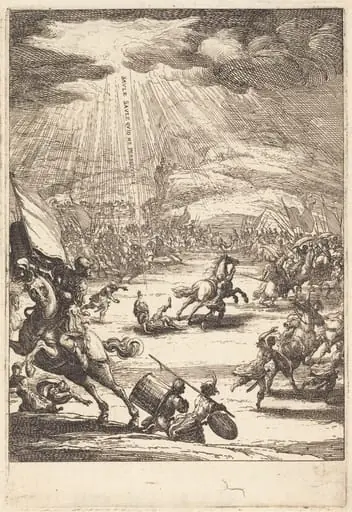
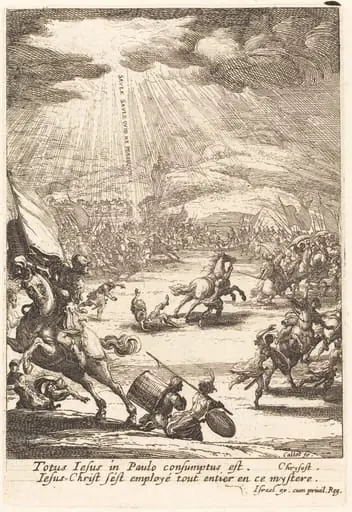
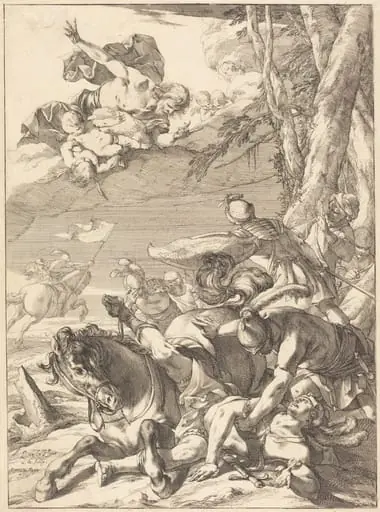
Conversion of Paul is an ink print by the Baroque artist Jacques Callot. It dates from 1635 and is held in the collection of the National Gallery of Art.
About this work
Overview
Jacques Callot's *Conversion of Paul* (1635) is an etching on laid paper, exemplifying the French baroque printmaker's technical prowess in capturing detailed, narrative scenes.
Subject & Meaning
The print illustrates the biblical episode of Saul's conversion to Paul on the road to Damascus, a pivotal religious moment rendered with Callot's characteristic attention to detail.
Technique & Style
Executed using the etching technique—where designs are scratched into a metal plate—*Conversion of Paul* showcases Callot's mastery of this method, achieving intricate textures and details. The composition includes dramatic elements such as horses and figures, highlighting his ability to convey dynamic scenes through etching.
History & Provenance
Created in 1635 by Callot, a prolific artist from the Duchy of Lorraine, this work is part of an extensive oeuvre of over 1,400 etchings that spanned religious, military, and contemporary life themes, often set against meticulously drawn landscapes.
Context
Within Callot's broader practice, *Conversion of Paul* reflects his interest in religious subjects, while his technical approach aligns with the baroque emphasis on expressive detail and dynamic composition.
Legacy
As one of Callot's religious etchings, *Conversion of Paul* contributes to his legacy as a versatile and skilled baroque printmaker, influencing subsequent generations with his precise and detailed etching style.
Artist & collection
Artist
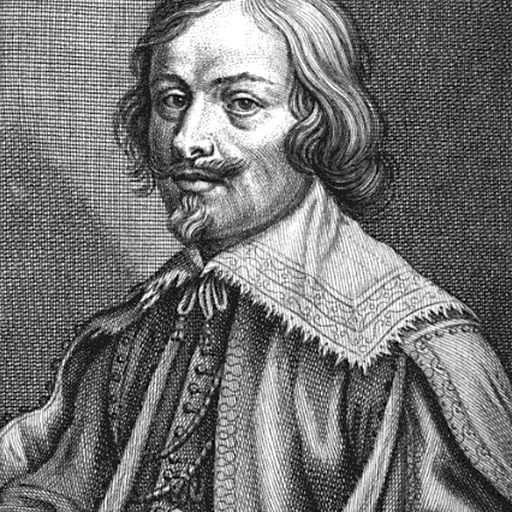
Jacques Callot was a baroque printmaker and draftsman from the Duchy of Lorraine.

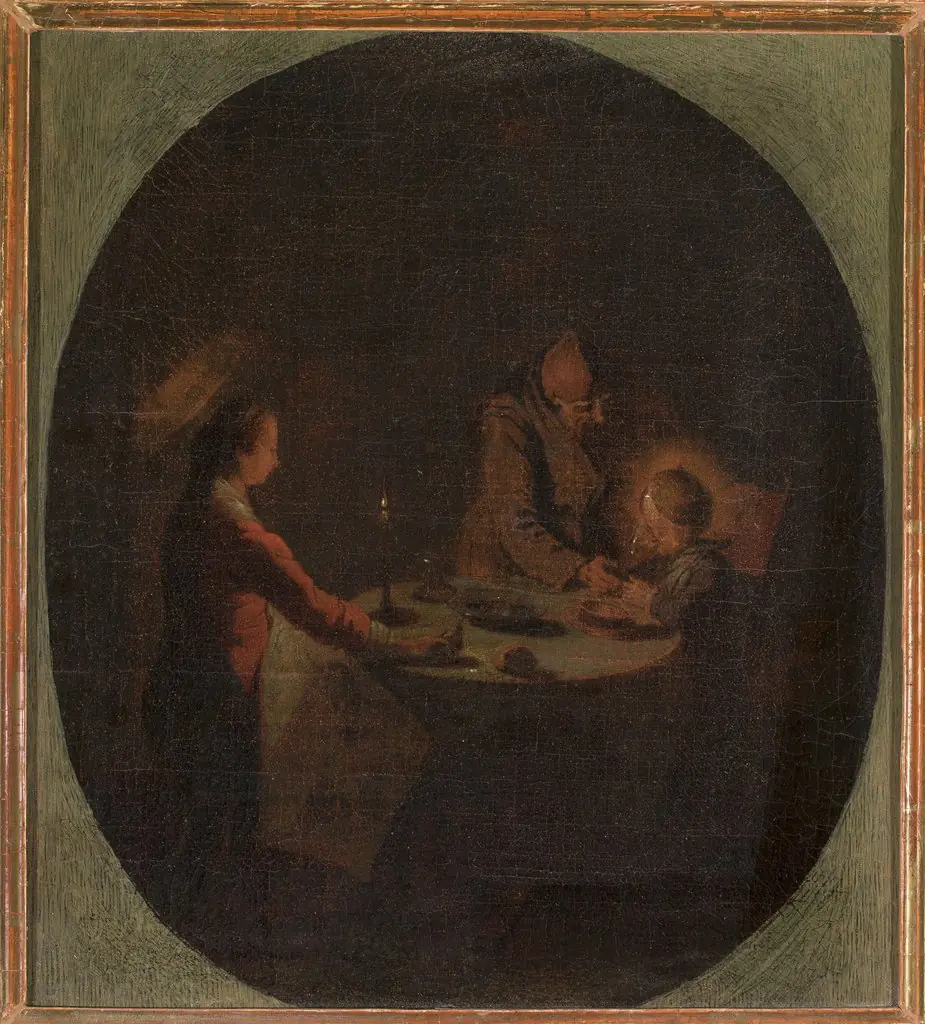 Holy Family at supper
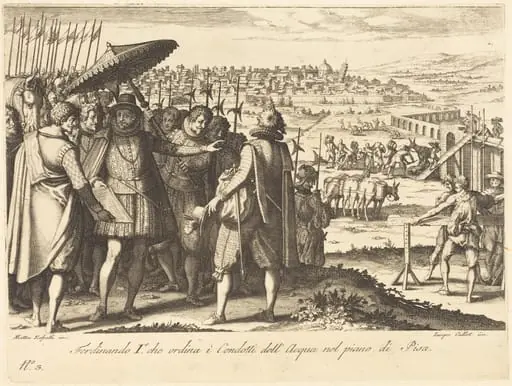 Restoration of the Aqueduct at Pisa
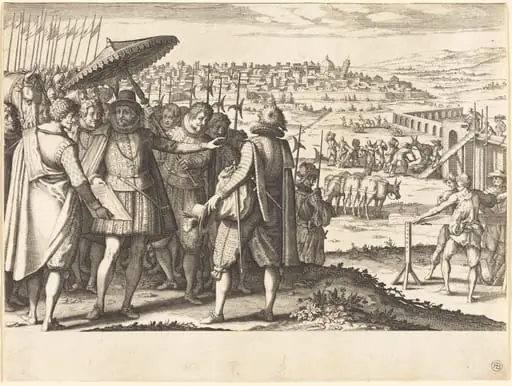 Restoration of the Aqueduct at Pisa
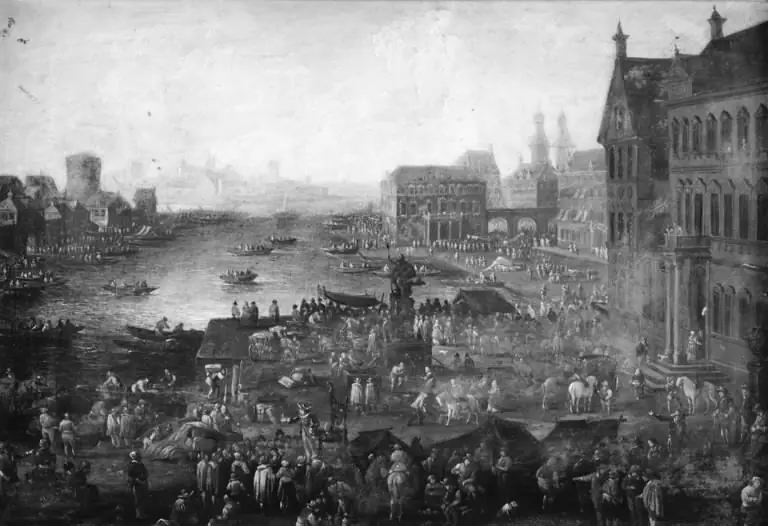 Square in Paris with Many Figures
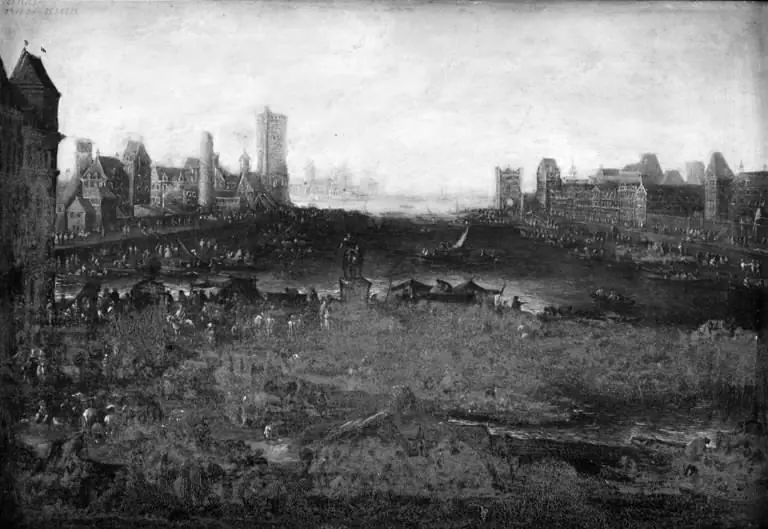 Square in Paris with Many Figures
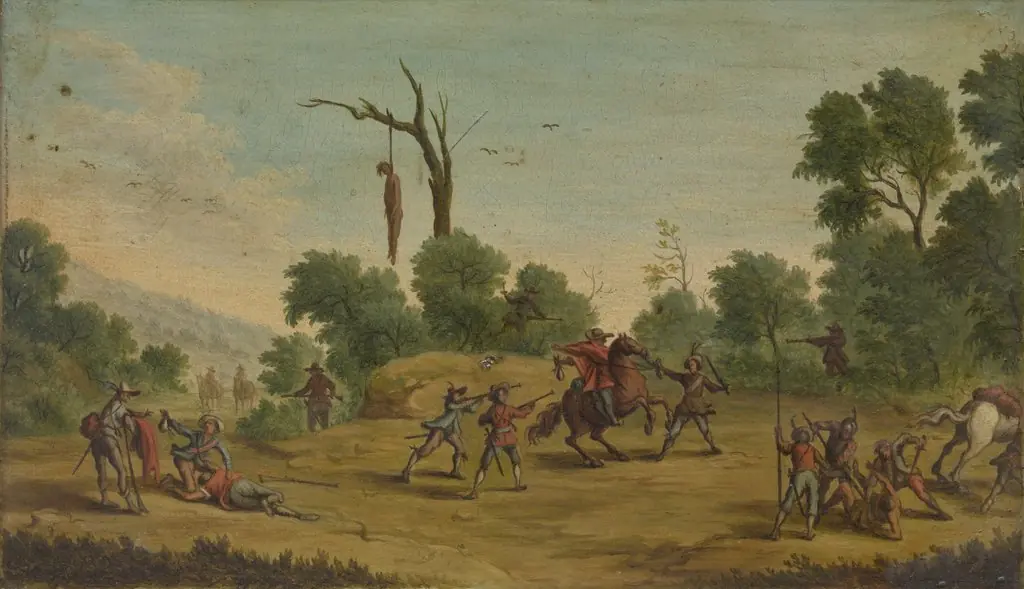 Horsemen Attacked by Robbers
 HOW WILL A COVERED PART BE CORRECTED?HOW WIKA A COVERED HEART DEED CORRECTED?
![Christ Walking on the Water [second plate], by Jacques Callot](https://artifactworldgallery.com/img/jacques-callot--christ-walking-on-the-water-second-plate--2069f3bfe4cb2126-w320.webp) Christ Walking on the Water [second plate]
Christ Walking on the Water [second plate]