Artwork
Dancers with Flute and Tambourine
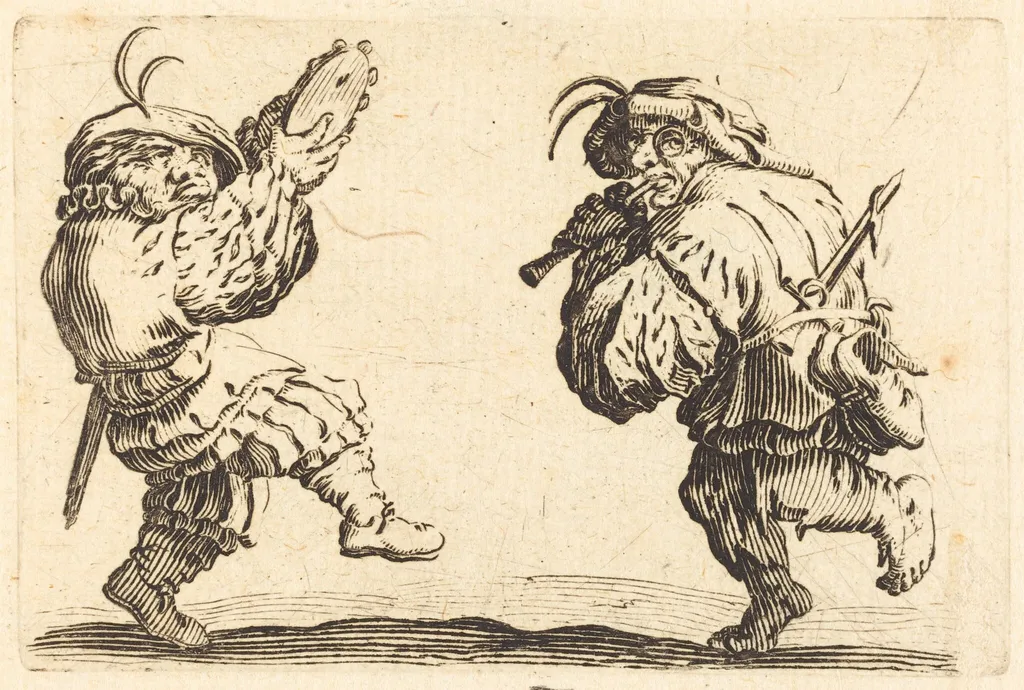
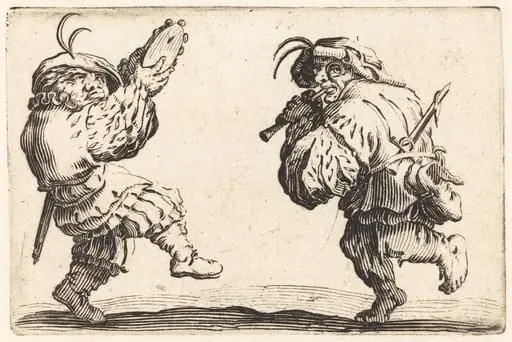
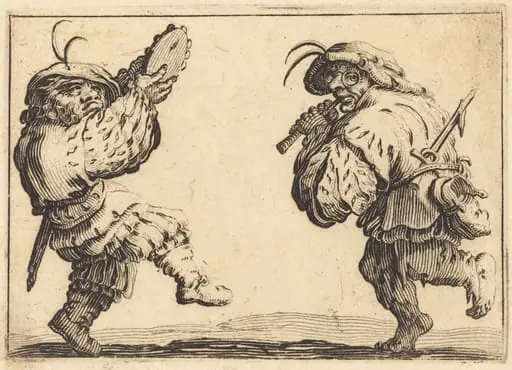
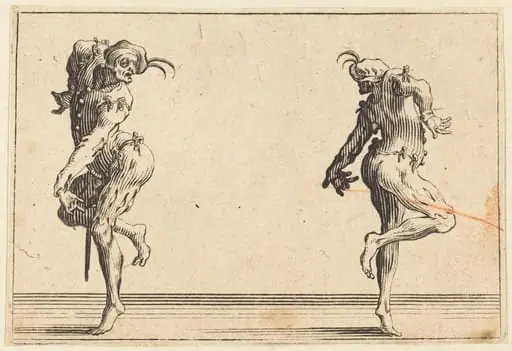
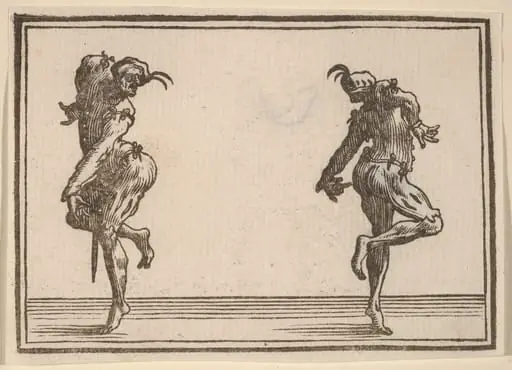
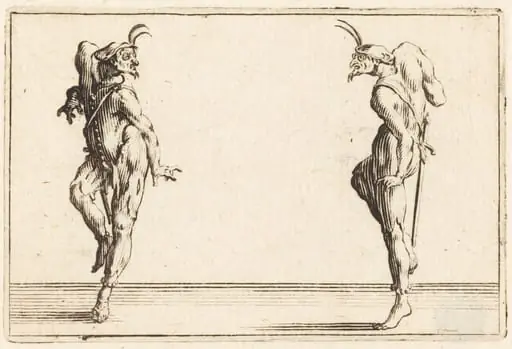
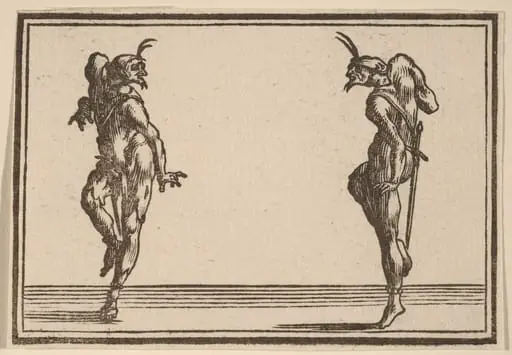
Dancers with Flute and Tambourine is an ink print by the Baroque artist Jacques Callot. It dates from 1622 and is held in the collection of the National Gallery of Art.
About this work
Overview
Executed on laid paper, the work exemplifies Callot’s mastery of the etching technique, using a needle to incise fine lines into a metal plate.
Created around 1622, this etching by Jacques Callot captures a moment of informal performance with quiet precision. Executed on laid paper, the work exemplifies Callot’s mastery of the etching technique, using a needle to incise fine lines into a metal plate. His output of over 1,400 prints often focused on everyday life, and this piece is one of many that record the movement and rhythm of common entertainers in early 17th-century Europe.
Subject & Meaning
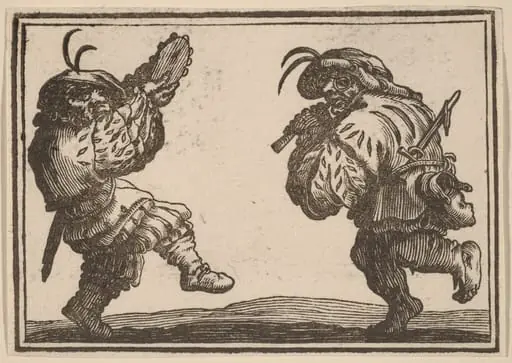
The scene depicts two dancers, one holding a flute and the other a tambourine, mid-motion in what appears to be a spontaneous street performance. Their postures suggest rhythm and energy, though their garments are rendered with a certain stiffness, contrasting with the fluidity of their gestures. Callot’s focus on such figures reflects an interest in the margins of society—performers whose lives existed outside aristocratic circles yet enriched public culture.
Technique & Style
Callot employed etching to achieve delicate, linear clarity, allowing subtle gradations of tone through controlled acid baths and fine needlework. The lines are light yet deliberate, defining form without heavy shading. The tambourine’s rim and the dancers’ folds are rendered with minimal strokes that suggest texture and movement. The paper’s texture interacts with the ink, enhancing the tactile quality of the print and grounding the scene in material reality.
History & Provenance
This print emerged during Callot’s most productive period in Florence and Paris, where he was influenced by Italian and French visual traditions. While its specific early ownership is unrecorded, it entered major institutional collections in the 19th and 20th centuries, including the National Gallery of Art in Washington, D.C., where it remains part of a significant holdings of his graphic work.
Context
In early 17th-century Europe, printmaking became a primary medium for documenting social life beyond religious or mythological themes. Callot’s etchings contributed to this shift, offering visual records of festivals, soldiers, and street performers. His work coincided with the rise of urban entertainment and the growing middle-class appetite for images of authentic, unidealized human activity.
Legacy
Callot’s technical innovations in etching, including his use of multiple biting stages and fine-line precision, influenced generations of printmakers across Europe. His genre scenes, like this one, helped establish the legitimacy of everyday subjects in fine art. Though not widely celebrated in his lifetime, his graphic oeuvre later became foundational to the study of Baroque visual culture and the history of print.
Artist & collection
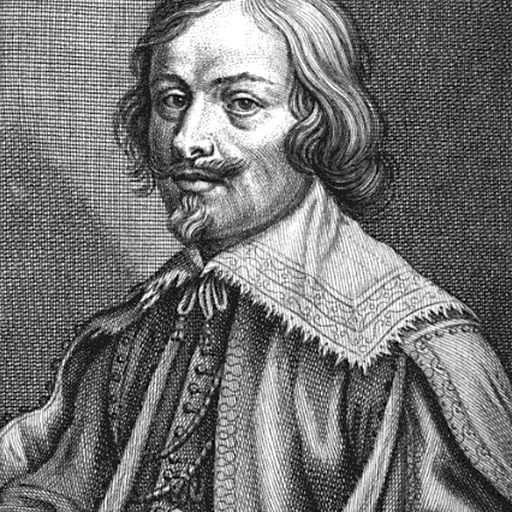
Artist
Jacques Callot was a baroque printmaker and draftsman from the Duchy of Lorraine.

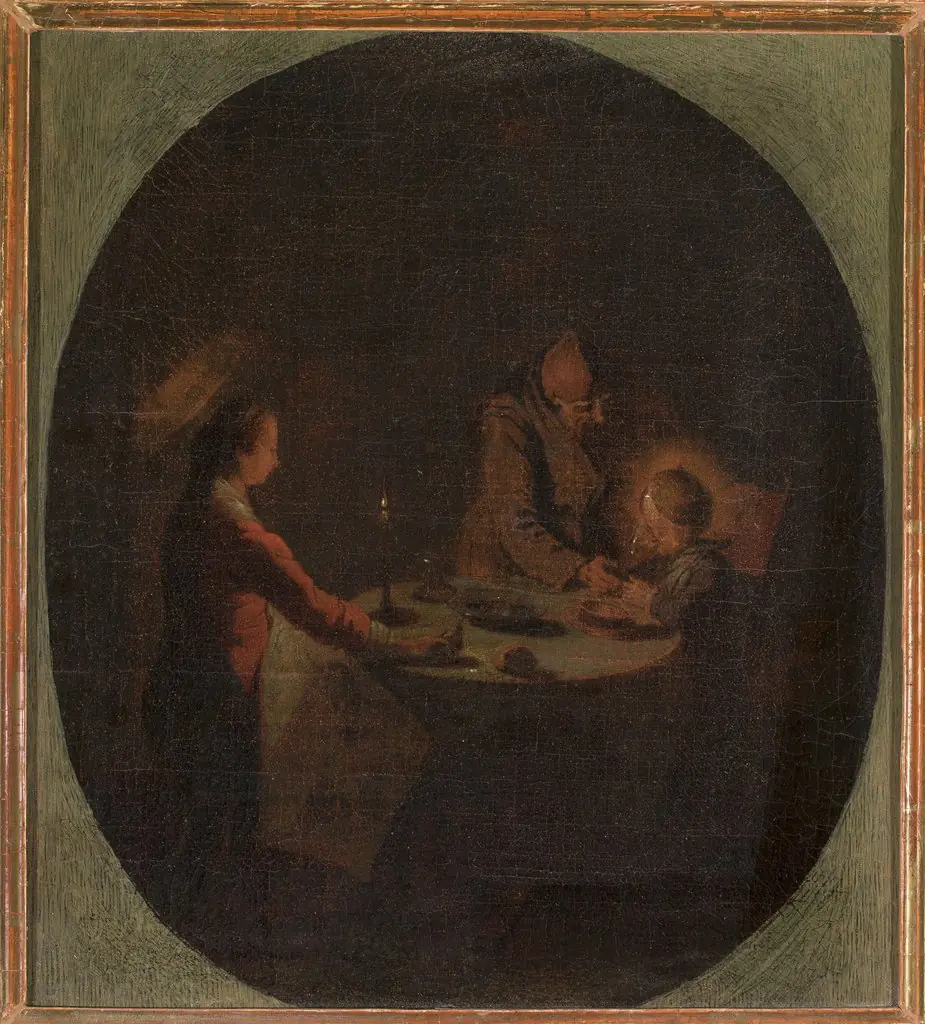 Holy Family at supper
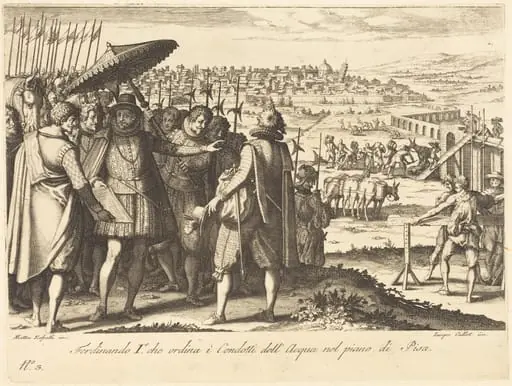 Restoration of the Aqueduct at Pisa
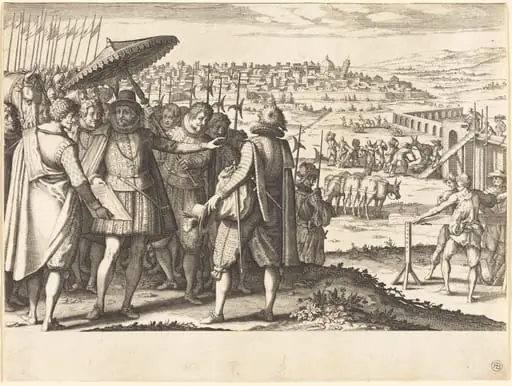 Restoration of the Aqueduct at Pisa
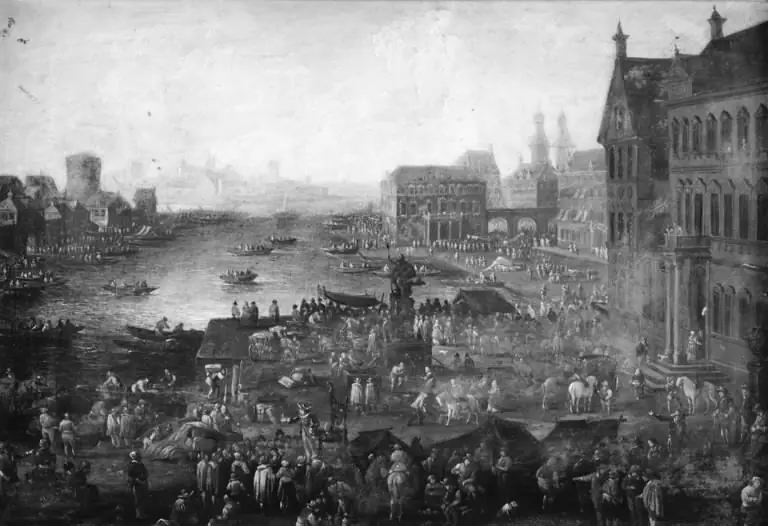 Square in Paris with Many Figures
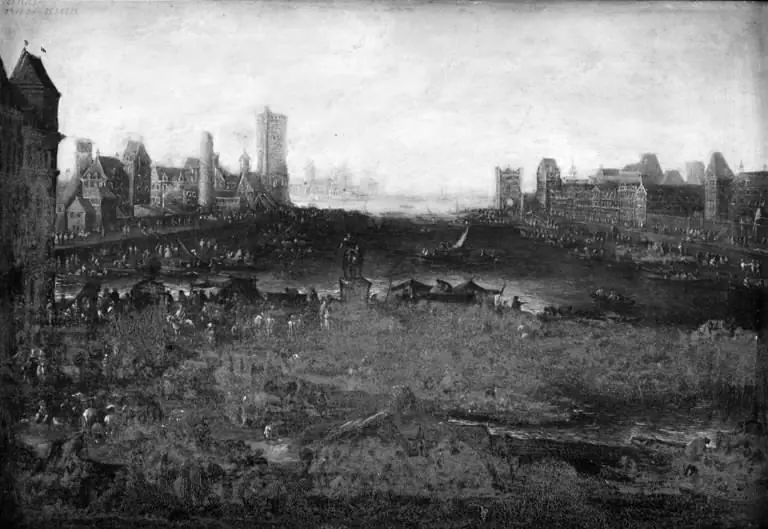 Square in Paris with Many Figures
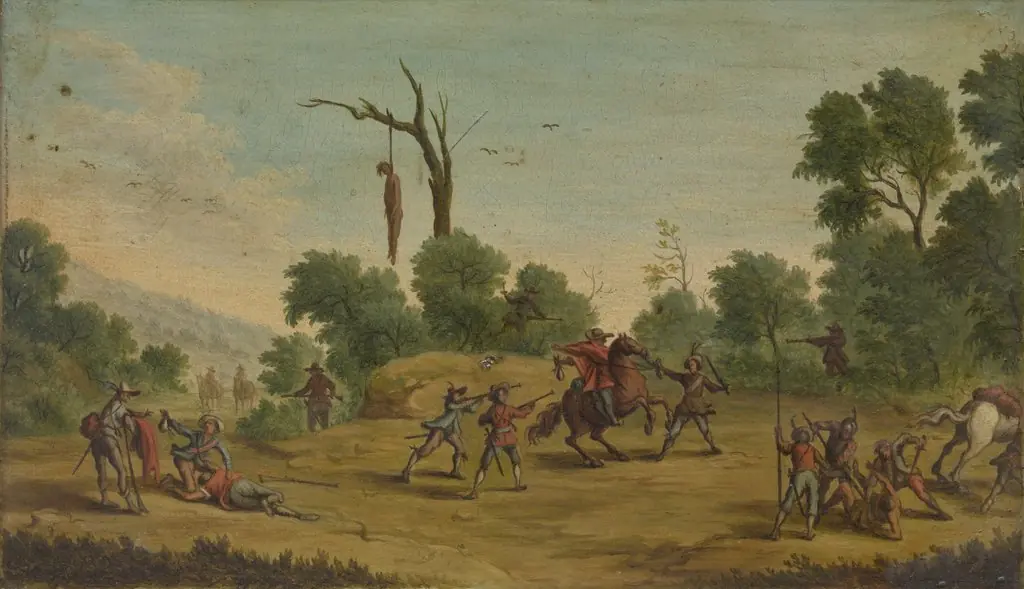 Horsemen Attacked by Robbers
 HOW WILL A COVERED PART BE CORRECTED?HOW WIKA A COVERED HEART DEED CORRECTED?
![Christ Walking on the Water [second plate], by Jacques Callot](https://artifactworldgallery.com/img/jacques-callot--christ-walking-on-the-water-second-plate--2069f3bfe4cb2126-w320.webp) Christ Walking on the Water [second plate]
Christ Walking on the Water [second plate]