Artwork
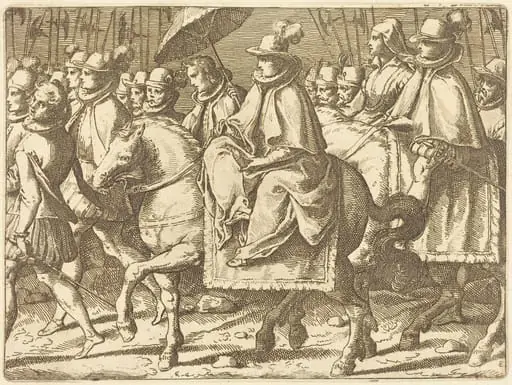
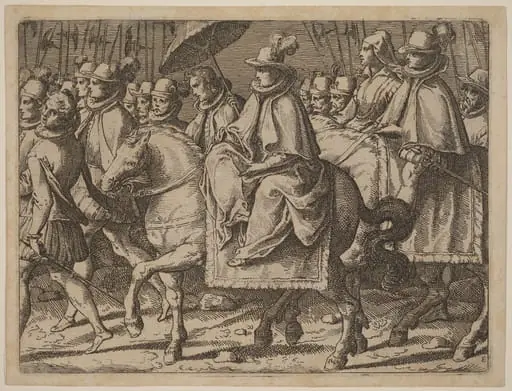
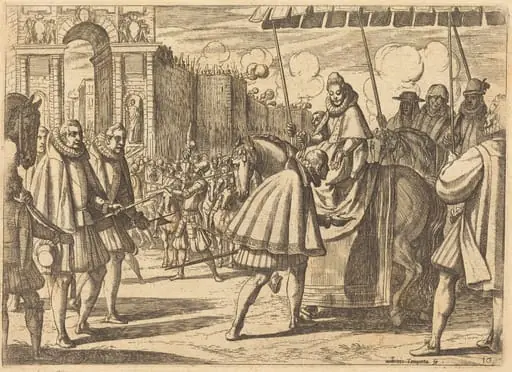
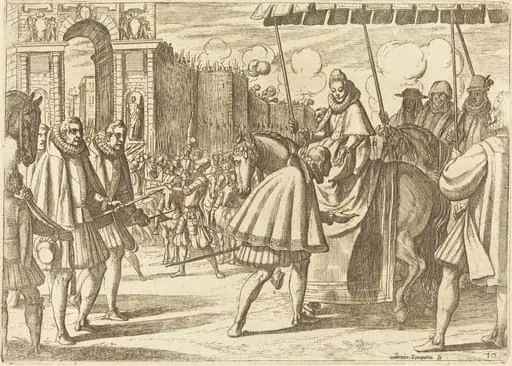
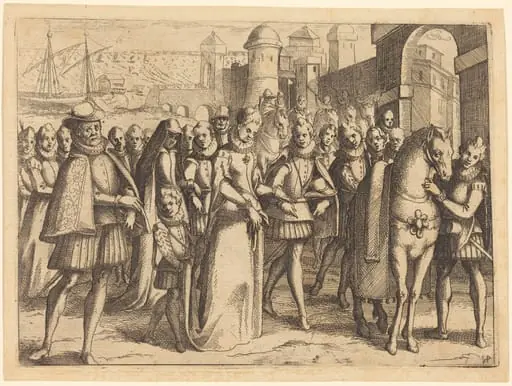
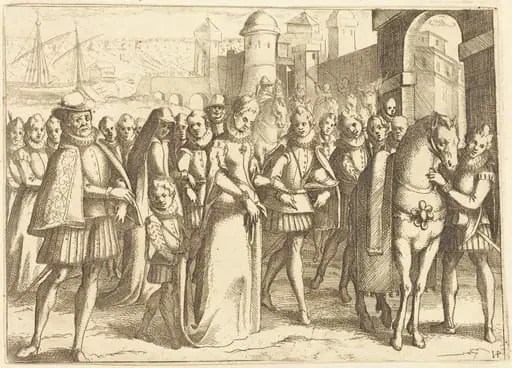
Entry into Ferrara [recto]
![Entry into Ferrara [recto], by Jacques Callot, ink, 1612](https://artifactworldgallery.com/img/jacques-callot--entry-into-ferrara-recto--0463f4a9351848b0-w1024.webp)
Entry into Ferrara [recto] is an ink print by the Baroque artist Jacques Callot. It dates from 1612 and is held in the collection of the National Gallery of Art.
About this work
Overview
Jacques Callot, a French printmaker from the Duchy of Lorraine, produced this etching in 1612 as part of a series documenting military and civic processions.
Jacques Callot, a French printmaker from the Duchy of Lorraine, produced this etching in 1612 as part of a series documenting military and civic processions. Executed on laid paper, the work exemplifies his technical precision and interest in capturing transient moments of public life. With over 1,400 known prints, Callot’s oeuvre often centered on the movement of people through urban and rural landscapes, rendered with meticulous detail and dynamic composition.
Subject & Meaning
The scene depicts a disorderly entry of troops into the city of Ferrara, likely referencing a historical military procession or occupation. Figures are densely packed, some mounted, others on foot, bearing weapons and banners. The rearing horse and strained postures suggest tension, possibly indicating friction between soldiers and civilians or the chaos of arrival. The castle in the background anchors the event in a specific place, reinforcing the work’s documentary intent rather than allegorical symbolism.
Technique & Style
Callot employed fine, incised lines to convey motion and texture, using the etching medium to achieve sharp contrasts and intricate detail. The jagged contours of clothing, armor, and weaponry enhance the sense of agitation, while the stormy sky adds atmospheric depth. His use of overlapping figures and compressed space creates a crowded, immersive effect, characteristic of his ability to render complex scenes with clarity despite their density.
History & Provenance
Created during Callot’s early career, this print likely belonged to a larger sequence illustrating events in northern Italy, where he traveled with the court of the Duke of Lorraine. Though its exact early ownership is undocumented, it aligns with prints collected by European nobility and institutions interested in contemporary military affairs. The work survived in private and public collections, reflecting its enduring appeal among connoisseurs of printmaking.
Context
In early 17th-century Italy, military movements were frequent due to regional conflicts and shifting alliances. Callot’s prints served as visual records of these events, often commissioned or inspired by firsthand observation. His focus on ordinary soldiers and chaotic public moments distinguished his work from idealized historical paintings, offering a ground-level view of war’s daily reality in a period dominated by courtly aesthetics.
Legacy
Callot’s technical innovations in etching, including the use of multiple biting stages to achieve tonal variation, influenced generations of printmakers across Europe. This work, like others in his series, helped establish etching as a medium capable of nuanced narrative and social observation. His depictions of military life became reference points for later artists seeking to portray realism over grandeur.
Artist & collection
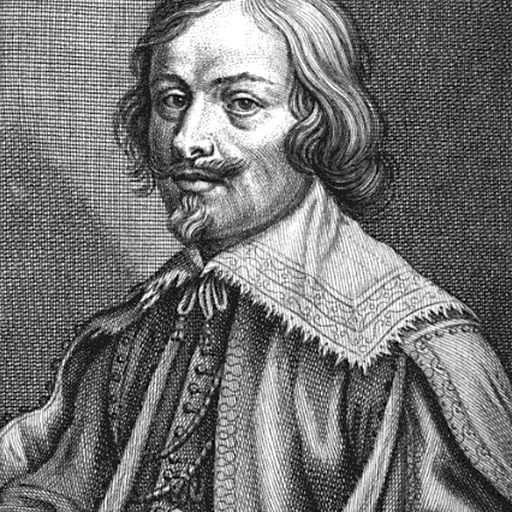
Artist
Jacques Callot was a baroque printmaker and draftsman from the Duchy of Lorraine.

 Holy Family at supper
 Restoration of the Aqueduct at Pisa
 Restoration of the Aqueduct at Pisa
 Square in Paris with Many Figures
 Square in Paris with Many Figures
 Horsemen Attacked by Robbers
 HOW WILL A COVERED PART BE CORRECTED?HOW WIKA A COVERED HEART DEED CORRECTED?
![Christ Walking on the Water [second plate], by Jacques Callot](https://artifactworldgallery.com/img/jacques-callot--christ-walking-on-the-water-second-plate--2069f3bfe4cb2126-w320.webp) Christ Walking on the Water [second plate]
Christ Walking on the Water [second plate]