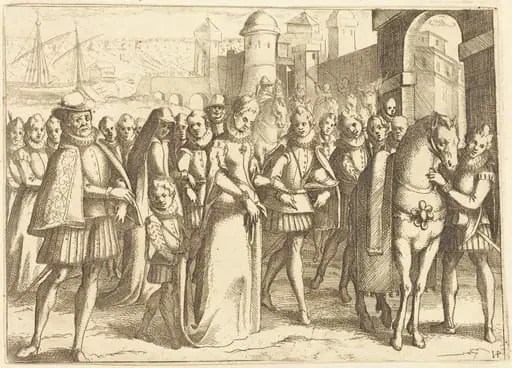
Artwork
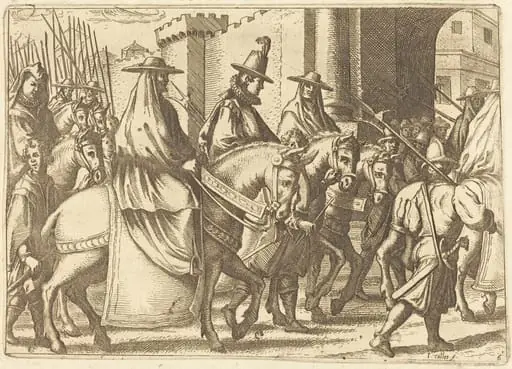
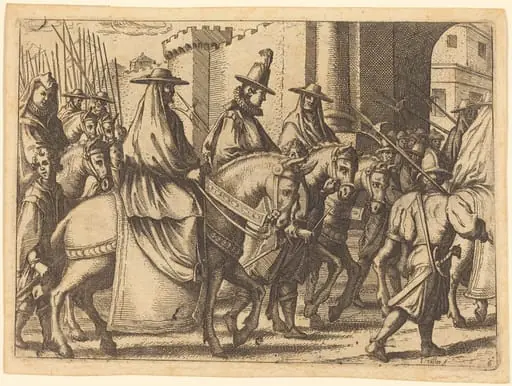
Margaret of Austria on Horseback
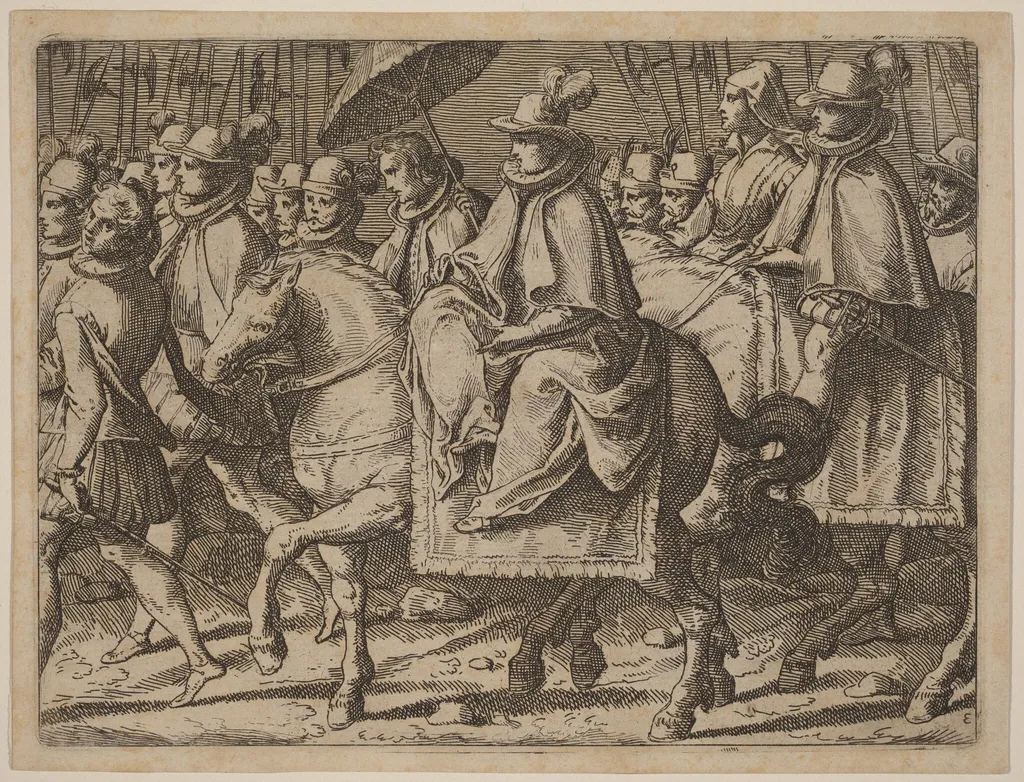
Margaret of Austria on Horseback is an ink print by the Baroque artist Raffaello Schiaminossi. It dates from 1612 and is held in the collection of the National Gallery of Art.
About this work
Overview
The image is rendered in fine linear detail characteristic of etching, a technique involving incised lines on a metal plate inked and pressed onto paper.
Created in 1612 by Raffaello Schiaminossi, this etching depicts Margaret of Austria mounted on a horse amid a bustling, theatrical crowd. The image is rendered in fine linear detail characteristic of etching, a technique involving incised lines on a metal plate inked and pressed onto paper. The composition captures a moment of heightened motion, with figures reacting dynamically around the central figure.
Subject & Meaning
Margaret of Austria, dressed in ornate armor and a flowing cape, is portrayed not in triumph but in a moment of tension. Her horse is restrained by a figure on the ground, suggesting a controlled yet precarious situation. The surrounding crowd, varied in gesture and expression, implies a public event—perhaps a ceremonial departure or political intervention—imbuing the scene with narrative gravity rather than mere portraiture.
Technique & Style
Schiaminossi employed etching to achieve intricate detail and atmospheric depth. Fine, deliberate lines define clothing, facial expressions, and architectural elements, while the background’s textured patterning evokes a stage-like setting. The contrast between the stillness of the central figure and the agitated movement of the crowd demonstrates mastery in guiding the viewer’s eye through controlled chaos.
History & Provenance
The print was produced in 1612, during a period when etching was increasingly used for both artistic and documentary purposes in Europe. While specific early ownership records are sparse, its survival suggests it circulated among collectors or institutions interested in Habsburg imagery. The work reflects the broader trend of using print to disseminate images of noble figures in dramatic contexts.
Context
Margaret of Austria, as a Habsburg regent and political figure, was frequently depicted in official imagery. This etching diverges from formal portraiture by placing her in a moment of public tension, aligning with early 17th-century European interest in narrative printmaking. The crowded, theatrical setting mirrors contemporary stage design and reflects how printmakers blended historical fact with dramatic convention.
Legacy
Though not widely reproduced in modern scholarship, the etching remains a notable example of early Baroque printmaking that prioritizes narrative over idealization. It contributes to understanding how noble women were visually framed in moments of agency, not just ceremony. Its technical precision and compositional complexity mark it as a significant, if understudied, work in the history of print.
Artist & collection


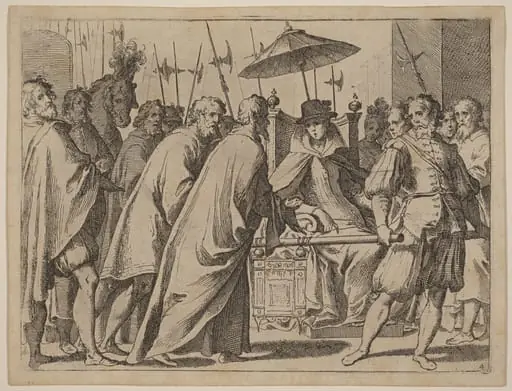 Margaret of Austria Being Carried in a Chaise
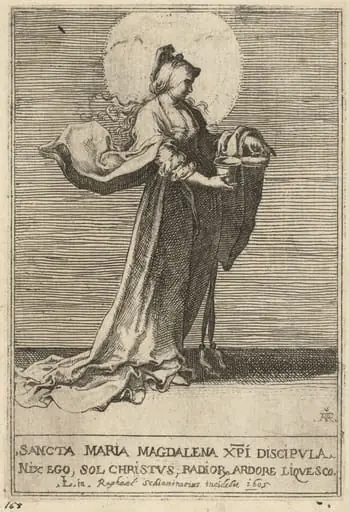 Saint Mary Magdalene
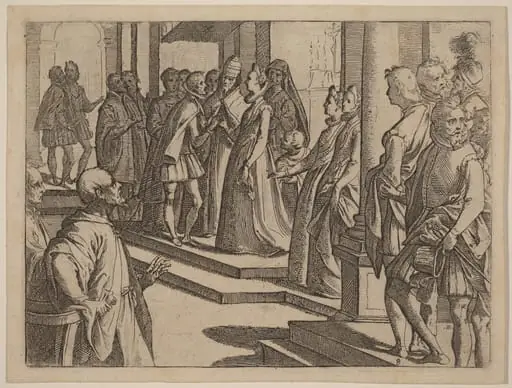 The Betrothal of Margaret of Austria to Philip III, King of Spain
![The Betrothal of Margaret of Austria to Philip III, King of Spain [verso], by Raffaello Schiaminossi](https://artifactworldgallery.com/img/raffaello-schiaminossi--the-betrothal-of-margaret-of-austria-to-philip-iii-king-of-s--509229b9feb3b80f-w320.webp) The Betrothal of Margaret of Austria to Philip III, King of Spain [verso]
The Betrothal of Margaret of Austria to Philip III, King of Spain [verso]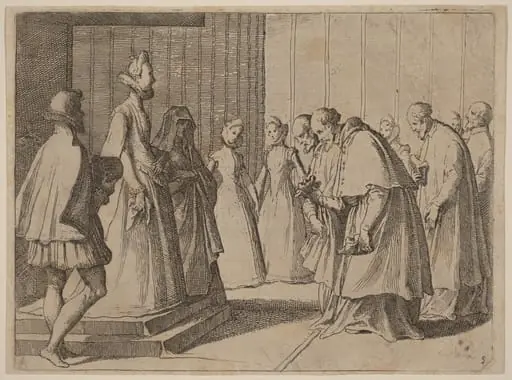 Margaret of Austria Receiving the Homage of Cardinals and Prelates
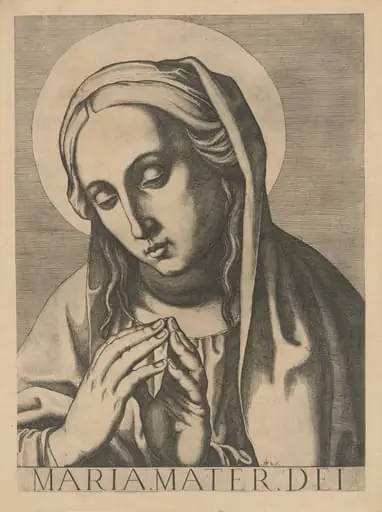 Bust of the Virgin
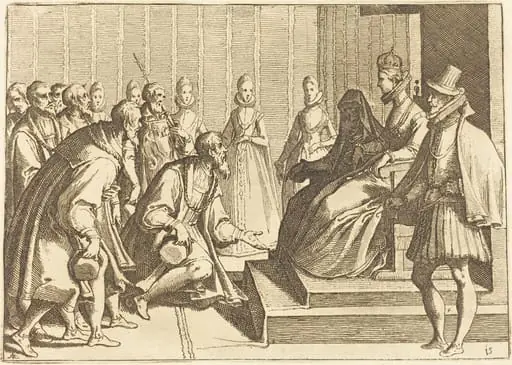 Margaret of Austria Giving Audience to a Nobleman
![Margaret of Austria Giving Audience to a Nobleman [verso], by Raffaello Schiaminossi](https://artifactworldgallery.com/img/raffaello-schiaminossi--margaret-of-austria-giving-audience-to-a-nobleman-verso--86ac2347af277f00-w320.webp) Margaret of Austria Giving Audience to a Nobleman [verso]
Margaret of Austria Giving Audience to a Nobleman [verso]
![Entry into Ferrara [recto], by Jacques Callot](https://artifactworldgallery.com/img/jacques-callot--entry-into-ferrara-recto--0463f4a9351848b0-w320.webp)