Artwork
Frontispiece for the Miracles and Graces of Our Lady of "Bon-Secours-les-Nancy"
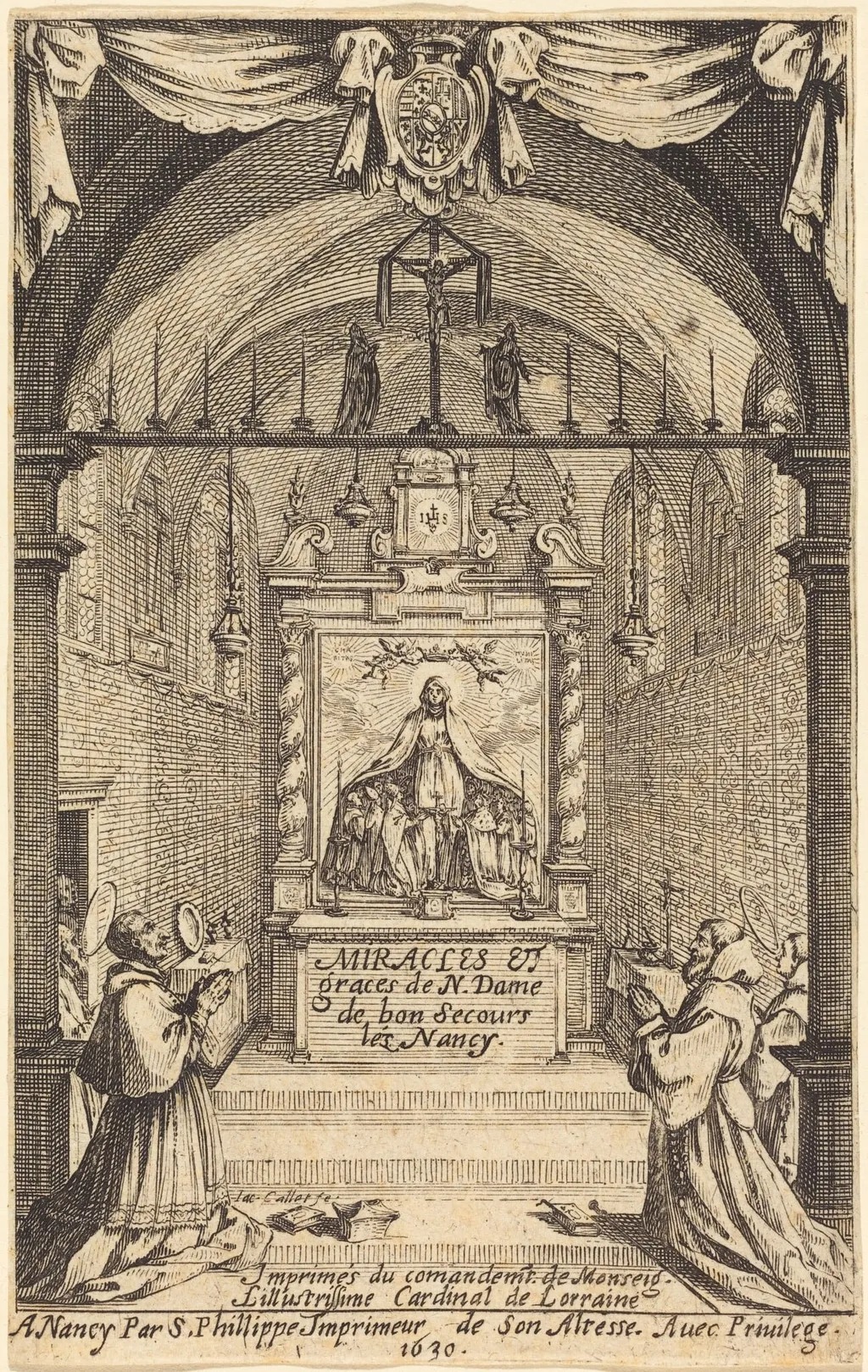
Frontispiece for the Miracles and Graces of Our Lady of "Bon-Secours-les-Nancy" is an ink print by the Renaissance artist Jacques Callot. It dates from 1630 and is held in the collection of the National Gallery of Art.
About this work
Overview
Created in 1630 by Jacques Callot, this etching serves as the frontispiece for a devotional publication centered on the Virgin Mary of Bon-Secours-les-Nancy.
Created in 1630 by Jacques Callot, this etching serves as the frontispiece for a devotional publication centered on the Virgin Mary of Bon-Secours-les-Nancy. Executed in fine detail on laid paper, it functions both as an introduction to a collection of miracle accounts and as a devotional image in its own right. Callot, a native of Lorraine, was renowned for his technical precision and narrative clarity in printmaking, qualities evident in this work’s structured composition and intricate line work.
Subject & Meaning
The image juxtaposes two sacred scenes: above, a crucifixion under an ornate arch symbolizes Christ’s sacrifice; below, a crowned Virgin Mary, surrounded by stars, is venerated by two kneeling devotees. The inscription identifies the Virgin of Bon-Secours, a local Marian devotion in Nancy. The dual composition links divine redemption with intercessory grace, reinforcing the belief that Marian devotion draws power from Christ’s passion while offering tangible aid to the faithful.
Technique & Style
Callot employed etching to achieve sharp, controlled lines, characteristic of his mature style. The composition is densely packed yet orderly, with fine hatching defining drapery, architecture, and facial expressions. The use of layered imagery—divine above, human below—creates a vertical hierarchy common in religious prints of the period. His meticulous attention to detail, from the texture of stone to the folds of robes, reflects the Baroque emphasis on realism and emotional engagement.
History & Provenance
This print was produced as part of a series promoting the cult of Our Lady of Bon-Secours in Nancy, a regional Marian shrine that gained prominence in the early 17th century. Published in 1630, it likely accompanied a printed account of local miracles attributed to the Virgin. As a Lorrainer working in a region contested by France and the Holy Roman Empire, Callot’s engagement with local devotion reflects the intersection of religious identity and regional pride during a period of political instability.
Context
In early 17th-century France, devotional prints like this were widely distributed to support Counter-Reformation piety. The emphasis on Marian miracles responded to Protestant critiques and reinforced Catholic practices such as pilgrimage and intercession. Callot’s work aligns with a broader trend of using print media to make religious narratives accessible to lay audiences, blending theological themes with visual storytelling tailored to popular devotion.
Legacy
Though not among Callot’s most widely reproduced works, this etching exemplifies his role in elevating printmaking as a medium for religious and historical documentation. Its precise technique and narrative structure influenced later generations of printmakers in France and beyond. As a record of regional devotion, it remains a valuable artifact of early modern Catholic culture in northeastern France, preserving both artistic and spiritual practices of its time.
Artist & collection
Artist
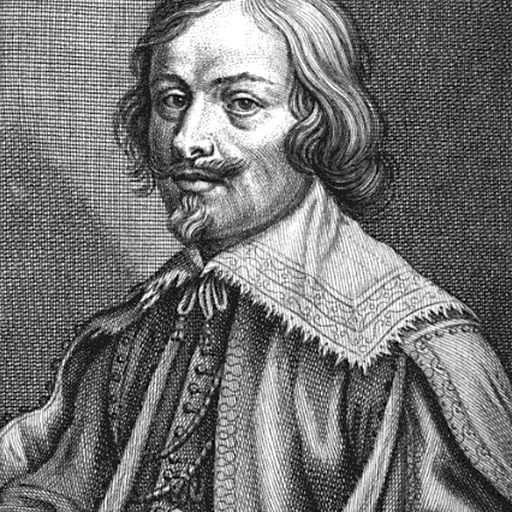
Jacques Callot was a baroque printmaker and draftsman from the Duchy of Lorraine.

 Holy Family at supper
 Restoration of the Aqueduct at Pisa
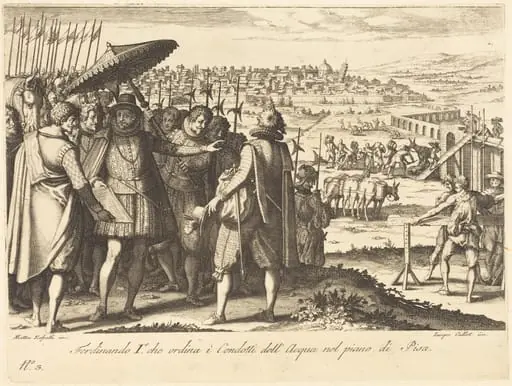
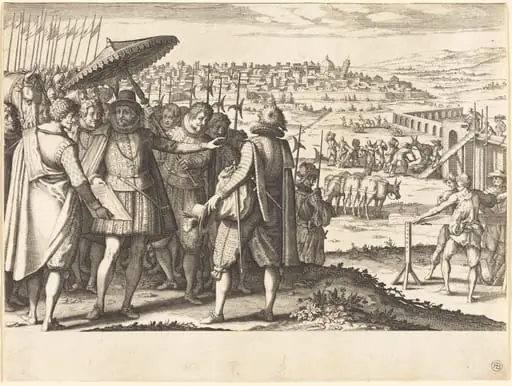 Restoration of the Aqueduct at Pisa
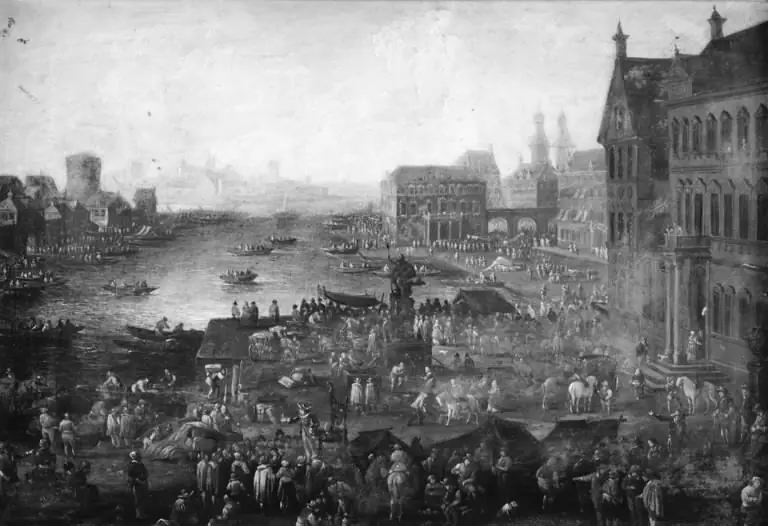 Square in Paris with Many Figures
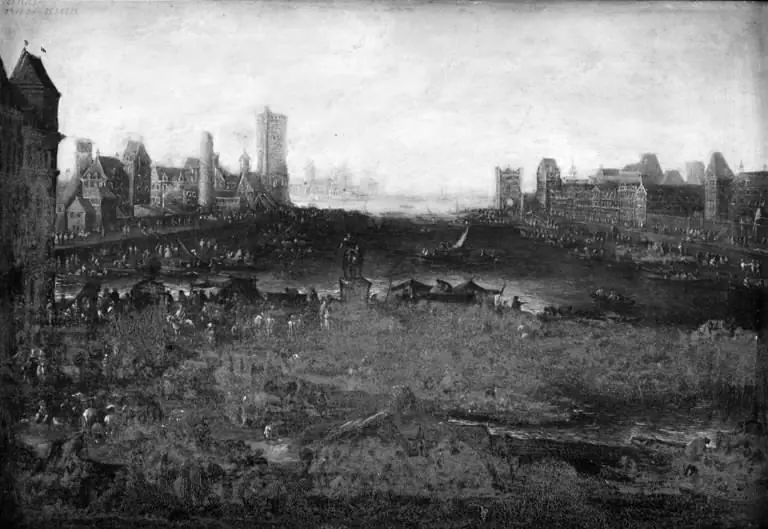 Square in Paris with Many Figures
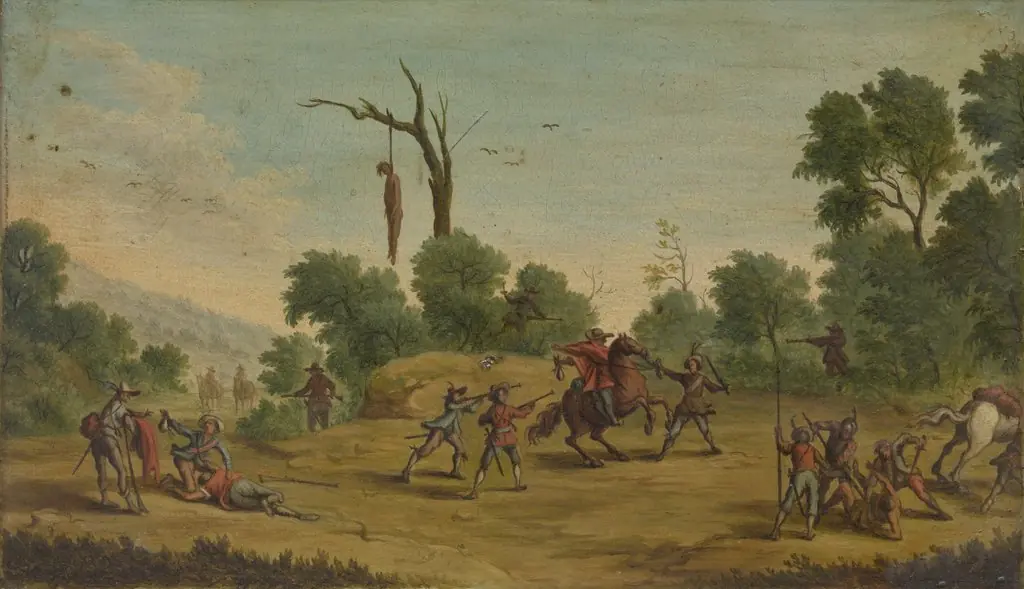 Horsemen Attacked by Robbers
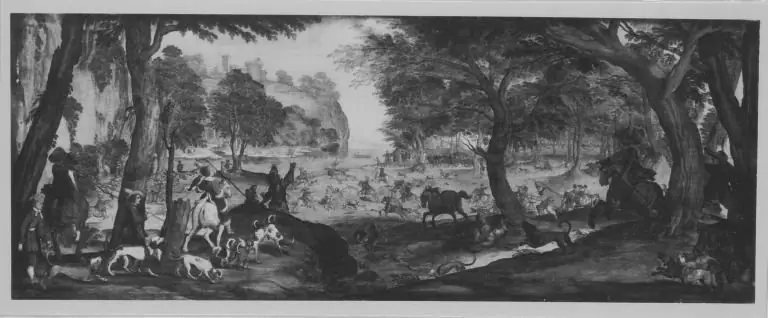 HOW WILL A COVERED PART BE CORRECTED?HOW WIKA A COVERED HEART DEED CORRECTED?
![Christ Walking on the Water [second plate], by Jacques Callot](https://artifactworldgallery.com/img/jacques-callot--christ-walking-on-the-water-second-plate--2069f3bfe4cb2126-w320.webp) Christ Walking on the Water [second plate]
Christ Walking on the Water [second plate]
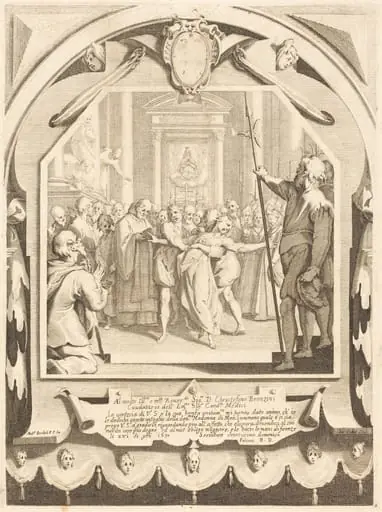 The Possessed
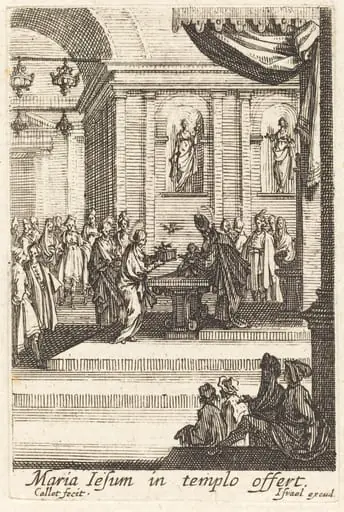 The Virgin Presents Jesus at the Temple
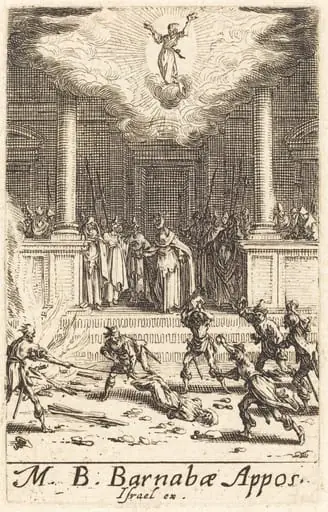 The Martyrdom of Saint Barnabas
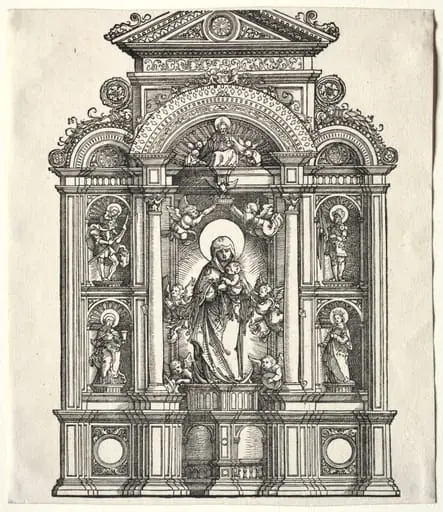 Great Altar with the Virgin, in a border with SS. Christopher, George, Barbara, Catherine
![Church of the Stigmata (Chiesa delle Stimmate) [plate M], by Jacopo Ligozzi](https://artifactworldgallery.com/img/jacopo-ligozzi--church-of-the-stigmata-chiesa-delle-stimmate-plate-m--255dd75981bd30e3-w320.webp) Church of the Stigmata (Chiesa delle Stimmate) [plate M]
Church of the Stigmata (Chiesa delle Stimmate) [plate M]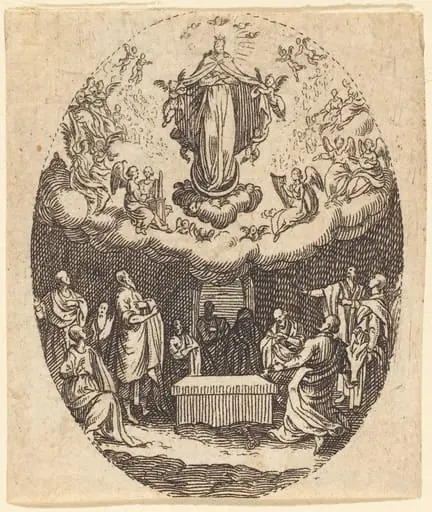 The Assumption with the Cherubin
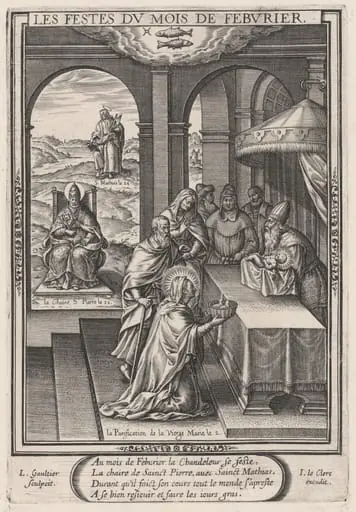 Les Festes du mois de Feburier (February: the Purification of the Virgin)
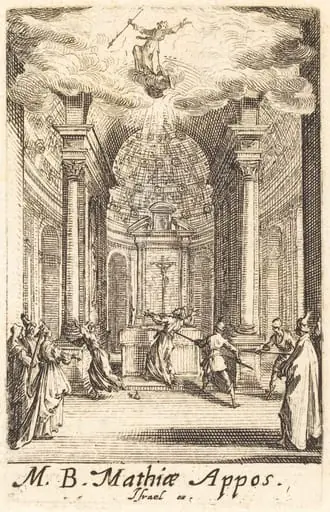 The Martyrdom of Saint Matthias
![Chapel of Saint Sebastian (Cappella di San Sebastiano) [plate N], by Jacopo Ligozzi](https://artifactworldgallery.com/img/jacopo-ligozzi--chapel-of-saint-sebastian-cappella-di-san-sebastiano-plate-n--144b97ba4a91d67b-w320.webp) Chapel of Saint Sebastian (Cappella di San Sebastiano) [plate N]
Chapel of Saint Sebastian (Cappella di San Sebastiano) [plate N]