Artwork
The Virgin Presents Jesus at the Temple
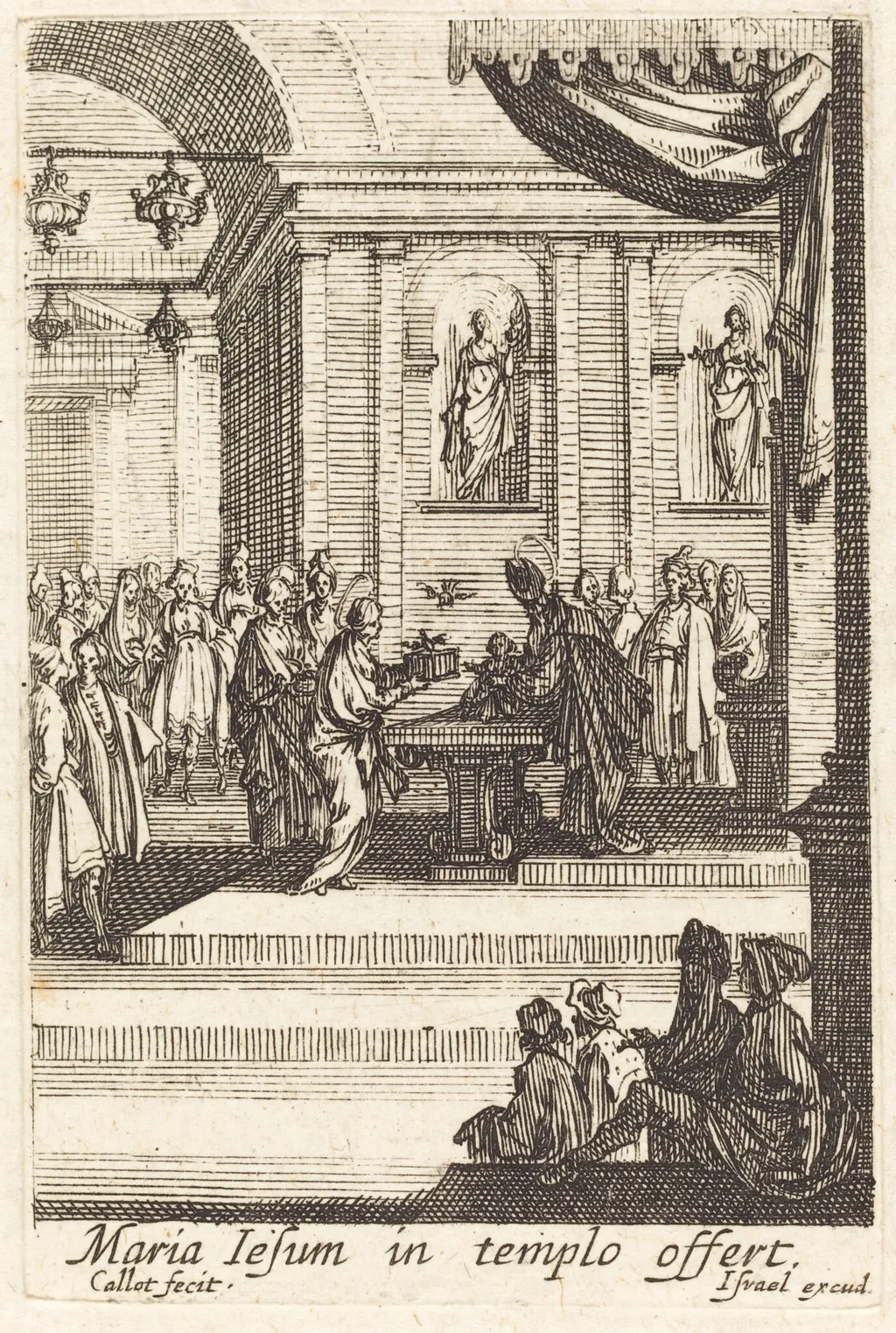
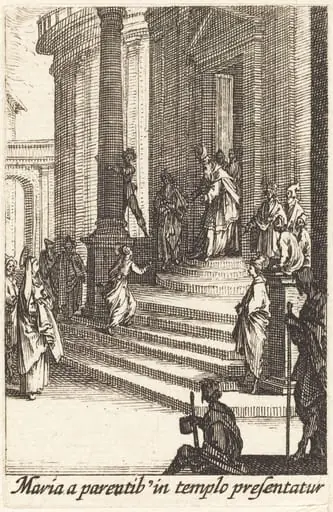
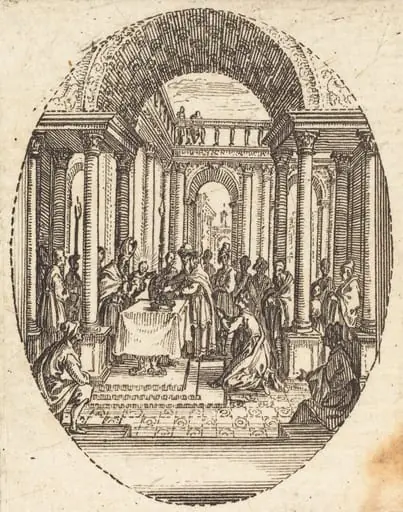
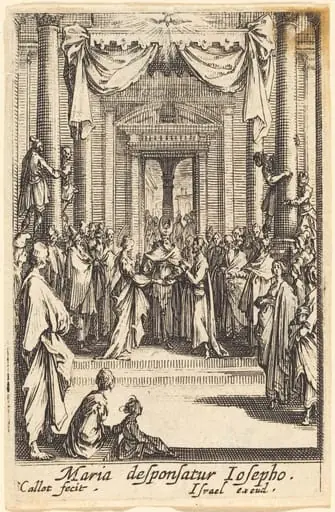
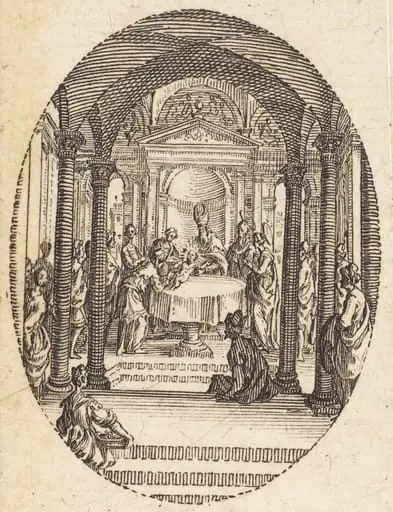
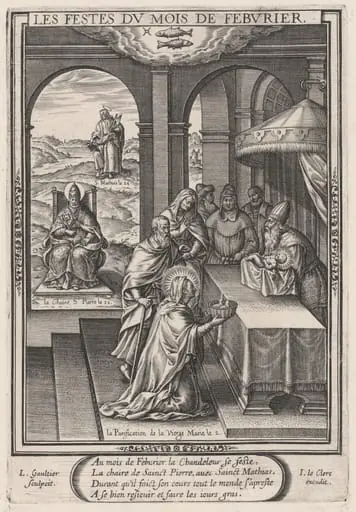
The Virgin Presents Jesus at the Temple is an ink print by the Baroque artist Jacques Callot. It dates from 1634 and is held in the collection of the National Gallery of Art.
About this work
Overview
Executed on laid paper, the work reflects Callot’s mastery of fine-line etching and his ability to convey narrative depth through delicate tonal gradations.
Created around 1634, this etching by Jacques Callot depicts the presentation of the infant Jesus in the Temple, a moment from the Gospel of Luke. Executed on laid paper, the work reflects Callot’s mastery of fine-line etching and his ability to convey narrative depth through delicate tonal gradations. As one of over 1,400 prints he produced, it exemplifies his sustained engagement with religious themes alongside secular subjects of his era.
Subject & Meaning
The scene portrays Mary presenting Jesus to Simeon, a righteous elder who recognizes the child as the Messiah. Surrounding figures, dressed in formal garments, observe in quiet reverence. The child’s stillness suggests contemplation or sleep, reinforcing the theological weight of the moment. The composition emphasizes humility and divine revelation, with the sacred act unfolding within a monumental architectural setting that underscores its spiritual significance.
Technique & Style
Callot employed fine, precise etching lines to render architectural detail and varied textures in fabric and hair. He used controlled hatching and cross-hatching to model light and shadow, creating a sense of volume and spatial depth. The background opens into a vast, softly rendered landscape, a signature feature of his religious prints that grounds sacred events in a tangible, earthly world. His attention to minute detail enhances the intimacy of the moment without overwhelming it.
History & Provenance
The print was produced during Callot’s mature period in Nancy, after his time in Florence and Rome. It circulated widely among collectors and clergy in early 17th-century Europe, valued for its devotional clarity and technical refinement. No single early ownership record is documented, but multiple impressions survive in major European collections, indicating its steady reception and reproduction.
Context
Callot worked in a period when religious imagery remained central to print culture, even amid rising secular interests. His prints often bridged sacred narratives with contemporary social observation. This etching aligns with Counter-Reformation efforts to reinforce devotional practice through accessible, emotionally resonant imagery, while retaining the human scale and naturalism favored by Northern European artists.
Legacy
Callot’s etchings influenced generations of printmakers through their technical precision and narrative nuance. Though less celebrated than his genre scenes or military series, works like this one demonstrate his capacity to elevate religious subjects with quiet dignity. His approach to light, composition, and emotional restraint contributed to the evolution of printmaking as a medium for both devotion and artistic inquiry.
Artist & collection
Artist
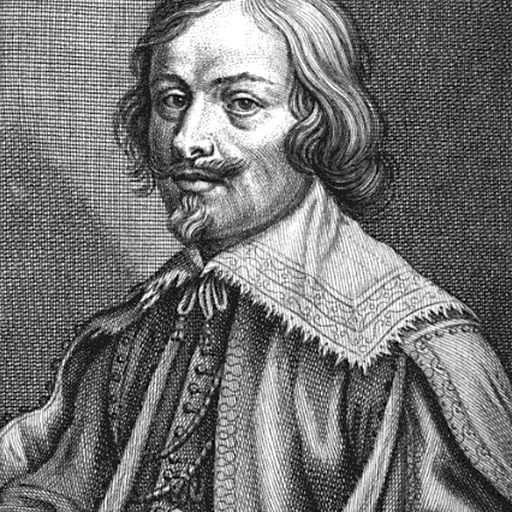
Jacques Callot was a baroque printmaker and draftsman from the Duchy of Lorraine.

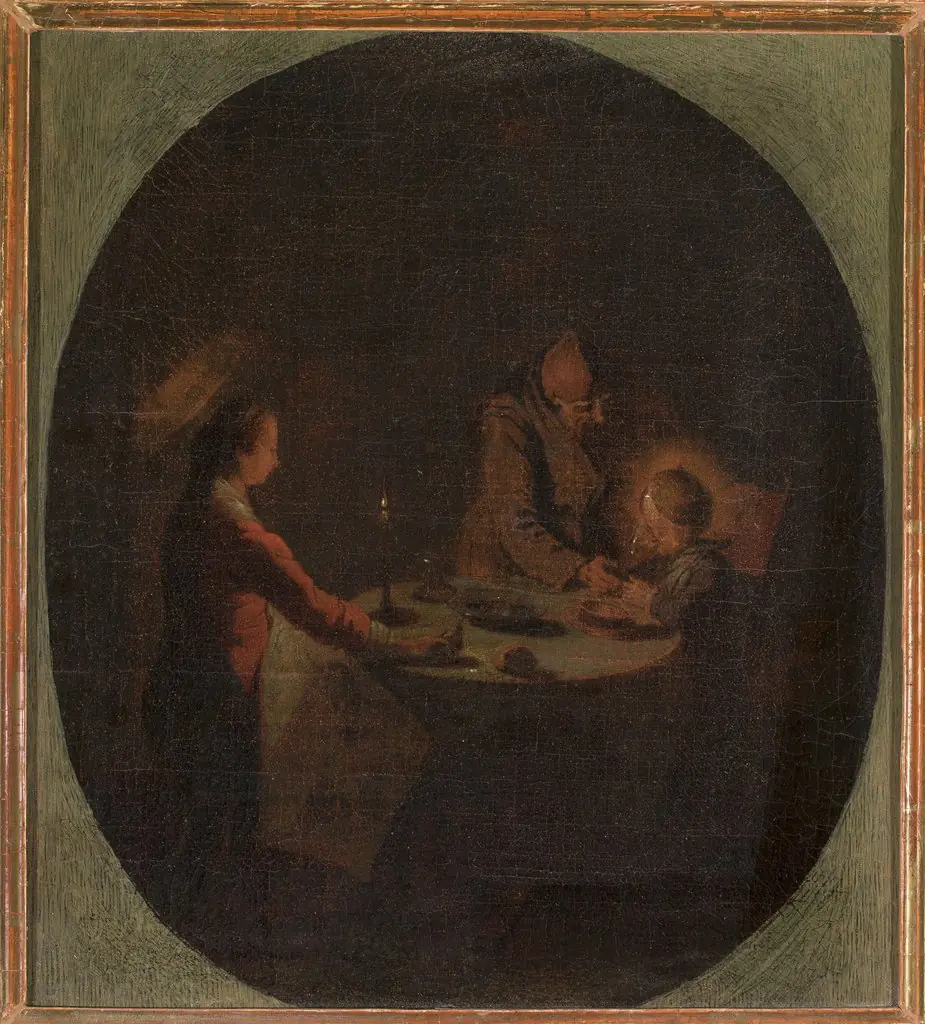 Holy Family at supper
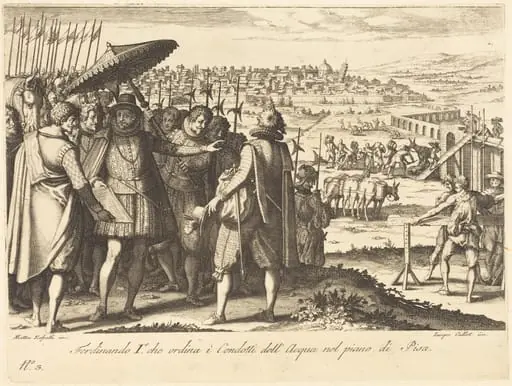 Restoration of the Aqueduct at Pisa
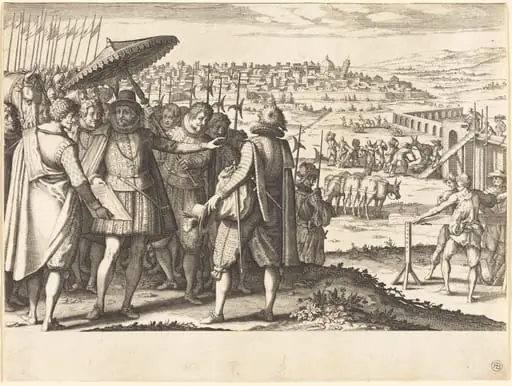 Restoration of the Aqueduct at Pisa
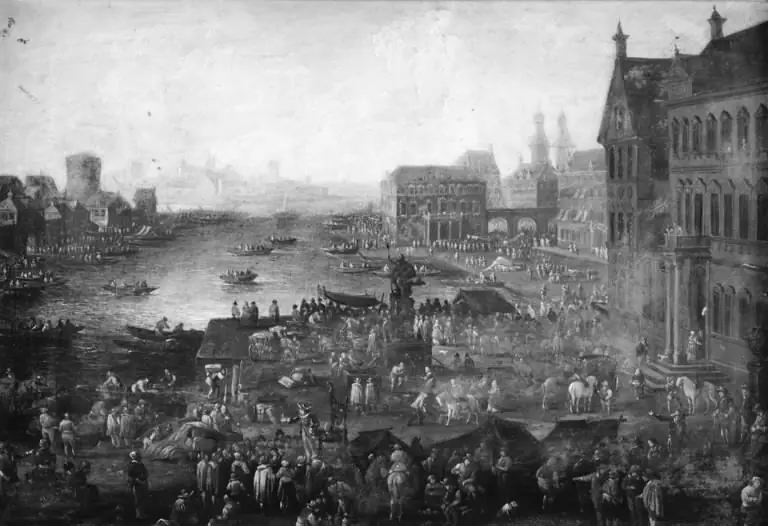 Square in Paris with Many Figures
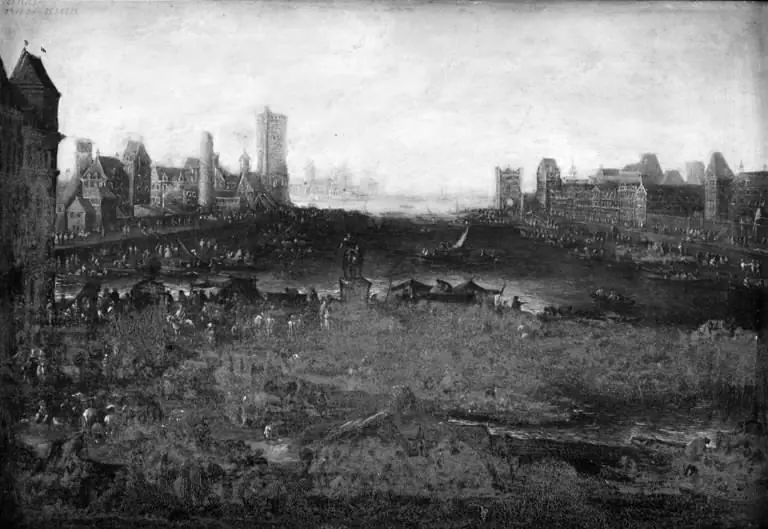 Square in Paris with Many Figures
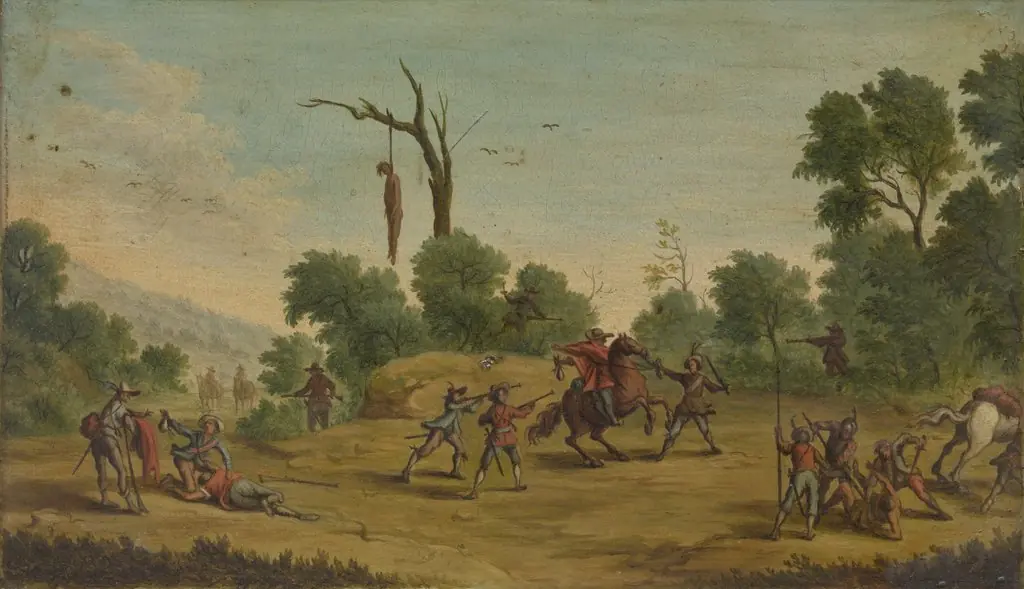 Horsemen Attacked by Robbers
 HOW WILL A COVERED PART BE CORRECTED?HOW WIKA A COVERED HEART DEED CORRECTED?
![Christ Walking on the Water [second plate], by Jacques Callot](https://artifactworldgallery.com/img/jacques-callot--christ-walking-on-the-water-second-plate--2069f3bfe4cb2126-w320.webp) Christ Walking on the Water [second plate]
Christ Walking on the Water [second plate]