Artwork
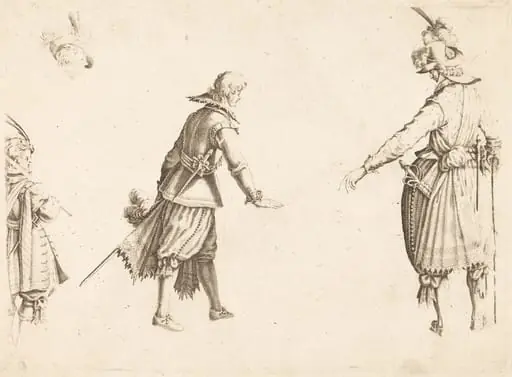
Gentleman and His Page
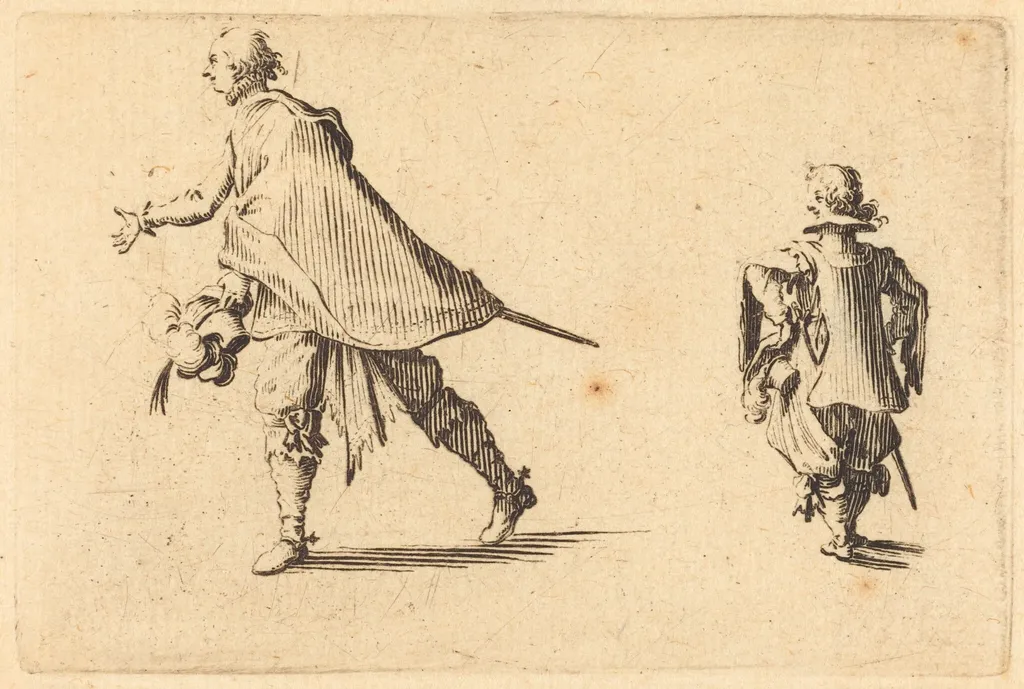
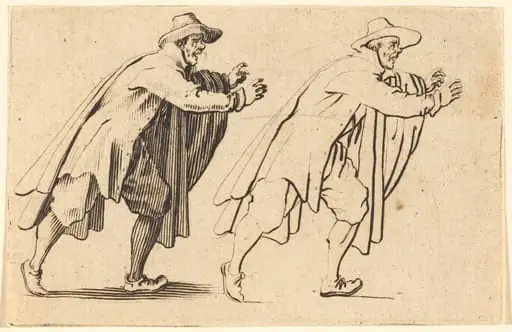
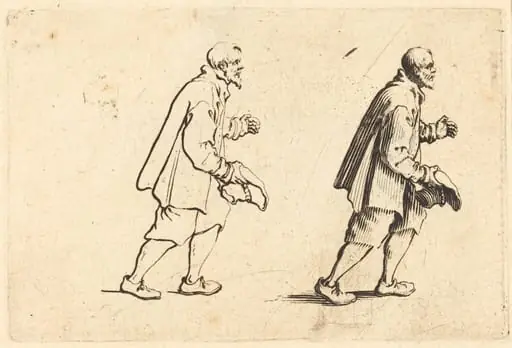
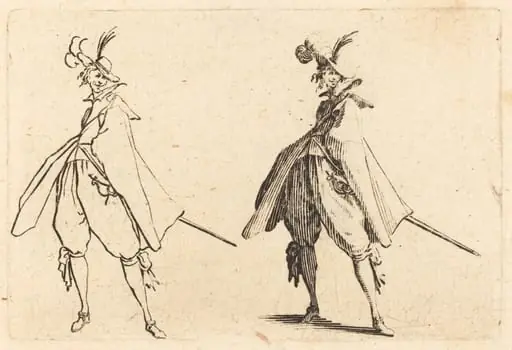
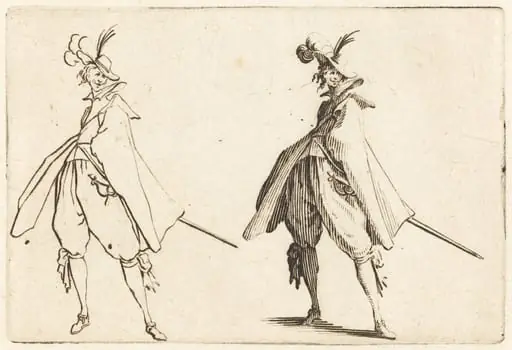
Gentleman and His Page is an ink print by the Baroque artist Jacques Callot. It dates from 1622 and is held in the collection of the National Gallery of Art.
About this work
Overview
Jacques Callot, a Baroque printmaker from the Duchy of Lorraine, produced the etching *Gentleman and His Page* circa 1622. Executed on laid paper, the work exemplifies Callot’s prolific output, which exceeds 1,400 prints documenting early‑seventeenth‑century life.
Subject & Meaning
The image presents two figures in contemporary dress: a gentleman in a long coat, high boots, and a wide‑brimmed hat, holding a cane and a feathered cap, and a page turned away, bearing a bundle on his shoulder. Their stiff, slightly awkward postures suggest a moment of movement, perhaps a departure or informal encounter, highlighting social roles within courtly travel.
Technique & Style
Callot employed a fine, scratchy line achieved through etching, allowing intricate rendering of fabrics, hat brims, and footwear despite the absence of colour. The detailed background, typical of his practice, includes a muted landscape that frames the figures and adds depth to the composition.
History & Provenance
Created during Callot’s early mature period, the print forms part of his extensive series that recorded the customs and personae of the early 1600s. It has circulated among collectors of Baroque prints and is referenced in catalogues of Callot’s oeuvre as an example of his social genre work.
Context
In the early seventeenth century, prints served both documentary and decorative functions. Callot’s focus on courtly attire and servants reflects contemporary interest in hierarchy and fashion, while his precise line work aligns with the Baroque emphasis on detail and narrative clarity.
Artist & collection
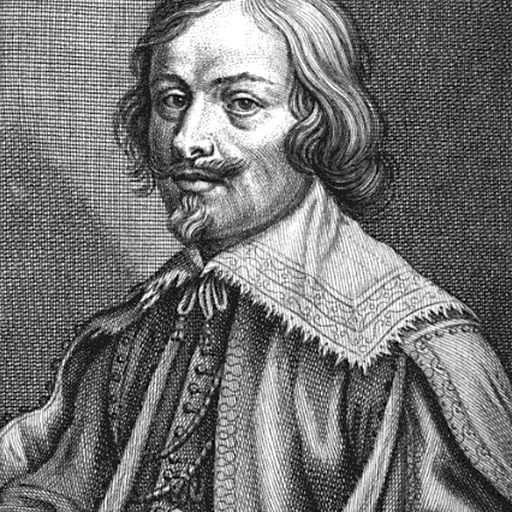
Artist
Jacques Callot was a baroque printmaker and draftsman from the Duchy of Lorraine.

 Holy Family at supper
 Restoration of the Aqueduct at Pisa
 Restoration of the Aqueduct at Pisa
 Square in Paris with Many Figures
 Square in Paris with Many Figures
 Horsemen Attacked by Robbers
 HOW WILL A COVERED PART BE CORRECTED?HOW WIKA A COVERED HEART DEED CORRECTED?
![Christ Walking on the Water [second plate], by Jacques Callot](https://artifactworldgallery.com/img/jacques-callot--christ-walking-on-the-water-second-plate--2069f3bfe4cb2126-w320.webp) Christ Walking on the Water [second plate]
Christ Walking on the Water [second plate]