Artwork
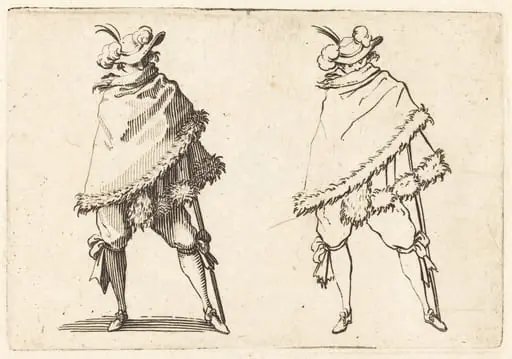
Gentleman in Large Mantle, Front View
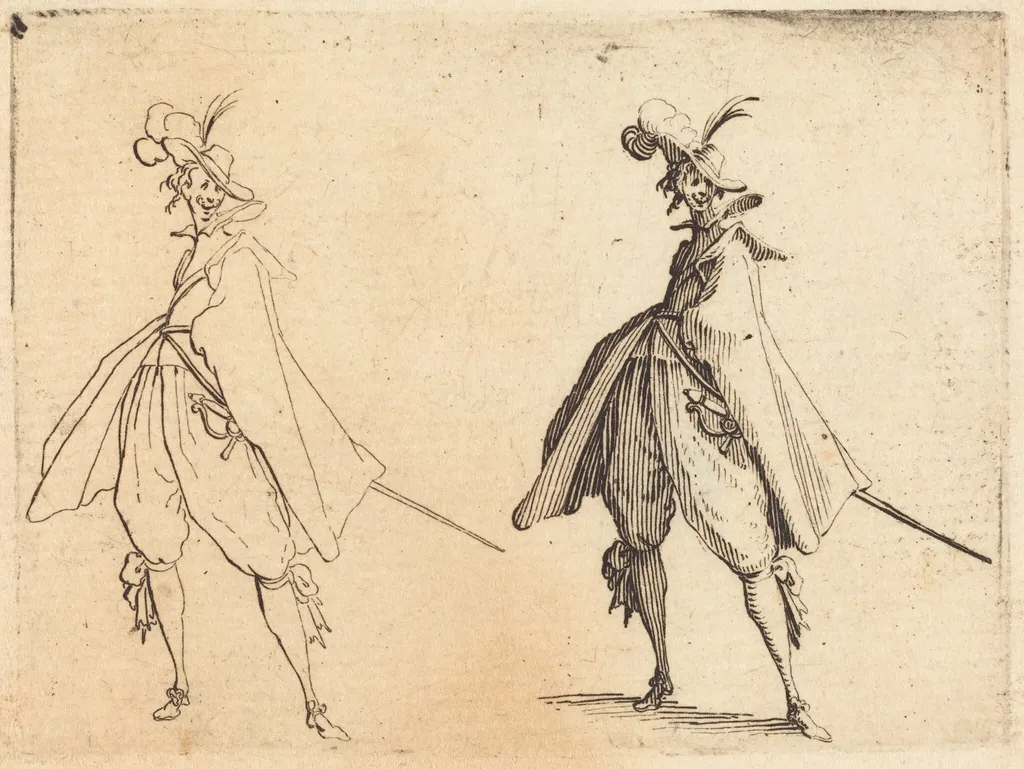
Gentleman in Large Mantle, Front View is an ink print by the Baroque artist Jacques Callot. It dates from 1617 and is held in the collection of the National Gallery of Art.
About this work
Overview
Gentleman in Large Mantle, Front View is an etching on laid paper created by Jacques Callot around 1617. As one of over 1,400 etchings by the French baroque printmaker, this work exemplifies his prolific documentation of contemporary life.
Subject & Meaning
The etching depicts a figure in elaborate, stiff attire, characteristic of Callot’s focus on refined draftsmanship and contemporary social subjects. Notably, the subject’s ornate cloak and accessories reflect the opulence of the era’s upper class.
Technique & Style
Callot employed sharp, scratchy lines, hallmark of etching, to capture intricate fabric folds and details. His use of etching allowed for direct drawing onto a metal plate, showcasing his technical skill.
History & Provenance
Created in the Duchy of Lorraine around 1617, the etching is part of Callot’s extensive oeuvre, which also includes scenes of soldiers and court life, highlighting his broad interest in societal documentation.
Context
This work reflects the baroque period’s emphasis on detailed realism and the emerging interest in everyday life subjects. Callot’s inclusion of a detailed background, likely a landscape, further situates the figure within a specific environment.
Legacy
As part of Callot’s vast body of work, *Gentleman in Large Mantle, Front View* contributes to the artist’s influence on baroque printmaking, notable for its meticulousness and insight into 17th-century European society.
Artist & collection

Artist
Jacques Callot was a baroque printmaker and draftsman from the Duchy of Lorraine.

 Holy Family at supper
 Restoration of the Aqueduct at Pisa
 Restoration of the Aqueduct at Pisa
 Square in Paris with Many Figures
 Square in Paris with Many Figures
 Horsemen Attacked by Robbers
 HOW WILL A COVERED PART BE CORRECTED?HOW WIKA A COVERED HEART DEED CORRECTED?
![Christ Walking on the Water [second plate], by Jacques Callot](https://artifactworldgallery.com/img/jacques-callot--christ-walking-on-the-water-second-plate--2069f3bfe4cb2126-w320.webp) Christ Walking on the Water [second plate]
Christ Walking on the Water [second plate]
 Gentleman in Large Mantle, Front View
 Gentleman in Large Mantle, Front View
 Gentleman in Large Mantle, Seen from Behind
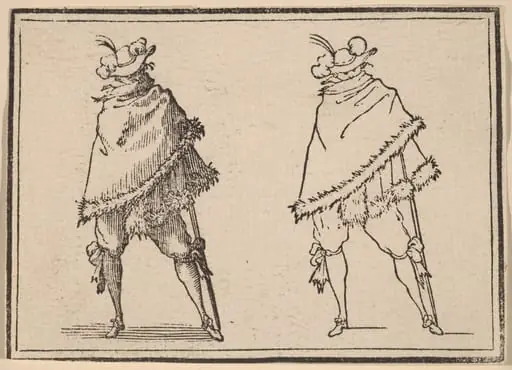 Gentleman Wrapped in his Mantle
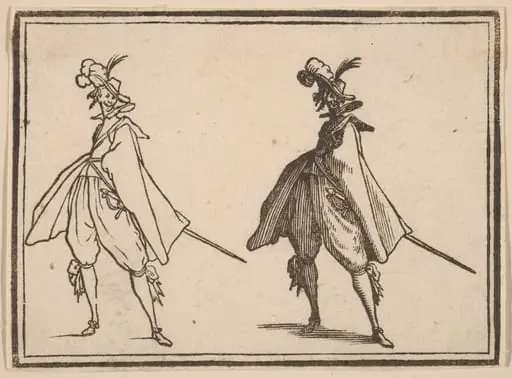 Gentleman in a Large Mantle, Front View
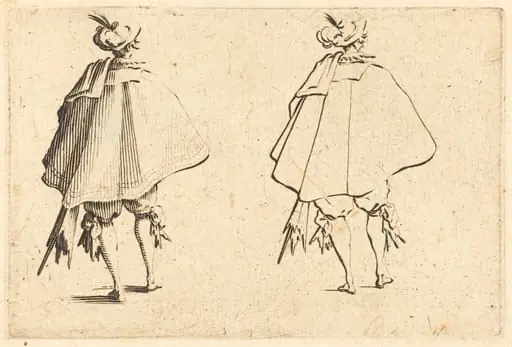 Gentleman in Large Mantle, Seen from Behind
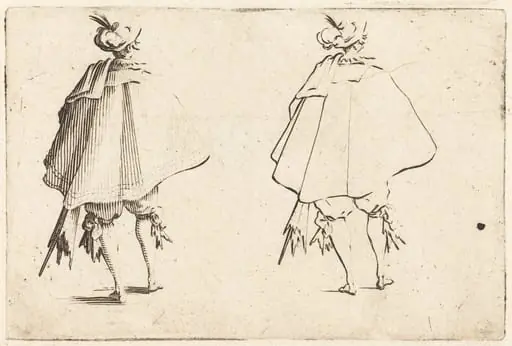 Gentleman in Large Mantle, Seen from Behind
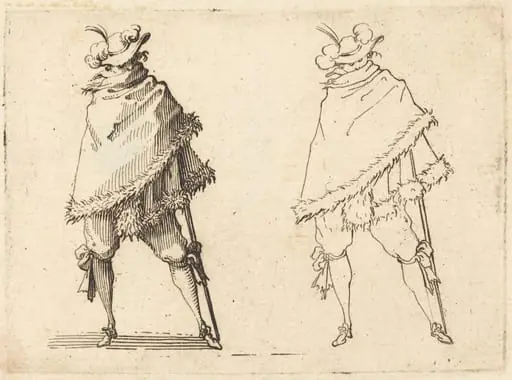 Man Wrapped in His Mantle
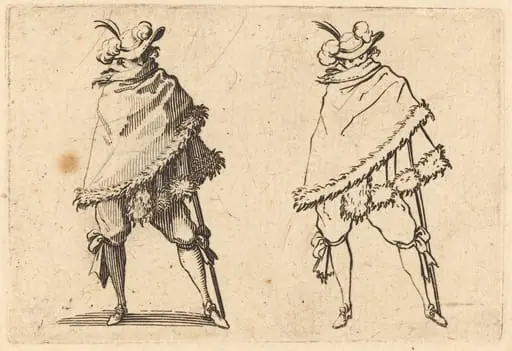 Man Wrapped in His Mantle
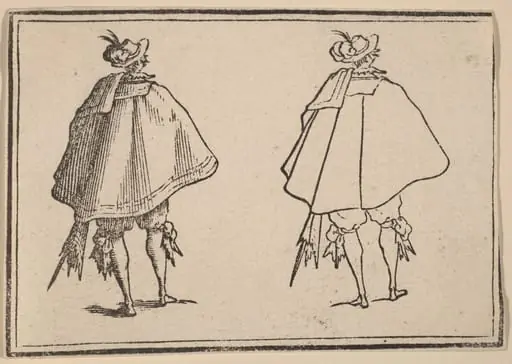 Gentleman in Large Mantle, Seen from Behind
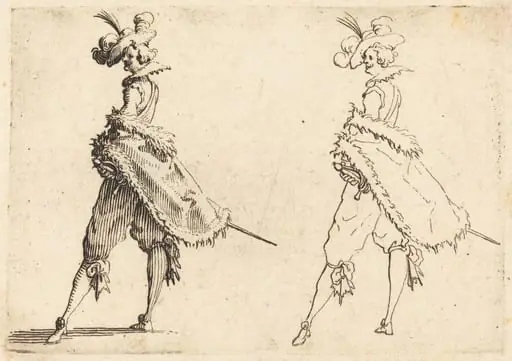 Gentleman Viewed from the Side
 Man Wrapped in His Mantle