Artwork
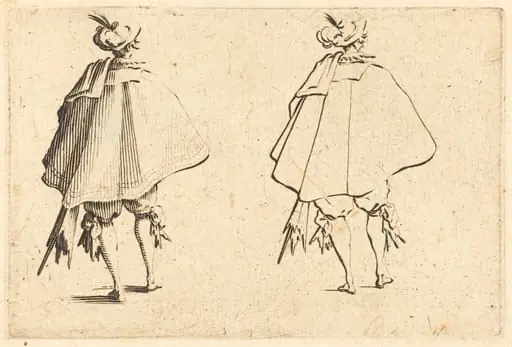
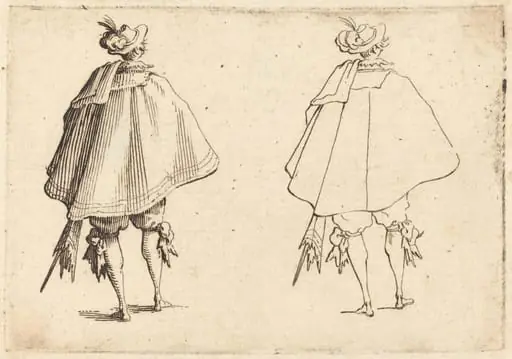
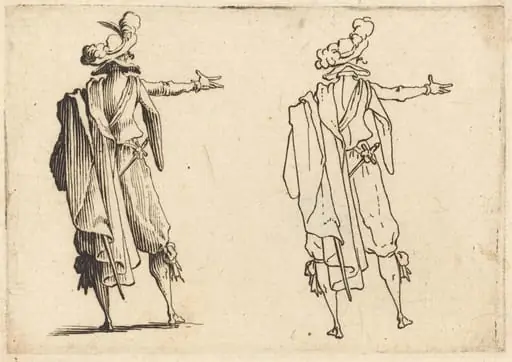
Gentleman in Large Mantle, Seen from Behind
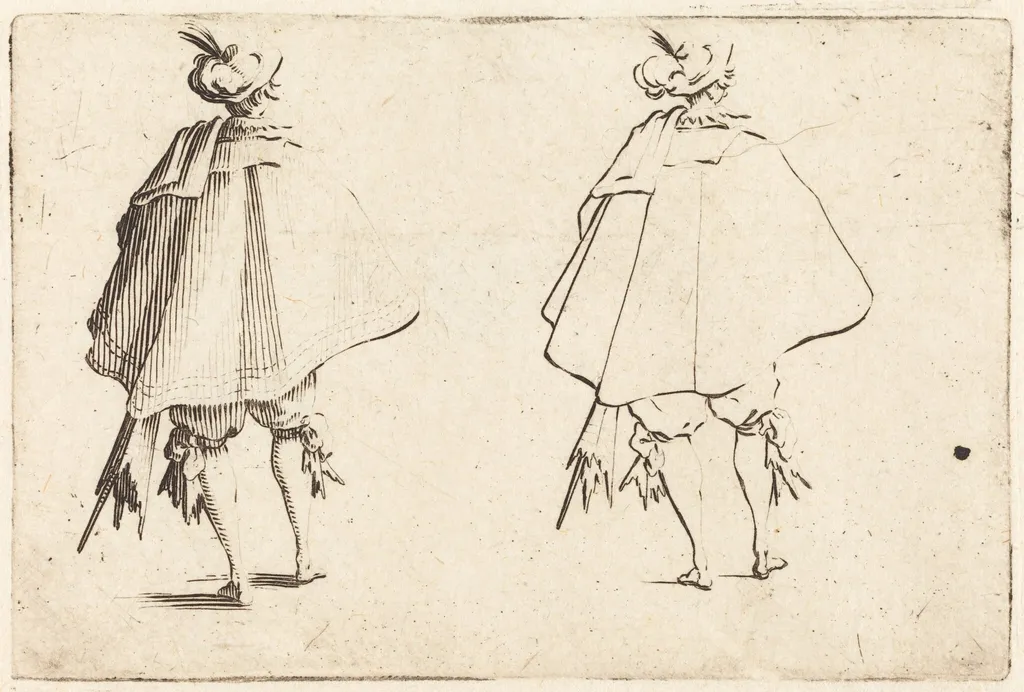
Gentleman in Large Mantle, Seen from Behind is an ink print by the Baroque artist Jacques Callot. It dates from 1622 and is held in the collection of the National Gallery of Art.
About this work
Overview
Created around 1622 by Jacques Callot, this etching captures two figures walking away from the viewer, rendered in ink on laid paper.
Created around 1622 by Jacques Callot, this etching captures two figures walking away from the viewer, rendered in ink on laid paper. Callot, active in the Duchy of Lorraine, was known for his precise yet expressive prints of everyday life. This work exemplifies his interest in observing social types, rendered with minimal detail but clear posture and movement. The composition focuses on the backs of the figures, emphasizing form over facial expression.
Subject & Meaning
The two men, dressed in long, striped cloaks with wide sleeves and tall hats, suggest upper-class strollers, possibly noblemen or courtiers. Their canes and crossed ankles imply a deliberate, unhurried pace, hinting at leisurely urban or rural promenades. The absence of faces shifts focus to costume and gait, inviting interpretation of social ritual rather than individual identity. The scene feels observational, not narrative.
Technique & Style
Callot employed etching to achieve fine, fluid lines that suggest texture and weight without heavy detail. Shading is built through loose, directional strokes that define the folds of heavy fabric, while the paper’s natural texture enhances the sketch-like quality. The rapid, almost spontaneous mark-making contrasts with the formality of the subjects, creating a tension between refinement and immediacy.
History & Provenance
This print belongs to Callot’s broader series of genre scenes from the early 1620s, a period when he was refining his etching technique in Florence and later in Paris. Few records exist for its early ownership, but it likely circulated among collectors of Northern European prints. Its survival in good condition reflects its modest scale and the durability of etching on laid paper.
Context
In early 17th-century Europe, printmaking became a key medium for documenting social life beyond religious or mythological themes. Callot’s work aligned with a growing interest in secular subjects—soldiers, travelers, and townspeople—captured with observational accuracy. This piece reflects the period’s fascination with costume, movement, and the quiet rituals of daily existence.
Legacy
Callot’s approach to etching influenced generations of printmakers, particularly in his ability to convey motion and texture with economy. While not widely exhibited as a standalone work, this etching contributes to his reputation as a keen chronicler of early modern life. Its informal quality helped legitimize the sketch as a finished artistic statement in print.
Artist & collection
Artist
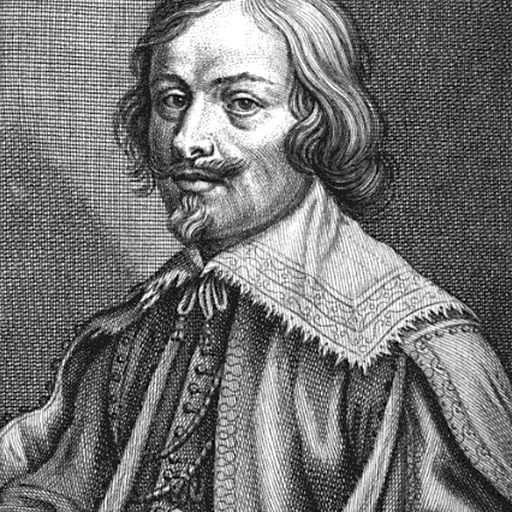
Jacques Callot was a baroque printmaker and draftsman from the Duchy of Lorraine.

 Holy Family at supper
 Restoration of the Aqueduct at Pisa
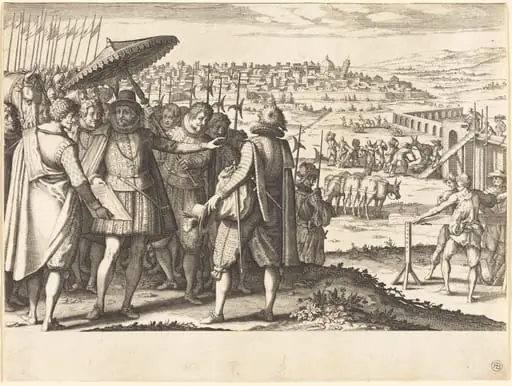 Restoration of the Aqueduct at Pisa
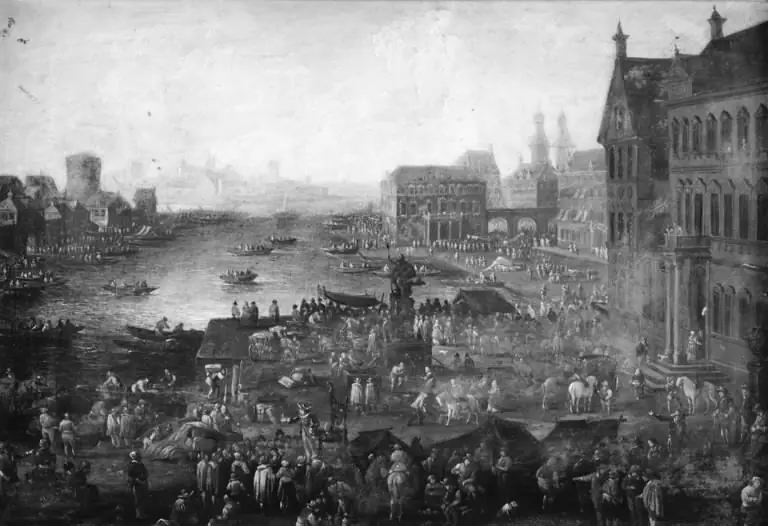 Square in Paris with Many Figures
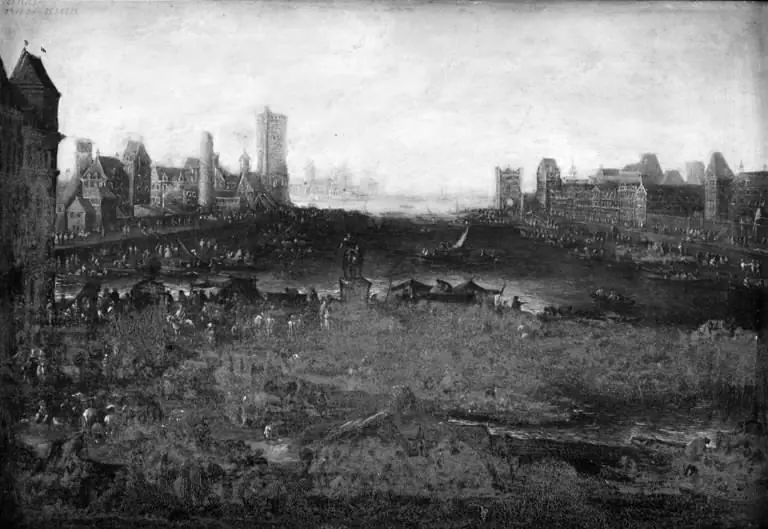 Square in Paris with Many Figures
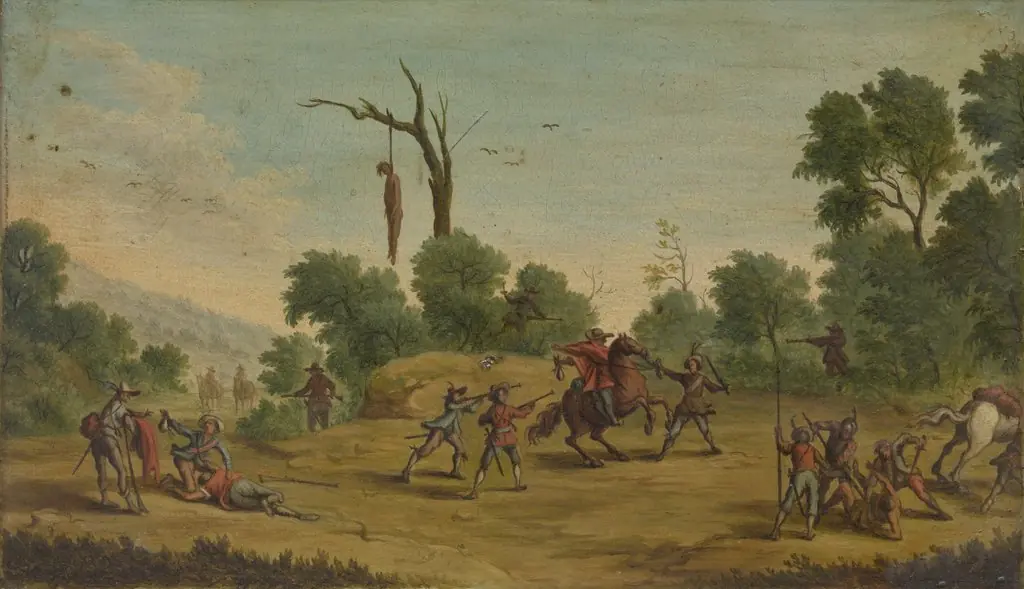 Horsemen Attacked by Robbers
 HOW WILL A COVERED PART BE CORRECTED?HOW WIKA A COVERED HEART DEED CORRECTED?
![Christ Walking on the Water [second plate], by Jacques Callot](https://artifactworldgallery.com/img/jacques-callot--christ-walking-on-the-water-second-plate--2069f3bfe4cb2126-w320.webp) Christ Walking on the Water [second plate]
Christ Walking on the Water [second plate]
 Man Wrapped in His Mantle
 Gentleman in Large Mantle, Seen from Behind
 Gentleman in Large Mantle, Seen from Behind
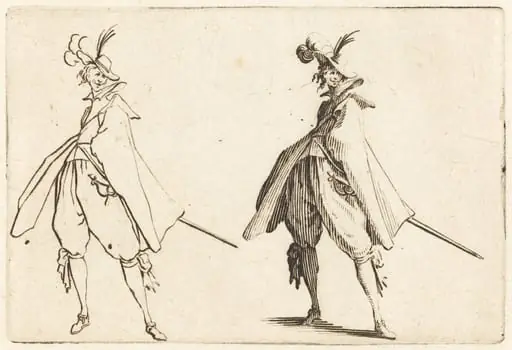 Gentleman in Large Mantle, Front View
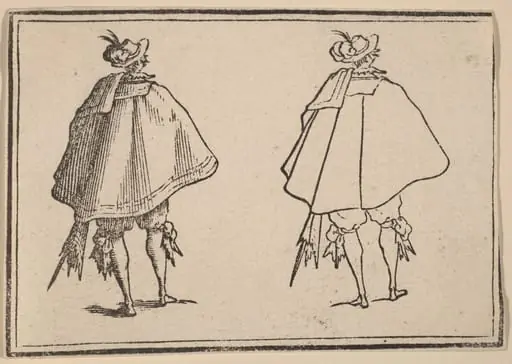 Gentleman in Large Mantle, Seen from Behind
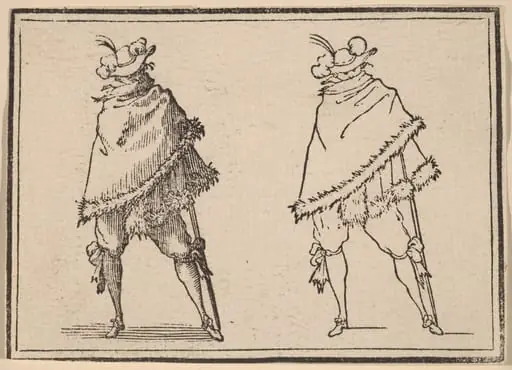 Gentleman Wrapped in his Mantle
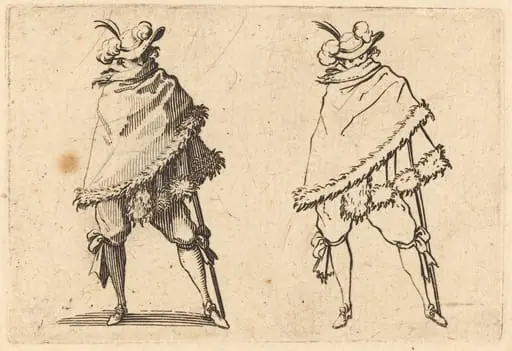 Man Wrapped in His Mantle
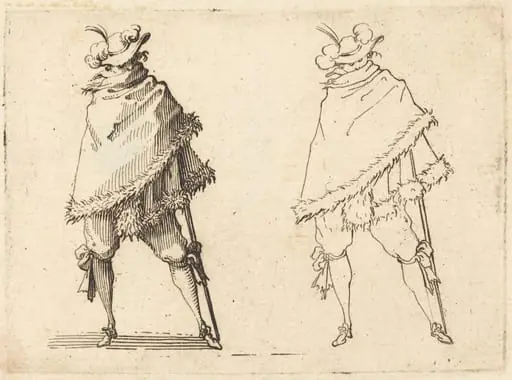 Man Wrapped in His Mantle
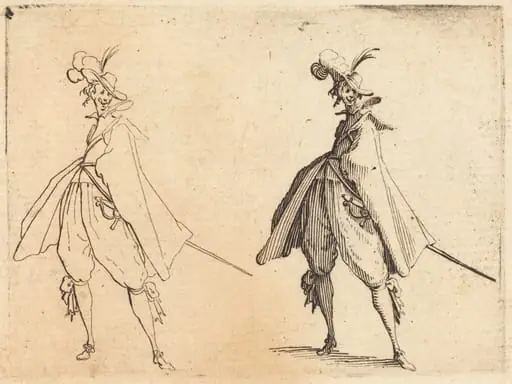 Gentleman in Large Mantle, Front View
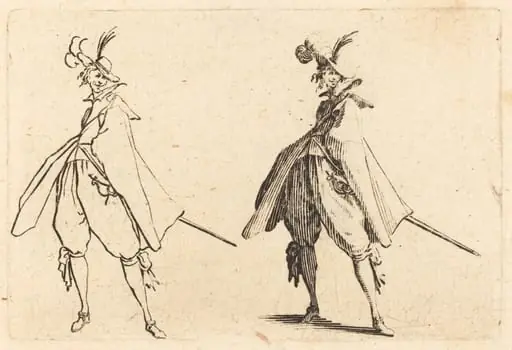 Gentleman in Large Mantle, Front View
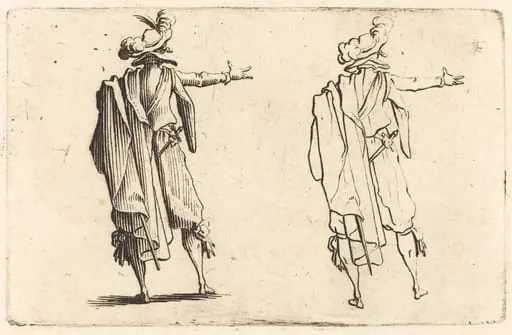 Man seen from Behind with His Right Arm Extended
 Man seen from Behind with His Right Arm Extended