Artwork
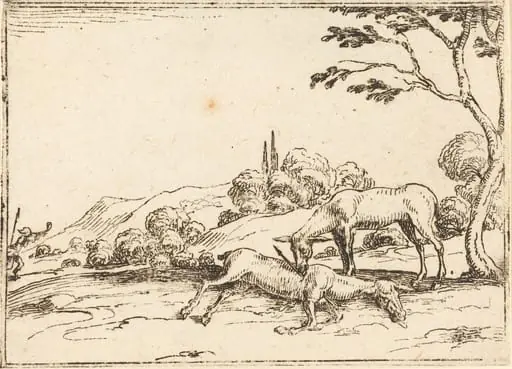
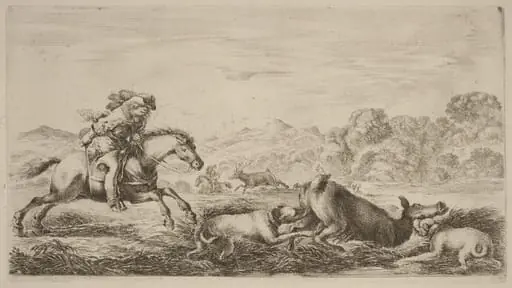
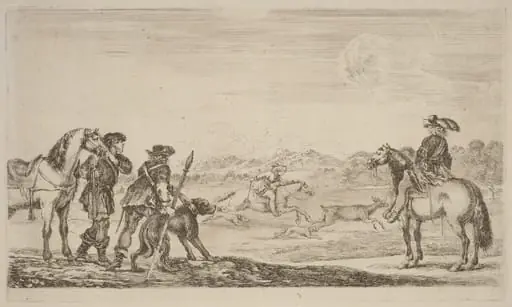
Lioness and Cub Pursued by Hunters
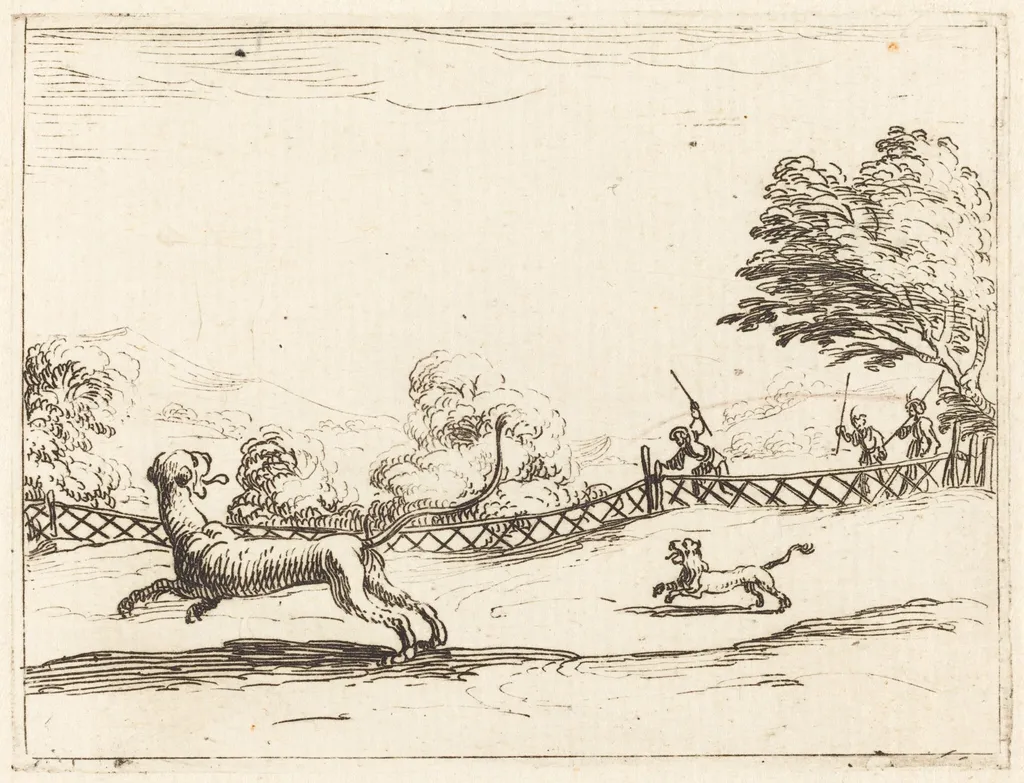
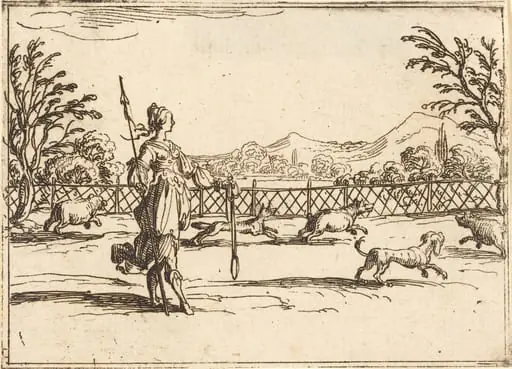
Lioness and Cub Pursued by Hunters is an ink print by the Renaissance artist Jacques Callot. It dates from 1628 and is held in the collection of the National Gallery of Art.
About this work
Overview
Created in 1628, this etching by Jacques Callot captures a moment of tension between wild animals and human hunters.
Created in 1628, this etching by Jacques Callot captures a moment of tension between wild animals and human hunters. Executed on laid paper, the work belongs to a vast body of over 1,400 prints produced by the Lorrainer artist, who specialized in detailed, narrative-driven scenes drawn from contemporary life. Unlike idealized mythological subjects, Callot often focused on raw, unvarnished moments, and this print continues that tendency with its dynamic composition and emotional immediacy.
Subject & Meaning
The scene portrays a lioness fleeing with her cub as mounted hunters close in, their spears and hounds suggesting imminent danger. The animal’s defensive posture conveys maternal urgency, contrasting with the organized aggression of the human pursuers. While not overtly allegorical, the image evokes broader themes of nature under threat and the imbalance of power between predator and hunter, reflecting a growing awareness of wildlife’s vulnerability in early modern Europe.
Technique & Style
Callot employed etching to achieve fine, fluid lines and dense atmospheric detail. His use of multiple plate stages allowed for nuanced shading and texture, particularly in the fur of the lioness, the movement of horses, and the layered landscape behind them. The composition’s diagonal energy and crowded background create a sense of motion, as if capturing a fleeting instant. Callot’s precision in rendering small elements—like the hunters’ gear or distant trees—enhances the scene’s realism without sacrificing narrative drive.
History & Provenance
The print was made during Callot’s mature period in Florence, where he worked for the Medici court and absorbed Italian artistic influences. Though the exact early ownership is undocumented, the work circulated widely through print markets in Europe, contributing to his international reputation. Surviving impressions are held in major collections, including the Louvre and the British Museum, attesting to its enduring presence in the printmaking canon.
Context
In early 17th-century Europe, hunting was both a noble pastime and a symbol of control over nature. Callot’s depiction diverges from celebratory royal hunts by focusing on the hunted rather than the hunters, subtly questioning the ethics of the pursuit. His interest in marginalized figures and violent encounters—seen also in his series on war and beggars—positions this image within a larger critique of social and natural order.
Legacy
Callot’s technical innovations in etching influenced generations of printmakers across Europe. This work exemplifies his ability to merge documentary observation with emotional intensity, setting a precedent for later artists who sought to portray nature and human conflict with unflinching detail. Though less famous than his war scenes, this print remains a significant example of how printmaking could convey complex narratives with subtlety and urgency.
Artist & collection

Artist
Jacques Callot was a baroque printmaker and draftsman from the Duchy of Lorraine.

 Holy Family at supper
 Restoration of the Aqueduct at Pisa
 Restoration of the Aqueduct at Pisa
 Square in Paris with Many Figures
 Square in Paris with Many Figures
 Horsemen Attacked by Robbers
 HOW WILL A COVERED PART BE CORRECTED?HOW WIKA A COVERED HEART DEED CORRECTED?
![Christ Walking on the Water [second plate], by Jacques Callot](https://artifactworldgallery.com/img/jacques-callot--christ-walking-on-the-water-second-plate--2069f3bfe4cb2126-w320.webp) Christ Walking on the Water [second plate]
Christ Walking on the Water [second plate]