Artwork
Reynard Blinds the Wolf in One Eye
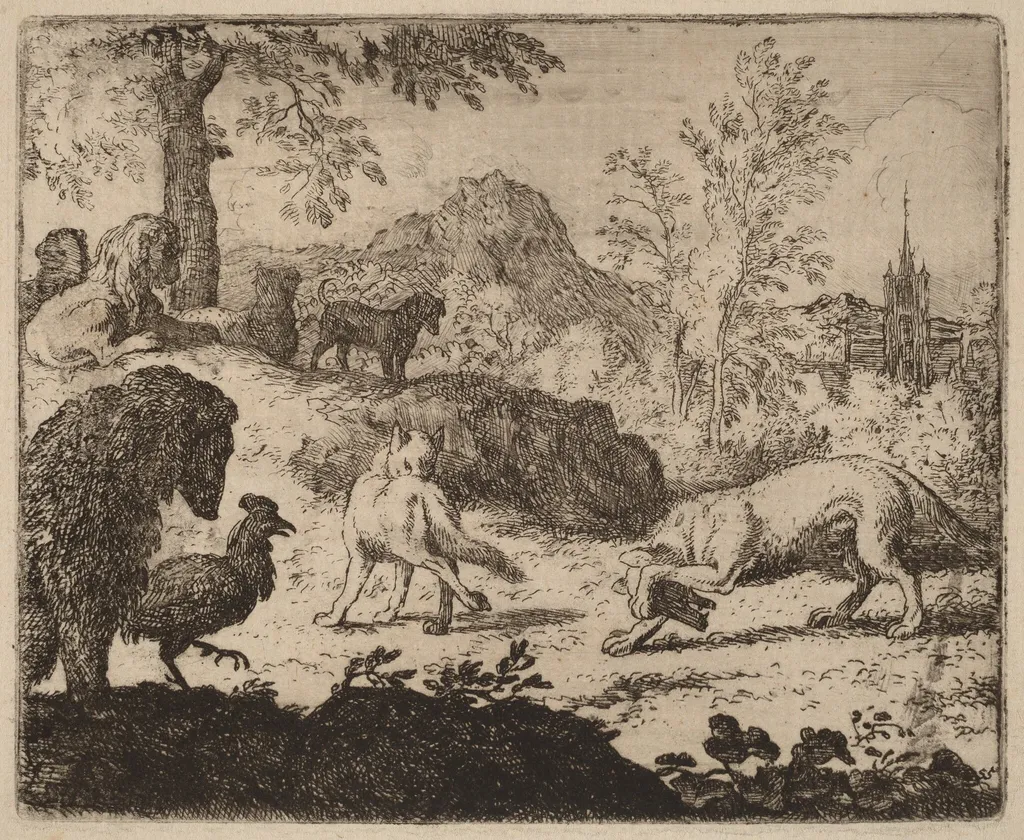
Reynard Blinds the Wolf in One Eye is an ink print by the Baroque artist Allart van Everdingen. It dates from 1650 and is held in the collection of the National Gallery of Art.
About this work
Overview
As a Dutch Golden Age printmaker, he specialized in animal subjects drawn from folklore, blending naturalistic observation with narrative clarity.
Allart van Everdingen created this etching around 1650, illustrating a moment from the medieval Reynard the Fox cycle. As a Dutch Golden Age printmaker, he specialized in animal subjects drawn from folklore, blending naturalistic observation with narrative clarity. The work belongs to a broader tradition of moral tales told through anthropomorphized creatures, rendered here with precision and quiet drama.
Subject & Meaning
The scene captures Reynard, the fox, blinding the wolf as retribution for past betrayal — a classic turn in the fable where wit triumphs over brute strength. The wolf’s vulnerability and the fox’s calculated action reflect themes of cunning versus power, common in medieval beast epics. No overt moralizing is present; instead, the tension lies in the quiet violence of the moment, told through gesture and expression.
Technique & Style
Everdingen employed etching to achieve fine, controlled lines that define the texture of fur, the curvature of claws, and the tension in the animals’ faces. The inked lines vary in density to suggest shadow and depth, while the composition focuses tightly on the two figures, eliminating extraneous detail. His handling of the burin reveals a mastery of surface texture, enhancing the realism of the creatures without sentimentality.
History & Provenance
The print was produced during Everdingen’s mature period, when he was actively engaged in publishing narrative etchings based on folklore and classical sources. While specific early ownership records are sparse, the work circulated among collectors of Dutch graphic art in the 17th and 18th centuries. It remains part of institutional collections today, valued for its technical refinement and literary resonance.
Context
In 17th-century Netherlands, illustrated fables were widely appreciated, reflecting both popular storytelling and intellectual interest in moral allegory. Everdingen’s engagement with Reynard aligned with broader cultural trends that favored animal tales as vehicles for social commentary. His choice of subject, though rooted in medieval tradition, resonated with contemporary audiences familiar with printed chapbooks and emblem books.
Legacy
Everdingen’s etching contributed to the persistence of Reynard imagery in Northern European print culture. Though less famous than his landscapes, this work exemplifies his ability to infuse animal subjects with psychological nuance. Later artists and illustrators of fables drew from his compositional clarity and attention to anatomical detail, securing his role in the evolution of narrative printmaking.
Own this work as a print
Artist & collection
Artist
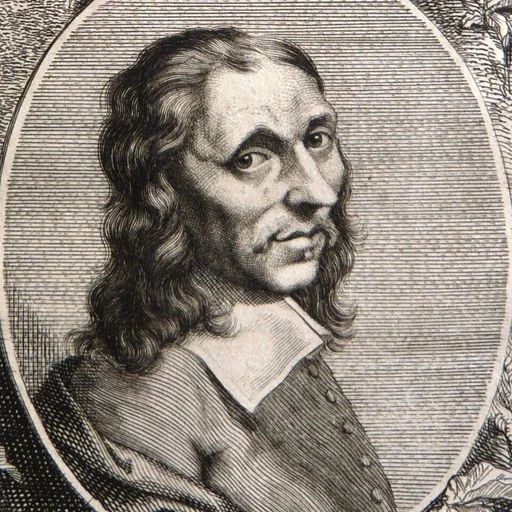
Allaert van Everdingen (Dutch pronunciation: ; bapt. 18 June 1621 – 8 November 1675 (buried)), was a Dutch Golden Age painter and printmaker in etching and mezzotint.

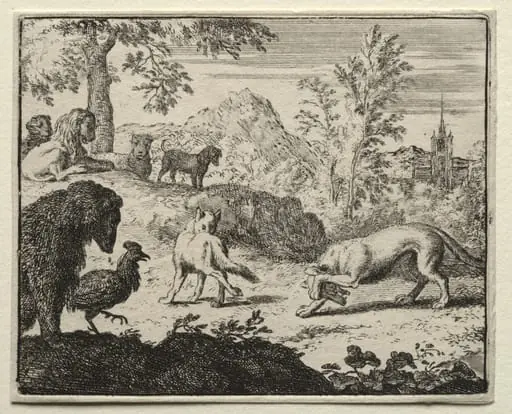 Reynard the Fox: The Combat Between Reynard and the Wolf
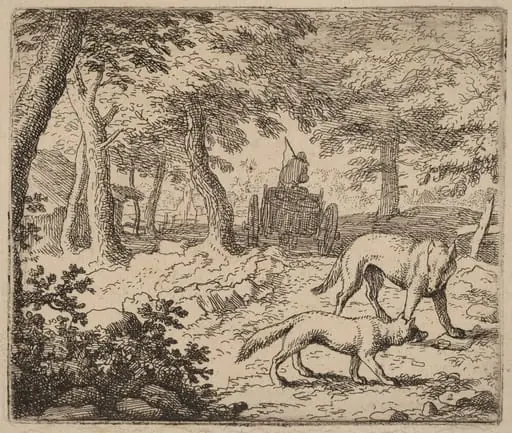 Reynard and the Wolf before the Fish Cart
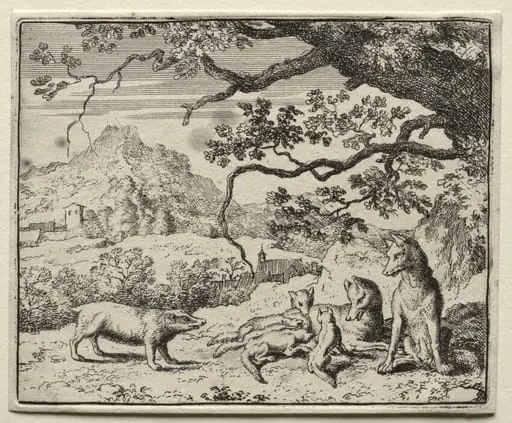 Reynard the Fox: The Badger Calls Reynard to Court
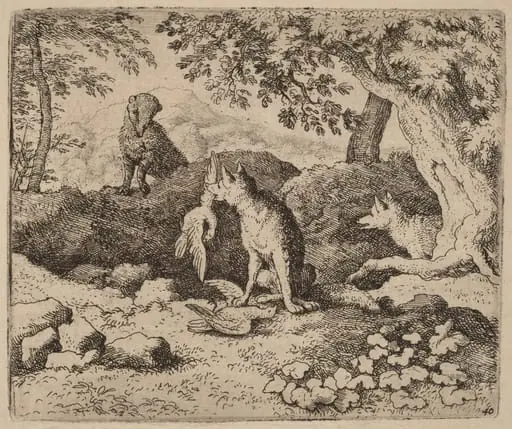 The Badger Goes to Warn Reynard
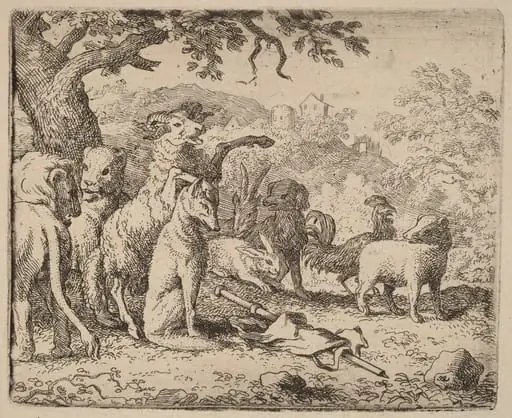 The Ram Blesses Reynard
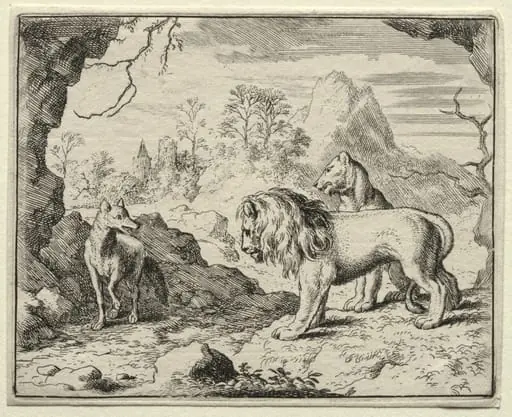 Reynard the Fox: Reynard Tells of Hidden Treasure
 Reynard and the Rabbit
 Reynard the Fox
 Reynard the Fox: The Freeing of the Wolf and the Bear